






















A small Nvidia computer built for robotics, machine vision and autonomous devices has turned up inside Russian weapons. Ukrainian specialists found Jetson Orin modules in drones that, they say, Russia tested in Zaporizhzhia as systems capable of selecting a final target autonomously.
The key difference from many earlier systems is the role of the operator. In a conventional setup, a human selects the target while software helps the drone lock onto it during the final phase. In the systems examined by Ukraine, investigators say the onboard computer made the last target-selection decision.
One such drone struck near a gas station in Zaporizhzhia on July 6. Ukrainian military and forensic specialists said the system used in the attack was capable of recognising preset categories of objects once the drone entered the target area.
Debris from other aircraft allowed investigators to study the architecture more closely. They found cameras and Jetson Orin modules, while Ukrainian specialists said the software had been trained to identify several categories of possible targets.
Daycom’s analysis indicates that Nvidia Jetson Orin in Russian drones matters for more than being another Western-made component in Russian weapons. It shows how widely available civilian electronics can turn a relatively cheap drone into an increasingly autonomous strike platform.
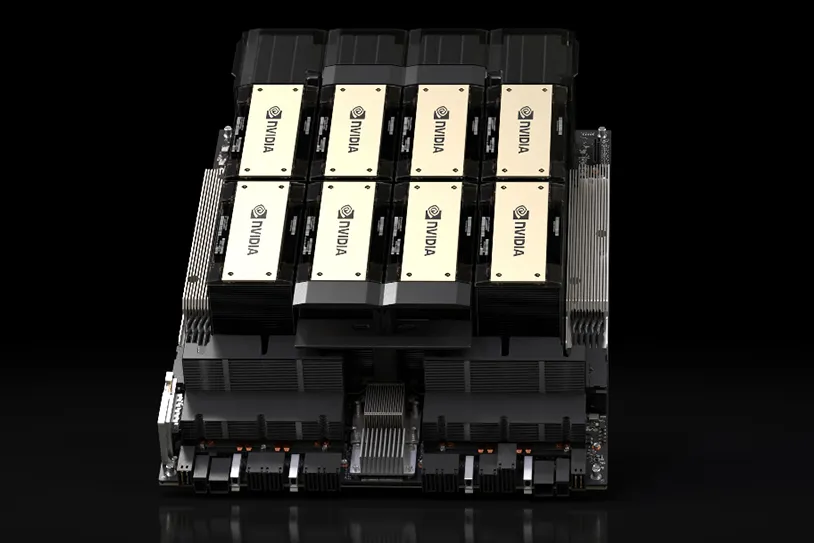
Jetson Orin itself is not a military product. Nvidia markets the family as compact computers for robotics, industrial automation, machine vision and other applications in which artificial intelligence needs to run directly on the device rather than in a remote data centre.
For a drone, that architecture offers an obvious advantage. A camera can feed images directly into the onboard computer, while a machine-learning model compares what it sees with categories it has been trained to recognise. A permanent link to an operator or external server is not required.
That matters especially in a war where electronic warfare has become one of the main tools for stopping drones. If an aircraft depends on a radio link, that signal can potentially be detected or jammed. An autonomous system can continue flying after communication with an operator is lost.
Ukrainian specialists say the Russian tests in Zaporizhzhia followed that logic. A human could define the general area or mission, while the algorithm would identify a specific object once the drone approached the target zone.
That does not mean the machine independently chooses the city or decides whether to launch an attack. Humans still define the mission, route and target categories. But allowing software to choose the final object to strike represents a significant increase in weapon autonomy.
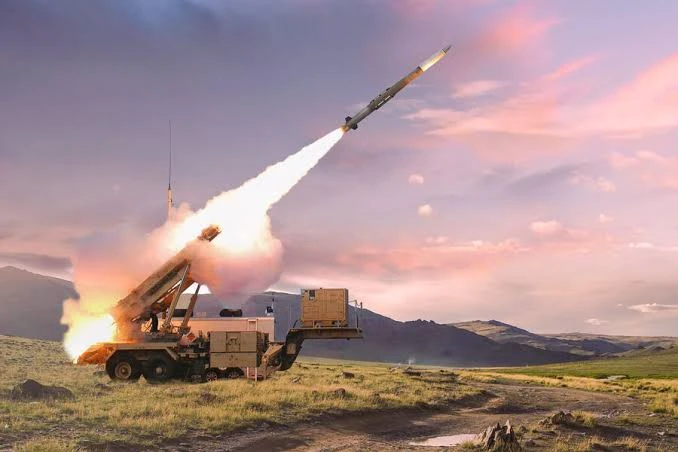
Ukrainian investigators have linked Jetson Orin not only to drones. A similar module was also found in Russia’s new S-71M Monochrome air-launched cruise missile, which Ukrainian intelligence says has been tested in combat.
The presence of the module does not by itself prove that it performed autonomous target selection in the missile. It does, however, suggest that Russian developers are experimenting with compact image-processing computers across more than one weapons platform.
For Nvidia, the case reflects a problem faced by many Western electronics manufacturers since 2022. The company says Jetson Orin is a civilian product intended for developers, students and start-ups and was not designed for military applications.
Nvidia also says it does not sell the Jetson line in Russia. But the devices are widely available through international distributors and resale markets. Once a product passes through independent traders, the original manufacturer may lose visibility over the final user.
That is one of the central weaknesses of export controls. Stopping a direct sale to a Russian defence company is far easier than tracing a small circuit board that can be legally purchased by thousands of civilian customers around the world.
A module can be bought in one country, resold in another, mounted on a third-party board and only then reach a company linked to Russia’s defence sector. Every additional transaction makes the supply chain harder to reconstruct.
U.S. export rules restrict the transfer of many categories of electronics to Russia, especially when a military end user is known. Additional controls also cover re-exports through third countries and companies suspected of helping to circumvent sanctions.
But legal restrictions and physical traceability are different problems. A serial number may identify an original batch or authorised distributor, yet it does not necessarily reveal every later resale involving several independent intermediaries.
In one Russian system examined by Ukrainian specialists, the board carrying the Nvidia component was marked “Made in China.” Publicly available evidence has not established which country, company or network of intermediaries ultimately supplied the Jetson Orin to the Russian producer.
The problem therefore extends far beyond one American corporation. Modern weapons increasingly rely not only on specialised military electronics but also on commercial cameras, processors, memory chips, navigation modules and other mass-market components.
For Russia’s defence industry, that model reduces development time and cost. Instead of designing a compact AI computer from scratch, engineers can integrate a commercial module that already comes with software tools, documentation and a mature development environment.
Jetson is attractive precisely because of that ecosystem. Nvidia provides not just processing hardware but a software platform for computer vision and robotics. The same features that simplify a civilian autonomous robot can also be adapted to an attack drone.
The war in Ukraine has already shown how quickly civilian technologies can be absorbed into military systems. Commercial cameras, modems, navigation parts and FPV components have become central to mass drone production on both sides of the front.
Artificial intelligence adds another capability: processing and interpreting images onboard. That reduces dependence on external communications and makes some forms of electronic jamming less effective.
Export-control authorities therefore face a difficult trade-off. Overly broad restrictions on mass-market electronics can damage civilian robotics, research and industry without closing illicit channels. Loose rules, however, leave a large pool of dual-use components available for military adaptation.
There is also a separate legal and ethical issue. Humanitarian organisations have long called for limits on autonomous weapons, particularly when machines are allowed to identify and engage targets without direct human confirmation.
The controversy is not about artificial intelligence itself. Algorithms are already widely used for navigation, stabilisation and object recognition. The more consequential threshold is crossed when software is allowed to select the specific object that will be struck.
The Ukrainian case also shows how difficult that boundary can be to establish technically. The absence of a radio link does not prove autonomous targeting: a drone could simply be following coordinates. Investigators therefore need access to memory, software and recognition logic.
If the Ukrainian findings are confirmed, the Russian tests point to the next phase of drone warfare. Electronic jamming alone may no longer be enough if an aircraft can navigate independently and recognise predefined target categories without external instructions.
That also changes defensive priorities. Physical interception, camouflage and methods designed to confuse machine vision become more important alongside electronic warfare. A target may now need protection not only from a human operator’s camera, but from an algorithm trained to recognise its visual profile.
The Jetson Orin story is therefore not primarily about whether Nvidia violated its own sales rules; there is no public evidence that it did. It illustrates a broader reality: civilian AI hardware has become cheap, compact and accessible enough to be adapted rapidly for military use.
The larger challenge is that global technology markets are moving faster than governments can build effective controls over end use. In the case of Nvidia Jetson Orin, the distance between a civilian development platform and an autonomous weapon can be as small as a single computer board.