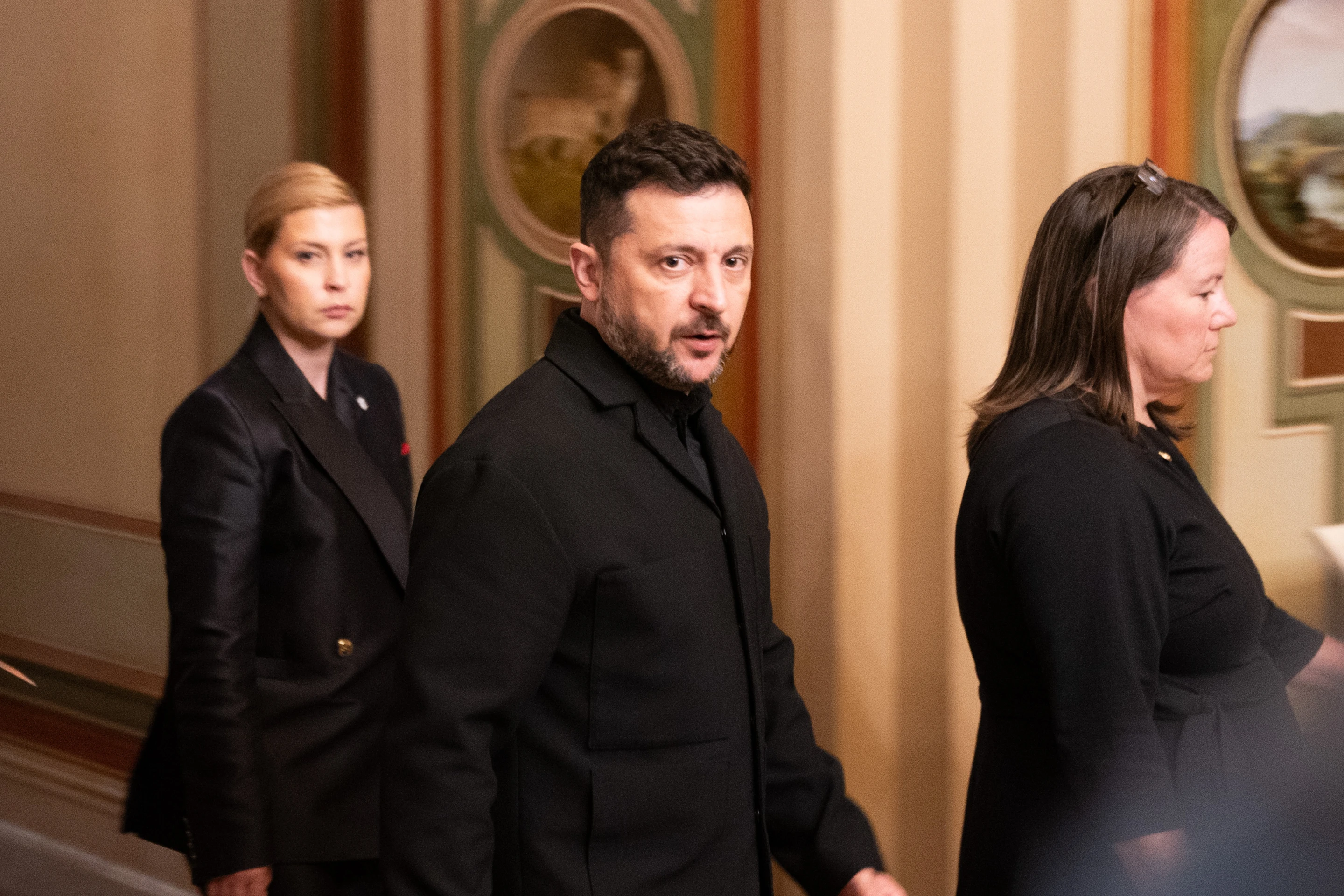

















In Oprah Winfrey’s studio, this story once looked like a final defense. The Cascio family spoke about Michael Jackson not as a distant superstar, but as a man who ate at their table, slept in their home and became almost a relative.
When asked directly whether anything inappropriate had ever happened between them and Jackson, the adult Cascio children answered together: no. At the time, it sounded like testimony from people who knew him not through headlines, but through dinners, holidays, trips and phone calls.
Now that same scene belongs to a different story. The Cascio siblings say they were lying then because they had been trained for years to protect Jackson. They describe themselves as his “soldiers” — people whose closeness to fame turned them into a defensive line.
According to Daycom’s analysis, the power of this lawsuit lies not only in the new allegations. It lies in the reversal of roles: a family long presented as proof of Michael Jackson’s innocence has become one of the most dangerous challenges to his estate.
Four of the five Cascio children have sued entities tied to Michael Jackson’s estate. A fifth sibling also says he was abused, though legal limitations prevent him from joining this specific case. All five describe a pattern of grooming.
Their current position sharply contradicts everything the family said for years. They publicly defended Jackson, appeared in media interviews, supported him during earlier accusations and remained part of the intimate circle around his posthumous memory.
That is why the Cascio case is so explosive for the image of the King of Pop. These are not outside critics or strangers from the margins of celebrity. These are people Jackson welcomed into his private orbit, and whom his supporters long treated as evidence of trust.
Michael Jackson’s estate categorically denies the allegations. Its representatives describe the lawsuit as an attempt to obtain money and emphasize that the Cascio family defended Jackson’s innocence for more than 25 years. That will likely become a central line of defense.
Legally, the case is far from resolved. It involves a lawsuit, an earlier payment agreement, arbitration, competing accusations of pressure and claims of attempted extortion. Culturally, however, it has already shifted the context: Jackson’s old defensive structure has cracked from within.
The Cascio story began not in court, but in hospitality. Dominic Cascio, the family’s father, worked in the New York hotel world, where Jackson often stayed. Professional contact gradually became friendship, and friendship became almost family-level access to a superstar.
Jackson visited the family’s New Jersey home, ate home-cooked meals, spent time with the children, invited them to Neverland Ranch and brought them on trips and tours. For the children, it appeared to be entry into a closed world where fantasy had a real address.
In this story, Neverland Ranch again becomes more than an estate with a theater, a zoo and amusement rides. It becomes a symbol of power, where childhood fantasy, luxury, dependence on an adult and vast inequality of status could merge into a dangerous atmosphere.
The plaintiffs allege that abuse occurred in such places — the family home, trips, the ranch and hotels. Each sibling describes individual trauma, but their accounts converge on one point: silence was part of the system.
Aldo Cascio says the first episode happened when he was a child. Marie Nicole Porte says Jackson first abused her in the family home when she was 12. Dominic and Eddie also describe acts that they say began in childhood.
These claims still require judicial examination. But the public articulation of them has already changed the architecture of the case. The Cascio family is no longer a silent part of the Jackson legend; it is now an active party in litigation against his estate.
Especially painful is the theme of shared silence. The children say they did not tell one another what had happened. They did not tell their parents. When their parents asked about their relationship with Jackson, they denied anything improper. A collective silence was born.
In cases involving alleged child sexual abuse, silence does not necessarily mean absence. It can result from fear, dependence, shame, affection for the abuser or the belief that the truth would destroy everyone’s life. This is the argument the plaintiffs now advance.
The key word in their lawsuit is grooming. The Cascios say Jackson created a feeling of exceptional closeness, convinced the children that their relationship with him was special and built in them a duty to defend him from any outside threat.
If such a pattern is proven, the story becomes darker still. It would not concern only isolated episodes, but a long psychological dependency in which a child does not merely remain silent, but becomes an advocate for the person later described as the source of trauma.
That is why the Oprah interview has become such an important symbol. What once looked like spontaneous support is now described by the plaintiffs as the result of years of training in silence. The public “never” has become, in their telling, a sign of the depth of control.
Jackson’s estate sees the matter in the opposite way. For the defense, the Cascios’ earlier statements are grounds for doubting their current claims. If people denied abuse for decades, wrote favorable accounts and benefited from proximity, their reversal will be challenged.
This will be one of the central legal battles. The plaintiffs will speak of trauma, grooming and delayed recognition. The estate will speak of inconsistency, money and prior benefits. The court will have to distinguish psychological complexity from possible bad faith.
A separate knot is the 2020 agreement. Before the public lawsuit, the Cascio family had already told the estate that Jackson had harmed them. The parties reached a payment arrangement totaling roughly $16 million over five years. The allegations did not become public then.
For the Cascios, those payments now appear as inadequate compensation and part of a mechanism of silence. For the estate, they were a reluctant step meant to protect Jackson’s family from allegations it considers false. One agreement now carries two opposing moral meanings.
When the payments neared their end, talks over additional money broke down. The estate says the family demanded a massive sum and threatened a public lawsuit. The Cascios say they are seeking not only money, but the right to finally tell the truth.
This brings the most delicate issue into the case: the relationship between compensation and truth. In sexual abuse litigation, money often becomes the language through which the public misreads trauma. A payment can be risk management, silence, restitution and a weapon all at once.
In Michael Jackson’s case, that issue is especially explosive. His estate is one of the most valuable music assets in the world. Rights, musicals, catalogs, the “Michael” biopic, licenses and stage shows create an economy in which every allegation carries both moral and financial weight.
The Cascio lawsuit emerged during a new cycle of commercial rehabilitation around Jackson’s image. The biopic “Michael” focuses on the earlier period of his life and stops before the public wave of allegations. It offers audiences a version of the legend without its darkest chapter.
That is why the new case is so dangerous for the estate. It returns to the center what the official cultural machine tries to keep at the edge: children, private rooms, unequal power and the ability of fame to turn witnesses into defenders.
“Leaving Neverland” functions in this story as a catalyst. The Cascios say that after watching the documentary, they began to understand their own experiences and speak to one another. Other people’s testimony became a mirror in which the family’s silence appeared back to them.
The film, built around the accounts of Wade Robson and James Safechuck, had already changed the global discussion around Jackson. Its critics call the allegations false and financially motivated. Its supporters see it as an explanation of why victims may defend an abuser for years.
The Cascios enter exactly that dispute. Their story seems to answer the skeptics’ central question: why did they stay silent? They say silence was not emptiness, but the result of long psychological conditioning, emotional dependence and fear of destroying their world.
Yet that answer does not erase other questions. Why did the family accept money? Why did some members commercially use their closeness to Jackson after his death? How should earlier denials, books, television appearances and present testimony be weighed against one another?
That is why the case will not be simple for either the court or the public. It does not fit cleanly into “victims versus monster” or “fraudsters versus innocent star.” It contains love, dependence, benefit, fame, fear, memory, money and trauma that may have taken years to mature.
For Michael Jackson’s estate, the strongest argument will remain the Cascios’ earlier loyalty. For the plaintiffs, that same loyalty becomes their strongest argument: they present it as evidence of how deeply Jackson’s influence shaped the children and the entire family.
It is an almost insoluble knot. One side says: they defended him, therefore they were telling the truth. The other says: they defended him because they had been formed to do so. The same fact operates in two opposite legal and psychological logics.
Jackson’s history has long lived inside such mirrors. His 2005 criminal trial ended in full acquittal. For supporters, that remains decisive proof of innocence. For critics, it is a legal answer to one case, not a resolution of every account or civil claim.
After his death, that ambiguity did not disappear. It became part of the business model. His music keeps playing, “Thriller” returns each Halloween, “MJ the Musical” fills theaters, his catalog is worth hundreds of millions and the disputes around his biography remain open.
This is the central paradox of Michael Jackson’s legacy. It is commercially powerful and morally unstable at the same time. The market behaves as if the songs can survive anything. Each new testimony reminds the world that biography does not release the catalog.
The Cascio lawsuit strikes precisely at that point. It does not merely add new accusers. It challenges one of the old pillars of Jackson’s defense: the idea of close families who knew the real Michael and never saw danger. Now one of those families says the opposite.
That does not mean a court will automatically believe the plaintiffs. But the public structure of memory has already changed. At the center are no longer only Robson, Safechuck or earlier accusers. Now there are also the Cascios — people once inside Jackson’s domestic myth.
One detail is especially stark: Eddie Cascio’s daughter carries the middle name Michael. It shows how deeply Jackson’s name entered the family’s identity. If the current allegations are true, trauma was embedded not only in the past, but in family symbolism itself.
In stories like this, society often seeks a quick moral verdict. Speed is dangerous here. There are living people with detailed and painful allegations. There is a dead artist who cannot answer. There is an estate protecting assets and a name. There is a court still to decide.
The responsibility of journalism is not to replace the court. It is to name the status of things precisely: the Cascios allege abuse; the estate denies it; previous payments existed; the lawsuit has opened a new stage in a long struggle over truth.
But the cultural effect no longer depends only on the legal outcome. Even if the case is delayed, paused by arbitration or partly dismissed, it has already become part of a broader picture: Jackson’s legacy cannot exist solely as musical triumph.
That matters especially now, when the industry is investing heavily in the restoration of a cleaner Michael Jackson image. The biopic, musicals, catalog deals and fan campaigns all work to recover the shine. The Cascio lawsuit brings the shadow back into the center of the frame.
For fans, this is painful. They see the new claims as another attack on an artist who can no longer defend himself. For those who believe the accusers, the case confirms a long-standing fear: the scale of silence may have been larger than anyone understood.
Between these two reactions there is almost no shared language. One side hears “Billie Jean” and sees genius. The other hears the same name and thinks of children, beds, closed rooms, money and silence. Pop culture rarely withstands such division without rage.
The Cascio case intensifies that rage because it destroys comfortable distance. These are not abstract figures from the past. They are a family many people knew as part of the official legend. Their photographs with Jackson now read differently than they did ten or twenty years ago.
This is how retrospective trauma works in public culture. Old images do not change, but the knowledge with which we see them does. A smile beside a superstar can remain a memory of happiness, or become a document of inequality no one named at the time.
At the center of this process is the question of childhood trust. The Cascio children say they saw Jackson as a friend, a father figure, an emotional anchor and an almost magical person. That combination is what makes alleged abuse so devastating: it arrives disguised as love.
That is what separates such cases from ordinary celebrity scandal. This is not only about a star’s reputation. It is about a mechanism in which fame can build around an adult a space of trust, untouchability and devotion where a child has no language for resistance.
If the Cascio claims are not proven, the story will become an example of how a vast estate can be attacked through the force of old ties. If they are proven, it will become one of the gravest indications that public love may have helped conceal danger for decades.
Either way, Michael Jackson’s legacy has entered a new phase. It can no longer lean only on the 2005 acquittal, box-office success, streaming strength and nostalgia. It must now coexist with new testimony from people who were once part of its shield.
That is what makes the Cascio case about more than Michael Jackson. It is about how culture handles genius when painful voices accumulate around it. It is about whether music can overpower trauma. It is about the cost of silence.
The ending of this process has not been written. Motions, arbitration, court rulings and the positions of both sides will determine the legal path. But the human and cultural meaning is already visible: Jackson’s “second family” no longer wants to serve as part of his defense.
They have stepped out of the shadow of an old interview, out from under the weight of their own denials and beyond the boundaries of a private agreement. They are speaking publicly now. Whatever the future verdict, their words have forced the world to ask again what Jackson’s estate cannot escape.
The hardest part of this story is not that former defenders have become accusers. The hardest part is that both roles may have belonged to the same people. That doubleness is what makes the Cascio case the new painful center of the Michael Jackson myth.