















The Russian authorities have run into a problem they tried for a long time to ignore: excessive pressure on the digital sphere is no longer hitting only freedom of communication, but also the political stability of the system itself. Internet restrictions are increasingly irritating citizens whose loyalty was never unconditional in the first place.
According to Bloomberg, it is precisely this public backlash against tougher internet controls that has forced the Kremlin to reconsider the pace of its digital crackdown. Attempts to make access to Telegram more difficult have been felt especially sharply, since the platform in Russia давно functions not just as a messenger, but as a key part of the country’s information infrastructure.
This is not only about political control in the narrow sense. Since the full-scale invasion of Ukraine, Moscow has systematically pressured YouTube, Facebook, Instagram, WhatsApp, and other platforms in an effort to limit alternative channels of information and strengthen domestic control over society.
More recently, the authorities have gone even further by promoting the state-backed “super-app” Max, presented as a Russian version of China’s WeChat. Against that backdrop, pressure on Telegram looks not only like a security measure, but also like an attempt to administratively redirect digital audiences into a state-controlled ecosystem.
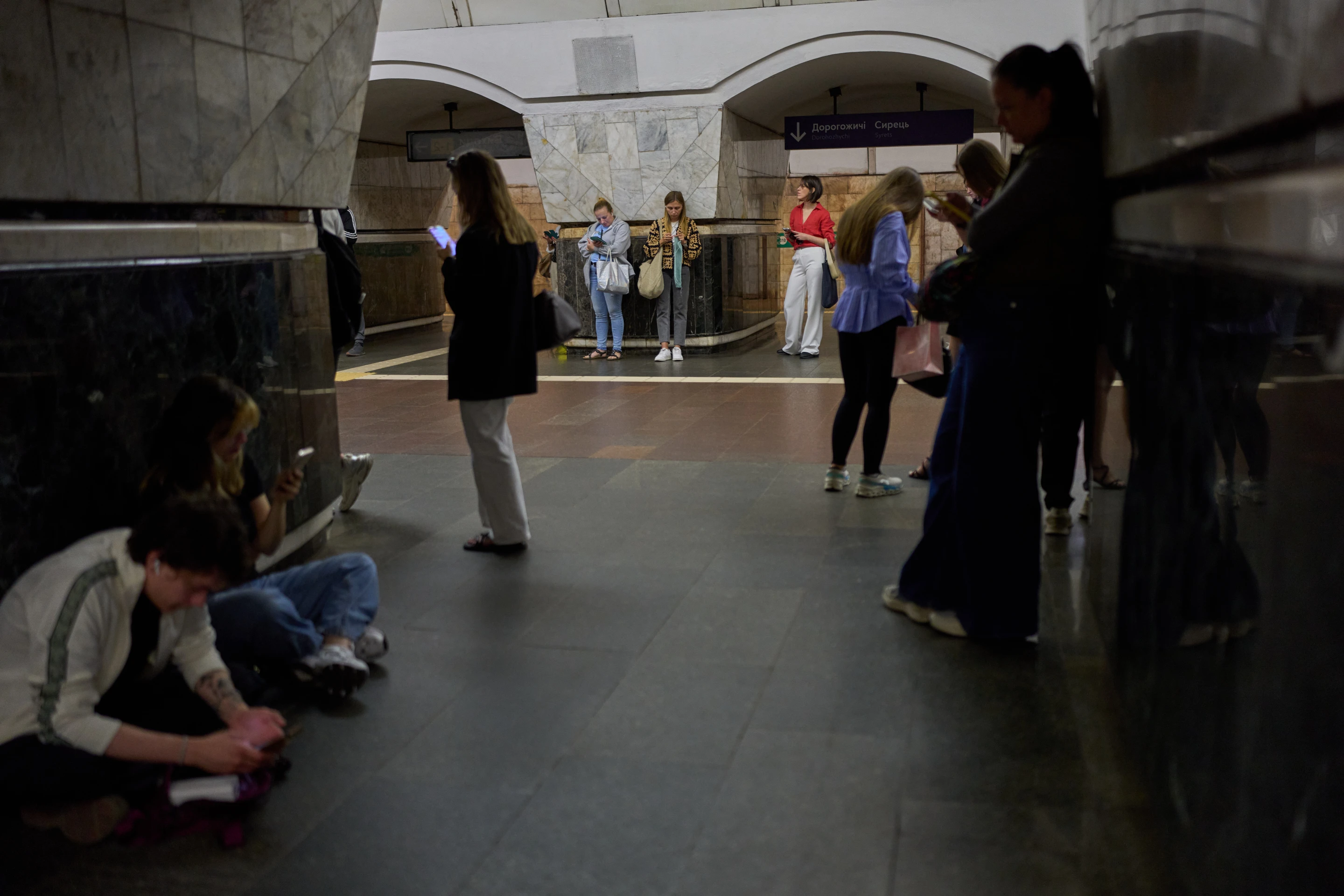
The problem for the Kremlin is that everyday digital convenience has long become part of ordinary life for millions of Russians. When mobile internet in Moscow disappears for weeks and access to popular services becomes unreliable, people do not experience it as an abstract policy issue. They see it as a direct deterioration in their quality of life.
That is why digital restrictions are beginning to turn into a political factor. According to the state pollster VTsIOM, trust in Vladimir Putin has fallen by more than eight percentage points since January, reaching 67.8%. In early March, the figure dropped to its lowest level since the start of the full-scale war.
This is especially sensitive for the Kremlin because parliamentary elections are scheduled for September. The authorities are trying to preserve an image of stability and mass support for Putin’s course, but the daily inconveniences linked to war and digital restrictions are increasingly eroding that official narrative.
It is telling that the strongest frustration is concentrated among residents of major cities and among wealthier, more socially active groups. These are the people most dependent on digital services, most likely to use messengers, VPNs, and online infrastructure, and therefore the fastest to react to new limits.
At the same time, the television-oriented core of Putin’s loyal electorate, according to sociologists, still feels this pressure less directly. That means internet restrictions do not immediately undermine the regime, but they do generate additional anger in precisely the part of society where distrust of the state and the war is already more pronounced.
It is also important that there is no complete consensus inside the Russian system itself about how far the blocking campaign should go. Bloomberg reports that some senior officials are warning about the political and economic risks of excessive internet control. That suggests that even within the ruling hierarchy, there is an understanding of the price such pressure could carry for the regime.
Formally, the Kremlin explains everything in terms of security. Dmitry Peskov insists that the restrictions are necessary and that most Russians supposedly support them. But the very fact that officials are now discussing a slower pace of new restrictions suggests the opposite: the authorities are being forced to balance repression against the fear of losing control over public sentiment.
Another key dimension of the story is the campaign against VPNs. For the state, they are a tool that allows citizens to bypass censorship and access blocked content. For users, they are simply a way to preserve access to familiar services and maintain basic digital freedom. The more aggressively the authorities move against VPNs, the clearer the conflict becomes between the regime and everyday digital life.
Against this backdrop, Pavel Durov’s reaction is especially symbolic. The founder of Telegram, who has openly criticized Russia’s tightening digital controls, is now publicly encouraging what he calls “digital resistance” inside the country. That gives the conflict not only a technological dimension, but also a symbolic one — a struggle over the very principle of free communication.
In the end, the Kremlin has found itself in an uncomfortable position. It wants to tighten control over the internet even further, but at the same time fears that overly harsh measures will damage Putin’s rating, economic activity, and public mood ahead of the elections. For that reason, the slowdown in internet blocking looks not like liberalization, but like a tactical pause driven by political fear.