



















Donald Trump left Beijing speaking like a winner, but without a package of wins. The two-day summit with Xi Jinping produced images, toasts, a banquet, talk of friendship and promises of future understandings. It did not produce what mattered most: clear public agreements capable of changing the balance in U.S.-China relations.
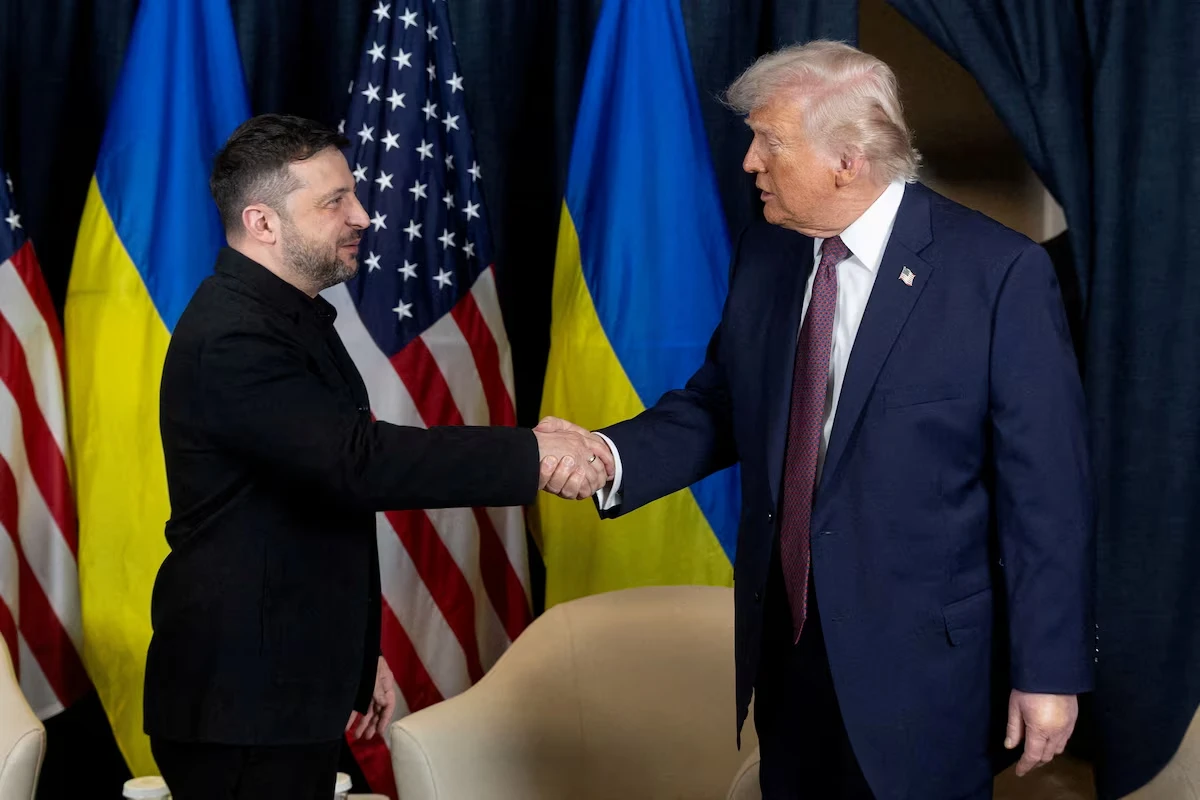
On the surface, everything looked like a diplomatic thaw. Trump called Xi a friend, emphasised their personal bond and presented the meeting as proof that he could deal directly with the world’s most difficult leaders. Beijing answered in a much more restrained language: not friendship, but an exchange of views and stabilisation of relations.
That difference in tone became the real result of the meeting. The American president built the summit around personal connection, while the Chinese leader used it to advance a longer state strategy. In Beijing, the encounter was not only between two countries, but between two styles of power: improvisational and systematic.
Daycom’s earlier analysis suggests that the Beijing summit exposed a weak point in Trump’s foreign policy: he often treats atmosphere as a tool that can replace structure. But in negotiations with China, personal warmth is not a currency unless it is backed by prepared agreements, leverage and control over detail.
Trump spoke about possible Chinese purchases of Boeing aircraft and American soybeans, Iran, the Strait of Hormuz, chemicals used to make fentanyl, artificial intelligence and strategic stability. Yet most of these issues remained in the realm of intention rather than signed decisions.
For the White House, that difference is dangerous. In domestic politics, Trump can sell a personal meeting as an achievement. In relations with Beijing, that is not enough. Chinese diplomacy does not rush to lock in concessions when it can preserve room for bargaining, test Washington’s endurance and turn every ambiguity into future leverage.
Taiwan became the sharpest point of this asymmetry. Xi clearly marked the risk of conflict over the island, while Trump did not publicly emphasise the defence of Taiwan’s democracy while in Beijing. After leaving, he kept open the questions of U.S. arms supplies and Washington’s future line. For Taipei, such uncertainty sounds less like strategic flexibility than a troubling space for bargaining.
The Iran track also produced no clear shift. Washington wanted Beijing to exert more pressure on Tehran, help reduce tensions around the Strait of Hormuz and stabilise energy markets. China, however, showed no readiness to act as America’s junior partner in a Middle Eastern crisis.
That is the central lesson of the meeting. Trump arrived in Beijing believing that personal chemistry could unlock difficult issues. Xi received him understanding that this belief could be used. China gave the U.S. president spectacle, respect, symbolic equality and ample room for compliments, but did not hurry to pay for it with strategic concessions.
In that sense, the summit was more convenient for Xi than for Trump. The Chinese leader gained images of great-power stability, showed that Washington was once again seeking dialogue and gave up nothing essential. For a country facing economic pressure and needing to reduce external tension, that was already a result.
Trump received something different: a stage on which to perform as a master dealmaker. But that stage became a trap, because after the performance came the inevitable question of substance. When words about friendship are not followed by agreements, personal diplomacy begins to look less like strength than a substitute for prepared policy.
This logic has already shown Trump its limits. During his first term, he bet on personal contact with Kim Jong-un, but North Korea did not give up its nuclear weapons. In his second, repeated contacts with Vladimir Putin did not stop Russia’s war against Ukraine. Beijing has now added another example: charisma does not cancel the interests of a state.
For China, the relationship with Russia remains a separate element of the larger game. While Trump speaks of friendship with Xi, Beijing maintains its partnership with Moscow, which Washington sees as one of the key challenges to American security. That limits any illusion that personal warmth between the leaders of the United States and China can quickly alter the geopolitical configuration.
The summit was not empty. It may have lowered the temperature after months of tension, opened channels for future talks and reduced the risk of uncontrolled escalation between the two superpowers. In U.S.-China relations, even a pause can have value — provided it does not turn into self-deception.
But a pause is not a breakthrough. Stability between Washington and Beijing requires not only meetings, but rules: on trade, technology, military contacts, Taiwan, cybersecurity, artificial intelligence and crisis communication. Without them, every future summit risks becoming another theatre of expectation, where both sides talk about peace while preparing for competition.
For U.S. allies, the result matters especially. Japan, South Korea, Taiwan, Europe and partners across the Pacific are looking not at compliments, but at the predictability of the American line. When the president’s mood becomes the main instrument, allies begin to insure themselves on their own.
Trump may meet Xi several more times this year, and those contacts could still produce concrete results. But Beijing has already shown that it enters this dialogue with patience, discipline and a clear reading of American vulnerabilities. It is not rejecting deals; it wants them to mature on its terms.
The Beijing summit therefore became not the end of a trade or strategic dispute, but a diagnosis. The United States has a president who believes in the power of personal influence. China has a leader who believes in time, the state apparatus and red lines. In Beijing, the second model looked more composed.
Trump called Xi a friend, but friendship in great-power politics is not measured by toasts. It is measured by concessions, guarantees, signatures and implementation. Until those appear, the Beijing summit remains a polished diplomatic stage without its decisive act — the moment when symbols become decisions.