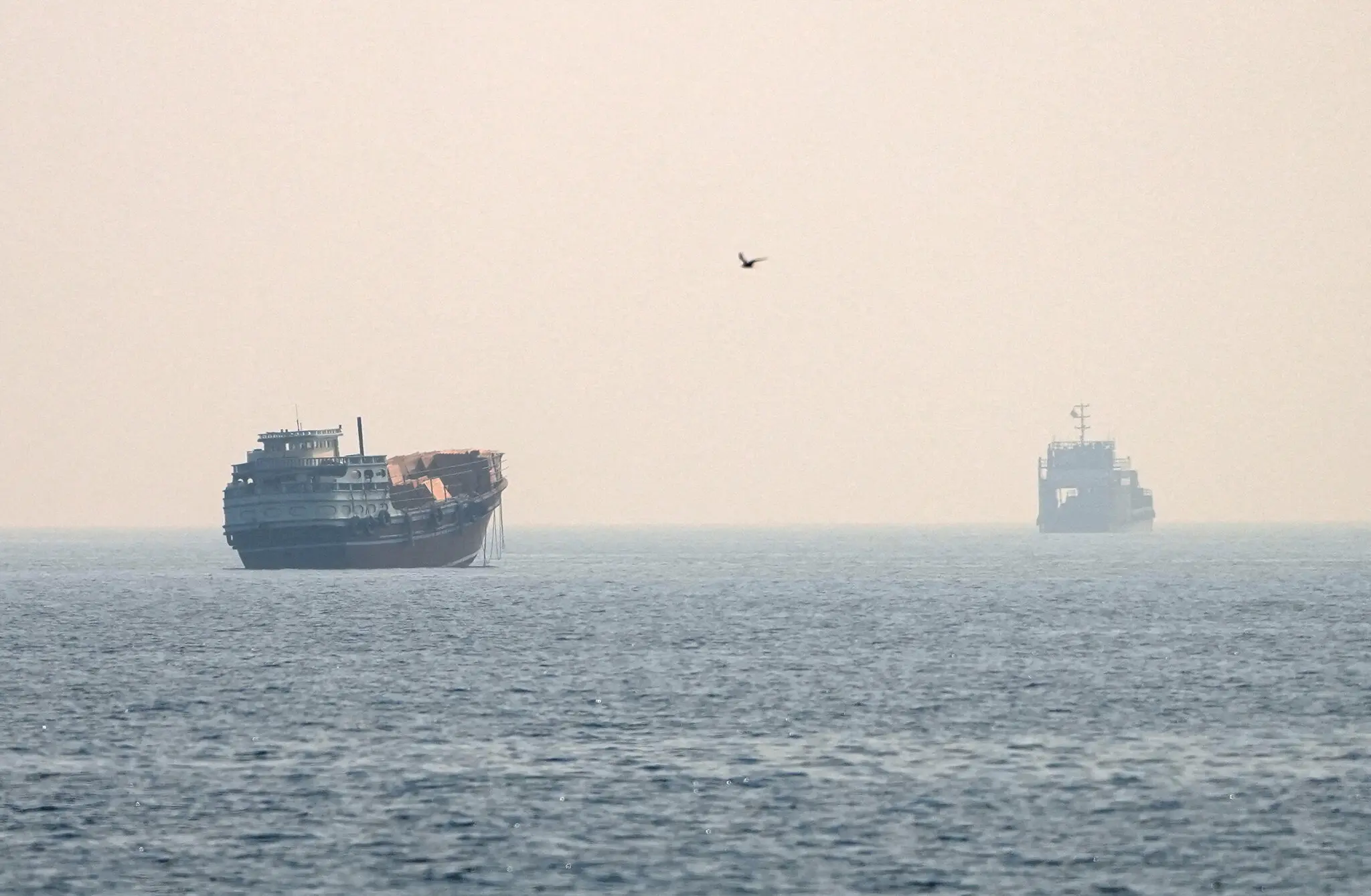






















The passage of two sanctioned tankers, Universal and Enigma, through the English Channel under the cover of the Russian frigate Admiral Grigorovich would be a minor shipping story if stripped of its political meaning. In reality, it was something else entirely: a deliberate signal that Moscow is willing to shield commercial traffic with naval force.
That is why the Kremlin’s language about a right to defend itself from “piracy” matters. It was not an improvised outburst. It was a pre-assembled justification, designed to recast pressure on Russian exports as unlawful interference and to prepare the ground for more overt military-backed protection of sanctioned trade routes.
The significance of the episode lies not only in the vessels involved, but in its timing. Britain has recently made clear that it is prepared to stop sanctioned ships in its own waters when they are tied to the shadow fleet sustaining Russian oil exports. That marked a shift from symbolic pressure to the prospect of physical enforcement. According to Daycom’s earlier analysis, the shadow fleet is no longer merely a sanctions-evasion mechanism; it has become part of a broader security contest in Northern Europe.
That is the shift Moscow is answering. The escort is not meant to trigger a clash. Its purpose is to raise the cost of British action. It is one thing to intercept a tanker hidden behind obscure registration, layered ownership and a convenient flag. It is something else to do so when a Russian warship is close enough to turn a legal move into a geopolitical confrontation.
In that sense, the Channel is not symbolic. It is logistical. It is the shortest and most efficient corridor between Baltic export terminals and southern destinations. Any tightening of control there immediately drives up costs: longer routes, higher fuel burn, disrupted schedules, jittery insurers, more expensive freight. For Russian oil logistics, that is not inconvenience. It is structural pressure.
This is why Universal and Enigma matter less as individual ships than as components of a larger system. The shadow fleet runs on rotating flags, opaque operators, shell ownership, legal ambiguity and selective access to ports willing to absorb risk. As long as that architecture holds, Russian crude and diesel can keep moving even under a dense sanctions regime and growing political scrutiny.
Britain’s problem is that sharp rhetoric does not automatically become operational action. Stopping a vessel in home waters is never purely a legal question. It is also a question of escalation, alliance management and maritime precedent. Every interception would have to be weighed against the rules of passage, the reaction of partners and the possibility that Moscow is actively looking for a test case.
And yet London is no longer merely watching. Over recent months, the Western approach to the shadow fleet has begun to change in character. Sanctions designations are no longer the end of the process. They are increasingly the opening move in a wider cycle that includes surveillance, intelligence-sharing, operational coordination and legal preparation for interdiction. The anonymous seaborne economy Russia relied on is becoming harder to hide inside.
From that perspective, the Kremlin’s insistence on protecting its interests sounds less like confidence than pressure revealing itself. When a state must move from quiet commercial workaround to visible naval escort, it is acknowledging that the workaround no longer feels secure. Moscow is trying to shift the contest from sanctions enforcement to strategic deterrence, where even limited military presence can complicate Western resolve.
The central question now is not whether another escorted passage will follow. It is whether Britain will eventually move to stop one. If London hesitates, the Kremlin will draw a clear conclusion: that even modest escalation can shield oil flows from meaningful disruption. If Britain acts, the Channel will cease to be merely a trade artery and become something more consequential — a place where sanctions harden into maritime coercion.
That is where a new boundary in Europe’s confrontation with Russia is beginning to form. Not in speeches, and not in communiqués, but in narrow waters crowded with tankers, patrol aircraft, naval escorts and allied command decisions. The outcome will shape more than a handful of voyages. It will help determine whether the West can truly constrict the revenue streams that continue to underwrite Russia’s war.