






















The latest wave of Israeli strikes on Lebanon matters for more than the death toll alone. Its deeper significance lies elsewhere: it is changing the very idea of where the front ends and the rear begins. Once attacks reach not only the south, but also the outskirts of Beirut and towns whose residents long believed themselves outside the main zone of danger, the war ceases to be geographically contained.
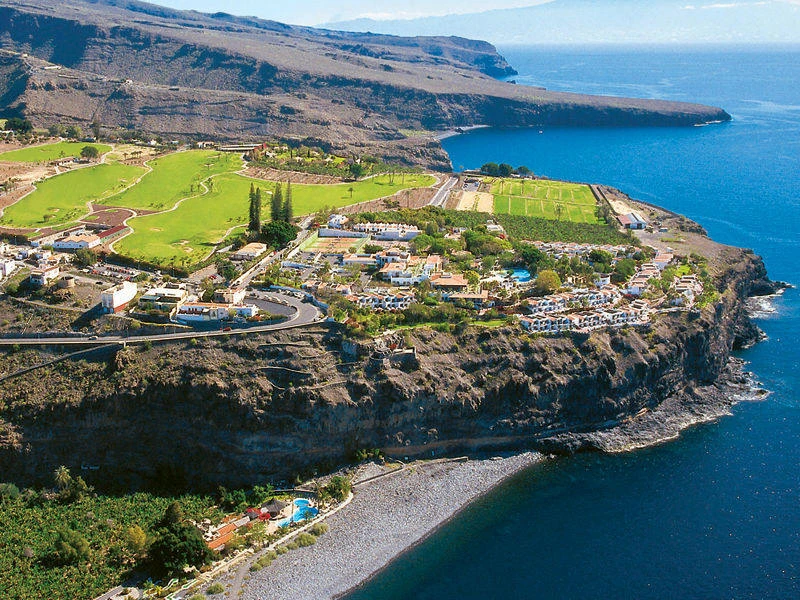
That is especially clear in the strikes on Jnah, Kfar Hatta and Ain Saadeh. In each case, what matters is not only the attack itself, but the type of space that came under fire: residential districts, commercial areas, communities that did not previously see themselves as part of an active combat belt. This is no longer just military escalation. It is a deeper transformation of the conflict.
When war loses its spatial predictability, it begins to destroy more than buildings. It starts to unravel a country’s social psychology. Lebanon has long lived with a fragile habit of danger, but that habit depended on an informal distribution of risk: some places were exposed, while others still offered a measure of respite. That principle is now rapidly weakening.
As Daycom noted in earlier analysis of Middle Eastern escalation, the most dangerous phase of a conflict begins when the map of safety erodes faster than diplomacy can produce new rules of restraint. That is precisely what is now happening in Lebanon: military logic is moving faster than political logic.
The strike on Ain Saadeh carries particular weight in that regard. It was not simply another episode with civilian casualties. It signaled that even communities that long considered themselves removed from the main line of confrontation can no longer rely on the old geography of risk. A Christian mountain town, once viewed as a relative refuge from Beirut’s heat, pollution and strain, suddenly found itself inside the strike zone.
That is one of the conflict’s central political effects. When war reaches places not commonly associated with Hezbollah’s core infrastructure, it produces not only fear, but a dangerous civic question: does any logic of target selectivity still exist at all? And the more often that question is asked, the faster the conflict begins to erode Lebanon’s internal fabric — across communities, parties, neighborhoods and local ideas of justice.
Israel, for its part, has consistently justified its strikes by arguing that Hezbollah embeds itself within civilian surroundings. That is a defining claim of modern warfare in densely populated terrain: the adversary dissolves into residential space, and the line between military and civilian infrastructure grows thinner by the day. But that is also where the central moral and strategic risk emerges. The thinner that line becomes, the easier it is for war to justify almost any strike.
For Lebanon, this means a sharp increase not only in physical vulnerability, but in political vulnerability as well. A country already drained by economic collapse, weak institutions and fragmented authority now faces a situation in which the state can no longer credibly guarantee basic safety even in areas that were not considered central to the fighting. This is no longer only another chapter in a war with Israel. It is an assault on what remains of trust in the Lebanese state itself.
The context in southern Lebanon is no less revealing. Signals that large parts of that territory may remain under military pressure even after the current ground operation ends suggest that the aim is no longer merely the tactical displacement of Hezbollah. It points instead to an effort to redraw the borderland’s security geography more deeply and for longer. And any such prolonged redesign almost inevitably brings new displacement, radicalization and deferred vengeance.
That is why the current escalation should not be read merely as an exchange of strikes between Israel and an Iran-backed armed group. What is unfolding is something broader: the conversion of Lebanon into a space where uncertainty becomes a daily condition of life. Once a resident no longer understands why his neighborhood has become a target, war begins to function as an instrument of general disorientation.
That disorienting effect is strategically important. It weakens not only the enemy’s concrete structures, but the very feeling of civilian normalcy. People stop trusting roads, districts, neighbors, local authorities and even the old unwritten rules of survival. In the short term, that may create military advantage. In the long term, it produces a society in which trauma becomes the dominant form of political experience.
This is also dangerous for Israel itself. The wider the strike zone becomes, and the more often it reaches areas with a complex civilian profile, the harder it will be to persuade the outside world that the campaign remains narrowly limited and purely security-driven. A strategy that begins as deterrence can very quickly come to look like the systematic expansion of war without a clear boundary of completion.
In that sense, Lebanon today is not the periphery of a larger regional conflict, but one of its nervous centers. It is here that one can see how modern war dismantles older assumptions about the localization of violence. A country does not have to be fully occupied for its life to be fundamentally altered. It is enough to make sure that no part of it feels genuinely safe anymore.
The central conclusion from this new wave of attacks is stark. Israel is increasing not only the intensity of its military campaign, but also the level of uncertainty in which Lebanon must now live. That means the war is entering a phase in which not only infrastructure is being destroyed, but the very idea of civilian space as something relatively protected. If that process continues, the result will not simply be another round of fighting, but a deeper and longer restructuring of Lebanese life around fear, loss and permanent instability.