


















In the fourth year of full-scale war, Ukraine is arriving ever more clearly at a conclusion that once sounded like harsh necessity rather than strategy: its strongest security guarantee is its own army. That is why the rise of new corps forged in combat now matters as more than an internal reform story. It shows what kind of military Ukraine wants after the war — and what kind it is being forced to build under fire.
The clearest example of that shift is Khartiia. What began in 2022 as a volunteer formation has since grown into the core of a major National Guard corps. The significance lies not only in the speed of that expansion, but in the fact that the unit is trying to offer the wider military a different way of organizing force — not as a heavy, inert machine, but as a system capable of learning as fast as the war itself changes.
The story extends far beyond a single brigade or one sector of the front. Ukraine as a whole has been moving back toward a corps-based structure. But the real question is no longer institutional form alone. The real question is what will fill that structure: the habits of an older command culture, or a new principle of military organization built around adaptability.
As Daycom’s earlier analysis noted, the real depth of this transformation lies not in changing the labels on headquarters or enlarging formations on paper. It lies in the attempt to break the logic of the post-Soviet army itself. For Ukraine, the issue is no longer only about manpower, ammunition or kilometers of front line. It is about whether the military can make decisions quickly, report bad news honestly, learn from mistakes and treat the preservation of soldiers not as rhetoric, but as the center of combat effectiveness.
This is where the new corps collide most directly with Soviet inheritance. The war after 2014 had already exposed chronic weaknesses: underinvestment, corruption and strategic drift. But the long campaign after 2022 brought other structural problems back to the surface — rigid hierarchy, excessive bureaucracy, fear of reporting failure and a habit of substituting the appearance of order for actual effectiveness.
Khartiia tried from the beginning to go in another direction. Its founders did not want simply to reproduce the old military culture in a more patriotic form. They built instead on a combination of battlefield experience, civilian management thinking and Western planning methods. That is not a cosmetic difference. In modern war, such a shift means a unit does not wait for solutions to descend through layers of inertia. It gains the ability to react faster, adapt faster and correct itself faster.
In practice, this takes shape through things that may look technical from the outside, but actually redefine the internal fabric of an army. Approaches that allow junior commanders to plan faster, and that make honest post-action review a routine part of operations, only work in a system that does not punish truth for ruining the picture. That kind of culture depends on trust. And on today’s battlefield, trust is no longer a moral luxury. It is an element of survival.
Technology forms the second pillar of this new model. These corps are not relying only on size. They are building around a combat environment in which drones, ground robotic systems, digital reconnaissance and autonomous logistics are becoming part of daily warfare. For Ukraine, that matters enormously, because this war no longer resembles a conventional campaign with clear separations between infantry, artillery and armor. The modern front demands something different: technology must not remain an accessory to combat. It must become part of the combat system itself.
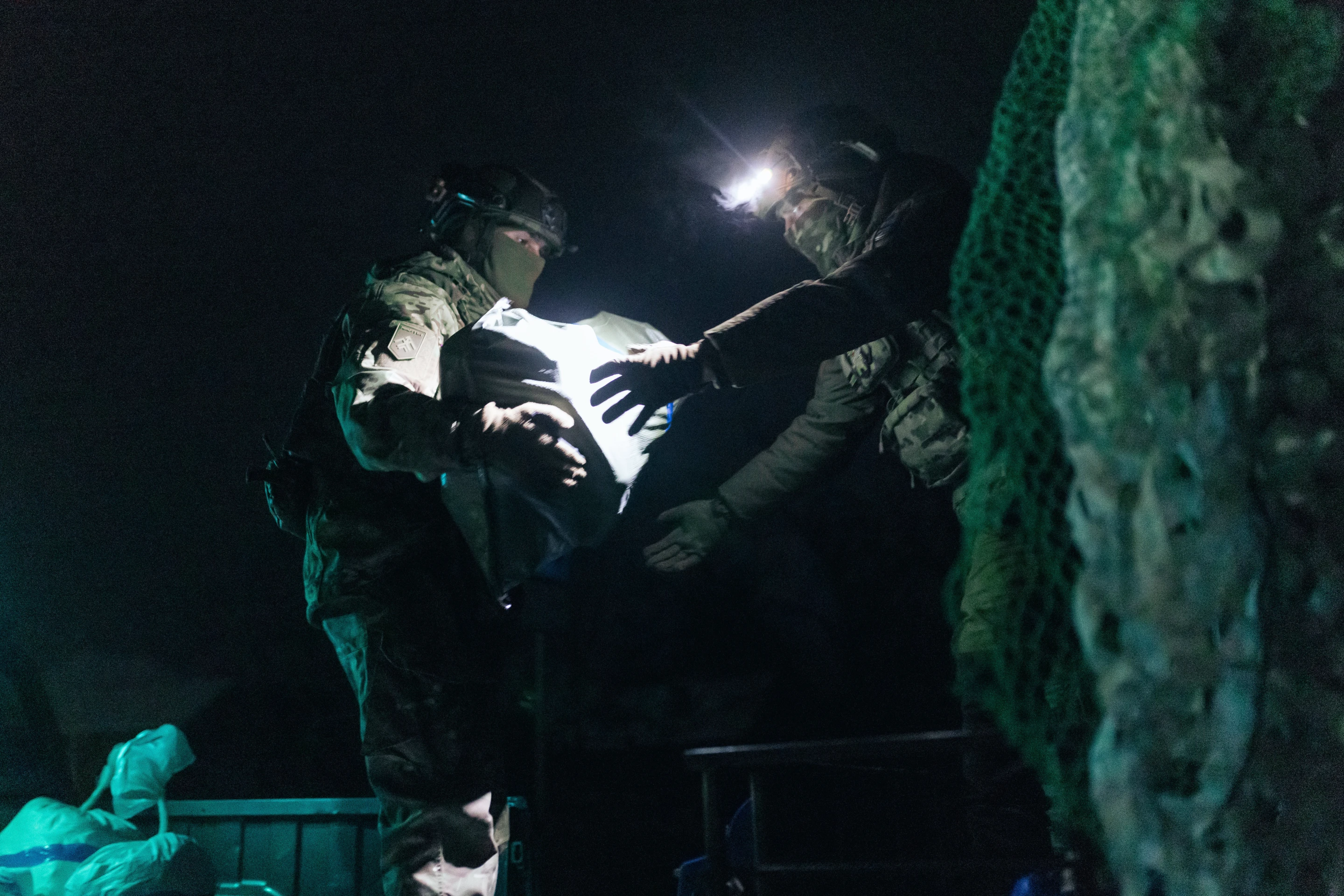

In that sense, Khartiia is more than one successful unit. It is a laboratory for a new army. War here is not treated as a matter of enduring with old methods for as long as possible. It is treated as a process of constant revision. The soldier is not expected to remain a replaceable cog. He is expected to function inside a structure where feedback matters, where reaction time matters, and where yesterday’s tactics are understood to be obsolete tomorrow.
None of that would matter if it did not produce results. And that is where the new approach finds its strongest justification. Ukrainian counterattacks in recent months have shown that even under severe pressure, the army remains capable not only of holding ground, but of making tactically meaningful gains where Russian forces are stretched, overloaded and constrained by the inertia of their own system. Episodes like that matter not only as front-line news. They suggest that a new command culture can be converted into real battlefield effect.
Another decisive change lies in how people are organized. The new corps are increasingly building professional recruitment systems, distinctive public identities, direct communication with society and clearer internal cultures. In an older military, such things might have looked secondary to fighting. In a long war, they are part of fighting. A state at war is not competing only for territory. It is competing for people, trust, volunteer energy, attention and the ability to attract those who can strengthen it.
That is why the most successful corps are becoming not only battlefield formations, but organizational centers of gravity. Other units study them. Their methods of basic training, junior leadership development, technological integration and internal culture begin to spread beyond their own sector. And that may be their greatest strategic significance: not only to hold a line, but to change the army from within.
Yet this is also where the central limit appears. New formations may be more effective, more flexible and more modern, but the larger question remains unresolved: is the system as a whole ready to accept their experience as a new norm rather than as a useful exception. Armies shaped by Soviet traditions do not transform easily. They may recognize success while still resisting the style of command that made it possible.
That means the struggle today is not taking place only along the contact line. It is taking place inside the military organism itself. Between a culture of orders for the sake of orders and a culture of purpose. Between fear of error and the discipline of honest review. Between ornamental order and real adaptability. Between a vertical that suppresses initiative and a structure in which initiative becomes part of collective strength.
For Ukraine, this is not only a question of present military performance. It is a question of postwar statehood. The country will not be able to afford an army of the old type — too slow, too inert, too deaf to the demands of modern war. If these new corps succeed in imposing a different culture on the broader military, the result will mean more than organizational reform. It will mean that Ukraine is building its own military school — not a copy of the Soviet past and not a mechanical imitation of Western doctrine, but a system born inside the hardest war of its modern history.
That is the deepest meaning of what is happening now. These corps matter not simply because they look more modern or use technology more effectively. They matter because they offer Ukraine a chance to answer the central question of this war: can a country do more than endure — can it change enough under fire to make the very structure of its power different. So far, formations like Khartiia are answering that question more convincingly than the old system has yet been able to formalize it.