






















Tetiana Bubynets ran when people sheltering near a petrol station in Zaporizhzhia saw a small aircraft approaching. According to a reconstruction, the 19-year-old student had been standing beside a nearby apartment building. The drone failed to clear an obstacle, struck and exploded.
Bubynets, who was studying accounting at Zaporizhzhia National University, died at a hospital. Two other civilians — Oleksiy Svirin, 41, and Roman Karpiy, 48 — later died from their wounds. For a city accustomed to Russian bombardment, it was another deadly attack, but one with a new and unsettling feature.
Ukrainian military officers, drone specialists and investigators who examined the wreckage concluded that a remote pilot had not selected the final point of impact. Human operators defined the mission and sent the aircraft toward the area, but an onboard machine-vision system handled the last stage of identifying the object to strike.
The likely target, according to the specialists who examined the system, was a propane tank at the petrol station. The algorithm had been trained to recognize objects of that type. A camera fed images into an onboard computer, which compared the scene with learned categories and adjusted the drone’s trajectory without new instructions from a pilot.
Daycom’s analysis of the available evidence suggests that the significance lies not in AI appearing on a battlefield for the first time. Artificial intelligence has already been used extensively in Ukraine. The threshold crossed here is more specific: an algorithm appears to have been given the authority to select the final object of attack.
Even that description requires care. The drone was not independent of human decisions in the broad sense. People chose the mission, programmed the system, selected the area and launched the weapon. Autonomy began afterward, when the aircraft could navigate and search for a matching object without continuous control from an operator.
That is what separates such a system from most FPV drones that have become one of the defining weapons of the Russia-Ukraine war. A conventional operator watches a live video feed, flies by radio or fibre-optic cable and remains directly involved until the last seconds before impact.
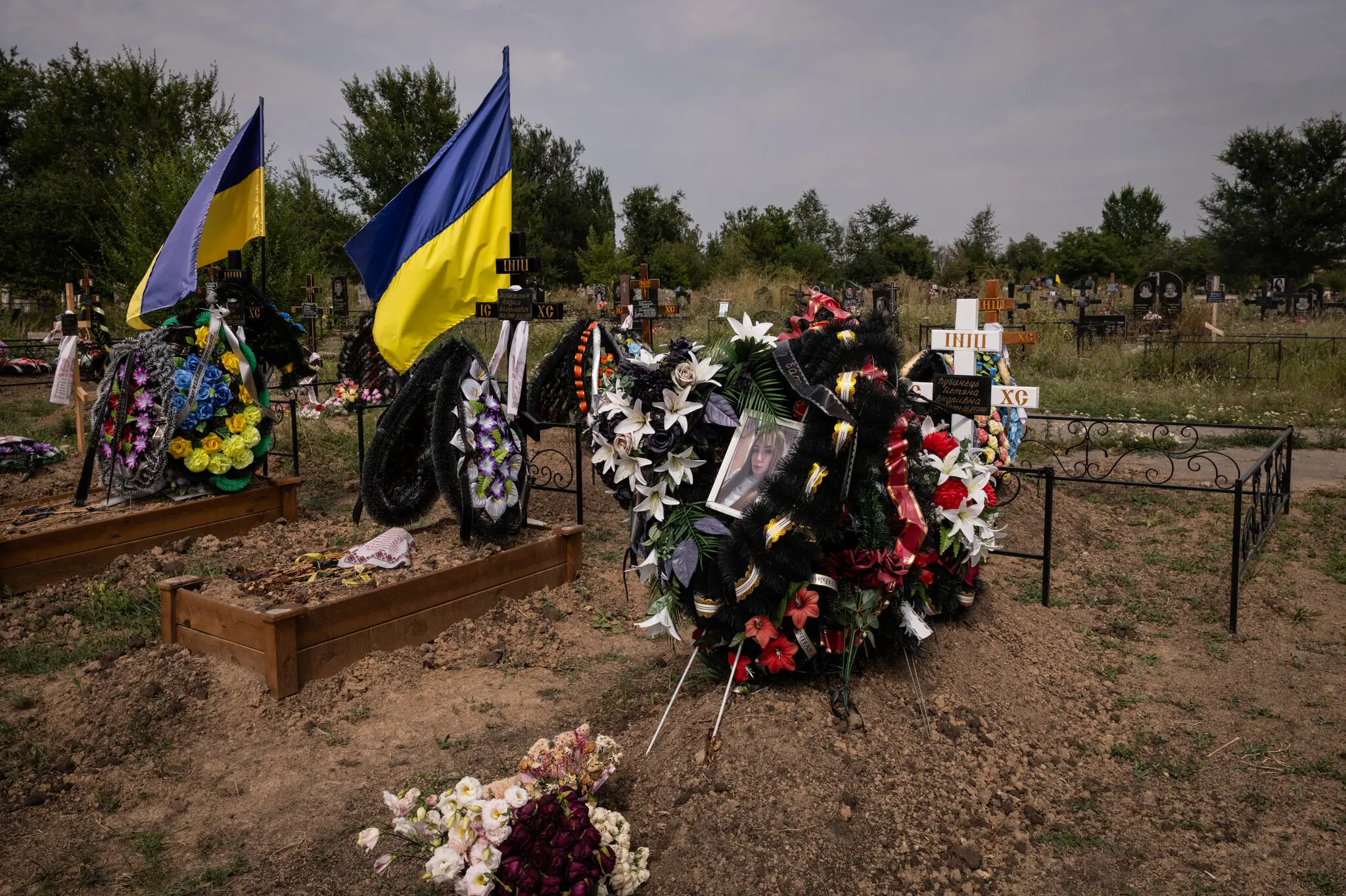 Могила Тетяни Бубинець, яка загинула минулого місяця внаслідок удару безпілотника по заправці в Запоріжжі, Україна — Ніколь Танг
Artificial intelligence had already begun reducing that dependence through what militaries often call “last-mile autonomy.” A human selects and locks a target, then software keeps it in frame and guides the drone toward it if radio contact is lost or electronic warfare disrupts communications.
The Zaporizhzhia case appears to move the boundary farther. The system was not merely tracking an object already designated by a human. It was reportedly able to search within an assigned area for objects belonging to a trained category and determine which one best matched the target profile embedded in its software.
The aircraft belonged to Russia’s Molniya family, inexpensive fixed-wing drones designed for relatively simple mass production. That point may be more important than the sophistication of any single mission: autonomous targeting is moving out of expensive experimental platforms and into weapons that can potentially be produced in very large numbers.
Russian developers had already begun testing AI-guided Molniya variants in May, according to Ukrainian air-defense specialists. Earlier experiments involved the V2U fixed-wing drone, some versions of which used computer vision for navigation and targeting. Several of those tests were limited to last-mile autonomy rather than full target selection.
The progression matters because autonomous weapons did not suddenly appear as fully formed “killer robots.” First, algorithms stabilized flight. Then they helped identify objects. Next, they continued an attack after communication was lost. The next step was allowing software to decide which object in a wider area matched a target category.
One of the most revealing components recovered from the Russian drones was an Nvidia Jetson Orin module. The Daycom sent photographs of the hardware to Nvidia, which confirmed that the images showed one of its compact Jetson Orin computers, a commercially available platform capable of running AI models locally.
The module was not designed as a weapon. Nvidia markets the Orin family for robotics, machine vision, autonomous machines and other applications that require AI processing at the edge. The crucial capability is that video can be analyzed on the device itself rather than constantly streamed to a remote server or human operator.
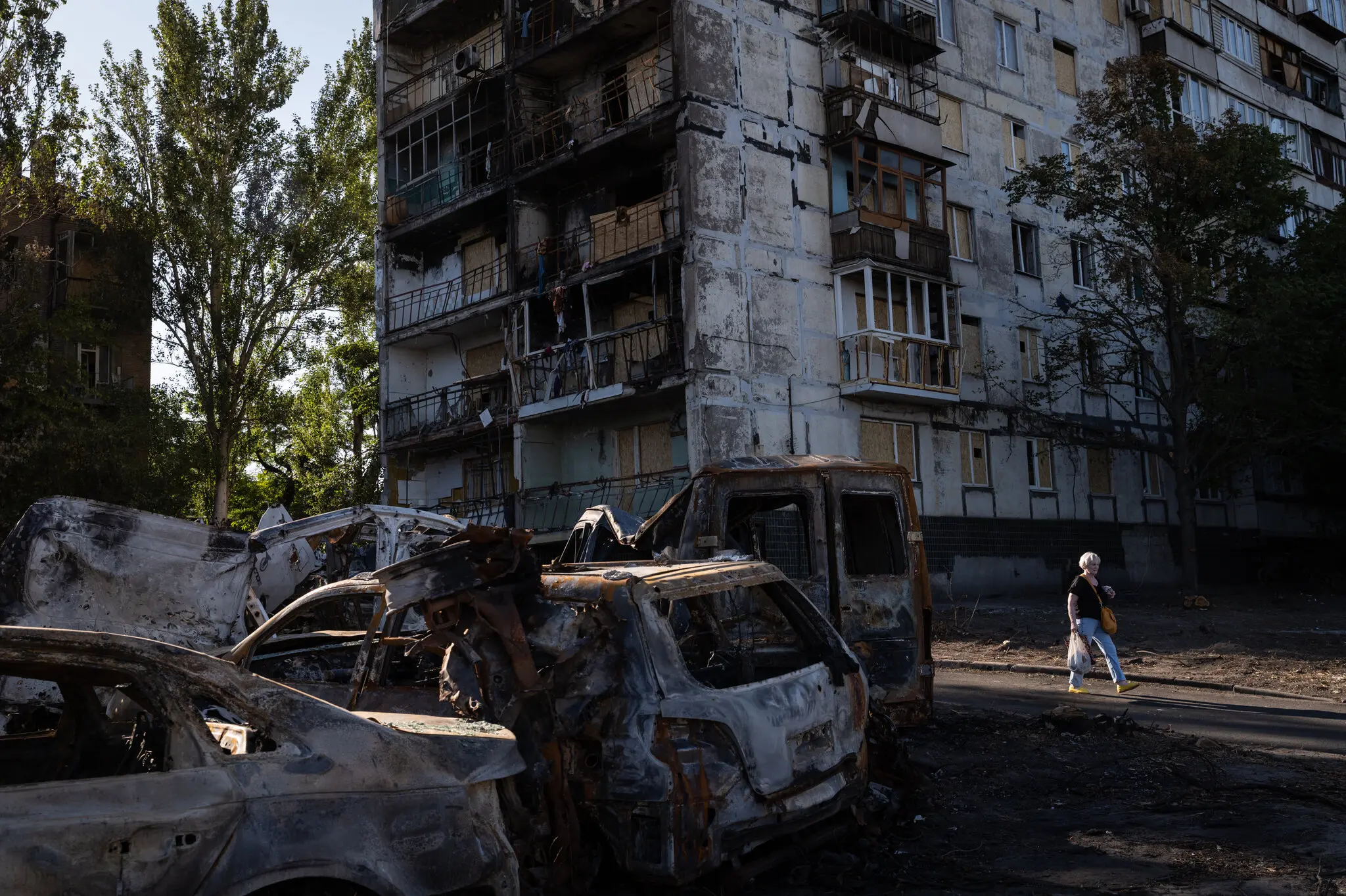 Наслідки авіаудару в Запоріжжі минулого місяця. Хоча авіаудари спричинили тисячі смертей українців, використання Росією автономних дронів зі штучним інтелектом, подібних до того, що вбив пані Бубинець, є новою подією — Ніколь Танг
For a military drone, that changes the problem of electronic warfare. If an onboard computer can recognize a road, vehicle, building or tank without transmitting video, the aircraft does not need a continuous command link. A defender then has far less radio traffic to detect, jam or use to locate the launch team.
The lack of conventional antennas was one reason Ukrainian specialists became suspicious. During the July 6 attack, a group of roughly half a dozen similar drones was reportedly flying without the radio emissions normally associated with piloted systems. But the absence of an antenna alone would not prove autonomous target selection.
Aircraft have followed preprogrammed routes without radio links for decades. More persuasive evidence came from the combination of a powerful onboard computer, camera systems, the absence of external control and data that Ukrainian investigators said they could recover because the module had not been encrypted.
Officials said the computer contained terrain images used for visual navigation. They also reported finding code and training material indicating the categories of objects the system was designed to identify. Among them were tank-like shapes resembling propane containers found at petrol stations.
This is the fundamental difference between coordinate-guided weapons and machine vision. A missile given a geographic point tries to reach that point. A recognition system receives a different instruction: find something in the real environment that resembles the examples on which the model was trained, then direct the weapon toward it.
For a human, the category “propane tank” comes with context. A person can understand that the tank is on a civilian petrol station, that civilians are standing nearby and that conditions may have changed since launch. A neural network may reduce the same scene to shapes, contours, colour patterns and statistical similarity.
That is both the power and the danger of machine vision. An algorithm can examine images continuously and react faster than a tired operator. But it does not understand what it sees in the human sense. It calculates the probability that a visual pattern belongs to a category created during training.
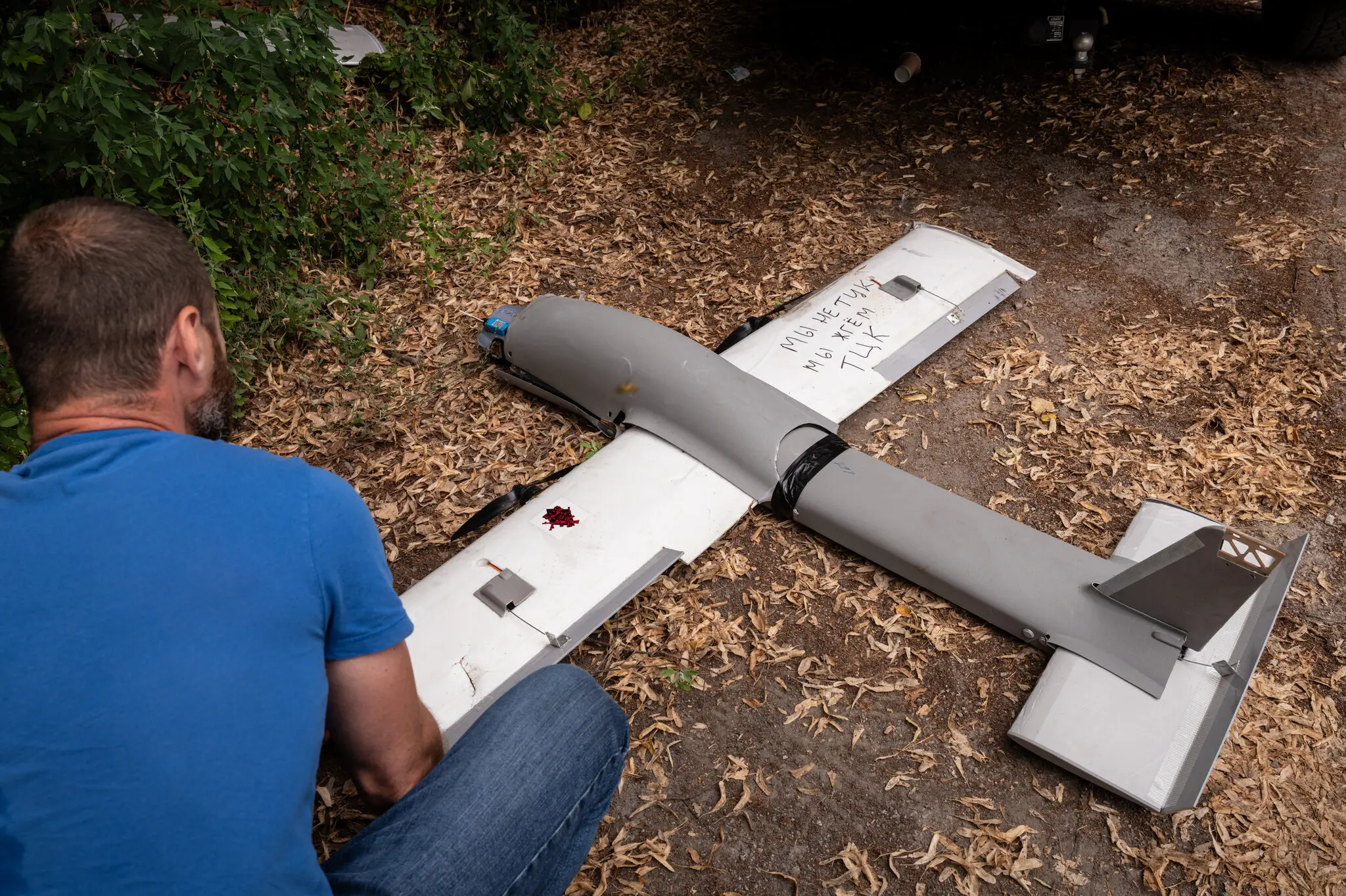 Український слідчий з повернутим російським безпілотником "Молнія" — Ніколь Танг
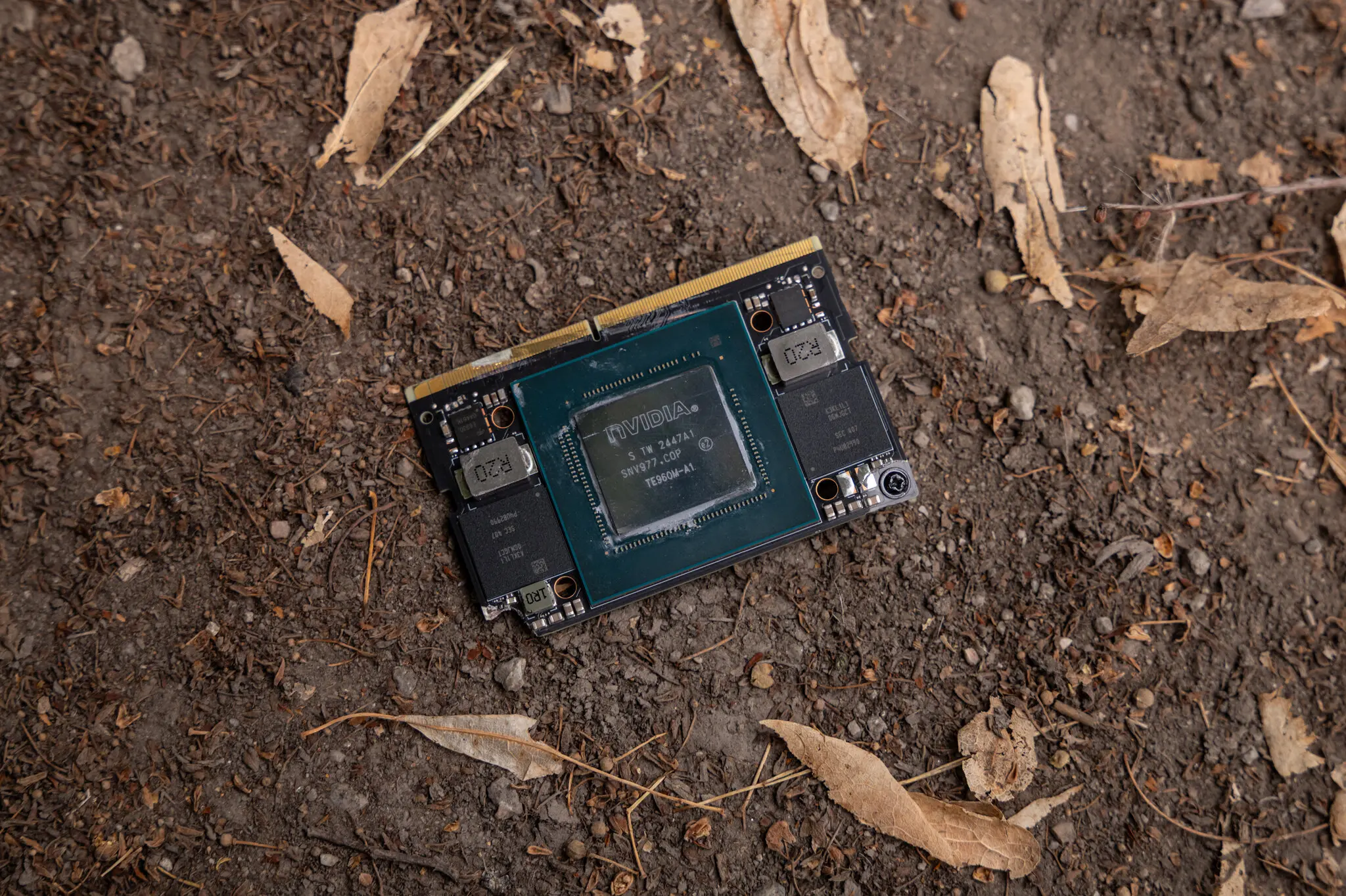 Мінікомп'ютер Nvidia Jetson Orin, який, за словами українських чиновників, був знайдений в автономному безпілотнику, який Росія нещодавно випробувала в Запоріжжі, Україна — Ніколь Танг
The legal problem therefore goes beyond ordinary accuracy. A system may be highly accurate at finding a particular shape yet still fail in the way that matters under the laws of war — by misunderstanding civilian context, failing to detect people nearby or behaving unpredictably when the environment differs from its training data.
The International Committee of the Red Cross has repeatedly stressed that international humanitarian law remains binding regardless of a weapon’s autonomy. Machines do not themselves “apply the law.” Human commanders and operators remain responsible for distinction, proportionality and feasible precautions before an attack.
The ICRC has called for legally binding rules on autonomous weapons, including prohibitions on unpredictable systems and on systems designed to apply force directly against people without meaningful human control. Other autonomous weapons, it argues, should face strict limits on targets, location, duration and scale of use.
International regulation, however, is moving much more slowly than battlefield engineering. Governments have debated lethal autonomous weapon systems for years, but there is still no universally accepted definition and no global treaty specifically governing the transfer of final target selection to machines.
Supporters of AI-enabled weapons make a serious counterargument. A system with cameras and recognition software might sometimes reduce civilian harm because it can decline to strike if the designated object is not present. An unguided bomb or artillery shell, once fired, cannot inspect the scene or reconsider what lies beneath it.
But that safety argument depends on conditions that are difficult to guarantee in war. The model must be trained on reliable data, tested in environments resembling reality and kept within clearly defined operating limits. Combat produces the opposite: smoke, camouflage, debris, damaged buildings, moving civilians and constant attempts to deceive sensors.
Even small changes in angle, light or partial obstruction can alter what a vision model sees. Zaporizhzhia is already adapting to that weakness. Plastic sheeting and improvised structures are being placed around some potential targets at unusual angles in an effort to break familiar silhouettes and confuse image-recognition software.
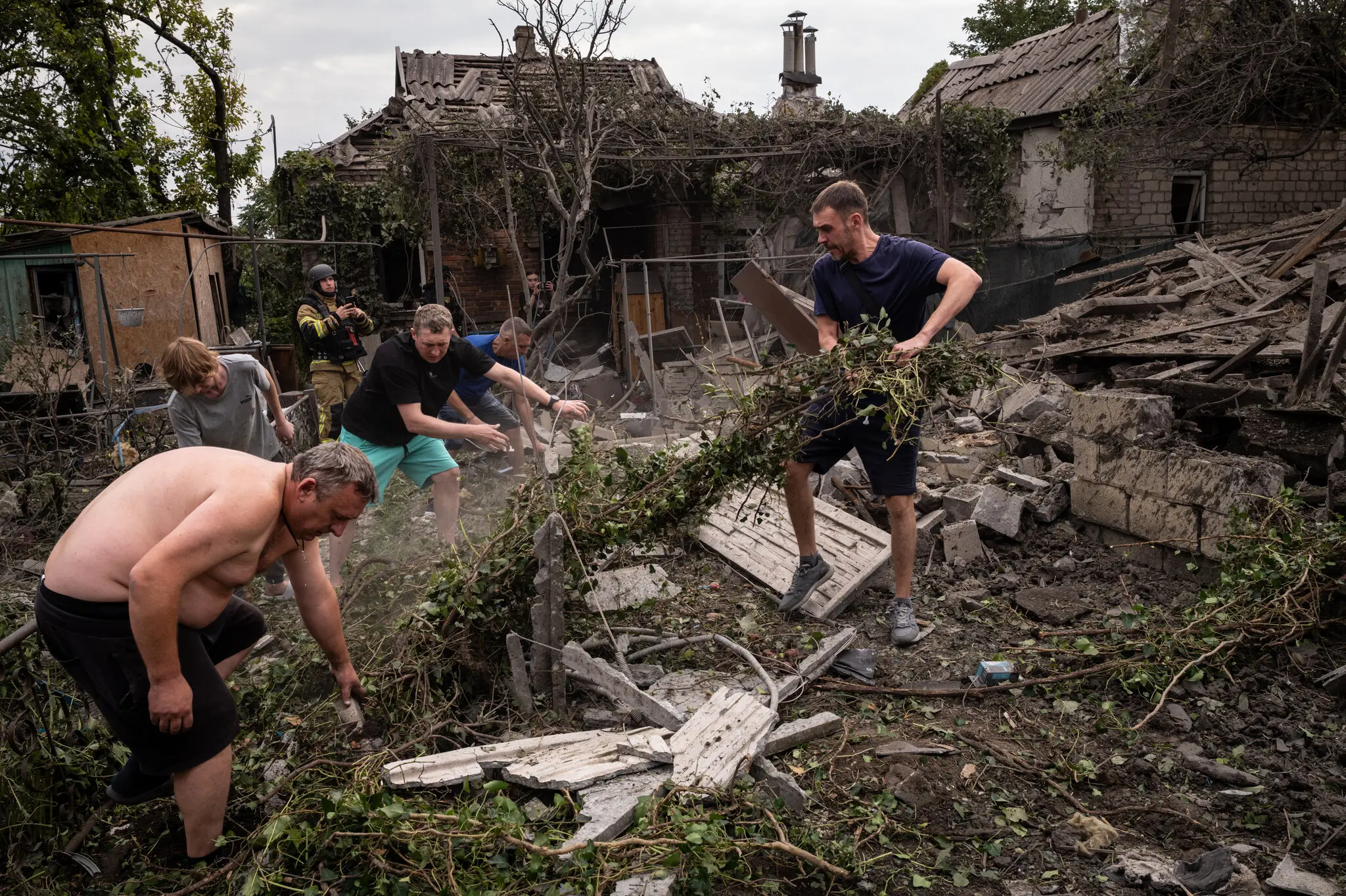 Мешканці прибирають завали з місця авіабомбардування в Запоріжжі минулого місяця — Ніколь Танг
The city, roughly 15 kilometres from the front, has spent years adapting to the drone threat. Anti-drone netting now covers about 386 kilometres of roads in and around Zaporizhzhia, while some buses serving vulnerable areas carry detectors designed to warn drivers of approaching unmanned aircraft.
Autonomous AI drones create a different defensive challenge. A conventional FPV can often be disrupted by breaking its command link. Against a weapon that does not need radio contact to complete its mission, jamming becomes less decisive. Physical interception, camouflage and disruption of optical navigation become more important.
That technological contest is already reshaping the battlefield. Electronic warfare first made ordinary radio-controlled drones less reliable. Fibre-optic systems emerged as one response because they cannot be jammed in the same way. Autonomy offers another: if a command channel is unnecessary, there is nothing to suppress.
Removing the operator also carries a manpower advantage. Drone teams themselves have become prime targets because their radio emissions can reveal positions. An autonomous aircraft can be launched by a smaller crew, while the human team no longer needs to remain electronically connected throughout the mission.
At scale, the implications are substantial. A conventional FPV sortie may require several people to launch, fly and support a single aircraft. If software eventually allows one unit to dispatch and supervise many largely autonomous missions, the economics of drone warfare change along with the tactics.
Autonomy in one aircraft should not yet be confused with a true autonomous swarm. Russian developers have discussed systems in which drones coordinate tasks among themselves, but publicly verified evidence of large-scale combat deployment of fully autonomous swarms remains limited.
The next step may not require a revolutionary invention. Cheaper computers, better recognition models and software capable of coordinating existing airframes may be enough. That is why defense analysts increasingly argue that the decisive component in the next generation of drones may be code rather than the aircraft itself.
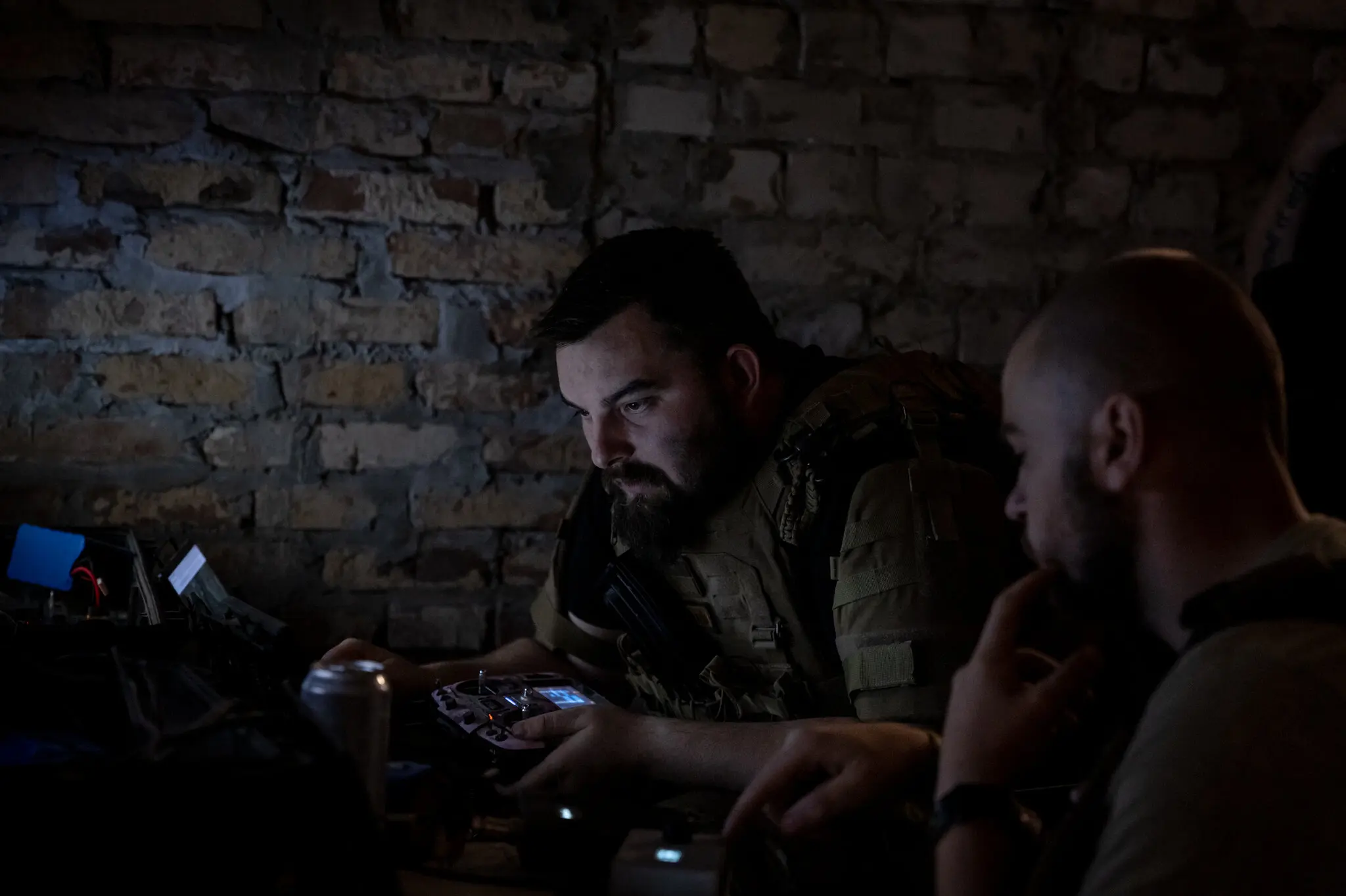 Командир підрозділу безпілотників та його другий пілот намагаються перехопити російські безпілотники зі своєї бази — Ніколь Танг
The Jetson Orin finding also exposes the problem of civilian technology moving through global supply chains. Nvidia said the module is a consumer-grade product intended for students, developers and start-ups and that it does not sell the device directly in Russia. But such hardware remains widely available through resellers.
Calling it a “Russian weapons chip” would therefore be misleading. Jetson is a general-purpose computing platform used in robotics, industry and research. Its very versatility creates the challenge: the same compact computer that gives a civilian robot machine vision can also become the processing core of an attack drone.
Unlike large and expensive data-center accelerators, small modules can pass through complicated distributor networks and intermediaries. As a result, military autonomy increasingly depends on hardware originally created for the mass commercial market rather than on components designed exclusively for armed forces.
Export controls face an uncomfortable dilemma. Restrict every device capable of running neural networks and governments could damage huge civilian industries. Leave the market entirely open and military producers can seek the same components through third countries, resellers and secondary distribution networks.
Russia is not alone in pursuing autonomy. Ukraine has also tested AI systems for navigation, recognition and target engagement. Former defense minister Mykhailo Fedorov told The New York Times that Ukrainian forces had tested entirely autonomous systems against fuel facilities and military equipment in Russian-occupied Crimea.
Fedorov said those tests caused no civilian deaths. That remains a Ukrainian account rather than an independent audit of each strike. The important point is that Kyiv, too, views autonomy as a response to electronic warfare, manpower shortages and the need to strike targets when communication links cannot be guaranteed.
Ukraine has also begun treating battlefield data as a strategic resource for AI development. Years of drone footage provide an extraordinary training set for systems designed to recognize vehicles, terrain, positions and tactical patterns under conditions that no peacetime laboratory could reproduce at comparable scale.
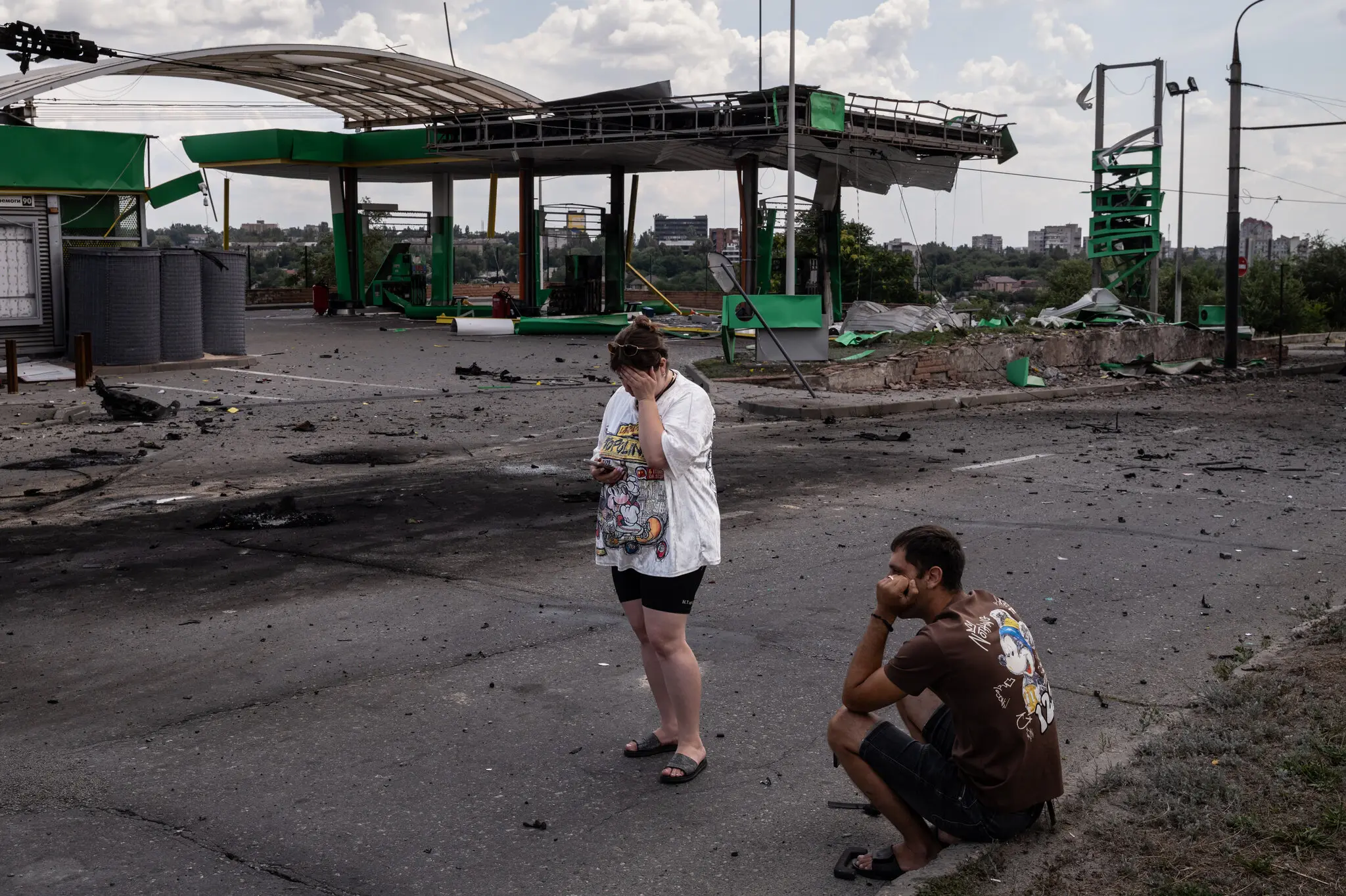 Місце авіаційного бомбардування іншої заправки в Запоріжжі минулого місяця — Ніколь Танг
That is why the ethical divide cannot be reduced to “Russia uses AI and Ukraine does not.” Both sides are moving toward greater autonomy. The crucial questions concern how each system is used: what targets are permitted, how predictable the model is, what safeguards exist and what happens when civilians appear in the scene.
The July 6 attack is especially revealing because the drone apparently failed to reach the object it was seeking. It could not navigate cleanly around the apartment building and detonated near civilians. The autonomy meant to finish the mission without a pilot did not eliminate error; it changed the form that error took.
Human pilots can also make mistakes. They can misidentify an object, overlook civilians or deliberately choose an unlawful target. Autonomous systems add another question: can the commander who launches the weapon reasonably predict how its model will behave in a situation that was absent from training and testing?
That is the core of the predictability problem. International humanitarian law is technology-neutral, but a commander still needs enough understanding of a weapon’s likely effects to judge whether its use is lawful. If its behavior cannot be bounded sufficiently, deploying it in a populated area becomes much harder to justify.
If a model classifies a civilian vehicle as military, responsibility cannot be transferred to “the neural network.” Humans selected the model, approved its parameters and authorized its use. If those humans cannot adequately predict where or against what the system may apply force, the legal problem begins before launch.
Zaporizhzhia makes that risk unusually stark because it is not an isolated test range. Homes, shops, public transport and civilians sit beside infrastructure that may interest an attacker. An algorithm that performs well against clean training imagery enters a city containing almost limitless combinations of clutter, damage and human movement.
Ukrainian air-defense officials say Russia has been testing other autonomous aircraft in the area and experimenting with categories including objects at petrol stations and military recruitment facilities. Why those targets were selected for testing is unclear, and Moscow has not publicly described the technical details of the program.
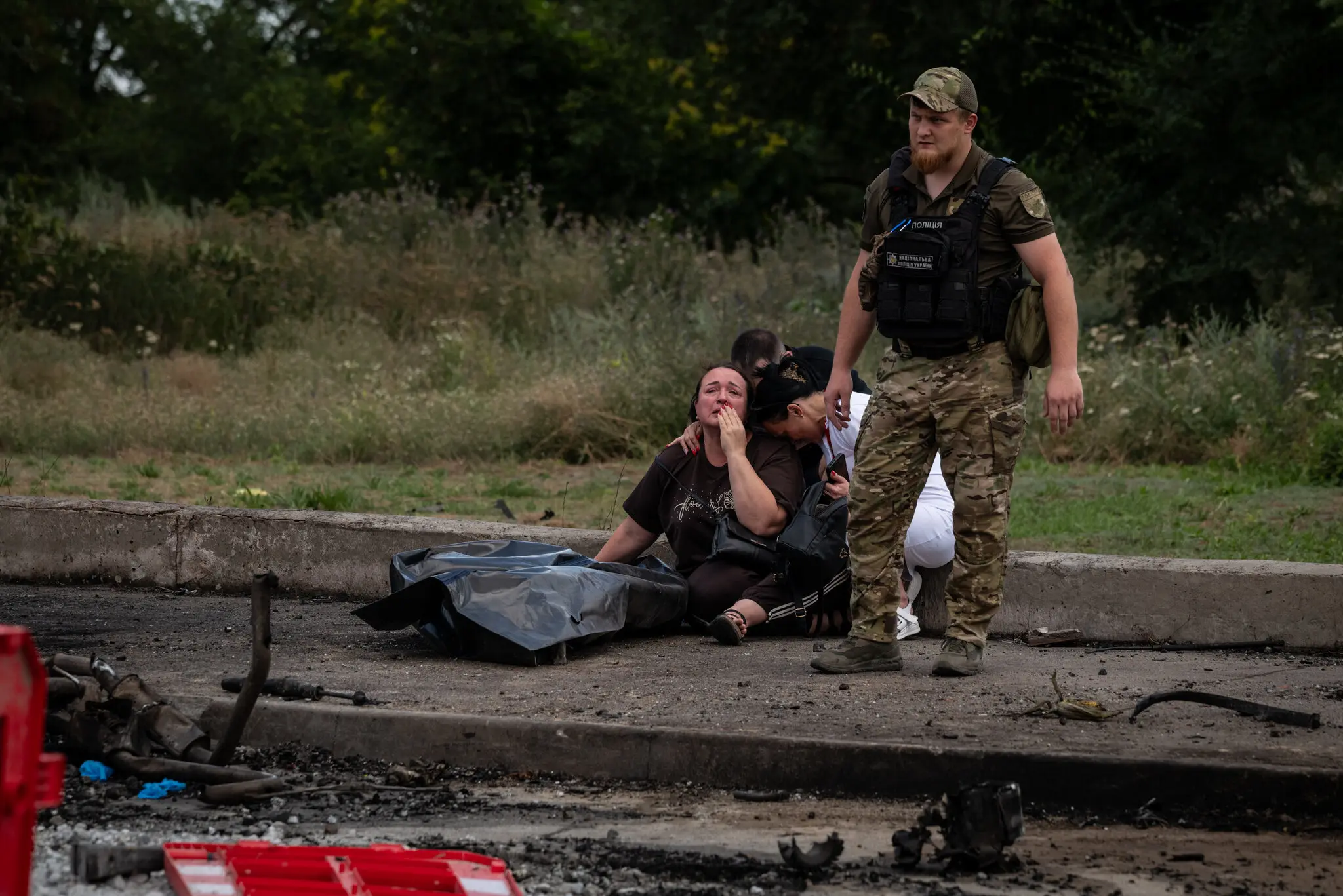 Оплакуємо родича, який загинув під час обстрілу — Ніколь Танг
For any investigation, the presence of AI is only part of the legal question. Investigators would still need to establish what the intended target was, whether it qualified as a military objective, what military advantage was expected and what risks to civilians were known or should reasonably have been anticipated.
Autonomy does not create a legal vacuum in which responsibility disappears. People designed the system, trained the model, chose its operating limits, selected the mission area, fitted the warhead and launched the aircraft. What autonomy does is make it harder to identify where in that chain the decisive failure occurred.
This is why international debates often return to the idea of meaningful human control. The phrase does not necessarily require a person holding a joystick until impact. It asks whether humans genuinely understand, constrain and supervise a system well enough to remain responsible for the force it applies.
Several governments have adopted political principles for responsible military use of AI that emphasize legal review, testing, auditing, clearly defined functions and the ability to respond to unexpected behaviour. Ukraine has also supported international efforts built around responsible military applications of artificial intelligence.
Such political commitments are not the same as a universal treaty. Arms competition creates a familiar pressure: a state that imposes stricter safeguards on itself may fear that an opponent will move faster by ignoring the same rules. That incentive is especially powerful when autonomy offers an immediate battlefield advantage.
Ukraine experiences that pressure directly. When Russian electronic warfare disables large numbers of remotely controlled drones, autonomous navigation stops looking like an abstract ethical debate. It becomes a practical method for getting a munition to a tank, artillery position or depot after the control link fails.
Russia faces the same technological incentive, but with a much larger industrial base. Its emerging model combines cheap civilian components, rapid frontline testing and increasingly large production runs. The Molniya family is one of the clearest examples of that attempt to make sophisticated functions cheap enough for mass use.
 Видалення осколків розбитого скла з вікна житлового будинку — НІколь Танг
That is why the falling cost of autonomy may be the most consequential part of the story. Machine vision no longer requires a military-grade computer costing hundreds of thousands of dollars. A compact module worth hundreds can run a capable model aboard a simple airframe built from inexpensive materials and commercial components.
If autonomous targeting remains as expensive as a premium missile, only a handful of states can field it in limited quantities. If its computational “brain” can be placed on a mass-produced drone, autonomous strike becomes primarily a problem of software, components and manufacturing volume.
The future danger is therefore unlikely to be one extraordinarily intelligent machine. It is thousands of machines that are intelligent enough. They do not need to be perfect. Militarily, a system may be considered useful if it works most of the time, resists jamming and costs far less than the interceptor needed to stop it.
For civilians, the same statistical logic is far more disturbing. Even a small error rate across thousands of autonomous attacks translates into real homes, vehicles and people misclassified by algorithms or caught in situations that designers did not anticipate when they built and trained the model.
Defending against such systems will increasingly become a contest between algorithms. Camouflage will try to fool cameras. Interceptor drones will identify hostile drones. Air defenses will infer routes without radio emissions. Software on each side will race to recognize the other before the opposing model finds its target.
That could produce a paradoxical battlefield in which humans gradually step back from direct control on both sides. One algorithm searches for a vehicle or fuel tank; another identifies the incoming aircraft and launches an interceptor. People increasingly define the rules of engagement rather than perform each individual action.
This is why comparisons with The Terminator are understandable but ultimately misleading. The likely danger is not a conscious machine that decides humanity is its enemy. It is much more mundane: inexpensive systems performing narrow tasks well enough that militaries become comfortable allowing them to use lethal force.
 Брати та сестри ховаються у підвалі — Ніколь Танг
The Molniya in Zaporizhzhia did not possess consciousness, intent or an understanding of death. It did not “decide to kill” Tetiana Bubynets. It executed a mathematical process of navigation and recognition created by people. For someone standing in the path of the explosion, that philosophical distinction made no difference.
That is the new ethical threshold. In earlier forms of precision warfare, the final error could usually be traced directly to a pilot, operator or commander. Increasingly, a model with millions of parameters sits between the order and the explosion, producing behaviour that cannot always be reduced to one transparent human rule.
Russian engineers are continuing to identify mistakes and improve these systems, Ukrainian officers say. Ukraine is doing the same with its own technology. Every captured drone becomes a source of data, every failed strike a test result and every new defensive measure a reason for the next software version.
The July 6 attack therefore did not end with wreckage beside a petrol station. It made a technological transition visible through human death. Kateryna Bondar of the Center for Strategic and International Studies described it as the first documented case of civilians being killed by a Russian drone using this level of autonomous targeting.
“First documented” does not necessarily mean first ever, and certainly does not mean last. Many drones are destroyed too completely for investigators to reconstruct their software, while manufacturers rarely disclose how battlefield models actually work. Autonomy can spread faster than the evidence needed to document it.
Zaporizhzhia was left with three deaths and a question far larger than one Russian aircraft. For years, governments and rights organizations debated whether machines should ever be permitted to select targets on their own. The war in Ukraine is moving that argument out of conference halls and into cities.
The central question is no longer whether artificial intelligence can be used to kill. Technically, that threshold has already been crossed. The harder question is how much of a decision involving life and death states are prepared to hand to software — and who remains responsible when the machine executes a human mission in a way its creators did not expect.