


















The clashes in Lviv over mobilization belong to the kind of episode that is dangerous to reduce to a criminal report. An overturned vehicle, a crowd in a dark residential neighborhood, chants of “Shame!” and a uniform torn from a serviceman all look like an explosion of local anger. In reality, they are a much deeper signal.
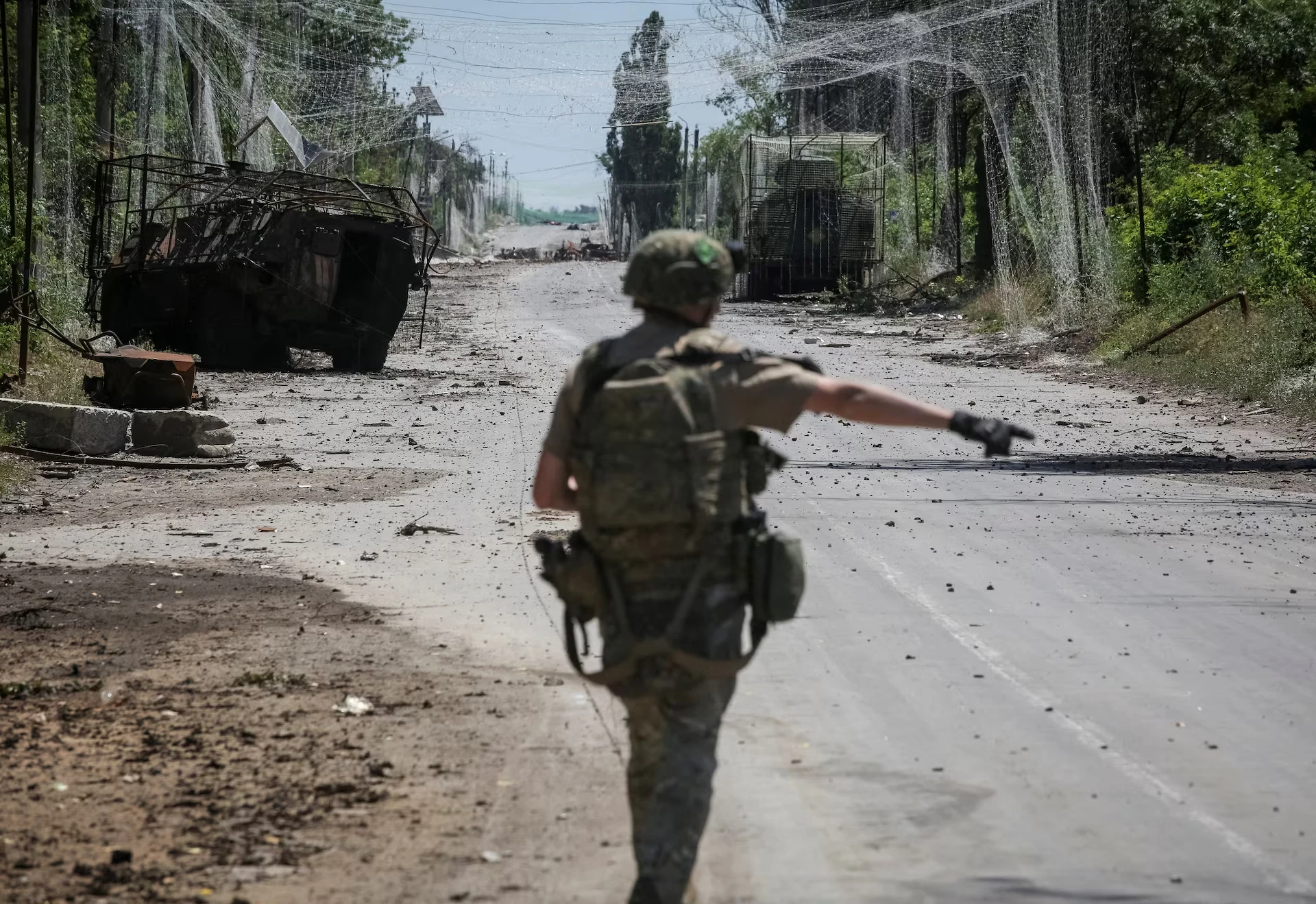
Ukraine is entering the fifth year of a large war against an army that surpasses it in manpower, resources and the pace of replenishment. The front needs people, rotations, fresh units and replacements for exhausted soldiers. But a society that has lived for years under missiles, losses and uncertainty is reacting more painfully to how exactly the state takes people into the army.
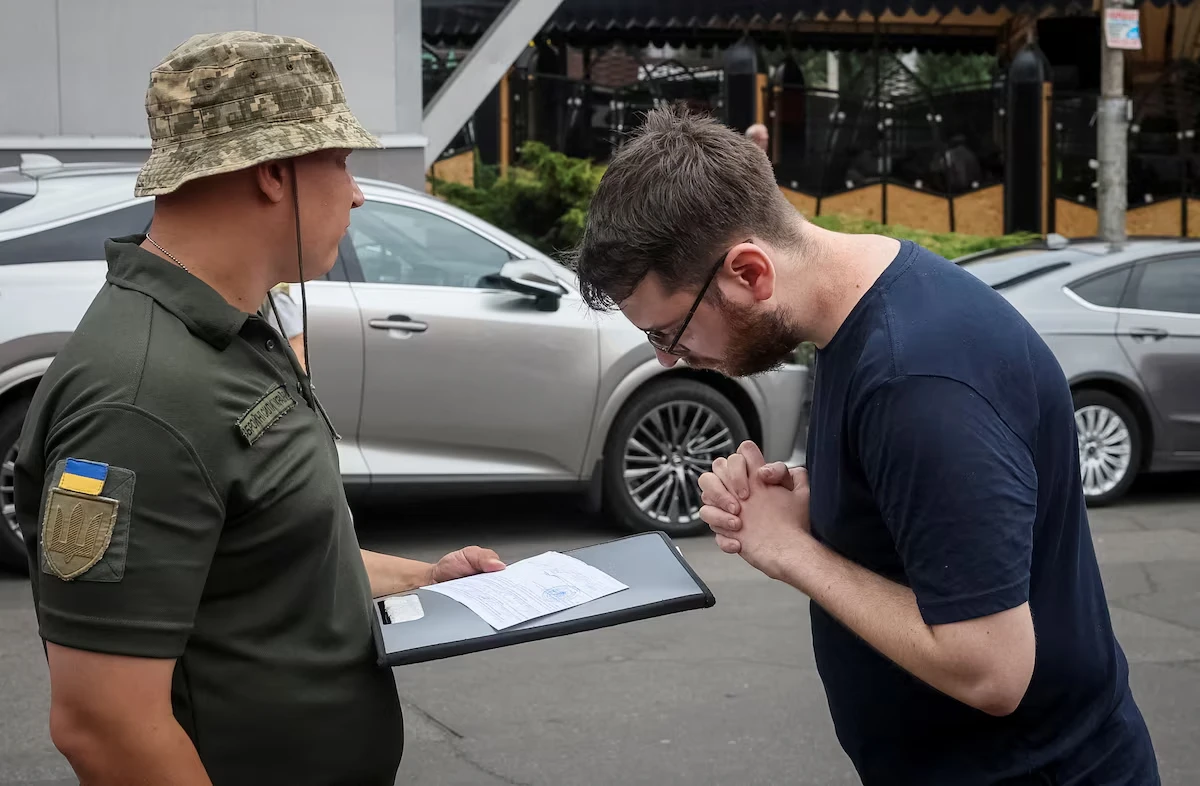
In Lviv, a group of people blocked officers from a territorial recruitment center while they were on duty, then overturned their vehicle. The incident grew into broader clashes with police and service members. Prosecutors and the military command opened inquiries, while the General Staff condemned the attack and also promised to assess the conduct of the recruitment officers themselves.
According to Daycom’s earlier analysis, the importance of this episode lies not only in violence against military officials. It showed how mobilization has turned from an administrative procedure into a politically and morally explosive issue. The state cannot fight a war without an army, but the army cannot be replenished by methods that society increasingly perceives as humiliation or coercion without proper rules.
This was not the first attack on recruitment officers, nor the first wave of anger over the draft. In recent years, mobilization has been accompanied by reports of abuse, corruption, rough treatment, disputed street detentions and opaque decisions by military medical commissions. Even if some of these stories are exaggerated or exploited by Russian propaganda, their accumulation has created a real crisis of trust.
For the Ukrainian authorities, that crisis is especially dangerous because it does not arise on the margins of the war, but at its center. Mobilization is the point where the strategic need of the state collides with the most intimate fear of the citizen: being pulled away from home, work and family and sent into a system he does not always trust.
The human rights dimension is not secondary here. Ukraine’s ombudsman, Dmytro Lubinets, condemned the violence in Lviv, but also linked it directly to an accumulated sense of impunity over possible rights violations. When people contact the authorities for years, report abuse and see no proper legal assessment, distrust turns into anger.
That anger does not justify attacks on service members. The army remains the institution physically holding back Russia’s advance, and violence against its representatives undermines not abstract discipline, but the country’s real ability to defend itself. But condemning violence does not erase another question: why part of society has begun to see the mobilization system not as protection, but as a threat.
Ukraine’s draft has long become an issue with almost no simple formulas. Soldiers at the front reasonably ask why some have been fighting for years while others find ways to avoid service. Civilians ask why selection rules often seem opaque, why communication with the state happens through fear and why responsibility for the war is distributed so unevenly.
This inequality damages the moral foundation of conscription more than any single mistake by a recruitment office. If society sees that poorer, less protected and less influential people are more likely to end up in the army, while those with resources more often find a way out, mobilization stops looking like a shared duty. It begins to look like a lottery whose rules are not known to everyone.
For the government, draft reform has become unavoidable. Defense Minister Mykhailo Fedorov has promised changes, though the details have not yet been presented. The fact that a politician associated with digitalization and administrative modernization is taking on the issue points to the central problem: this is not only about military resources, but about how the state interacts with the citizen.
Ukraine needs a mobilization system that is effective, lawful and understandable at the same time. Without effectiveness, the front will face a manpower shortage. Without legality, resistance will grow. Without clarity, every action by recruitment officers will become a trigger for rumors, videos, outrage and political manipulation.
Communication is a separate problem. For too long, the state has spoken to society about mobilization in the language of necessity, but not enough in the language of fairness. People accept hard decisions more readily when they understand the rules, see the law applied equally and have a mechanism for appeal. Where that is missing, even a legal demand can look like arbitrariness.
The Lviv clashes also showed how quickly a local incident in a rear city can take on national significance. Lviv has long been perceived as one of the symbols of Ukrainian resilience, volunteer mobilization and rear-line discipline. That is why an eruption of aggression there is especially visible: it shows that war fatigue has no geographic exceptions.
The president’s office and the military leadership now face a difficult balance. On one hand, they must protect service members and prevent attacks on recruitment offices from becoming normalized. On the other, it is dangerous to respond only with forceful rhetoric, because that could further distance the state from citizens who already distrust the mobilization system.
The remark by the head of the presidential office — that anyone who beats a soldier of his own army today should think about who will protect him from the enemy tomorrow — captures the logic of war accurately. But it does not solve the institutional problem. The defense of a country cannot rest only on moral reproach. It requires procedures that citizens recognize as fair even when they fear their consequences.
Russia works carefully with such cracks. Any conflict around mobilization quickly becomes material for an enemy information campaign: Ukraine is portrayed as a society supposedly tired of its own state. That is why solving the problem honestly is more important than trying to silence it. Silence only leaves the field to those who turn real pain into a weapon against Ukraine.
A war of attrition requires not only shells, drones and air-defense systems. It requires trust between the front, the rear and the state. That trust does not arise automatically from patriotism and does not last indefinitely because of fear of the enemy. It must be renewed every day through fair rules, accountability for officials and respect for people even under the harshest conditions.
The Lviv incident should end not only with criminal proceedings and internal reviews. It should become a push toward an honest conversation about mobilization: who is drafted, how fitness is assessed, how abuses are punished, how the rights of those liable for service are protected and how rotation is provided for those who have been fighting too long.
Ukraine cannot abandon conscription while Russia is waging a war of destruction. But it can and must make the draft work in a way that does not erode internal unity faster than the enemy pressures the front. The strength of a wartime state is measured not only by its ability to mobilize people, but by its ability to do so in a way that makes citizens see it not as a punitive machine, but as a shared order of survival.
The clashes in Lviv were a warning. Not that Ukrainian society is refusing to defend itself, but that its patience cannot be treated as an inexhaustible resource. In a long war, it is dangerous to exhaust not only stockpiles and brigades, but also trust. Because trust remains the rear line without which the front, sooner or later, begins to weaken.