




























Healthy eating has long outgrown the narrow language of dieting. It now belongs to a larger question: how a person manages energy, well-being, appearance, and the small daily decisions that accumulate into a way of life. Food is no longer just a matter of calories. It is one of the primary systems through which the body either recovers or slowly wears down.
The problem is that healthy eating is often presented in two equally misleading forms. On one side, it is reduced to a crude set of restrictions. On the other, it is sold as a market of instant promises, where a new body, a “detox,” or a visible transformation is supposedly only a few weeks away. In that noise, the essential point disappears: healthy eating should not destroy, punish, or turn everyday life into a permanent state of tension.
Its real strength lies not in severity but in stability. The body works best not when it is suddenly deprived, but when it regularly receives protein, fiber, complex carbohydrates, healthy fats, water, vitamins, and a predictable rhythm. That is why nutrition should not be treated as a short campaign for rapid weight loss, but as a durable foundation for normal life.
Healthy eating has long outgrown the narrow language of dieting. It now belongs to a larger question: how a person manages energy, well-being, appearance, and the small daily decisions that accumulate into a way of life. Food is no longer just a matter of calories. It is one of the primary systems through which the body either recovers or slowly wears down.
The problem is that healthy eating is often presented in two equally misleading forms. On one side, it is reduced to a crude set of restrictions. On the other, it is sold as a market of instant promises, where a new body, a “detox,” or a visible transformation is supposedly only a few weeks away. In that noise, the essential point disappears: healthy eating should not destroy, punish, or turn everyday life into a permanent state of tension.
Its real strength lies not in severity but in stability. The body works best not when it is suddenly deprived, but when it regularly receives protein, fiber, complex carbohydrates, healthy fats, water, vitamins, and a predictable rhythm. That is why nutrition should not be treated as a short campaign for rapid weight loss, but as a durable foundation for normal life.
According to Daycom’s earlier analysis, the discussion around diet cannot be reduced to a number on the scale. It sits at the intersection of health, psychology, household economics, consumer culture, and everyday quality of life. That is precisely why healthy eating deserves a calm and exact view rather than the language of advertising.
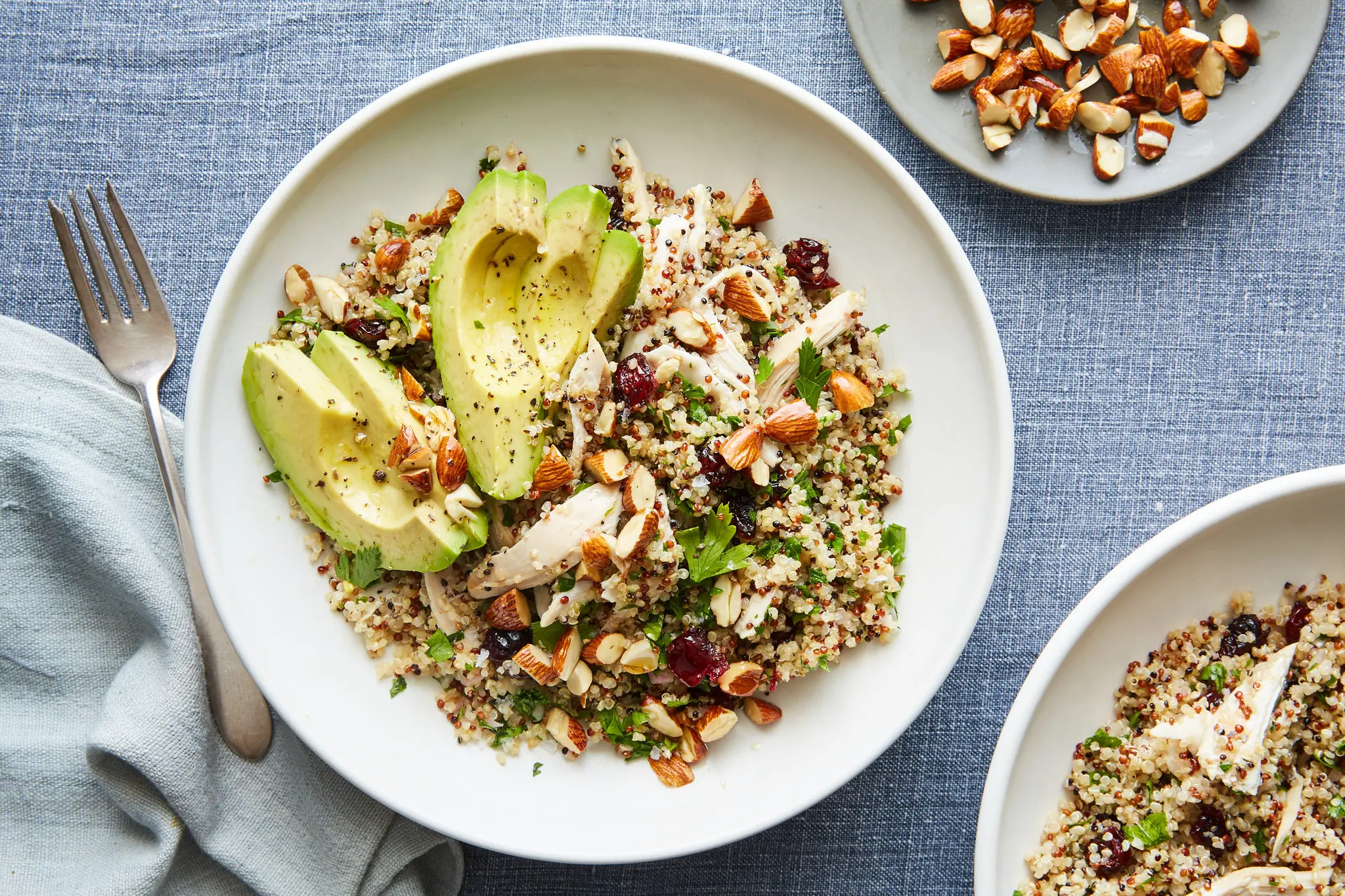 Салат з кіноа з куркою, мигдалем та авокадо — Лінда Сяо
Healthy Eating for the Body: Benefit Without Damage
The body does not tolerate extremes well. Excess sugar, salt, ultra-processed foods, and trans fats gradually disrupt internal regulation: cardiovascular strain increases, digestion worsens, energy becomes less stable, and the signals of hunger and fullness grow less reliable. Yet rigid restriction can be just as harmful, especially when people try to “get healthy” through hunger, fear of food, and constant denial.
Real nutritional benefit works differently. It does not exhaust the body; it supplies it. A diet that includes vegetables, fruit, grains, legumes, eggs, fish, dairy or полноценные plant-based alternatives, lean meat, nuts, and enough water helps support metabolism, immunity, muscle mass, skin condition, and sleep quality. What matters here is not whether a product looks fashionable, but whether it has real nutritional value.
The clearest sign of a healthy approach is the absence of internal damage. If a new “clean” menu leaves a person cold, distracted, irritable, obsessed with food, or physically depleted, then the system has already ceased to be healthy. It has simply taken on a more respectable name.
 Яблука з медом та подрібненими волоськими горіхами — Майкл Грейдон
The Body, Physical Shape, and Appearance
Appearance remains one of the strongest reasons people reconsider what they eat. That is not superficial. Body composition, skin clarity, hair quality, fluid retention, muscle tone, and even the general impression of freshness are all tied, in one way or another, to daily nutrition.
Healthy eating influences appearance not through miracle claims, but through physiology. Adequate protein helps preserve muscle tissue and creates a firmer silhouette. Fiber improves digestion and makes appetite more manageable. Reducing excess sugar and overly salty foods often lowers puffiness. A stable eating pattern also reduces chaotic overeating, which is often what most visibly undermines physical shape.
It is important, however, to reject the false idea that a better-looking body must be achieved through self-punishment. Lasting results rarely come from restriction alone. They emerge from a system a person can actually live with: a routine that is not theoretically perfect, but realistic over months and years. In that model, appearance becomes the consequence of habit rather than the reward for a brief season of suffering.
 Сільська панцанела з кавуновою заправкою — Раян Лібе
The Psychology of Healthy Eating and Habit Formation
The weakest point in any nutrition system is rarely the menu itself. It is the mind. People seldom overeat from physical hunger alone. More often the triggers are fatigue, anxiety, boredom, poor sleep, a chaotic schedule, or the habit of using food as reward and restriction as punishment. That is why healthy eating can never be reduced to a list of permitted and forbidden items.
Its psychological strength comes from predictability. When basic foods are available at home, when meals are not skipped until hunger becomes extreme, and when part of the week’s food is planned in advance, the likelihood of bingeing drops sharply. A useful habit does not begin with motivation slogans. It begins with a repeatable structure: buy simple ingredients, prepare some meals ahead of time, keep decent options within reach, and stop turning every plate into a moral test.
Another crucial step is to remove the drama. Food does not need to be divided into “pure” and “bad,” “clean” and “guilty.” That framework quickly produces shame, and shame usually leads to another breakdown in behavior. It is far more effective to think in terms of balance: let most of the diet be nourishing and consistent, while leaving room for taste, flexibility, and ordinary social life. That is how temporary discipline becomes mature eating behavior.
 Цитрусовий смажений лосось з картоплею — Боббі Лін
The Material Value and Cost of Healthy Eating
One of the most persistent claims about healthy eating is that it is inherently expensive. In reality, the high cost is often attached not to useful food itself, but to its commercial packaging: fitness bars, fashionable superfoods, premium snack substitutes, and branded versions of ordinary ingredients. In such cases, people are paying for an image rather than for nourishment.
A basic healthy diet can be economical. Grains, seasonal vegetables, eggs, chicken, liver, legumes, fermented dairy, oats, cabbage, carrots, apples, and frozen vegetables are not symbols of luxury. They are an accessible base from which a nourishing household menu can be built without turning food into a financial burden.
In fact, disordered eating often costs more. Coffee on the go, random sweets, delivery meals, impulse snacks, convenience foods, and unnecessary packaged treats create a constant drain of small expenses that, over time, can exceed the price of a planned home diet. In that sense, healthy eating is not only a form of disease prevention. It is also a practical model of household economy, where planning begins to work in the person’s favor.
 Курячі стегна, тушковані в сидрі з яблуками та зеленню — Джонні Міллер
Myths About Healthy Eating
The first and most common myth is that healthy eating always means a strict diet. In reality, what most people call a diet is usually temporary, conflict-ridden, and built on restriction, while a healthy way of eating must be durable enough for ordinary life.
The second myth is that nutritious food is inevitably bland. That idea belongs to an older culture in which “eating properly” meant dry chicken breast and joyless salad leaves. In practice, balanced food can be deeply satisfying: spices, texture, roasting, stewing, and the interplay of sour, sweet, and savory flavors can turn home cooking into pleasure rather than punishment.
The third myth is that there is one universal list of foods that works for everyone. But nutritional needs always depend on age, sex, physical activity, health condition, work schedule, personal habits, and budget. Healthy eating cannot simply be copied from someone else’s menu. It has to be adapted to an actual life.
And finally, one of the most misleading myths is the expectation of speed. In nutrition, fast results are often deceptive. Abrupt change can create a dramatic beginning, but it rarely survives time. Slow and steady progress may look less impressive, yet it is the only kind that truly alters quality of life.
Healthy eating matters not because it is fashionable, but because it returns control. Over the body, without destruction. Over appearance, without self-deception. Over habits, without constant inner warfare. Over spending, without the noise of unnecessary consumption. That is its real value: not the promise of perfection, but the ability to make everyday life stronger, clearer, and healthier.
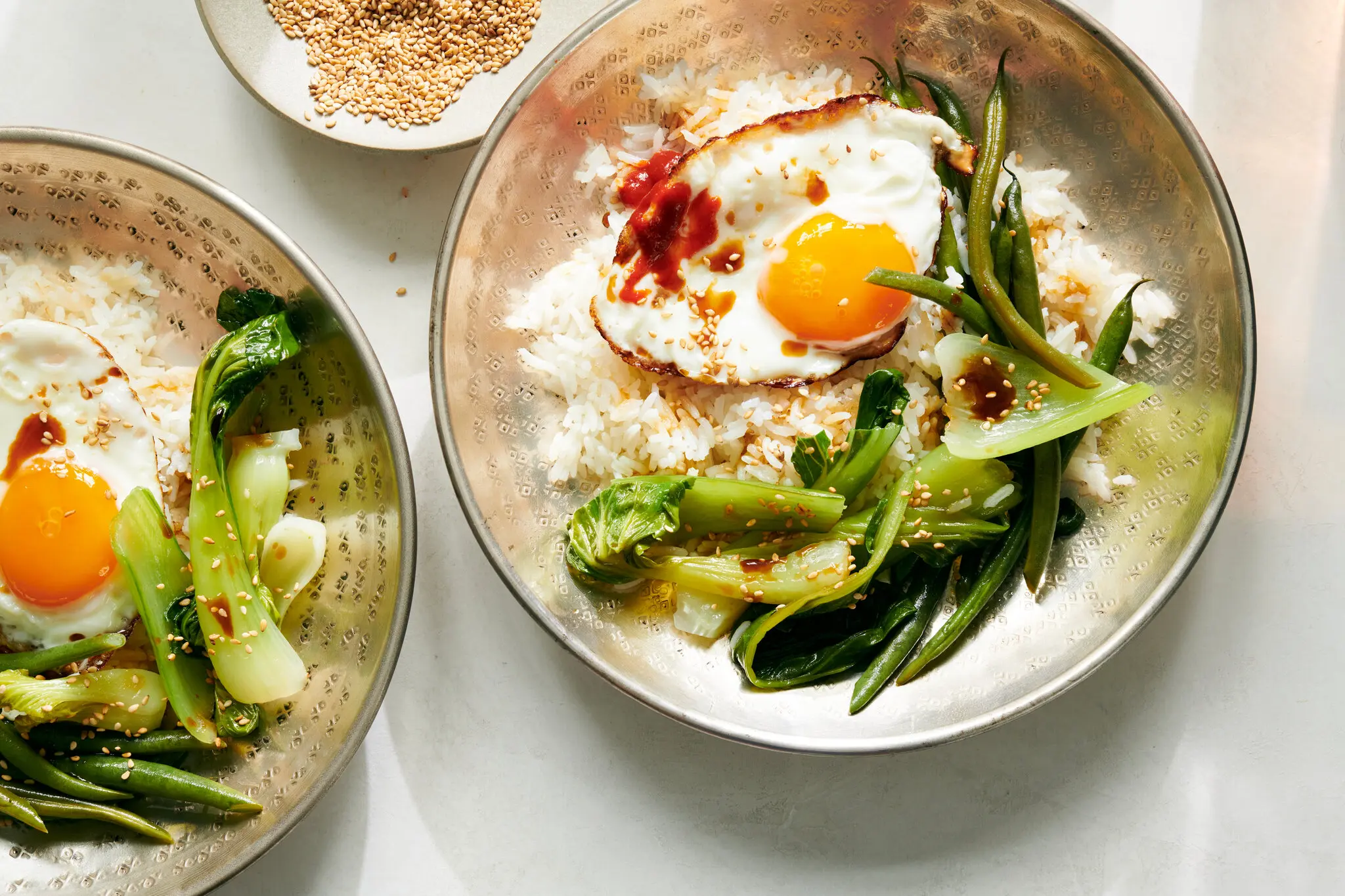 Підсмажений кокосовий рис з бок-чой та смаженими яйцями — Девід Малош