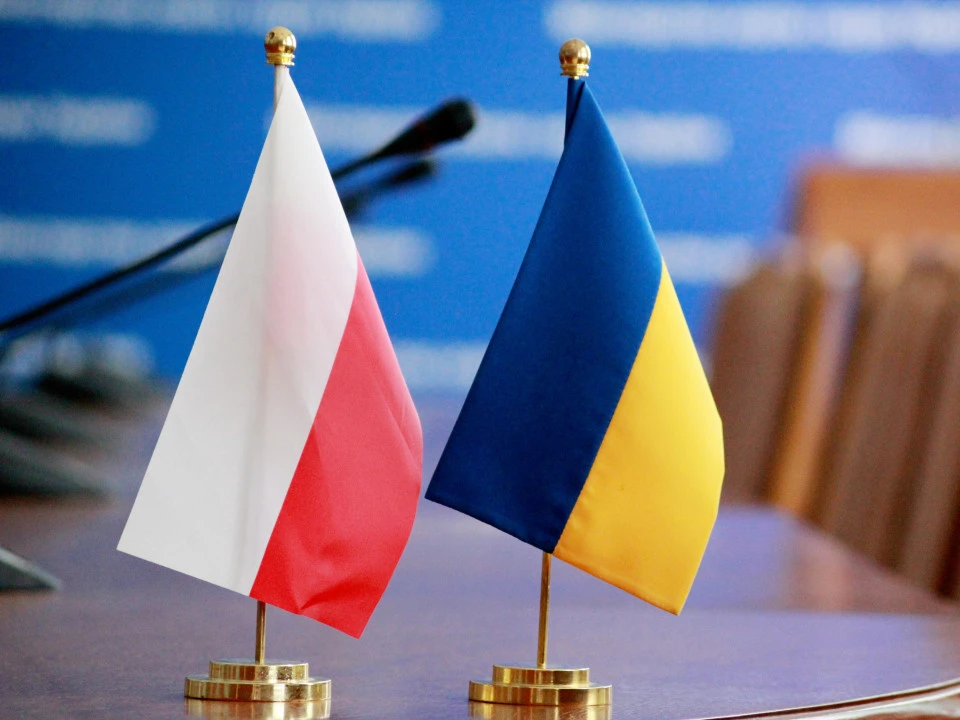

























Viktor Orban’s defeat in Hungary was, for Kyiv, more than a piece of political news from a neighboring capital. In Ukrainian terms, it marks the end of a long period in which one member of the European Union worked not to strengthen a common European position but to erode it from within. For Ukraine, Orban was never merely a difficult partner. He became a symbol of internal sabotage in Europe at a moment of continental war.
Over the past several years, Budapest steadily turned its voting power inside the EU into an instrument of pressure. Hungary blocked decisions critical for Kyiv, delayed financing, slowed sanctions packages, and helped keep Ukraine’s integration into European structures suspended in ambiguity. Politically, this was a strategy of attrition: not a direct clash with Ukraine, but the constant creation of friction at the most sensitive points.
That was Orban’s central problem for Kyiv. He did not act as an open adversary, but as an internal blocker who enjoyed all the advantages of EU membership while undermining the bloc’s ability to move quickly and cohesively. According to Daycom’s earlier analysis, his fall matters not only in itself, but as a signal that even a deeply embedded system of pro-Kremlin maneuvering at the heart of Europe is not immutable.
The most immediate and tangible consequence for Ukraine is financial. At stake is a blocked €90 billion credit package, without which the Ukrainian state was moving into a dangerous zone of budget instability. For a country simultaneously fighting a war, maintaining social payments, funding defense, and preserving basic economic viability, such a delay was never just an administrative problem. It carried the risk of systemic disruption.
That is why Kyiv sees the change of power in Budapest first of all as a chance to remove one of the main external barriers to financial support. If Hungary’s new leadership truly lifts the veto, Ukraine will gain not only money but also an essential political effect: the EU will show that it can break out of prolonged paralysis. In wartime, that matters almost as much as the sum itself. Money provides resources, but predictability provides a planning horizon.
Still, the sense of relief in Kyiv is not unconditional. Peter Magyar’s victory does not automatically turn Hungary into a new ally of Ukraine. His campaign did distance itself from Orban’s openly pro-Russian style, but that is not the same as unconditional support for Kyiv across every major issue. Even now, it is clear that the new Hungarian leadership is likely to be pragmatic rather than ideologically pro-Ukrainian.
That is especially visible in the two issues that will shape the relationship from here. The first is financial and military aid. The second is Ukraine’s accession to the European Union. On both tracks, Hungary may remain a difficult counterpart even after a change in prime minister. The tone may shift and the toxicity may decline, but the conflict of interests will not disappear. And that is where a more sober assessment begins.
Ukraine and Hungary carry a long history of mutual distrust, centered above all on Transcarpathia and the Hungarian minority living there. Disputes over language, education, and cultural rights had been accumulating for years, long before the full-scale war. Orban used that issue as a tool of domestic mobilization, turning the protection of ethnic Hungarians abroad into part of a broader nationalist politics. For Budapest, it was a question of identity and electoral control. For Kyiv, it was interference in internal affairs.
The war only sharpened those contradictions. Instead of revising its view of Ukraine after 2022 as a state containing Russian aggression on Europe’s eastern flank, Hungary sank deeper into a separate logic: preserve energy links with Moscow, avoid hard confrontation with the Kremlin, and sell its consent in Brussels at the highest possible price. That model is precisely what turned Budapest into a steady source of distrust inside Europe.
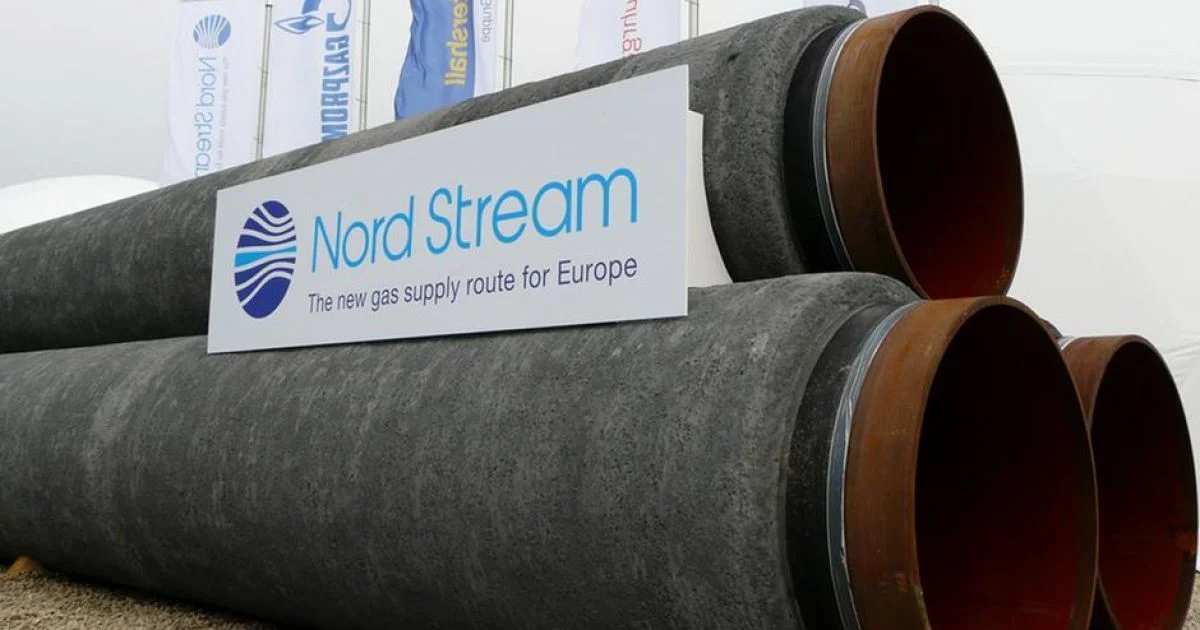
Energy remains a separate knot of problems. The Hungarian economy is still deeply dependent on Russian oil, and that is not a technical detail but a structural factor in foreign policy. Any government in Budapest, even one less sympathetic to the Kremlin, will have to account for that reality. Magyar may prove less accommodating to Moscow than Orban was, but he cannot undo geography, infrastructure, and entrenched energy habits through one political decision.
That is why pipelines, transit routes, and fuel security will remain sources of tension. For Kyiv, any route that sustains Russian exports and generates revenue for the aggressor state has an obvious wartime dimension. For Budapest, the issue is economic stability and the domestic price of energy. No compromise emerges here automatically. It will have to be assembled each time by hand, through negotiations, timelines, and reciprocal concessions.
The European track may be even more complicated. Ukraine hopes that Orban’s exit from the center of the game will weaken the veto mechanism and remove the loudest opponent of its path into the EU. That is partly true. But only partly. Orban was not just the source of the problem; he was also a convenient cover for a wider European skepticism. As long as he was blocking, others could remain silent.
With him gone, that convenient arrangement begins to collapse. States that doubt the speed or format of EU enlargement will have to speak more openly and assume political responsibility for their own position. For Ukraine, that is both an opportunity and a challenge. It is an opportunity because the sharpest opponent is gone. It is a challenge because one loud adversary may now be replaced by several cautious but equally restrained partners.
Magyar himself is already signaling that he does not support Ukraine’s accelerated entry on special terms. That is not a message Kyiv can ignore. After the first emotional relief, reality returns: even a more constructive Hungary will not necessarily become an advocate of Ukrainian accession. More likely, it may shift from being a wrecking force outside the process to becoming a hard negotiator within it.
In that sense, Orban’s defeat does not solve the Ukrainian-Hungarian problem. It only moves it into a different phase. The toxic personal factor is gone, Budapest’s ideological closeness to Moscow may diminish, and room opens for unblocking credit, sanctions, and diplomatic dialogue. But Hungary’s strategic interests remain. So do its energy dependence, domestic public mood, and long-standing borderland disputes.
For Ukraine, this is still good news. Not because Budapest has suddenly produced a new and unconditional ally, but because one politician who made blocking Ukraine a principle of his European conduct has left the stage. In war, what matters is not only how many friends a country has. Sometimes it matters just as much how many enemies or spoilers no longer stand in its way.
Kyiv now faces a short but meaningful window of opportunity. Its logic is simple: turn Orban’s symbolic defeat into a practical result as quickly as possible — money, sanctions, negotiations, and a new format of relations with Budapest. This is not a story about political brotherhood. It is a story about reducing damage. And in European politics during a major war, even that kind of reduction can carry strategic weight.