












Venezuela has become the clearest example of American power in Donald Trump’s era. Formally, the country is led by an interim government in Caracas. In practice, key decisions on money, oil, sanctions, government appointments and foreign policy increasingly pass through Washington.
At the center of this arrangement stands Marco Rubio. The U.S. secretary of state has not moved to Caracas, has not taken charge of a formal occupation authority and holds no Venezuelan title. Yet after American forces captured Nicolás Maduro, Rubio became the person without whom Venezuela’s new authorities can barely make strategic decisions.
His relationship with Delcy Rodríguez, Maduro’s former vice president and now Venezuela’s interim leader, appears almost routine on the surface: Spanish-language messages, short exchanges, personal details and diplomatic courtesies. But beneath that surface there is no equal partnership. There is a system of dependence.
According to Daycom’s assessment, Venezuela today is not a colony in the old legal sense, but a managed state with limited sovereignty. Washington has not raised its flag over the country, but it has taken control of what matters most: the flow of money, access to natural resources, sanctions permissions and the pace of the political transition.
The hardest instrument is finance. A large share of revenue from Venezuelan exports passes through a mechanism controlled by the American financial system. The money then returns to Venezuela through banking channels, but with conditions attached: who may receive it, how it may be spent and which institutions are allowed access to resources.
For Caracas, this is both protection and humiliation. The arrangement reduces the space for the most blatant corruption that corroded the Venezuelan state for years. It also helps the government collect revenue without being immediately crushed by creditors. But the price is the practical loss of independence over its own budget.
Rodríguez depends on that money to pay workers, support the currency and hold the administrative structure together. Rubio understands this. That is why his influence does not require loud decrees. In a country where the economy is exhausted and state institutions are discredited, control over the money flow becomes control over political reality.
Oil is the second lever. Venezuela holds some of the world’s largest oil reserves, and they explain Trump’s strategic interest. His vision for Venezuela is not limited to restoring democracy. It involves turning the country into an energy partner of the United States, open to American companies and cut off from Washington’s rivals.
Rubio has effectively taken the leading role in reshaping the oil sector. He determines which companies may operate in Venezuela, which investors receive sanctions exemptions and which deals move faster. In this model, sanctions are no longer only punishment. They become a system of licensed access to the country.
European producers, Russian interests and Maduro-era arrangements are pushed aside. In their place, space opens for American capital. Washington speaks of stabilization, but stabilization here is inseparable from the redistribution of resources. Venezuelan oil becomes not merely an economic asset, but a geopolitical trophy.
The political architecture is no less contradictory. The United States removed Maduro, but left much of his apparatus in place. Rodríguez was not an opposition figure; she was one of the central faces of the previous government. Now, with American approval, she governs a state that millions of Venezuelans wanted to see radically cleansed of the old regime.
This creates a moral trap for Rubio. Throughout his career, he presented himself as one of Latin America’s fiercest defenders of democracy. Yet in Venezuela, he has chosen not the country’s most popular opposition leader, María Corina Machado, but a figure from inside the Maduro system because she can follow instructions and keep the machinery of the state functioning.
From the perspective of realpolitik, that is understandable. A sudden dismantling of the regime could have shattered the administration, security forces, oil sector and delivery of basic services. But from the perspective of democracy, it looks like a compromise with the very authoritarian order Washington spent years promising to defeat.
Rubio promises a transition to democracy, but the timetable remains vague. Elections have not been scheduled. The interim government has no clear mandate from society. The popular opposition does not control the process. The question of who will truly determine Venezuela’s next leader is moving more and more from Caracas to Washington.
Trump views the situation almost as proof of the effectiveness of force. Maduro’s capture became a symbol of foreign-policy success. Venezuela became an example of how the United States can not merely influence a country in crisis, but effectively manage its recovery. There is an echo here of an older American imperial instinct, one the current president no longer tries to hide.
But experiments of this kind rarely remain clean. The longer a foreign state controls another country’s finances and political transition, the more responsibility for failure shifts toward it. If inflation remains high, the currency weakens, investors hesitate and elections are delayed, Venezuelans will increasingly ask not only Rodríguez, but Rubio, for answers.
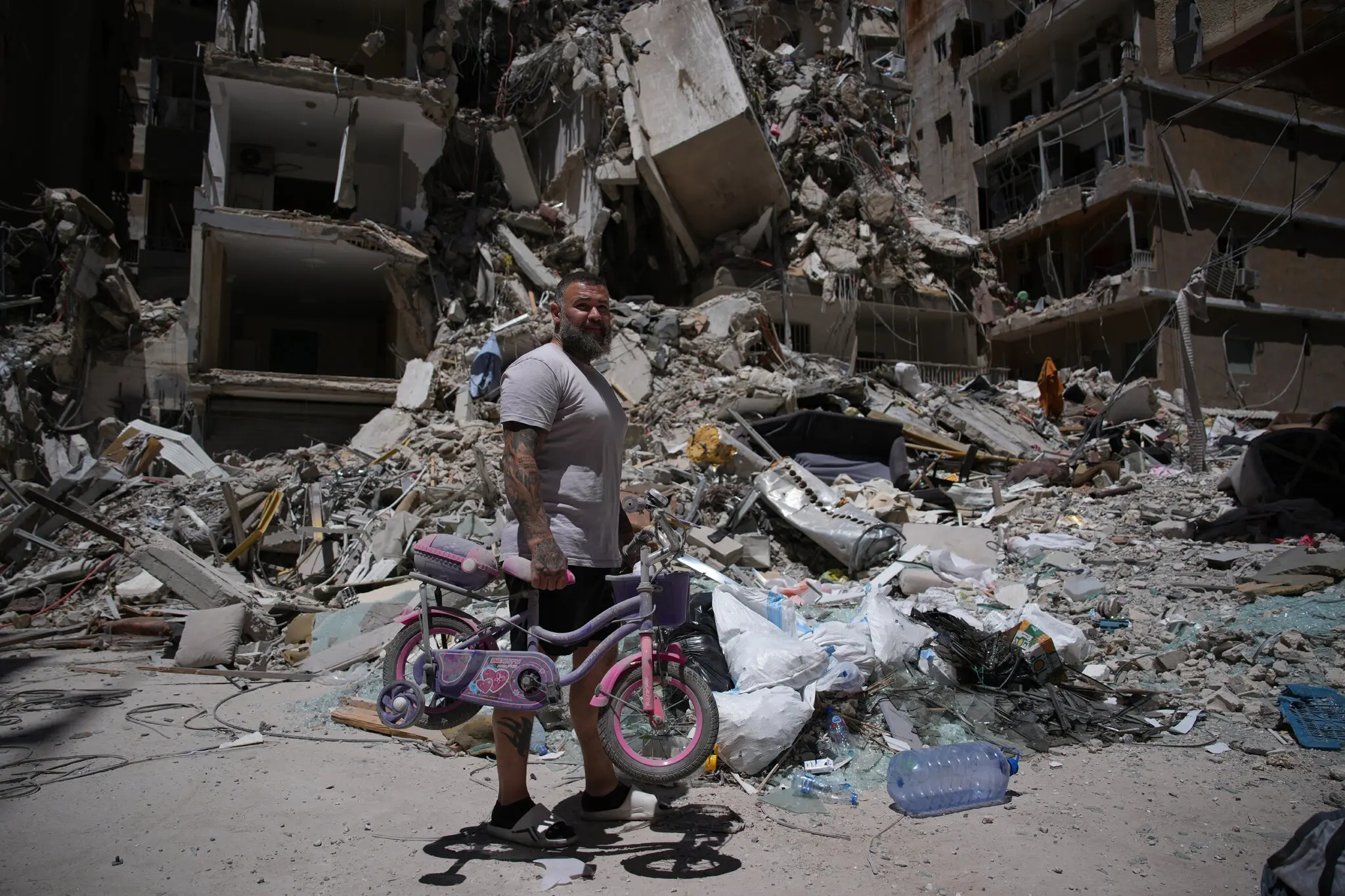
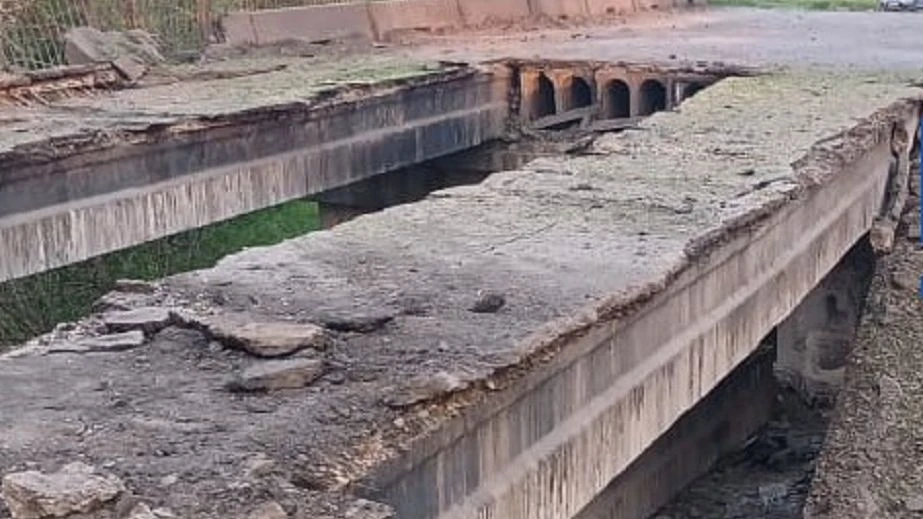
The earthquakes added another layer to this structure. After the destruction, the United States sent troops, aid and cash in an effort to strengthen the interim government and prevent chaos. The humanitarian response gave Washington an even greater physical presence inside the country. But it also delayed the political transition, because in a disaster, those in power always have a reason to ask for more time.
For Rodríguez, that may be useful. She wants greater financial autonomy, sanctions relief and less domestic pressure. Her logic is simple: if she maintains order, cooperates with the United States and opens the oil sector, Washington should give her more room. But Rubio is in no hurry to release control, because control remains the main guarantee of Caracas’s obedience.
Venezuela’s foreign policy has also changed. When Caracas tried to issue a mild condemnation of the American strike on Iran, Washington made clear that such independence was unwelcome. The statement was deleted. It was a small episode, but its meaning was large: a state that recently built an anti-American axis with Tehran, Moscow and Havana now has to coordinate even the tone of its public statements.
Security cooperation has gone even further. Venezuelan authorities hand over people wanted by American justice and assist operations against criminal structures. For the United States, this is effective. For Caracas, it is a way to prove loyalty. But for Venezuelans, it is another sign that the boundary between national jurisdiction and American will has become almost transparent.
The weakest point of the entire arrangement is its legitimacy. Maduro was hated by much of society, but his removal by a foreign power does not automatically create a democratic order. Authoritarianism does not disappear simply because its outside patron changes. If elections are postponed and old security officials remain in place, the system may be repainted without being reborn.
María Corina Machado remains the symbol of that unresolved contradiction. She is popular and has political legitimacy among much of the opposition, but her return could trigger instability and confrontation with the security services. That is why Washington keeps her at a distance. Stability has again become more important than democracy.
Investors see the problem. Venezuela’s oil industry is degraded, corrupt networks have not disappeared, the legal system is weak and the future government remains uncertain. An American umbrella can reduce some risks, but it cannot replace a political mandate or public trust. Capital enters cautiously where rules depend on Washington’s mood and the survival of an interim administration.
For Rubio himself, Venezuela has become a major test. If the experiment succeeds, he can present himself as the architect of a country’s recovery after years as a symbol of anti-American socialism, corruption and decline. If it fails, his name will be tied to a new kind of protectorate, where democracy was postponed for oil and control.
Trump’s Venezuela is no longer fully sovereign in any practical sense, but it is not yet stable. It is suspended between foreign management, an authoritarian domestic inheritance, American energy ambitions and society’s demand for real elections. In that space, Rubio holds the greatest power — and the greatest responsibility.
His control can stop corruption schemes, open the oil sector and stabilize state accounts. But it cannot indefinitely replace the political will of Venezuelans. At some point, the question will shift from whether Washington can run Venezuela to whether it has the right to do so.
That is where the diplomacy of force ends and its most dangerous boundary begins. Rubio can distribute money, approve appointments, control sanctions and set the rules of the oil game. But if democracy remains a promise without a date, Venezuela will become not a triumph of American order, but proof that imperial control can destroy even the goals it claims to serve.