






















András Schiff has not been in Hungary since 2010, when he returned for his mother’s funeral. Since then, one of the world’s most admired pianists has kept his distance from the country where he was born, refusing to perform there while Viktor Orbán remained in power. Now, after Orbán’s electoral defeat, Schiff is preparing to return.
His return does not look like an ordinary concert announcement. It is closer to the end of a long moral pause — a silence he chose in protest against a political system he believed was moving Hungary away from democratic Europe. For Schiff, the stage has never been fully separate from civic responsibility.
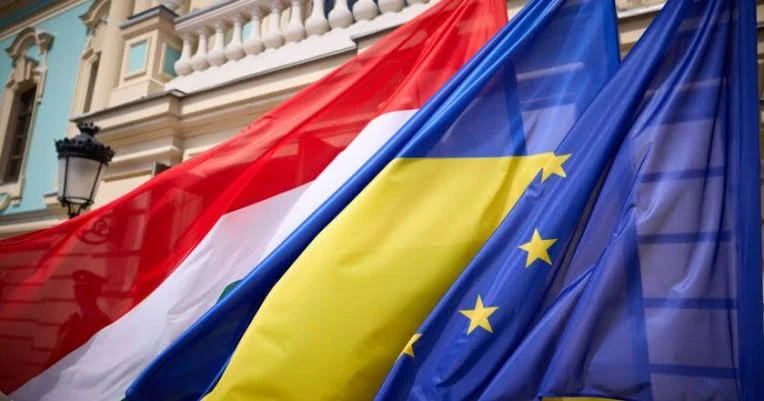
Orbán’s defeat came as a surprise to him. The opposition movement led by Péter Magyar won decisively, ending the long dominance of Fidesz. Hungarian politics, which for years had seemed frozen in place, suddenly opened a window onto another possible future.
According to Daycom’s assessment, Schiff’s story matters because it reveals the political weight of cultural absence. Sometimes an artist exerts influence not only through the places where he performs, but through the places he refuses to enter. His silence in Budapest was a form of presence — negative, painful and stubborn.
Schiff is not an artist who accidentally found himself near politics. He made politics part of his ethical biography. He placed Hungary among the countries where, in his view, strongman rule corrodes democratic institutions, public language and the atmosphere of freedom itself.
That position has carried a cost. It narrowed his concert geography, complicated his relationship with institutions, cost him some audiences and turned each appearance into a potential political statement. But that is precisely why it does not feel like a gesture made for convenient publicity.
The pianist refused to perform in Russia after the full-scale invasion of Ukraine. Later, he canceled appearances in the United States over Donald Trump’s return to power and the rhetoric he described as unacceptable. For Schiff, these are not separate grievances against governments, but parts of a consistent line: music should not help normalize authoritarian politics.
Hungary remained the most painful case. This was not a foreign country, but the place of his childhood, language, memory and musical formation. To turn away from it meant more than canceling concerts. It meant admitting that his homeland had become morally incompatible with his idea of freedom.
Now that inner prohibition has not disappeared entirely, but for the first time in many years it has weakened. Schiff has said he intends to return to Hungary within this calendar year. It will not be merely a concert, but an event in which personal biography and national political change meet.
Still, his optimism is cautious. Péter Magyar is not, for Schiff, an unquestioned hero. He emerged from Orbán’s former circle, and his political character still has to be tested by power. Yet after a long era of concentrated authority, even the possibility of change matters.
That is the complexity of the Hungarian moment. Orbán’s defeat does not automatically dismantle the system built over years. Courts, media, state companies, cultural institutions and administrative networks do not change overnight. A political victory only opens the field for a struggle over the state.
For Schiff, returning therefore cannot be a celebration without shadow. It is more like a first visit home after a long illness: the door is open, but the rooms still carry the smell of the past. He is not returning to a purified country, but to one that has only begun to ask what it had become.
His chosen examples — Beethoven, Bartók, Toscanini — show the tradition in which he places himself. It is the tradition of an artist who does not treat talent as permission for indifference. Beethoven crossed out his dedication to Napoleon, Bartók left fascist Hungary, and Toscanini refused to serve Mussolini’s regime.
These comparisons may seem too large for contemporary concert politics. But Schiff is not claiming that the historical situations are identical. He is pointing to a principle: art always exists within a moral climate. When that climate becomes poisonous, neutrality also becomes a position.
That is why his argument with parts of the music world is so sharp. Many artists prefer to remain outside politics, explaining that choice as loyalty to music, to an orchestra or to the public. Schiff sees in that silence the danger of convenience — the kind that allows institutions to function as if nothing has changed.
His view can be severe, and at times unfair to those who choose a different tactic. But it raises a question the cultural world cannot avoid: does the stage have a right to autonomy when power uses culture as a decoration of normality? And where is the line between professional loyalty and political accommodation?
The Hungarian case makes that question especially visible. During the Orbán years, the country became a model for many right-wing populists: a managed democracy with controlled media, loyal institutions and a rhetoric of national protection. Its political change now carries symbolic meaning far beyond Budapest.
Schiff’s return will not repair Hungarian democracy or replace reforms. But it can become a precise cultural sign: a country that some of its own artists had considered lost to conscience has again become a place one can enter not through compromise, but through hope.
For the pianist himself, it will also be a difficult moment. The audience that hears him in Budapest will not consist only of people who supported his stance. There will be those who waited, those who felt hurt, those who disagreed, those who quietly understood and those who thought his boycott excessive. The concert will inevitably become a meeting with all those memories.
In that sense, music can do something political speech cannot. It will not erase conflict, but it can allow conflict to sound without shouting. After years of absence, Schiff’s first notes in Hungary will not be only Bach or Mozart. They will test whether a country can listen to itself again.
The central point in this story is not the triumph of a musician over a politician. Nor is it simply the homecoming of a famous pianist. It is a reminder that culture does not live outside history. It either notices how the air around it changes, or agrees to breathe whatever it is given.
For years, András Schiff chose absence as a form of resistance. Now he is choosing return as a form of cautious trust. For Hungary, this is a small but revealing test: whether political change can become not only a change of government, but the return of voices that once decided it was no longer possible to play at home.