















Brian Burch, the U.S. ambassador to the Holy See, holds an unusually delicate diplomatic post: he represents Donald Trump before Pope Leo XIV, the first pope born in the United States. On paper, that could have looked like a rare moment of closeness between Washington and the Vatican. In practice, it has become a test at the intersection of politics, faith and personal loyalty.
The central conflict revolves around the U.S.-Israeli war against Iran. Pope Leo XIV has said that the criteria for a just war are not present in Iran. For the Vatican, this was a moral judgment rooted in Catholic tradition. For the Trump administration, it was an unwelcome signal at a moment when the White House is seeking not only military support, but moral justification for its actions.
Burch has tried to blur that contradiction. He insists that the Vatican has not issued a definitive judgment on whether the war is just or unjust. Even when confronted with the pope’s direct words, the ambassador shifts the discussion toward procedure and competence: in his reading, the pontiff has only a limited set of facts and cannot judge the decision of a sovereign state in the same way as its elected leader.
According to Daycom’s assessment, Burch’s real role becomes visible precisely in this linguistic defense. He is not merely explaining U.S. policy at the Vatican. He is trying to subordinate the moral language of the Catholic Church to the political logic of the White House. This is not classic diplomacy between two states, but an effort to keep the pope within boundaries convenient for the president.
The post of ambassador to the Holy See has always been unusual. The Vatican is not an ordinary state with an army, a market or a geopolitical bloc. Its power lies in moral influence over 1.4 billion Catholics and in its ability to speak a language that does not depend on military budgets. That is why the conflict between Trump and Leo XIV matters more than another diplomatic disagreement.
Burch is in a personally complicated position. He is not only a diplomat, but also a longtime conservative Catholic activist. His political biography is closely tied to a movement that helped Trump win Catholic voters in key states. He arrived at the Vatican not as a neutral career official, but as a representative of American Catholic conservatism that made its bet on Trump.
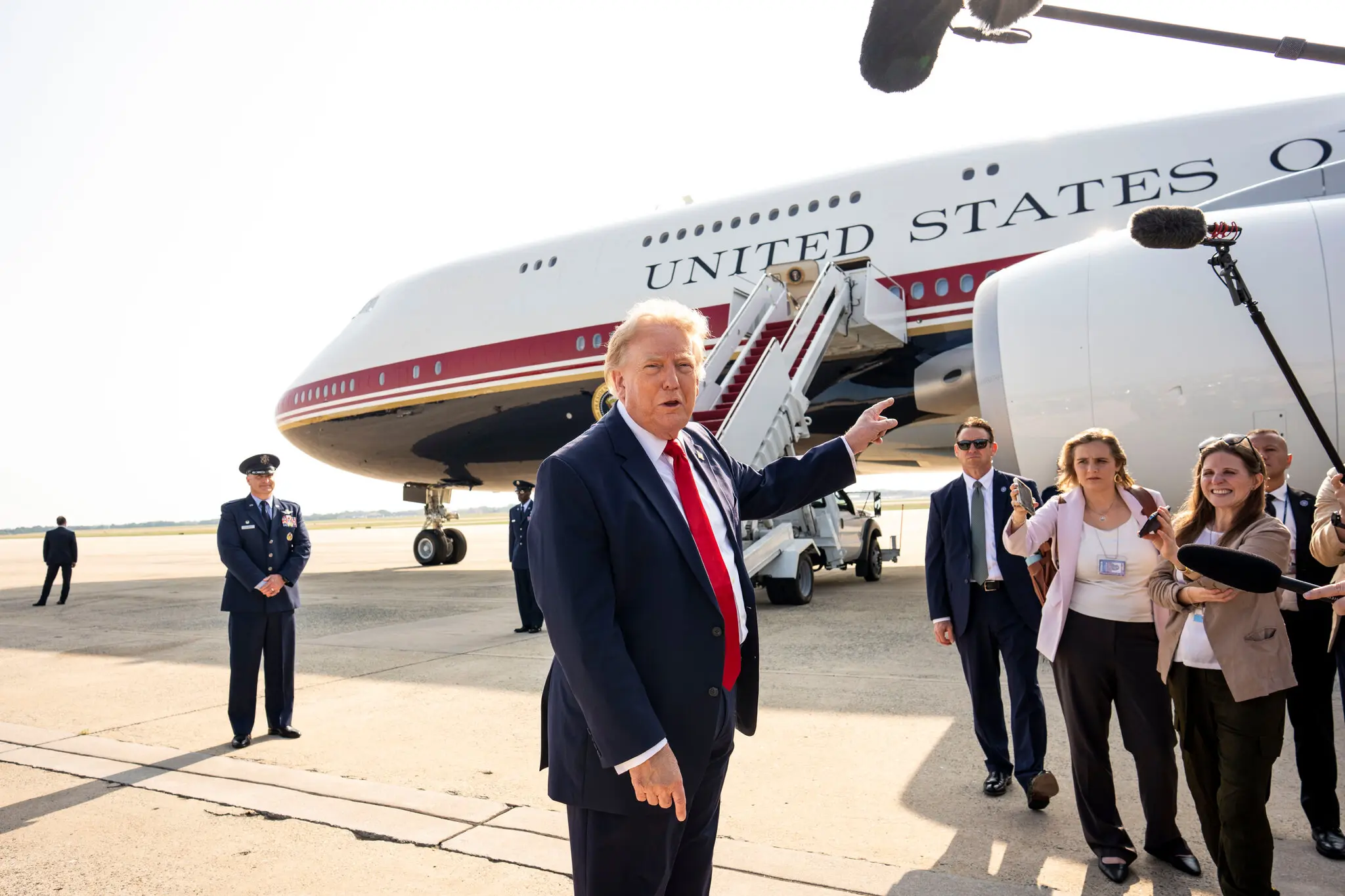
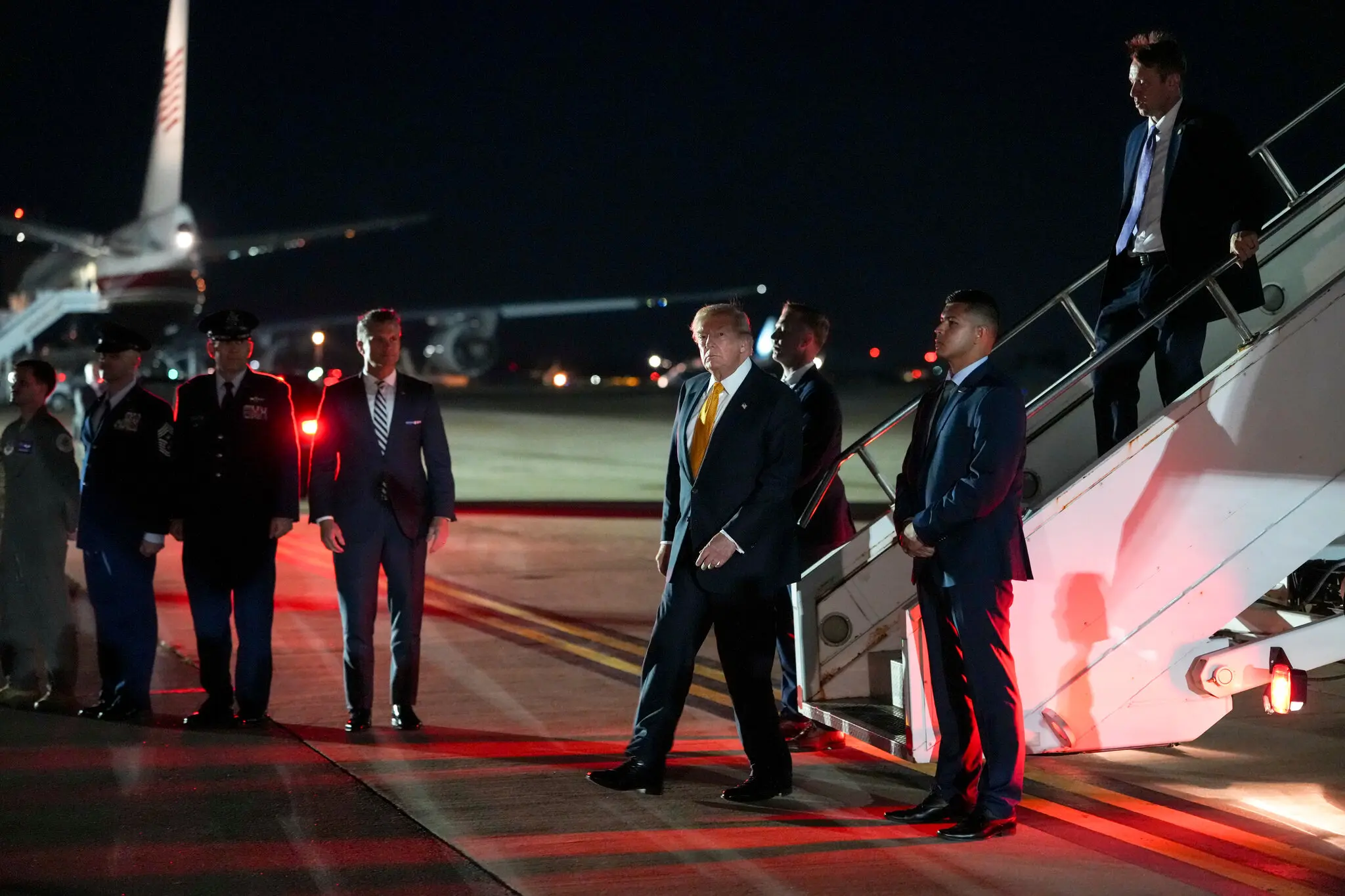 Президент Трамп виходить з літака Air Force One після приземлення на базі Мілденхолл у Великій Британії в середу — Даг Міллс
That bet has its own history. Conservative Catholics in the United States long had doubts about Trump because of his character, style and moral reputation. But over time, part of the movement concluded that he was the most effective political instrument for defending its priorities — from courts and abortion to education, religious liberty and the broader cultural struggle.
Burch became one of the symbols of that turn. In his political logic, Trump is not so much a model of personal virtue as a holder of power capable of advancing the agenda of conservative Catholics. His loyalty to the president is therefore not accidental bureaucratic discipline. It is part of a wider alliance between political Trumpism and a segment of the American Catholic world.
The emergence of an American pope has complicated that arrangement. Leo XIV did not become an automatic ally of Washington simply because he was born in the United States. On the contrary, he speaks from the position of a global church for which American politics is only one center of power, not its moral standard. This is especially visible on questions of war, migration and the treatment of the poor.
Trump, by contrast, thinks in terms of pressure, deals and public dominance. His criticism of the pope on social media, accusations that Leo is weak on crime and foreign policy, and hints about “radical left” rhetoric all showed that the president treats moral disagreement not as a theological position, but as a political challenge.
Burch tries to translate even these outbursts into the language of negotiation. To him, Trump’s sharp statements are not an attack on the pope, but a way to secure the Holy See’s support on the issue of nuclear danger. That interpretation is convenient for the White House, but it barely conceals the central point: Washington wants the Vatican not merely to remain silent, but at least not to obstruct the moral legitimization of the war.
This is where the deepest contradiction appears. The Catholic just-war tradition was not created to automatically bless the decisions of the state. It is meant to limit power, to ask questions about necessity, proportionality, last resort and the protection of the innocent. If an ambassador effectively argues that the final judgment belongs to the sovereign rather than to the church’s moral authority, he is changing the balance of that tradition.
For the Vatican, this is a delicate moment. Leo XIV may be American by birth, but he cannot allow his papacy to look like an extension of American foreign policy. On the contrary, he must demonstrate the universality of his mission — especially before countries that already suspect the West of double standards.
That explains his choice of symbolic gestures. On the 250th anniversary of the U.S. Declaration of Independence, the pope did not travel to Washington. He visited Lampedusa instead, the Mediterranean island that has become a gateway to Europe for asylum seekers. He congratulated Americans, but also reminded them that defending human life includes welcoming, protecting and assisting migrants.
The gesture was restrained, but eloquent. Leo XIV did not break his connection with the country of his birth, but he refused to play the role of honored guest at Trump’s political celebration. He placed another theme beside American freedom: responsibility toward the stranger, the refugee and the person without protection. For the current administration, that is one of the most sensitive moral challenges.
At the same time, the pope did not close the door to the American ambassador. A private dinner with Burch and his family at the ambassador’s residence in Rome became an important signal. For the Vatican, it may have been a way to keep a channel of dialogue open. For Burch, it was a diplomatic success that could be presented as proof of closeness between the two states and of the possibility of speaking about Trump’s “bold leadership.”
But personal courtesy does not erase structural tension. Trump has not yet visited the Vatican and, as far as is known, has not spoken directly with the pope. Vice President J.D. Vance and Secretary of State Marco Rubio have met with Leo XIV, but the central contact between the two most visible American men in the world remains indirect, mediated and politically charged.
That makes Burch’s role even more important. He is supposed to be a bridge, but he behaves more like the president’s advocate. When the Vatican criticizes the United States, he speaks of disproportion and points to China, implying that the Holy See should be tougher on other human-rights violators. There is diplomatic logic in that move, but also an attempt to deflect attention from the specific moral claim being made against Washington.
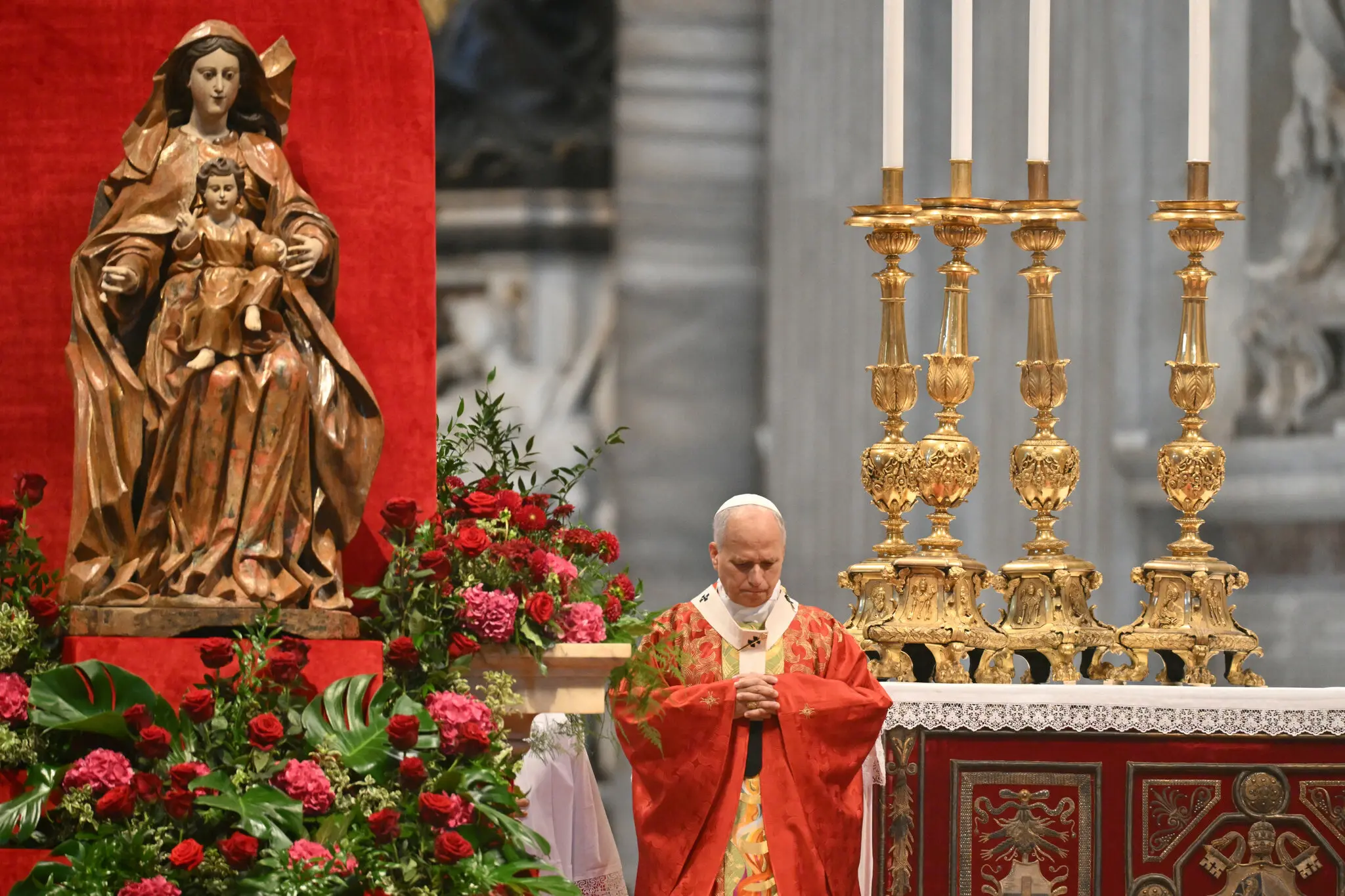 «Я вважаю, що це вже було чітко сказано: в Ірані критерії справедливої війни відсутні», – сказав Папа Лев XIV — Альберто Піццолі
For Trump, Pope Leo XIV is an inconvenient interlocutor. Unlike many world leaders, the pontiff does not depend on American tariffs, military aid or personal threats. He cannot force the president to change course, but he can deprive him of part of his moral comfort. In politics, where the image of strength often matters as much as strength itself, that carries weight.
Burch understands the power of the pope’s words. He openly acknowledges that when the Holy Father speaks, people listen. That is why the Trump administration seeks not so much to defeat the Vatican as to neutralize its possible opposition. For the White House, papal silence on Iran would already be a political gain. Approval would be an even greater one.
Yet Leo XIV is so far acting on his own terms. He is not turning the conflict with Trump into an open war, but he is not abandoning moral language where he believes it is necessary. His papacy may become not a gift to the United States, but a mirror: an American pope reminding America that its power does not free it from moral limits.
In this sense, Burch is not merely an ambassador. He is a figure of a new American Catholic moment in which faith, partisanship and geopolitics are increasingly intertwined. His mission is not only to represent the president before the pope, but to persuade the Catholic world that Trump’s politics do not contradict the moral order, and supposedly serve it.
That is where his task becomes almost impossible. Pope Leo XIV is not required to be the White House’s spiritual ally. He may be American, but his authority does not come from Washington. And the sharper the war with Iran, the migration debates and the questions of global leadership become, the clearer it is that what stands between Trump and the pope is not only an ambassador, but a different understanding of what power means.
Burch has already made his choice. He represents the president, defends his language, softens his conflicts and tries to translate his decisions into a Catholic vocabulary. But the Vatican is not another American political district. If the pope continues to speak as a moral arbiter while Trump speaks as a leader demanding loyalty, the ambassador will increasingly have to explain not the closeness of two worlds, but the depth of the divide between them.