

















Volodymyr Zelensky’s phone call with United Arab Emirates President Sheikh Mohammed bin Zayed Al Nahyan went beyond routine diplomacy. It showed how Russia’s war against Ukraine is increasingly connected to the security crises reshaping the Middle East.
The conversation centered on three issues: the UAE’s role in helping bring Ukrainians home from Russian captivity, the security of the Gulf after the escalation involving Iran, and reciprocal cooperation, including support for Ukraine’s energy sector. Zelensky stressed that Ukrainian expertise is already helping protect lives in the region.
This marks an important shift in Ukraine’s role. Kyiv is no longer only asking for weapons, fuel, funding or political backing. It is also offering partners something gained at extraordinary cost: practical knowledge of air defense, drone warfare, critical infrastructure protection and rapid adaptation under mass attacks.
According to Daycom’s earlier analysis, this exchange of experience is becoming a new currency of Ukrainian diplomacy. A country that has lived for years under Russian missiles and attack drones does not bring theoretical briefings to the table. It brings battlefield competence now needed by Gulf states.
The UAE matters to Ukraine not only as a wealthy partner. Abu Dhabi has repeatedly acted as a mediator in humanitarian issues, especially in efforts to return people from Russian captivity. For Kyiv, this is one of the few channels where Emirati political flexibility can produce results that direct dialogue with Moscow rarely can.
The issue of captives was not an accessory to the call; it was one of its central nerves. Ukraine sees every line of influence on Russia as a possible path for bringing back soldiers and civilians. In that sense, the UAE has become part of the humanitarian infrastructure of the war.
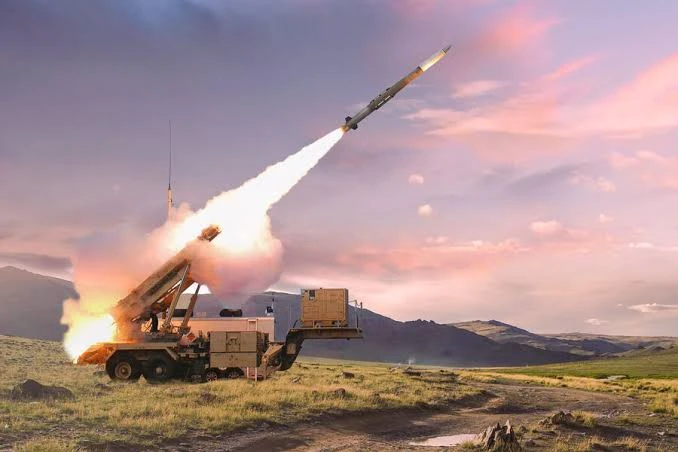
The second line is Middle Eastern security. After Iranian drone and missile attacks, air defense is no longer a narrow military topic for Gulf states. It is a question of energy facilities, ports, airports, financial stability and the insurance of global trade.
Ukraine enters this conversation from a unique position. Its cities, power plants, ports and logistics networks have spent years under attack by Russian missiles and Iranian-designed drones adapted by Moscow for its own war. Ukrainian specialists can therefore speak not about abstract defense, but about survival systems.
That experience is not limited to one type of weapon. It includes target detection, mobile fire groups, coordination between military and civilian services, protection of energy sites, allocation of scarce air-defense resources and constant training. In modern war, technology matters — but so does the speed of adaptation.
For Ukraine, this creates a rare diplomatic advantage. A country fighting a major war usually depends heavily on outside assistance. Kyiv still does. But it is also becoming a donor of security experience to a region where a single failure can affect not only human lives, but global energy prices.
The energy dimension is especially important. Zelensky thanked the UAE for the support Ukraine needs, including in the energy sector. For Kyiv, this is not a secondary issue: Russian strikes on power plants, substations and gas infrastructure have made energy resilience part of national security.
The logic of cooperation is becoming clearer. Ukraine shares its experience in countering drones and protecting critical infrastructure. The UAE, in turn, can help where its resources and diplomatic channels matter most: humanitarian exchanges, energy resilience, investment and long-term security projects.
For the Emirates, this partnership is also rational. The country has modern weapons, powerful allies and financial resources, but the drone war has exposed the limits of traditional defense. Cheap mass-produced unmanned systems require layered protection, where interceptors are only one part of a larger architecture.
Ukraine has gone through that learning curve in the harshest possible way. Its experience lies not only in hardware, but in a culture of fast adjustment: how to avoid spending expensive missiles on every cheap target, how to cover infrastructure, how to combine centralized command with flexibility on the ground, and how to keep systems functioning under nightly attacks.
At this point, two wars intersect: Russia’s war against Ukraine and the Middle Eastern escalation around Iran. They are linked by the same logic of attack — cheap drones, mass launches, psychological pressure, strikes on infrastructure and an attempt to exhaust defense systems. That is why Ukrainian expertise now has value far beyond Europe.
For Kyiv, the relationship with the UAE is also a way to widen its circle of partners beyond the familiar Western framework. Ukraine is not moving away from the central role of the United States and Europe, but it is working more actively with states that have money, energy resources, mediation channels and their own interest in containing the drone threat.
This diplomacy carries risks. The Middle East is built on complex balances, and the UAE maintains channels with different centers of power. Ukraine must avoid becoming an instrument in someone else’s regional game and keep its focus clear: returning captives, strengthening energy security, attracting investment and improving protection against Russian attacks.
That is why Zelensky’s call with Mohammed bin Zayed was not merely another conversation after a crisis week. It fixed a new formula: Ukraine is not exporting war, but the experience of surviving war. If that experience helps protect Gulf cities, it must return to Ukraine as energy support, technology, political leverage and people brought back from Russian captivity.