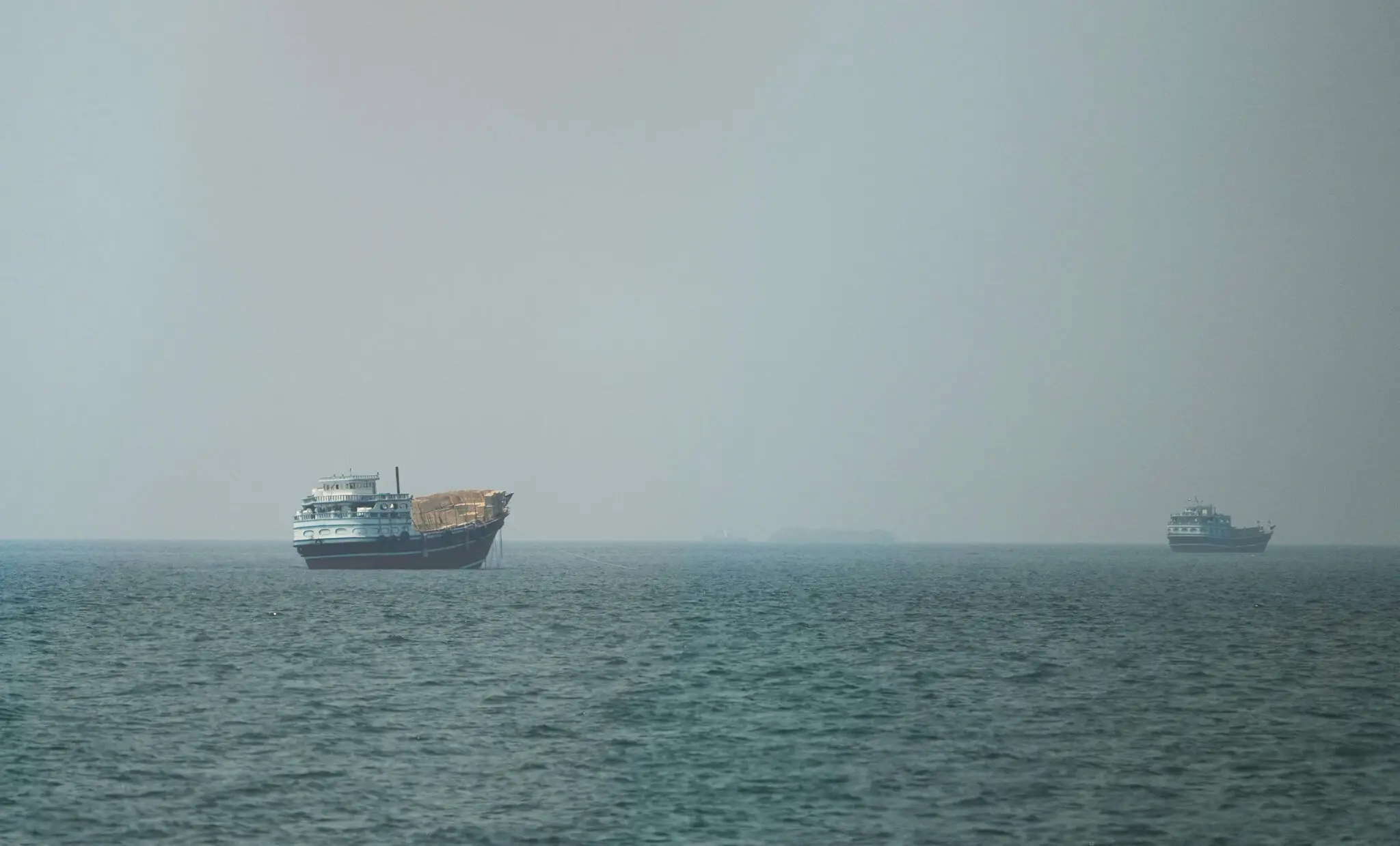






















The American blockade of Iran in the Strait of Hormuz changes the logic of this war. Until now, the central story revolved around strikes on military facilities, missile launch sites and nuclear infrastructure. Now something else moves to the center: not the destruction of force, but the constriction of a state’s vital circulation.
This is not merely a naval operation. It is an attempt to strike at the main source of Iran’s endurance — oil exports, which provide the regime with hard currency, budgetary oxygen and the means to sustain conflict longer than its formal military weakness would suggest. In that sense, the blockade is an economic weapon dressed as a maritime measure.
That is why this stage of the conflict looks more dangerous than the last. A missile campaign has limits. A blockade does not. It may not end a war quickly, but it almost always stretches it out, shifting the struggle from the realm of firepower into the realm of exhaustion, prices, insurance, freight and political stamina.
As Daycom’s earlier analysis suggested, wars of this kind are decided not only by who can strike harder, but by who can endure accumulating losses for longer. That is what is now unfolding around Hormuz: the United States is trying to turn military superiority into economic strangulation, while Iran is trying to turn its own weakness into a global bill paid by everyone else.
Trump appears to be betting on two outcomes at once. The first is to force Tehran to accept terms it had already rejected in negotiations: surrendering its uranium stockpile, dismantling its nuclear infrastructure and abandoning its claim to regulate movement through the strait. The second is an older American hope — that internal pressure and worsening living conditions might eventually shake the regime itself.
But this is where the American strategy meets its hardest reality. Iran has already shown that it is willing to pay a high price to preserve the political core of its power. This is not a system that retreats because of social discomfort or fears its own population enough for economic pain to translate automatically into political collapse. For Tehran, public suffering has never been sufficient reason to change course.
That is why Iran’s response takes on an almost mirror image. If the United States wants to choke Iranian oil, Iran will try to make expensive oil hit the United States in return. Tehran has already shifted the conflict into global markets, where every rise in Brent, every increase in gasoline prices and every new wave of financial unease can work against the White House as effectively as a military strike.
Hormuz, in that sense, is no longer only a geopolitical theater. It is becoming an American domestic political story as well. Iran is betting that Trump’s tolerance for economic pain is limited, especially ahead of the midterm elections. If fuel prices rise, the pressure will be felt not by an abstract Washington, but by a concrete American voter for whom war in the Gulf is measured at the pump.
There is a revealing paradox in Trump’s own position. Not long ago, he tried to bomb Iran without breaking the global oil market, allowing some Iranian oil to keep moving at sea. It looked like a half-war: coercion without fully severing the source of revenue. The current blockade is, in effect, an admission that the earlier formula did not work.
Even now, however, the American plan is less absolute than its public rhetoric suggests. The language speaks of a total blockade, but the actual mechanism is narrower: ships heading to or from Iranian ports are the target, while cargo from other Gulf states is formally allowed to pass. That reduces the scale of the operation on paper, but does nothing to remove the risk in practice.
The Strait of Hormuz does not permit clean legal designs. Even if the blockade is formally aimed only at Iran, shipowners, traders and insurers do not price the wording of an order. They price danger. Mines, drone attacks, fast boats or strikes on neighboring energy facilities would be enough to push the whole region back into a condition of expensive uncertainty.
That uncertainty is now Iran’s strongest weapon after the military losses of recent weeks. In a direct naval confrontation with the United States, Tehran has little chance. But a war over prices, risk and market nerves is something else entirely. If Iran cannot defeat Washington at sea, it can still try to make Washington’s victory unbearably costly.
The reaction of Iran’s biggest oil customers will be critical. China, India, Pakistan and Turkey are not merely export destinations; they are part of the external cushion that helps the Iranian system survive. If they decide to pressure Tehran in order to reopen the route, the American strategy may gain political traction. If they instead look for ways around the new rules, or for ways to profit from the crisis, the blockade could drag on.
In that case, the war will become a long contest of endurance in which both sides try to shift the cost of conflict onto others. The United States will try to impose the price on Iran through oil exports. Iran will try to impose the price on the world through the energy market. That is the central danger of the moment: Hormuz is no longer merely a shipping corridor. It is becoming a mechanism of coercion in which every day without resolution makes the crisis more expensive.
If the blockade is brief and Tehran yields, Trump will be able to present it as a sharp and successful turning point in the war. But if Iran does not capitulate and prices continue to rise, the White House will soon face the same question it is now putting to Tehran: how much pain is it prepared to endure before it begins to search for compromise.
That is why this blockade is not only about Iran. It is a test of America’s capacity to wage war not for a few days and not in the register of television spectacle, but under conditions of prolonged economic strain, global resentment and an uncertain end. A strike at Hormuz may become a moment of strength for Washington. It may also become the moment when military superiority runs up against the limits of political endurance.