






















The night of July 26 began in Kyiv with a brief air-raid alert and a series of explosions. In Kryvyi Rih, it continued into the morning with a fire whose smoke could be seen from miles away. The Russian assault once again combined two speeds of war: a rapid ballistic strike on the capital and a prolonged drone campaign against the regions.
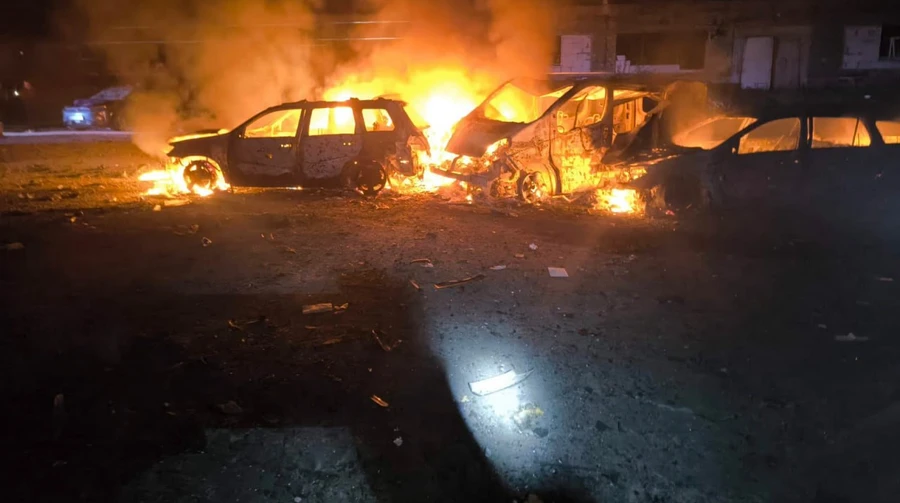
In Kyiv, falling debris and impacts triggered fires in the Desnianskyi, Shevchenkivskyi and Solomianskyi districts. Buildings, warehouses and vehicles caught fire. Three people were injured, and one was taken to hospital.
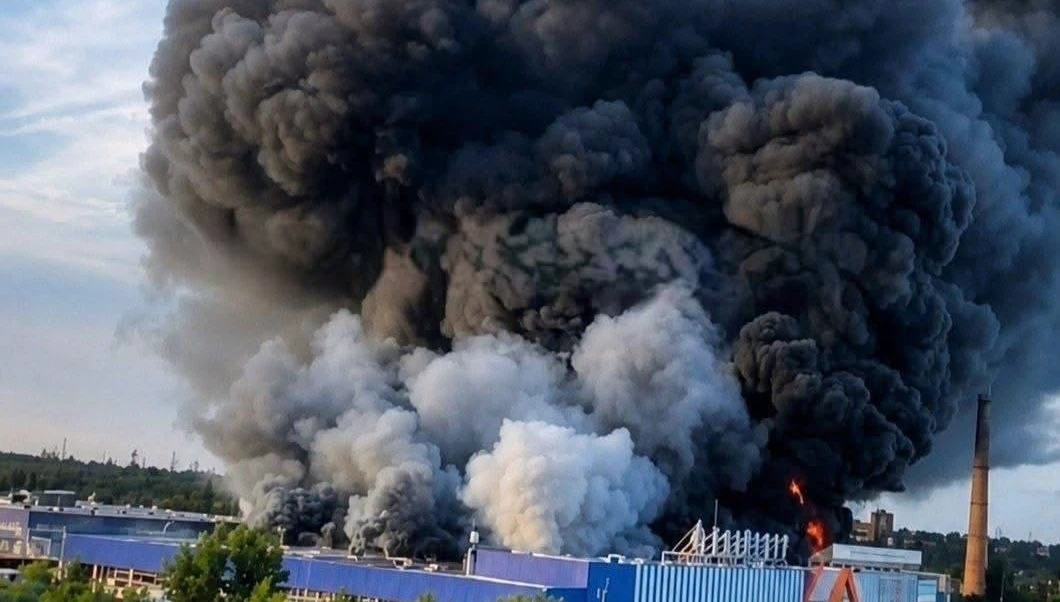
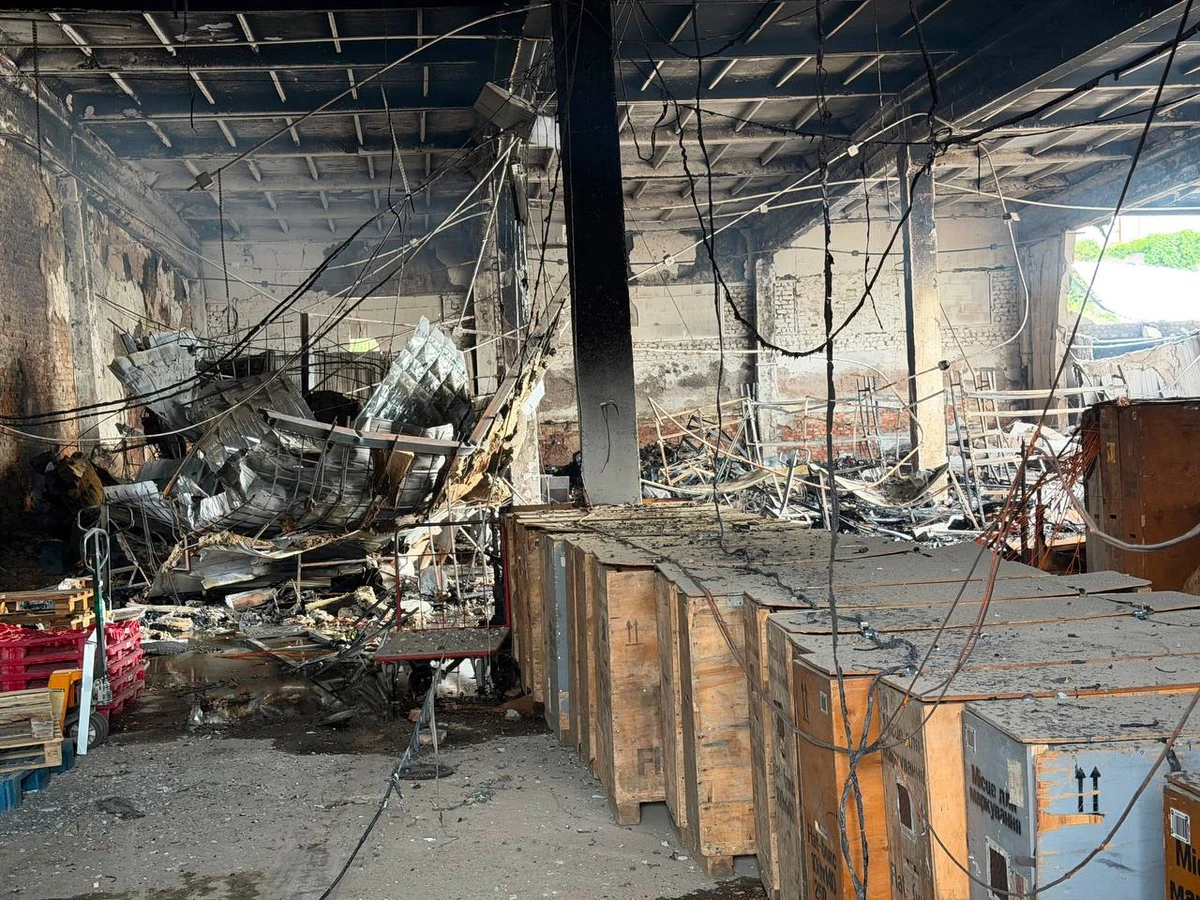
In Kryvyi Rih, the morning attack hit a major commercial site: the city’s only Epicentr home-improvement hypermarket. A large fire spread through the building. Emergency crews brought the blaze under control while municipal services organized a continuous water supply. Initial reports indicated that no one was injured.
In Daycom’s assessment, the attacks were connected not by geography but by a strategy of exhaustion. Russia simultaneously tested Kyiv’s ballistic-missile defenses, forced Ukraine to expend scarce interceptors and carried destruction into spaces directly tied to employment, commerce and everyday life.
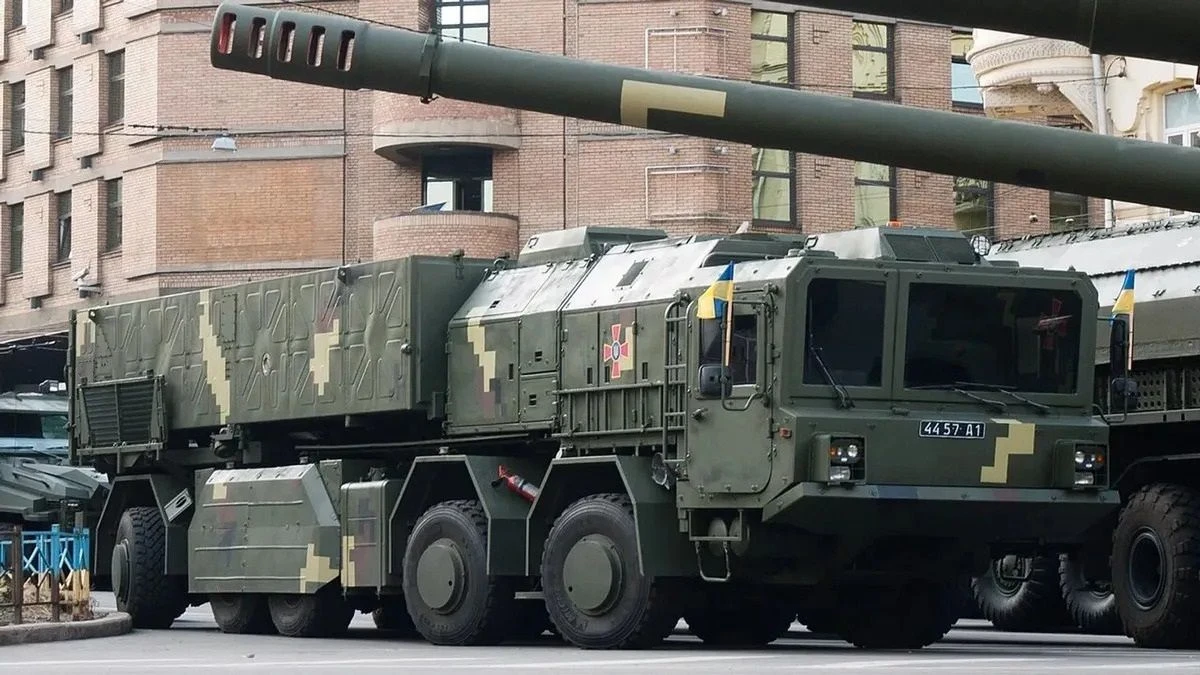
The aerial assault began on the evening of July 25. Russia launched seven Iskander-M or S-400 ballistic missiles, one Kh-59/69 guided air-launched missile and 136 unmanned aircraft of different types, including strike drones, jet-powered systems and decoys.
Ukrainian air defenses intercepted or suppressed the guided missile, five ballistic missiles and 104 drones. Two ballistic missiles and 27 attack drones nevertheless reached targets at 18 locations. Debris from intercepted missiles fell at another seven sites.
The figures reveal the limits even of highly effective air defense. Most of the incoming weapons were neutralized, yet only a handful of penetrations were needed to set buildings and parking areas ablaze in Kyiv and effectively destroy one of Kryvyi Rih’s largest retail properties.
In Kyiv’s Desnianskyi district, fire engulfed a warehouse covering about 150 square meters. Ten passenger cars and a truck burned in a nearby parking area. In the Shevchenkivskyi district, flames spread through a vacant four-story building.
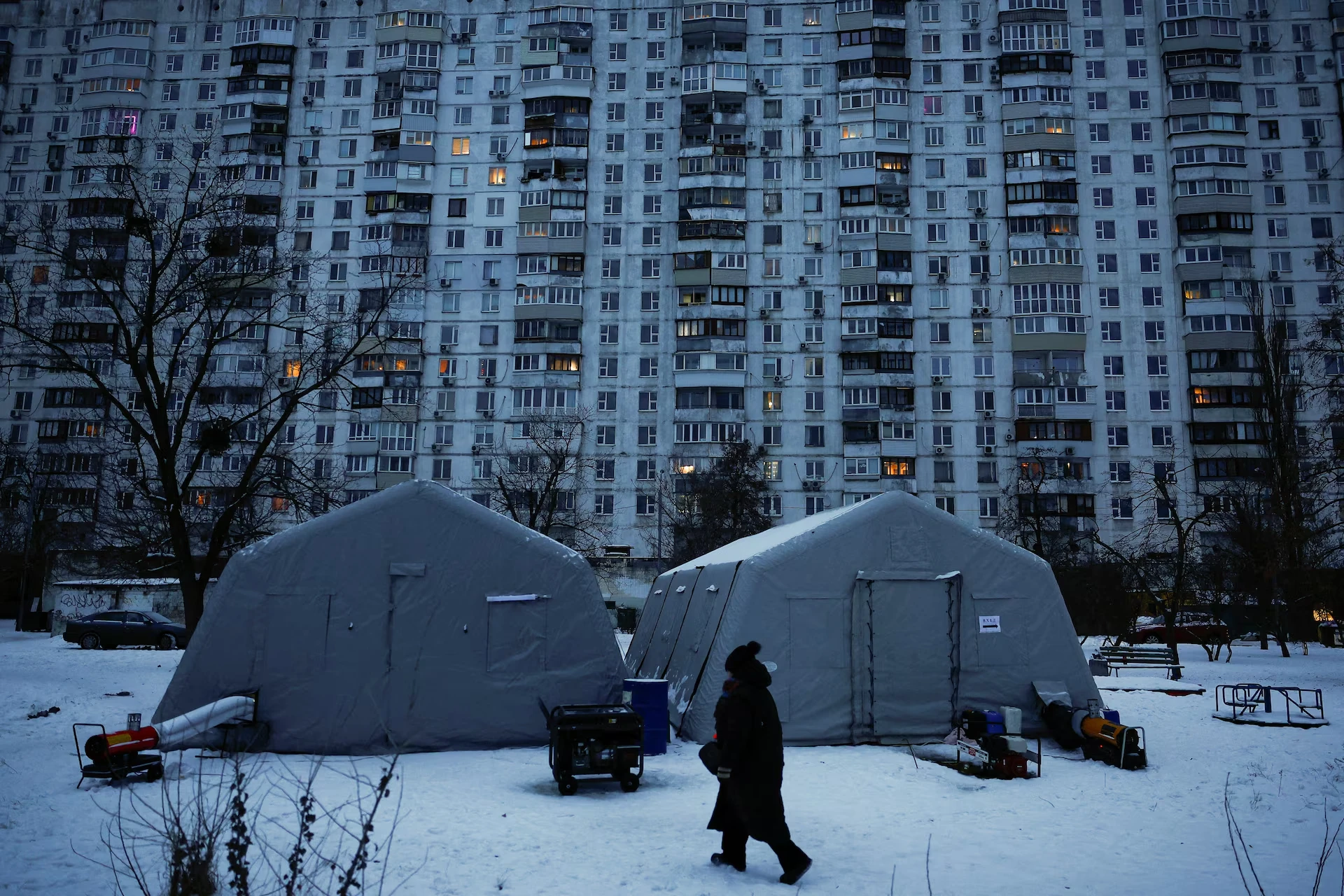
In the Solomianskyi district, a fire was accompanied by the partial destruction of a nonresidential structure. An office building, warehouses and vehicles were damaged. Debris also struck an 18-story residential building, causing a fire around the seventh and eighth floors.
Kyiv avoided mass casualties this time, but that does not make the attack unsuccessful from the perspective of Russian strategy. Every ballistic threat forces the capital to activate its most valuable air-defense layer, halt movement, interrupt commercial activity and keep emergency services on permanent alert.
Ballistic missiles leave residents almost no time to react. Only minutes may pass between the warning and a possible impact. Urban security therefore depends not only on interception, but also on accessible shelters, automated alerts and the public’s willingness to act immediately.
The strike on Kyiv was relatively brief, but its consequences lasted for hours. That is the economics of modern bombardment: a missile may remain in the air only a short time, while firefighters, doctors, police, municipal crews and repair teams spend far longer dealing with what it leaves behind.
Kryvyi Rih illustrated another part of the same strategy. Epicentr was neither a power substation nor a weapons plant. It was a civilian retail space connected to home repairs, construction, small businesses and the daily needs of hundreds of thousands of residents.
The hypermarket had operated in the city for nearly 19 years, since December 2007, and employed roughly 400 people. Its destruction means more than the loss of a building and its inventory. It also means interrupted contracts, lost income, broken supply chains and another blow to the local labor market.
The fact that it was the only Epicentr store in Kryvyi Rih makes the damage more significant. When several large retailers serve the same market, the loss of one can be partly absorbed by the others. Here, a single strike immediately reduced access to an entire category of goods and services.
A home-improvement hypermarket carries particular importance in a country at war. Such stores supply materials for covering shattered windows, repairing damaged roofs, restoring electrical systems and installing backup heating.
Its destruction therefore creates a double burden. The city must first spend resources extinguishing the fire, then cope with the loss of part of the commercial infrastructure needed to repair other buildings damaged by the war.
The attack on Kryvyi Rih was not an isolated loss for the Epicentr chain. Less than a week earlier, Russian drones destroyed one of its shopping centers in Sumy. Across Ukraine, nine company sites have been completely destroyed and another 14 damaged.
That repetition turns corporate losses into part of a wider campaign against the civilian economy. Even when no one is killed, the city inherits a lasting wound: threatened jobs, lower tax revenue, disrupted supplies and new reconstruction costs.
For Russia, this campaign has cumulative value. One destroyed store does not alter the course of the war. Dozens of damaged warehouses, shopping centers, logistics terminals and businesses gradually raise the cost of maintaining normal life in Ukraine.
Moscow is trying to make the idea of a secure rear area meaningless. Kyiv is attacked with ballistic missiles, Kryvyi Rih with drones and port infrastructure with weapons launched from the air and sea. Distance from the front no longer guarantees safety for an apartment block, a warehouse or a retail floor.
The simultaneous use of different weapons complicates Ukraine’s air-defense calculations. Ballistic missiles require the most sophisticated interceptors, while large numbers of cheaper drones overload radars, mobile fire teams and electronic-warfare systems.
Decoy drones make that arithmetic even harder. They may carry little or no explosive payload, but defenders must still track them, assess their threat and commit time and attention. Within that noise, a genuine strike drone has a better chance of breaking through.
Jet-powered drones further reduce interception time and bring the speed of the drone threat closer to that of missiles. The traditional mobile fire-team model therefore requires constant modernization: faster sensors, automated targeting and new classes of affordable interceptors.
Protecting Ukrainian cities cannot depend solely on acquiring more expensive surface-to-air missiles. It requires a layered system in which ballistic threats are handled by high-end defenses, while aircraft, mobile groups, electronic warfare and interceptor drones deal with unmanned systems.
The night of July 26 again demonstrated why a high interception rate does not equal complete safety. Air defenses may destroy most incoming targets, but cities still suffer from the few that penetrate—or from debris falling after successful interceptions.
Russian strikes also have a psychological dimension. In Kyiv, residents wake to repeated explosions without knowing whether the next missile is headed toward their district. In Kryvyi Rih, a familiar shopping center can become a blackened frame beneath a cloud of smoke within an hour.
That is how predictability, one of the foundations of civilian life, is destroyed. People can adapt to power shortages or a changed transport route. The constant possibility of a sudden strike, however, forces every ordinary day to be planned around the war.
The aftermath also demonstrated the resilience of Ukrainian cities. All fires in Kyiv were extinguished. In Kryvyi Rih, emergency crews contained the blaze, municipal services kept water flowing and the absence of customers inside the hypermarket helped prevent mass casualties.
Resilience, however, should not become a convenient substitute for protection. The ability to extinguish a fire quickly does not replace the lost building. The skill of doctors does not eliminate the need for shelters, just as successful interception does not remove the need for more systems and ammunition.
The attacks on Kyiv and Kryvyi Rih were parts of the same campaign: to force Ukraine to divide limited defenses among the capital, industrial cities, energy facilities, ports and the front. Every defensive choice leaves another target less protected.
The consequences of the July 26 assault cannot therefore be measured only by the number of wounded. In Kyiv, they include burned vehicles, damaged buildings and renewed pressure on ballistic-missile defenses. In Kryvyi Rih, they include the loss of a hypermarket, hundreds of jobs placed at risk and weakened infrastructure for reconstruction.
Russia does not stop waging war when its missiles fail to kill. It continues through fires, destroyed businesses, shortages and the hours of human labor required to repair the damage. In this strategy, every warehouse, apartment block and shopping center becomes part of the battlefield.
Ukraine’s answer must extend beyond new air-defense systems. It also requires dispersed storage, reserve retail and logistics capacity, war-risk insurance and rapid support mechanisms for workers whose employers are destroyed by Russian strikes.
The night of July 26 was not the deadliest of the war. But attacks like this define its exhausting duration. Kyiv extinguished its fires and Kryvyi Rih brought the blaze under control, yet by morning the country had awakened to another destroyed space of ordinary life.