




















When 18-year-old Josua Lottering stepped out of the airport in Dhaka, the humid, polluted air hit his lungs almost instantly. A coughing fit bent him double. Yet for the young man from South Africa, the journey was not a surrender to illness, but an unlikely opening.
He had flown to Bangladesh with his mother to buy a year’s supply of Triko, a generic version of Trikafta, one of the most important drugs developed for cystic fibrosis. In the United States, a year of the original treatment costs about $346,000.
Trikafta has changed the outlook for many patients in North America and Europe. It helps the lungs function better, reduces the burden of symptoms and gives people something that had long been out of reach: the prospect of a longer, fuller life.
Daycom’s earlier analysis has treated cases like Triko not simply as stories of one disease, but as evidence of a deeper conflict in modern pharmaceuticals: the tension between a company’s right to protect innovation and a patient’s right to reach a treatment that may determine the length of life itself.
The original drug is made by Vertex Pharmaceuticals, an American company whose cystic fibrosis portfolio has generated tens of billions of dollars since Trikafta’s launch in 2019. Yet in many lower-income countries, the medicine is either unregistered, unavailable or so expensive that access exists only on paper.
Into that gap stepped Beximco Pharmaceuticals in Bangladesh. The company reverse-engineered the drug and released Triko, relying on Bangladesh’s special status as a least-developed country, which allows exemptions from parts of the global patent regime.
Triko is not cheap in any ordinary sense. A year’s course costs about $6,350 for children and roughly twice that for adults. But compared with the American price, it turns an impossible summit into a brutal, exhausting, but imaginable route for families willing to borrow, fundraise and travel across continents.
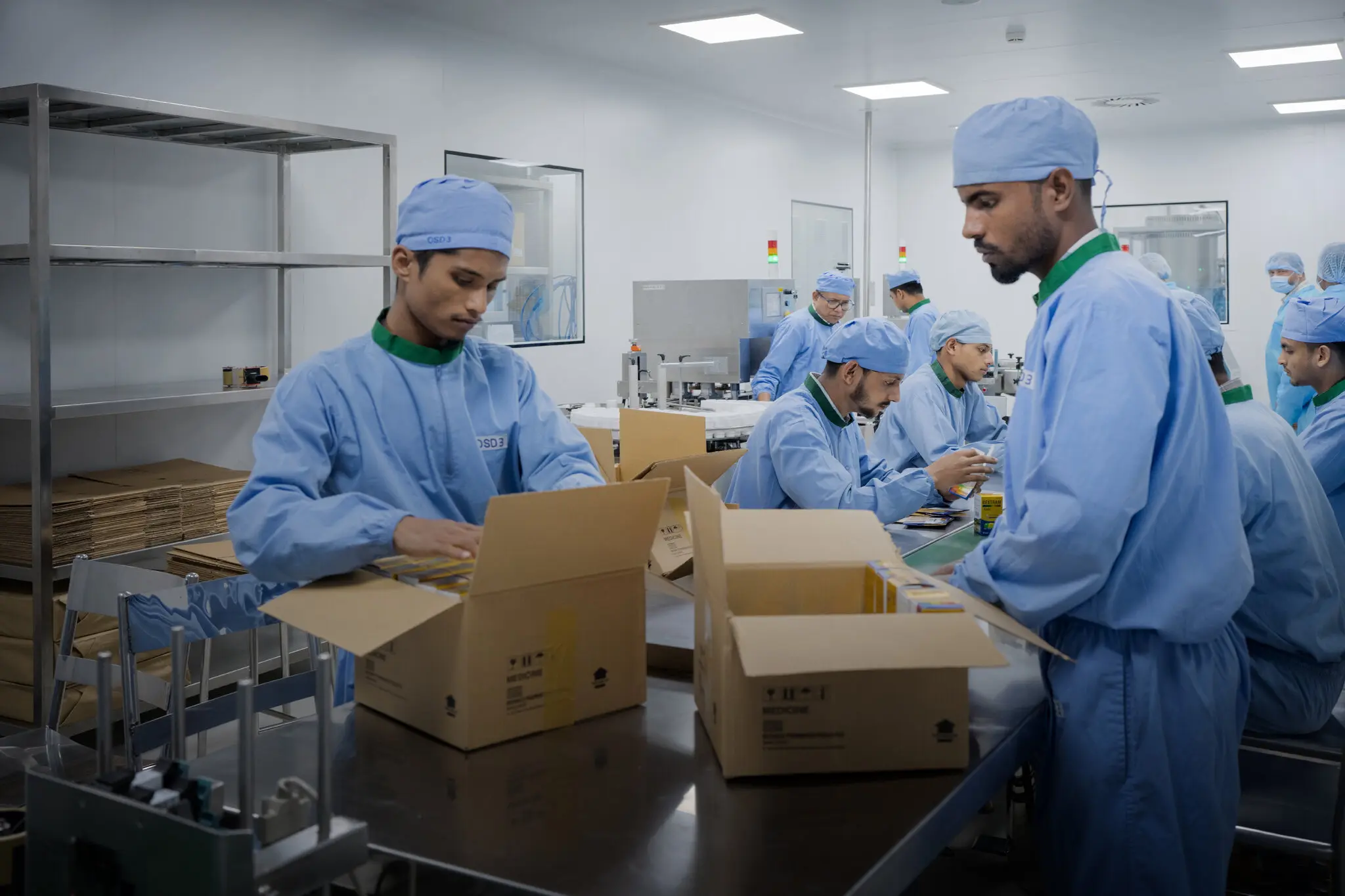 Фармацевтична промисловість Бангладеш забезпечує потреби всього внутрішнього ринку лікарських засобів, а також експортує недорогі ліки — Фабеха Монір
For Josua, that route began after a late diagnosis. South Africa does not routinely screen newborns for cystic fibrosis, leaving some children to live for years with coughing, weight loss and symptoms that are misread or explained away. He was diagnosed only last year.
His mother, Wilna Lottering, learned that Trikafta existed almost at the same moment she learned the family could not afford it. A doctor quoted a price far beyond their means, even with health insurance. Selling the family home would not have covered a full year of treatment.
Thousands of patients face the same trap in countries where cystic fibrosis remains underdiagnosed and advanced therapy is still largely the privilege of wealthy health systems. The disease is often associated with people of Northern European ancestry, but its real geography is far wider.
In India, Bangladesh, South Africa and other countries, significant numbers of patients either do not know their diagnosis or learn it too late. For them, the arrival of a generic drug is not an abstract debate over patents. It is the difference between gradual decline and the ability to imagine a future.
In Dhaka, the first boxes of Triko went not only to the Lotterings but also to other families. Among them was six-year-old Aadil Rahman from Bangladesh. His parents had spent two years moving from one doctor to another before hearing the name of a disease they had barely known existed.
When they learned about Trikafta, relief quickly turned into despair. The drug was not available in Bangladesh, and its American price belonged to a world entirely detached from the life of an ordinary Bangladeshi family. Their son grew weaker, spent weeks in intensive care and watched from the window as other children walked to school.
After his first dose of Triko, Aadil’s body began expelling the thick mucus that cystic fibrosis causes to build up in the lungs and airways. To his parents, it looked like a miracle. Behind that emotion, however, lies the hard arithmetic of access to medicine.
Beximco has long worked in the space between breakthrough science and unaffordable prices. It has produced cheaper versions of expensive hepatitis C treatments and, during the pandemic, made antiviral drugs for wider use. That record is why cystic fibrosis families turned to the company after years of searching for a path to therapy.
The model depends on several conditions. Bangladesh can manufacture such drugs because of its patent exemption. Patients from other countries can often bring medicine home for personal use. And where the original drug is not registered or covered by insurance, a generic may become the only practical alternative.
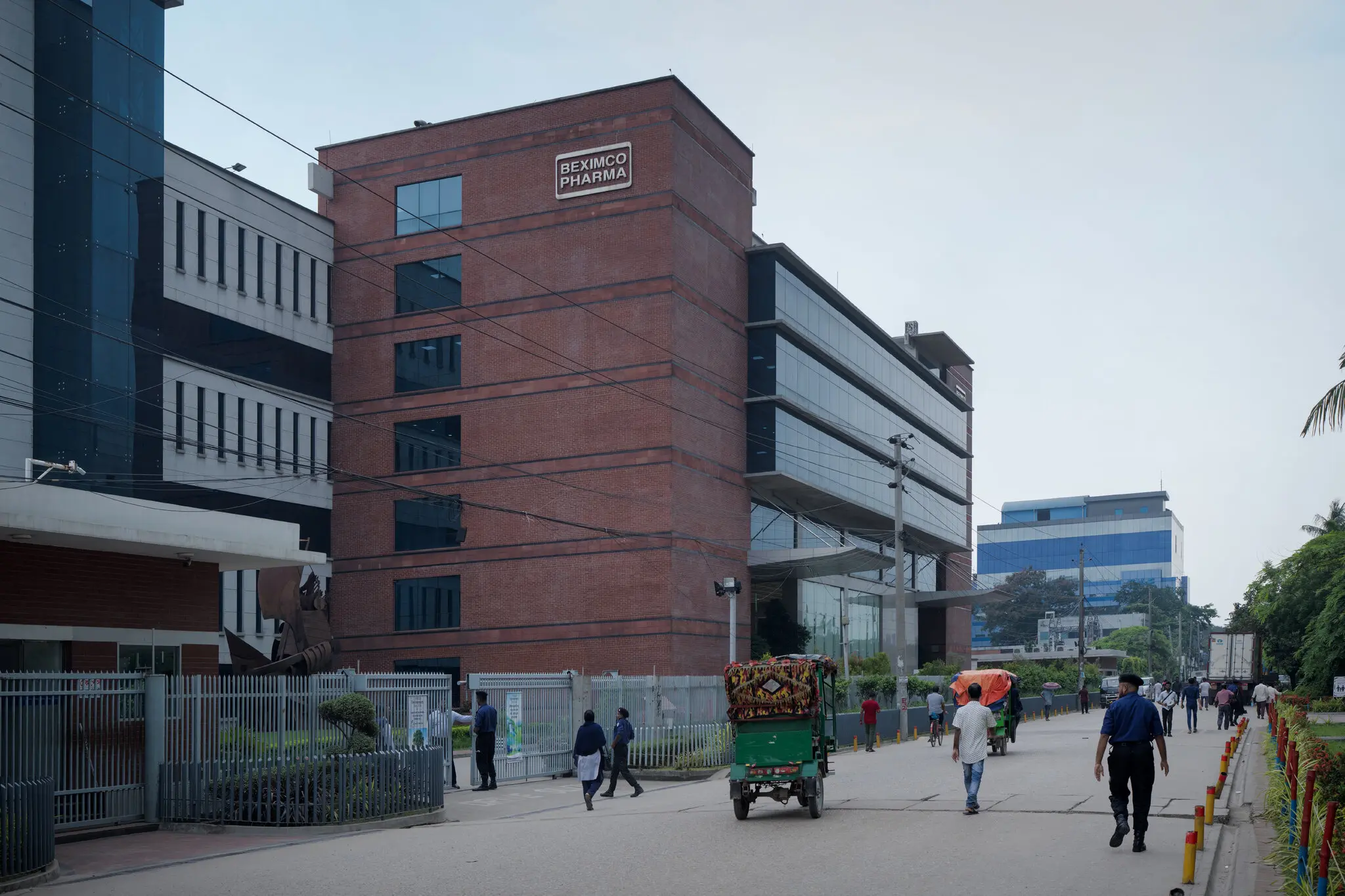 Компанія «Beximco» випустила першу партію препарату «Тріко» — достатню для дворічного лікування кількох десятків пацієнтів — і тепер буде спостерігати за тим, як розвиватиметься ринок — Фабеха Монір
Still, Triko does not erase the risks. It has been approved by Bangladesh’s national regulator, but not by most of the countries where patients hope to use it. Families must navigate customs rules, import limits and a persistent legal gray zone around a medicine they see not as optional, but as essential.
Demand is already forming. Parents are looking for suppliers, consulting patient groups and studying personal import rules. For them, the central question is not how the pharmaceutical market justifies its margins, but whether a child can breathe, eat, attend school and preserve lung function.
In Slovakia, 26-year-old Šimon Ševčík faces another version of the same problem. His national system covers Trikafta for some patients, but not for people with his particular genetic mutations. He traveled to Bangladesh for a six-month supply of Triko, hoping to recover enough to work and press his government to change its rules.
The story exposes a fault line in global medicine. Breakthrough drugs increasingly exist, but access to them is distributed not by the severity of disease, but by passport, insurance coverage, patent status and a family’s ability to raise money quickly. Innovation without access becomes a moral paradox.
For pharmaceutical companies, a patent is a mechanism for recovering investment and financing the next generation of research. For patients excluded from donation programs or public reimbursement, the same patent can look like a wall between them and survival. Both logics are real, but their consequences are not equal.
Triko is unlikely to resolve this conflict on its own. Its price remains far beyond the reach of many families, and obtaining it is still complicated. But it has already changed the bargaining position of patients. They no longer have only pleas, lawsuits and petitions. They have a tangible alternative.
When Josua returned home, he began taking Triko the next day. That evening, he told his mother he was hungry. For most families, it would be an ordinary sentence. For Wilna Lottering, it was a sign that her son’s body, after years of answering only to disease, had begun to answer to life.