




















Israel’s apparent readiness to consider a short-term cease-fire with Lebanon sounds, at first glance, like a sign of de-escalation. In reality, it is a sign of limit. After weeks of airstrikes, ground pressure and hurried diplomacy, the war has approached not a settlement but a threshold where even the combatants seem to need a pause.
That is why the possible truce matters less for its duration than for its meaning. What is taking shape is not a political agreement but a technical interruption, a brief suspension that could begin quickly and end just as quickly. It is not a peace formula. It is an attempt to buy time in a conflict where none of the central actors has abandoned its larger objective.
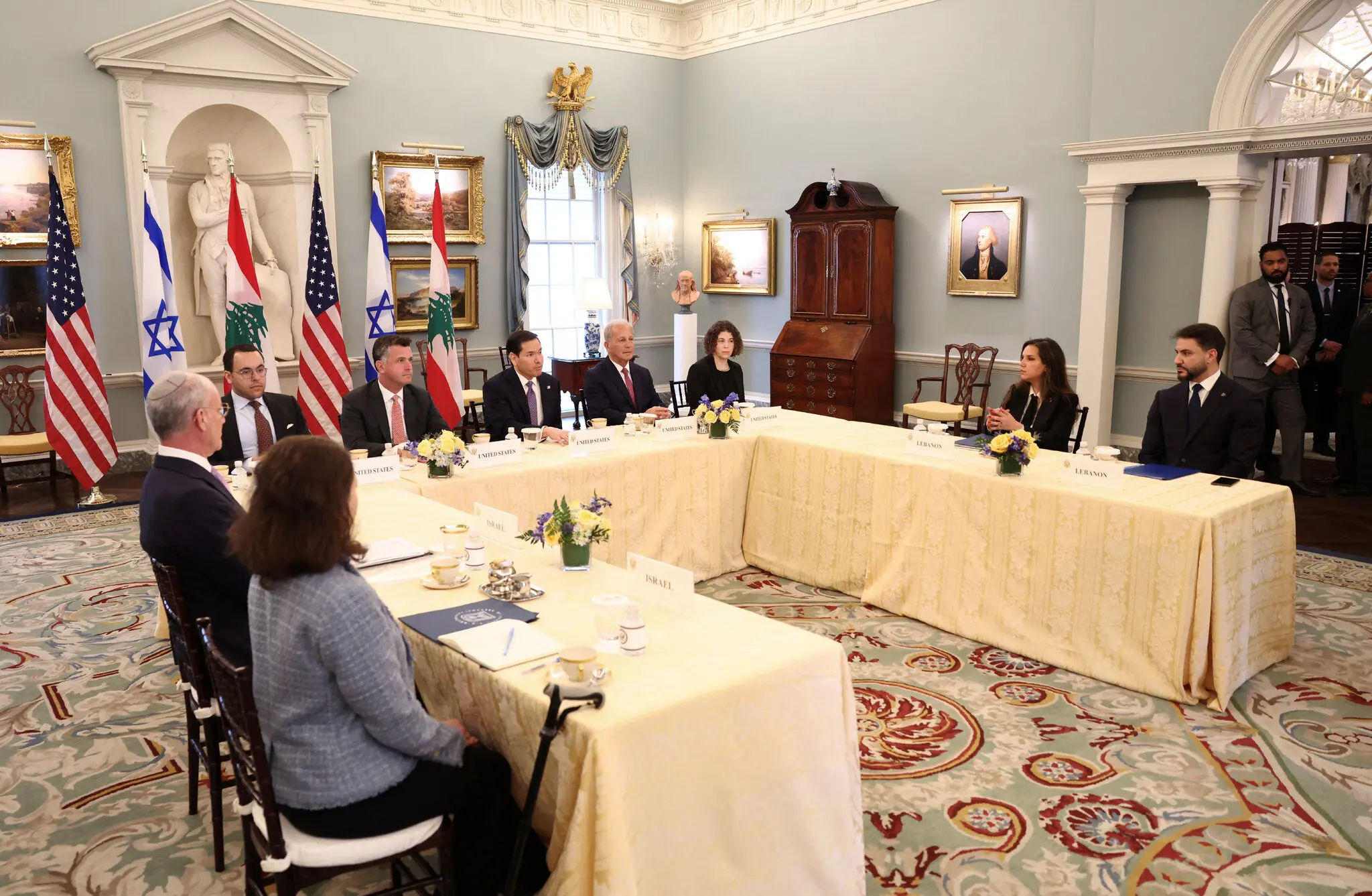
The paradox is that the diplomatic frame currently looks stronger than the political ground beneath it. Rare direct contacts between Israeli and Lebanese officials have created the impression of movement: Washington is pushing a channel, Beirut is willing to talk and Israel is at least prepared to discuss a pause.
According to Daycom’s earlier analysis, that is also where the present moment shows its central weakness. The Lebanese state can negotiate, the United States can mediate and Israel can calibrate military pressure, but none of them can automatically command Hezbollah’s consent. Any cease-fire would therefore begin not as the end of war, but as a test of whether Lebanon can reclaim even a partial monopoly over decisions of war and peace on its own territory.
For Israel, the pause appears to be an instrument rather than a concession. The recent scaling back of attacks on Beirut already showed that Benjamin Netanyahu’s government knows how to adjust pressure without ending the campaign itself. The capital can be temporarily spared while southern Lebanon remains under sustained strikes. If a truce does take hold, it will not cancel Israel’s logic of war. It will only alter its tempo.
For Beirut, even a short cease-fire carries a very different meaning. Lebanon’s leadership does not need symbolism. It needs breathing space: a halt in fire, the return of some of the displaced, the repair of basic infrastructure and at least a narrow chance to prevent the state from appearing as a bystander caught between Israeli force and Hezbollah’s armed autonomy. In a country strained by destruction, displacement and institutional exhaustion, even a week of quiet becomes less a diplomatic gain than a question of survival.
This is where the American role becomes decisive. Washington is trying not only to cool the northern front of Israel’s war, but also to remove one of the most volatile elements from a wider regional equation. If the current U.S.-Iran truce is to evolve into something more durable, the Lebanese theater has to be stabilized, at least temporarily. In that sense, a pause between Israel and Lebanon is not a separate episode. It is part of a broader American attempt to convert a chain of regional escalations into a more manageable diplomatic structure.
But that same linkage is what makes the entire process so fragile. Iran insists that its truce with Washington should extend to Lebanon. The United States, by contrast, is trying to pull the Lebanese track into a separate state-to-state format. This is not a procedural disagreement. It is a struggle over who gets to shape Lebanon’s future: the Iranian axis through Hezbollah, or an intergovernmental channel backed by American power.
That is why any silence on the front would carry two meanings at once. If Hezbollah accepts restraint, it will be read as evidence of weakness and forced adaptation to a new balance of power. If it refuses, or quietly sabotages the arrangement, the conclusion will be equally clear: direct contacts between Israel and Lebanon still cannot alter the central reality that decisions of war and peace pass not only through governments, but through an armed actor unwilling to surrender its veto.
This is also why Israel’s preparation for a cease-fire should not be mistaken for a step toward settlement. It is better understood as an interim maneuver in a war where diplomacy is trying to catch up with military facts. Israel wants a pause without strategic retreat. Lebanon wants a pause as a chance to avoid further collapse. The United States wants a pause as a bridge to a wider regional de-escalation. Hezbollah, meanwhile, has every incentive to prove that without it, no pause can turn into order.
The most sober conclusion is therefore also the hardest one. If the cease-fire begins, it will not show that the parties are moving closer to peace. It will show how far they remain from a political solution. A brief quiet in Lebanon today would not be the end of war. It would be a measure of whether the state can recover even part of its sovereignty in a country where, for too long, armed force has spoken louder than government.