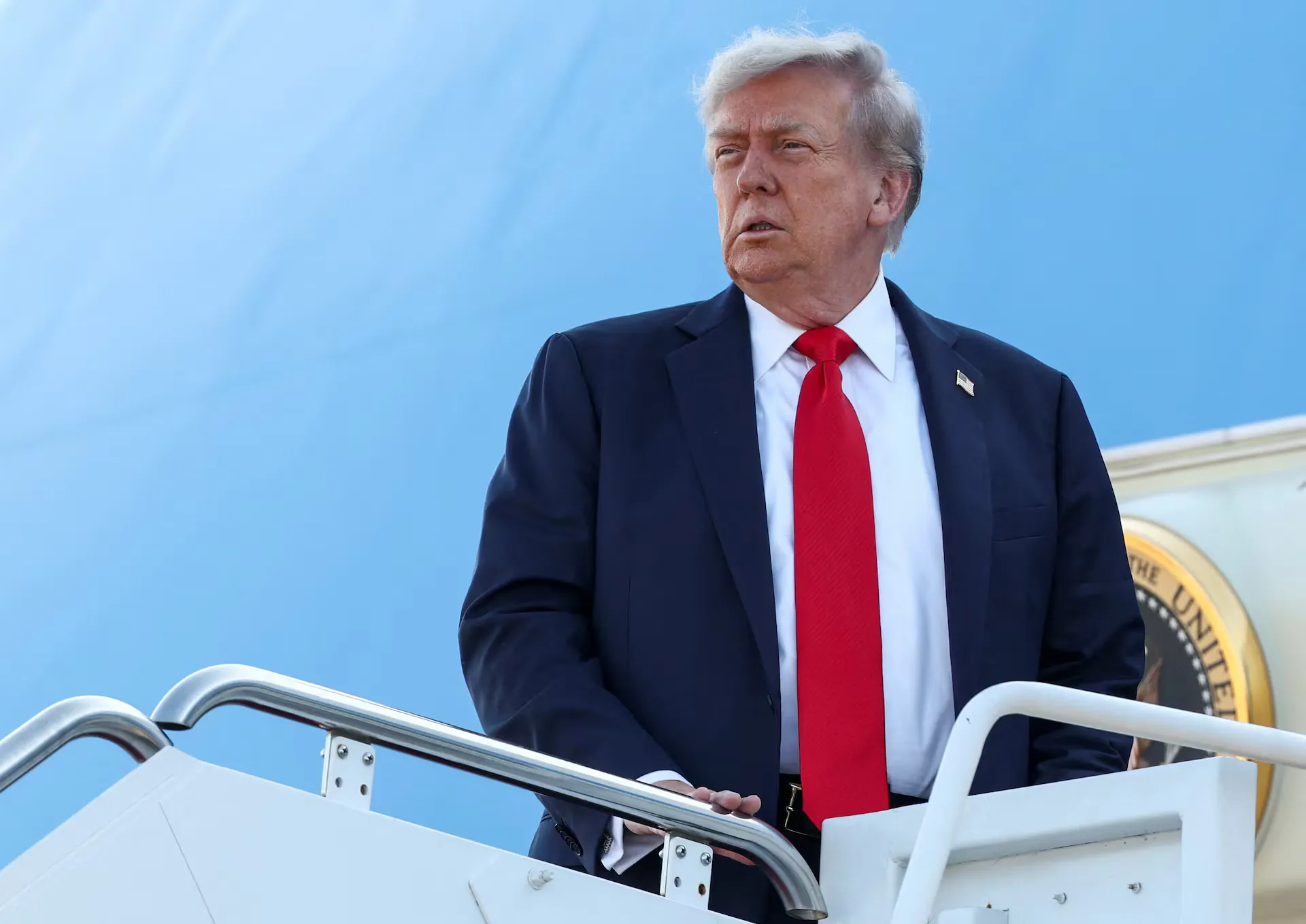



















When a leader drives a crisis to the edge and then slams on the brakes hours before his own deadline, that does not necessarily amount to diplomacy. More often, it means the cost of carrying out the threat turned out to be higher than expected. That is the real meaning of Donald Trump’s decision to suspend strikes on Iran for two weeks rather than move directly into escalation.
On paper, the arrangement looks like a framework for de-escalation: Pakistani mediation, a two-week cease-fire, possible talks, and a link between that pause and the reopening of the Strait of Hormuz. But the weakness of the deal is already built into its structure. Washington speaks of a “complete, immediate and safe” reopening of the strait, while Tehran has accepted the pause without publicly and unambiguously endorsing all of the American conditions.
That is why the most important outcome was not the cease-fire itself, but the ambiguity it exposed. Trump found a political exit from his own ultimatum, yet he did not demonstrate the same clarity about what Iran had actually surrendered. This does not look like an Iranian capitulation. It looks like a pause in which each side has preserved the right to describe the deal on its own terms. According to Daycom’s earlier analysis, the real meaning of crises on this scale is often revealed not in the moment of the dramatic announcement, but in what remains deliberately unresolved afterward.
And almost everything that produced the war remains unresolved. The status of the Strait of Hormuz is still politically contested. The future of Iran’s nuclear program is still unclear. The disputes over sanctions, reparations and missile limits have not been settled. In other words, the pause has interrupted the immediate danger, but it has not removed a single structural cause of the confrontation.
The strait is the first and most visible fault line. For Trump, Hormuz became the public red line beyond which he threatened devastating attacks on Iranian infrastructure. For Iran, the waterway remains not just a shipping route but a source of leverage. That is why the two sides continue to speak past one another. The White House presents the pause as a step toward normal maritime traffic. Tehran presents it as part of a broader political bargain in which control, security guarantees and the shape of any final settlement are still very much in dispute.
The same is true of the nuclear issue, which remains the core of the crisis no matter how much public attention shifts to shipping lanes and deadlines. A cease-fire can delay military decisions, but it cannot dissolve the strategic reality created by Iran’s stockpile of highly enriched uranium. As long as that question remains open, every truce is only provisional. The heart of the conflict is not the latest pause in fighting. It is the unresolved argument over what Iran is allowed to possess, and what the United States and Israel are prepared to tolerate.
Missiles remain another unresolved front. Tehran has long resisted demands for sweeping limits on both its nuclear and ballistic capabilities, while insisting on a broader package that includes an end to the war, sanctions relief, protection from future attacks and compensation for the damage already inflicted. If those positions have not materially changed, then the two-week cease-fire does not solve the contradiction. It merely postpones the moment when the contradiction returns, likely under even greater pressure.
Trump, meanwhile, does not emerge from this episode without political damage. In the morning he was speaking in the language of total destruction. By evening he was describing the opening as an opportunity for something unexpectedly positive. That reversal can be sold as negotiating flexibility. But it can also be read, more convincingly, as an effort to escape the trap of his own rhetoric. Once a president raises the stakes to the level of civilizational ruin, walking back the threat no longer looks like controlled strength. It looks like necessity.
There is also a deeper political consequence embedded in the cease-fire itself. By agreeing even to a temporary halt in hostilities, Washington is in practice acknowledging the authority of the leadership in Tehran that it had recently sought to delegitimize through the language of pressure and regime fracture. This is not formal recognition in a legal sense. It is something more immediate and more revealing. Even a short pause has to be negotiated with the people who actually control the state, the missiles and the strait.
For markets and for states dependent on Middle Eastern energy flows, the pause will bring real relief. But economic relief is not the same as strategic clarity. If Hormuz reopens only partially, temporarily or under conditions Tehran can reinterpret at will, the world will not be returning to the old order. It will simply be entering a more managed version of the same instability. That may calm traders for a time, but it does not amount to resolution.
The central question after Trump’s retreat, then, is not whether an immediate strike was avoided. It is what happens when the two-week clock runs out. Was this pause a bridge to a larger settlement, or merely a short intermission between two phases of the same war? For now, the answer is bleak. Trump may have stepped back from immediate catastrophe, but he has not removed any of the forces that made catastrophe possible in the first place.