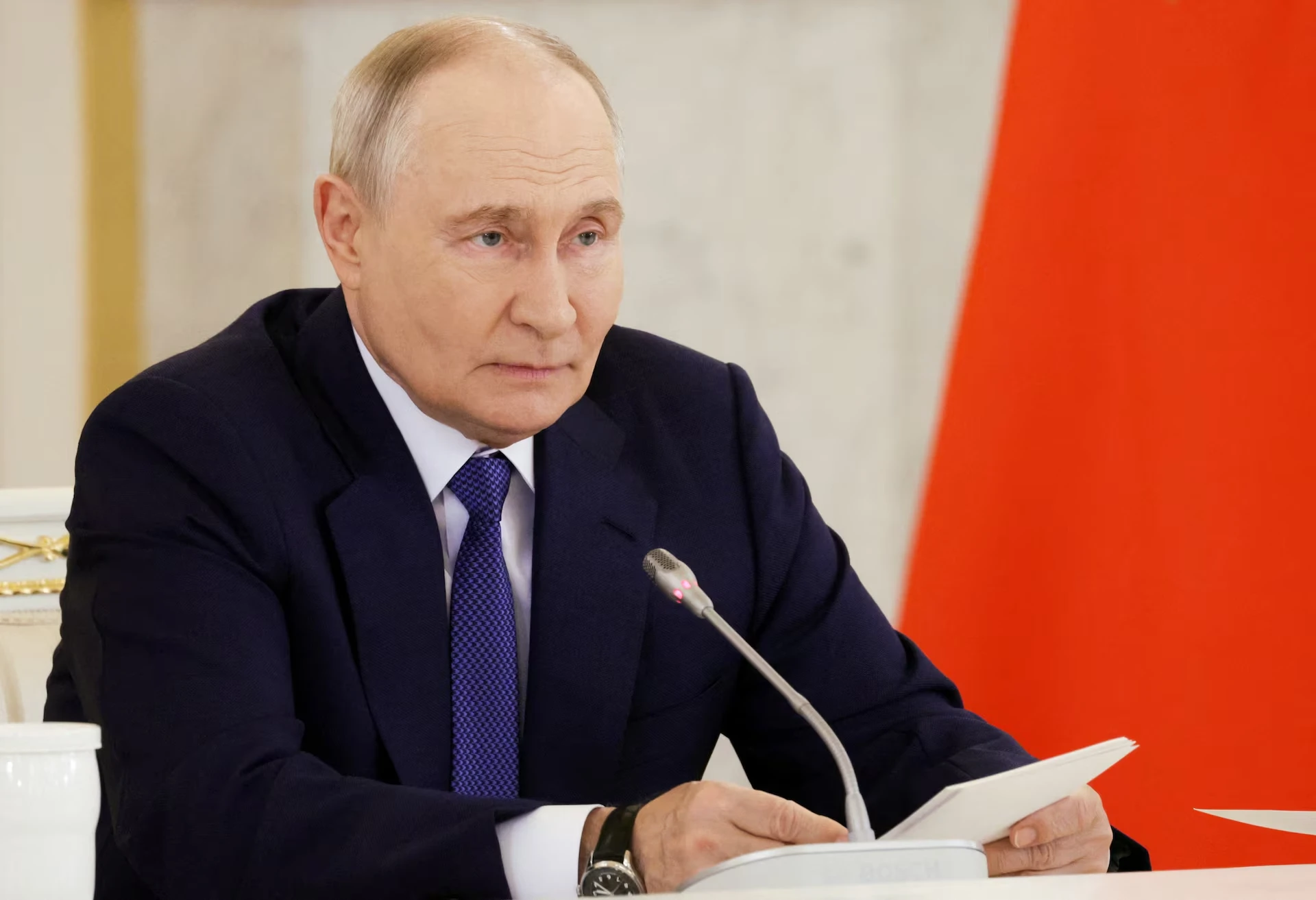






















Andy Burnham arrives at Downing Street carrying the most useful word in politics: hope. It is broad enough to unite an exhausted party and vague enough to postpone the hardest questions — who will pay for Britain’s renewal, and whose interests will have to give way.
Burnham became Labour leader on Friday, completing the final political step before taking office as prime minister. On Monday, Keir Starmer is expected to submit his resignation to King Charles III, after which Burnham will be invited to form a government.
The appointment will complete a 25-year journey through Parliament, two failed Labour leadership campaigns, the mayoralty of Greater Manchester and a return to Westminster. Burnham will become Britain’s seventh prime minister in a decade, a number that captures the depth of the country’s political instability.
According to Daycom’s analysis, his rise means more than another change of personnel in Downing Street. Labour is attempting to replace technocratic management with a politics of territorial and social belonging — to persuade voters that the state can once again see the places where they live.
Burnham is unusually well suited to that role. For years, he cultivated the image of a northern English politician confronting a Westminster establishment detached from ordinary life. His political language was shaped by transport routes, housing costs, hospital waiting lists and municipal budgets rather than abstract arguments in the capital.
That is why his promise to build a government for “all parts of the country” carries more weight than it might from another national leader. A government office in Manchester is intended to become the symbol of devolution — a challenge to a system in which economic, administrative and cultural power has long been concentrated in London.
Symbols, however, do not change fiscal arithmetic. Burnham will inherit weak growth, high public debt, an overstretched National Health Service, a chronic housing shortage and infrastructure that successive governments have postponed modernising.
His slogan, “good growth in every British postcode,” identifies the problem clearly while concealing its scale. Productive companies, investment, transport links and skilled workers cannot be distributed by political instruction. Rebalancing the country would require years of disciplined industrial policy.
Burnham traces Britain’s decline to the economic turn of the 1980s: privatisation, deregulation, deindustrialisation and the transfer of housing, water, energy and transport into systems primarily shaped by profit. So far, however, he has offered a moral indictment more clearly than an economic mechanism for replacing that model.
That is the first risk of his premiership. It is easier to condemn a 40-year settlement than to dismantle it without sharply higher taxes, capital flight or further pressure on public borrowing. The contradiction becomes sharper because Burnham also promises to be pro-business while leading a “distinctively Labour” government.
Those ideas can coexist if the state offers companies stable rules, cheaper energy, better infrastructure and a skilled workforce in exchange for investment and higher wages. They will collide if Labour’s left demands rapid nationalisation while financial markets demand spending restraint.
His second test will be the Labour Party itself. Starmer lost authority not only because of the government’s failures, but because he never established durable rules for coexistence between the left, the centre, trade unions and MPs worried about losing their constituencies.
Burnham has turned ideological flexibility into a political asset. He served under Tony Blair, Gordon Brown and Jeremy Corbyn, learning the language of several Labour traditions. What critics describe as the absence of a coherent philosophy, he presents as the ability to end factional warfare.
That skill helped make him the natural successor to Starmer. Yet reconciling party groups during a leadership contest is easier than dividing cabinet posts, public money and influence over policy. Burnham’s first cabinet will be the earliest serious test of his promise of unity.
A government designed to satisfy every faction could become a collection of mutual vetoes. A narrower cabinet would quickly reproduce the conflicts of his predecessor. Burnham must do more than represent the party’s competing wings; he must define the limits within which disagreement will not paralyse government.
The third challenge will be legitimacy. Burnham will enter Downing Street without a general election because Labour retains its parliamentary majority. That is entirely consistent with Britain’s constitutional practice, but it increases the pressure to deliver quickly and prove that the change was more than an internal party operation.
He has little time. Reform UK has turned frustration over migration, housing, public services and regional inequality into a simple story of elite betrayal. Nigel Farage’s party is competing for many of the same voters Burnham hopes to bring back to Labour.
Burnham’s answer is a different kind of populism — municipal rather than nationalist. He speaks of communities abandoned by the state, power concentrated in too few places and a political system designed to protect entrenched interests.
That rhetoric allows him to challenge Farage without imitating him. In place of national grievance, Burnham offers social reconstruction; in place of further centralisation, he promises devolution; in place of cultural conflict, he emphasises housing, transport and health care.
His role in the long campaign for truth over the Hillsborough disaster gives that language personal force. For Burnham, institutional indifference is not merely a campaign theme. It is central to a political career built around confronting closed systems and neglected communities.
A compelling biography, however, cannot substitute for political steel. His critics question whether he can make decisions that inevitably create winners and losers. Burnham’s instinct is to negotiate and unite. Prime-ministerial authority often demands the opposite: choosing a side and absorbing the consequences.
The NHS will expose that tension quickly. Repairing the health service will require more than additional money. It will involve contentious changes to productivity, management, social care and staffing. Supporting doctors and nurses is politically easy; restructuring the system in which they work is far harder.
The same applies to devolution. Westminster will have to transfer not only responsibility but funding. Previous governments often handed local authorities new problems without sufficient resources. Burnham must prove that his model will not become another way of shifting blame downwards.
His first cabinet appointments and early policy decisions will reveal whether the rhetoric of hope is supported by a credible order of action: what will come first, how much it will cost and which promises will have to wait.
Britain does not suffer from a shortage of diagnoses. Weak productivity, regional inequality, a housing crisis and deteriorating public services have all been described in exhaustive detail. The difficulty is that every proposed remedy threatens groups that have learned to defend their share of the existing system.
Burnham enters office with a rare advantage: he can speak credibly to party activists, trade unions, business leaders and voters in the industrial north. But broad trust remains an asset only until a government begins to spend it.
His premiership will not be defined by whether he can restore hope, but by whether he can explain its price. Hope becomes policy only when it has a budget, a timetable and people accountable for delivery. On Monday, Burnham will receive power. The harder struggle will begin immediately afterward — proving that he knows how to use it.