






















Wars do not transform regions only when they begin. They transform them when it becomes clear that the old guarantees no longer work. For the Persian Gulf, that moment did not arrive with the first strike, but with the realization that even its richest and most carefully protected cities — Dubai, Doha, Manama — were not insulated from the same logic of war they had long tried to keep at a distance.
The two-week cease-fire between the United States and Iran brought relief, but it did not restore a sense of safety. On the contrary, it fixed a new starting point. The region can no longer rely on the old model in which an American presence automatically meant immunity. It has now been exposed that even close alignment with Washington does not guarantee protection from missiles, drones and retaliatory pressure.
The consequences of that shift are not only military. They are economic, infrastructural and political. Gulf states now face the burden of repairing damaged assets — from oil and gas facilities to airports and desalination plants — while also bracing for weaker growth as energy exports remain vulnerable. The sectors that sustained their prosperity have become the sectors most exposed to risk. According to Daycom’s earlier analysis, the deepest ruptures in regional politics rarely come from a formal change in alliances. They come when faith in the entire security architecture begins to collapse.
That is precisely what is happening now. The Gulf order rested on several unwritten assumptions: that the United States would deter major threats, that Iran would remain constrained by the regional balance, and that economic interdependence would reduce the likelihood of direct confrontation. All three assumptions now look damaged.
Nothing illustrates that more clearly than the Strait of Hormuz. For Gulf governments, it is not merely an export route. It is the artery of their economic existence. The prospect that Iran could effectively control, delay or even informally price the passage of vessels through the strait would amount to a profound change in the region’s economic logic. In such a scenario, state revenues would depend not only on the market, but on the political discretion of Tehran.
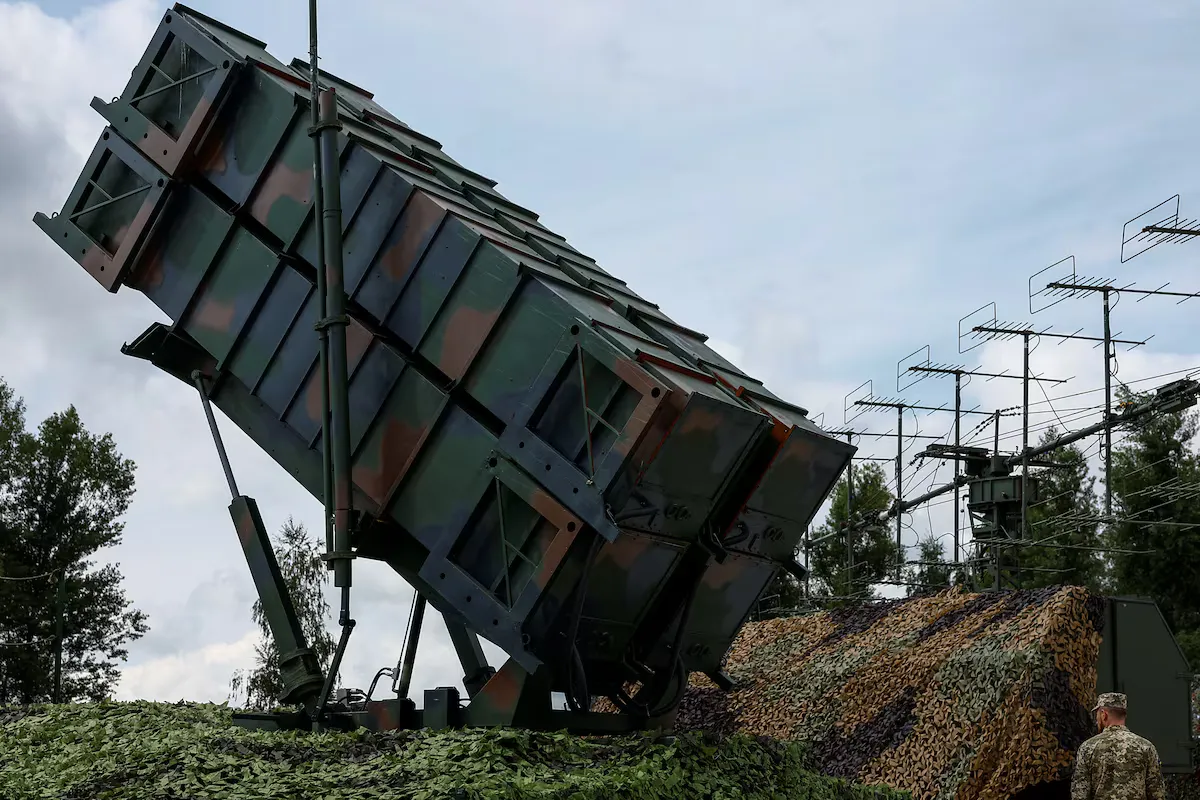
The problem is that there is no obvious alternative. Any desire to search for a new security guarantor collides with a hard fact: no other power or coalition can quickly replace the American military umbrella. Yet that umbrella no longer appears absolute. The Gulf states are therefore caught in a strategic vacuum — dependent on the United States, yet increasingly uncertain that the United States can truly shield them from the threats they face.
That creates another danger. Even a weakened Iran remains capable of becoming a permanent source of pressure. A bruised but embittered adversary with experience in mass drone and missile strikes does not need to launch a full-scale war to destabilize the region. It can rely on periodic, targeted attacks that keep markets nervous, governments cautious and societies on edge. That kind of pressure does not destroy a system all at once. It slowly corrodes it.
The first hours after the cease-fire already revealed how fragile the new environment is. Reports of fresh attacks and renewed alerts only deepened doubts about whether the pause could endure. This is one of the defining features of the new Gulf reality: political agreements no longer guarantee immediate control over every armed actor operating across the region.
The internal political consequences may prove just as important. Some Gulf elites are already being forced to reconsider their earlier attempts to improve ties with Iran, which until recently looked like pragmatic efforts to lower the temperature. Those efforts may now seem naïve, or at least insufficient. At the same time, different Gulf governments are likely to respond differently — some by hardening deterrence, others by seeking new forms of accommodation. That divergence could reopen and deepen fractures within the Gulf itself.
Another consequence is quieter, but no less significant. Gulf monarchies have long believed they could shape Washington’s regional choices through personal ties, strategic investment and political access. This war exposed the limits of that influence. Critical decisions were made without their full participation, even though they were among the clearest targets of retaliatory attacks. The lesson is hard to miss: proximity to power is not the same as control over it.
The region is now left with no easy path back. A return to the prewar status quo looks unlikely. Building a new security framework will require time, coordination and political trust — three things that may be in short supply if the cease-fire falters. Living under constant tension, meanwhile, would mean the slow but systematic weakening of both economic resilience and political stability.
That is why the most important consequence of this war is not only whether the current pause holds. It is that the Persian Gulf has lost its central illusion — the illusion of untouchability. Even if the guns fall silent for a time, that loss will remain.