





















Belarus has again found itself in a dangerous position between two wars: one already raging nearby, and another that could pass through its own territory. Alexander Lukashenko is trying to preserve his old formula of survival — remaining Vladimir Putin’s closest ally without becoming a full participant in his war against Ukraine.
That balance is becoming increasingly fragile. Russia is looking for new ways to pressure Ukraine, while Kyiv is making it clearer that it will not allow Belarusian territory to serve Russia’s war machine with impunity. For Lukashenko, this means that the political maneuvering that once allowed him to trade loyalty may now carry the risk of a direct strike.
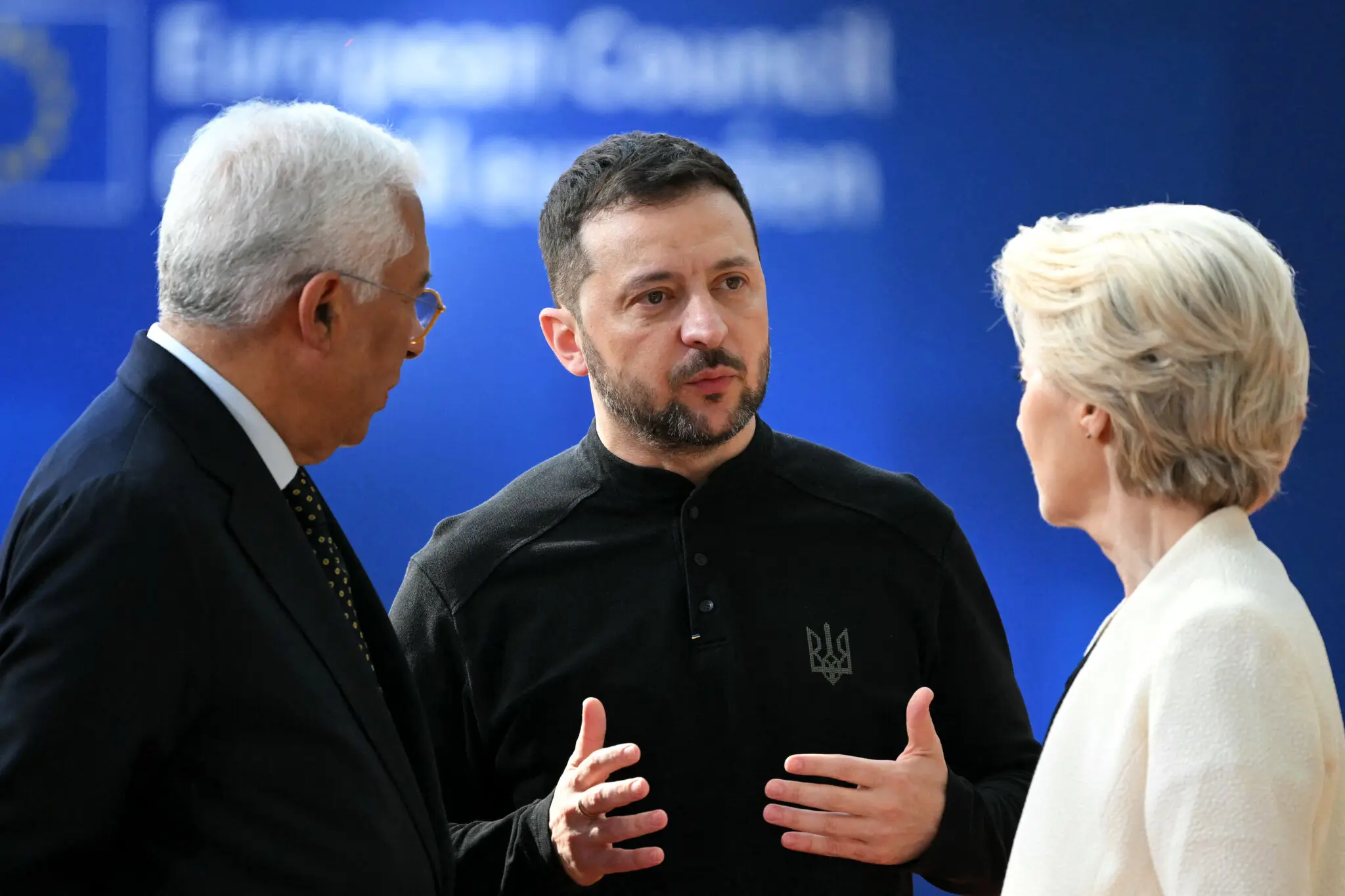
In June, Volodymyr Zelensky issued a public ultimatum to Minsk: shut down four relay facilities in the Brest and Gomel regions near the Ukrainian border. Those stations amplified signals for Russian drones and extended their range during attacks on Ukrainian cities. Within days, the facilities stopped operating.
According to Daycom’s assessment, that episode showed a new quality in Ukraine’s pressure on Belarus. Kyiv is no longer limiting itself to diplomatic warnings, nor does it treat Belarus’s role as merely passive. If infrastructure on Belarusian territory helps Russian strikes, Ukraine views it as part of the enemy system.
For Lukashenko, this was a troubling signal. On one side, he cannot openly ignore Putin, on whom he depends economically, politically and militarily. On the other, he can see that Ukraine’s army is already capable of precise strikes deep inside Russia. That means Kyiv’s promise to hit targets in Belarus no longer sounds like rhetoric.
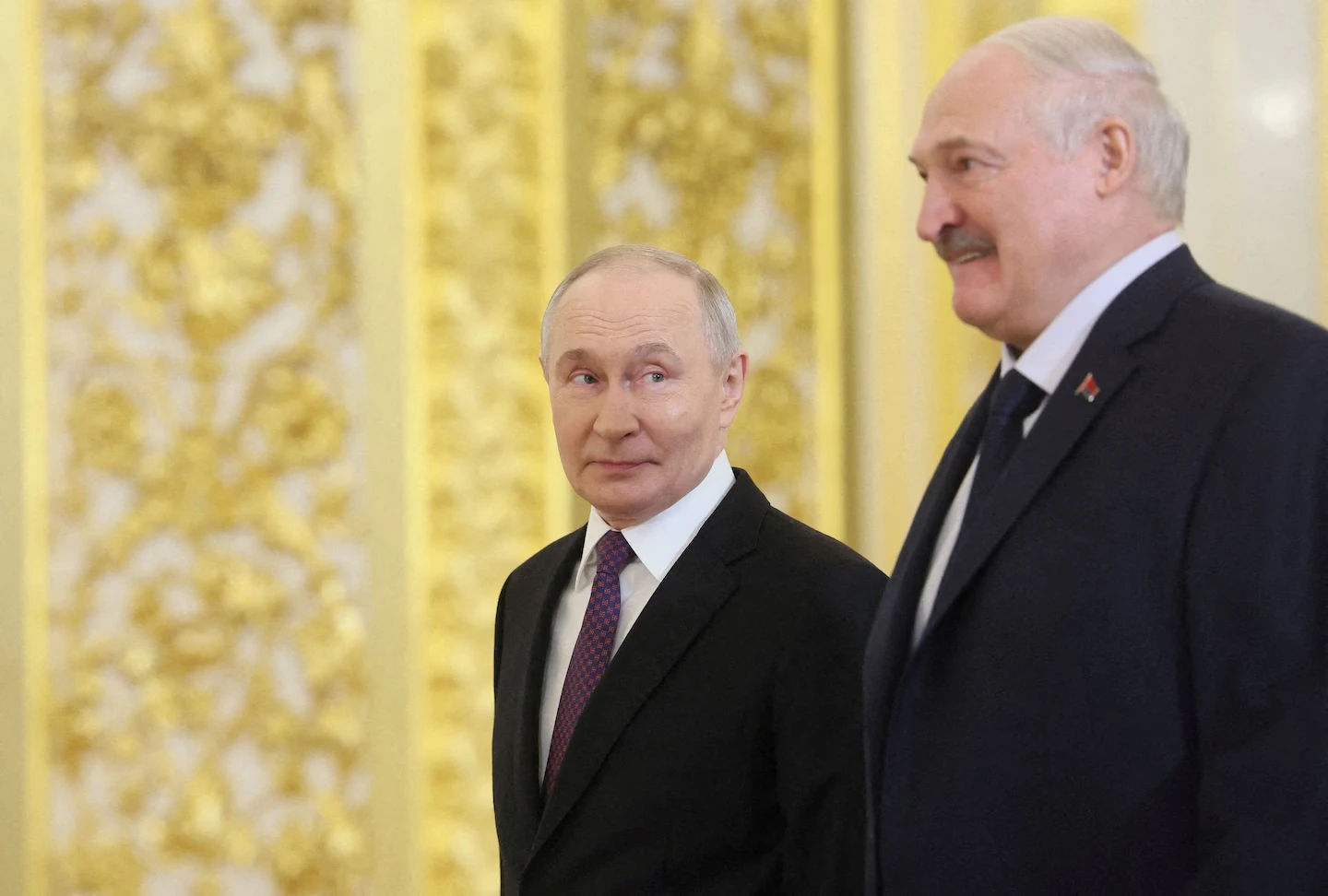
After the relay stations were shut down, Lukashenko traveled to Russia for a closed meeting with Putin at the Valdai residence. The format was telling: no press, no final statement, no familiar theatrical display of brotherhood. The Kremlin called it an informal exchange, but the secrecy only strengthened the sense that the conversation concerned not protocol, but the limits of Belarusian loyalty.
Belarus remains critically dependent on Russia. Moscow supports its economy, its security apparatus and the external durability of Lukashenko’s regime after the isolation that followed the suppression of the 2020 protests. Lukashenko understands well that without Russian backing, his political structure would become far weaker.
But full entanglement in the war against Ukraine could be even more dangerous for him. The Belarusian army is not prepared for a major campaign, society shows no appetite for war, and an attack on Ukraine from Belarusian territory could trigger a response that is no longer symbolic but military. That is why Minsk has tried, since the beginning of the full-scale invasion, not to cross the line into direct participation.
In 2022, Belarus already gave Russia what mattered most: territory for the advance on Kyiv. But after the failure of Russia’s blitzkrieg, Lukashenko avoided sending his own troops. He allowed exercises, Russian deployments, logistics and demonstrative threats, but did not take the final step. Now the Kremlin may again demand more.
The reason is not only Putin’s desire to punish Ukraine. Russia is searching for ways to expand pressure because the front is becoming increasingly costly, occupied Crimea is more vulnerable, and Ukrainian strikes on oil refining and logistics are creating domestic problems for Moscow. In such conditions, the Belarusian direction again looks to the Kremlin like a potential tool of escalation.
That does not necessarily mean the Belarusian army entering the war. Its weakness and low readiness make that scenario risky even for Moscow. A more realistic option would be using Belarusian territory for strikes on Ukrainian logistics, drone operations, reconnaissance, pressure on the northern border or threats against supply routes from the West.
The northern direction is especially important for Ukraine. It is close to Kyiv, Volyn, Rivne and Chernihiv regions, as well as to corridors through which part of Western aid enters the country. Even without a major offensive, Russia could try to create a permanent danger zone from Belarusian territory through cheap drones, artillery, sabotage or missile threats.
For Europe, a separate fear is the Suwałki corridor between Belarus and Russia’s Kaliningrad exclave. This narrow stretch connects the Baltic states to the rest of NATO. Any escalation around it would immediately move beyond the Ukrainian war and affect the entire architecture of European security. That is why Belarus’s role is watched not only in Kyiv, but also in Warsaw, Vilnius, Brussels and Washington.
Lukashenko understands this, which is why he publicly insists that Belarusian soldiers will not be sent into a “bloody slaughter.” He says Belarus does not need war, that Minsk supports peaceful solutions, and that no military action should be expected from him. Those words are addressed not only to Kyiv, but also to his own officers, society and Putin.
At the same time, his tone toward Zelensky remains double-edged. Lukashenko effectively apologized for crude remarks about the Ukrainian president, but immediately added that Kyiv should not “provoke” Belarus. This is his familiar method of speaking to all sides at once: signal readiness for de-escalation without appearing weak before the Kremlin.
China has become another important factor in this game. During Lukashenko’s visit to Beijing, Xi Jinping publicly supported Belarus’s sovereignty, independence and territorial integrity. For Minsk, that is a valuable political umbrella, because China has influence over both Russia and the Belarusian regime.
But Chinese support has limits. Beijing is interested in Belarus’s stability as a transit corridor for some goods bound for Europe and as a politically loyal partner. That does not mean China is ready to become Lukashenko’s shield in a direct conflict with Putin. Its interest is not heroic defense of Belarusian sovereignty, but the absence of chaos along routes and across the region.
Another restraining factor for Lukashenko is renewed contact with the United States. After arrangements that included the release of some political prisoners, Washington eased sanctions pressure on certain Belarusian state structures and enterprises. For Minsk, this is not full rehabilitation, but it is an important channel out of isolation.
If Belarus is drawn deeper into the war, that channel could close. Lukashenko understands this. He needs room to bargain with the West, the possibility of sanctions relief, economic breathing space and an international role that is not reduced to being a Russian appendage. Full participation in the war would destroy almost all of those options.
That is why his current strategy is delay, maneuvering and displays of limited obedience. He can give Russia facilities, exercises, signals and political statements, but he is trying not to give what would make Belarus a legitimate military target for Ukraine in the eyes of Kyiv’s international partners.
Lukashenko’s problem is that the space for this game is shrinking. Ukraine no longer accepts the gray zone as safe for Minsk. Russia increasingly needs resources for war. The West views Belarus through the prism of its real role, not its declarations. China supports stability, but does not guarantee rescue.
The Belarusian regime is trapped by its own dependence. In 2022, Lukashenko allowed Putin to use the country’s territory, hoping it would not require full entry into the war. Now that earlier choice makes him vulnerable: the Kremlin can demand continued loyalty, while Ukraine can punish the practical consequences of that loyalty.
For Kyiv, the episode with the relay stations was a small but important victory. Minsk stepped back without a strike. It showed that the threat of Ukrainian force can work even where diplomacy has long remained cautious. But it also raised the stakes: next time, Lukashenko may face stronger pressure from Moscow and have less room to concede.
In this story, Belarus is not a fully independent actor, but neither is it a lifeless instrument of the Kremlin. Lukashenko is still calculating the risks to his own survival. That is what makes him cautious. He may depend on Putin, but he does not want to die politically because of someone else’s war.
Yet war leaves less and less room for half-positions. If Belarusian territory again becomes an active element of Russian strikes, Ukraine will respond not to Minsk’s statements, but to the function of its infrastructure. For Lukashenko, that is the most dangerous scenario: being pulled into war not by a solemn decision, but by a chain of concessions that one day turns Belarus from Russia’s rear into a field of Ukrainian response.