
















Bucha has long ceased to be merely the name of a Kyiv suburb. For Europe, it became a dividing line after which Russia’s war could no longer be explained away as a “crisis,” a “conflict,” or another geopolitical dispute. It was there, in the spring of 2022, that the continent confronted not abstract aggression but murdered civilians, torture chambers and the collapse of its own assumptions about security.
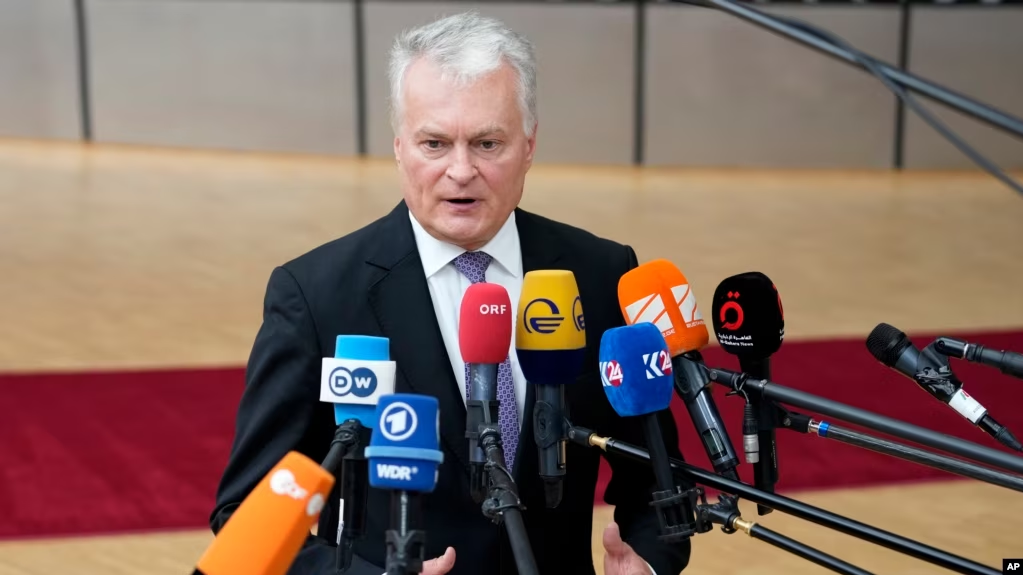
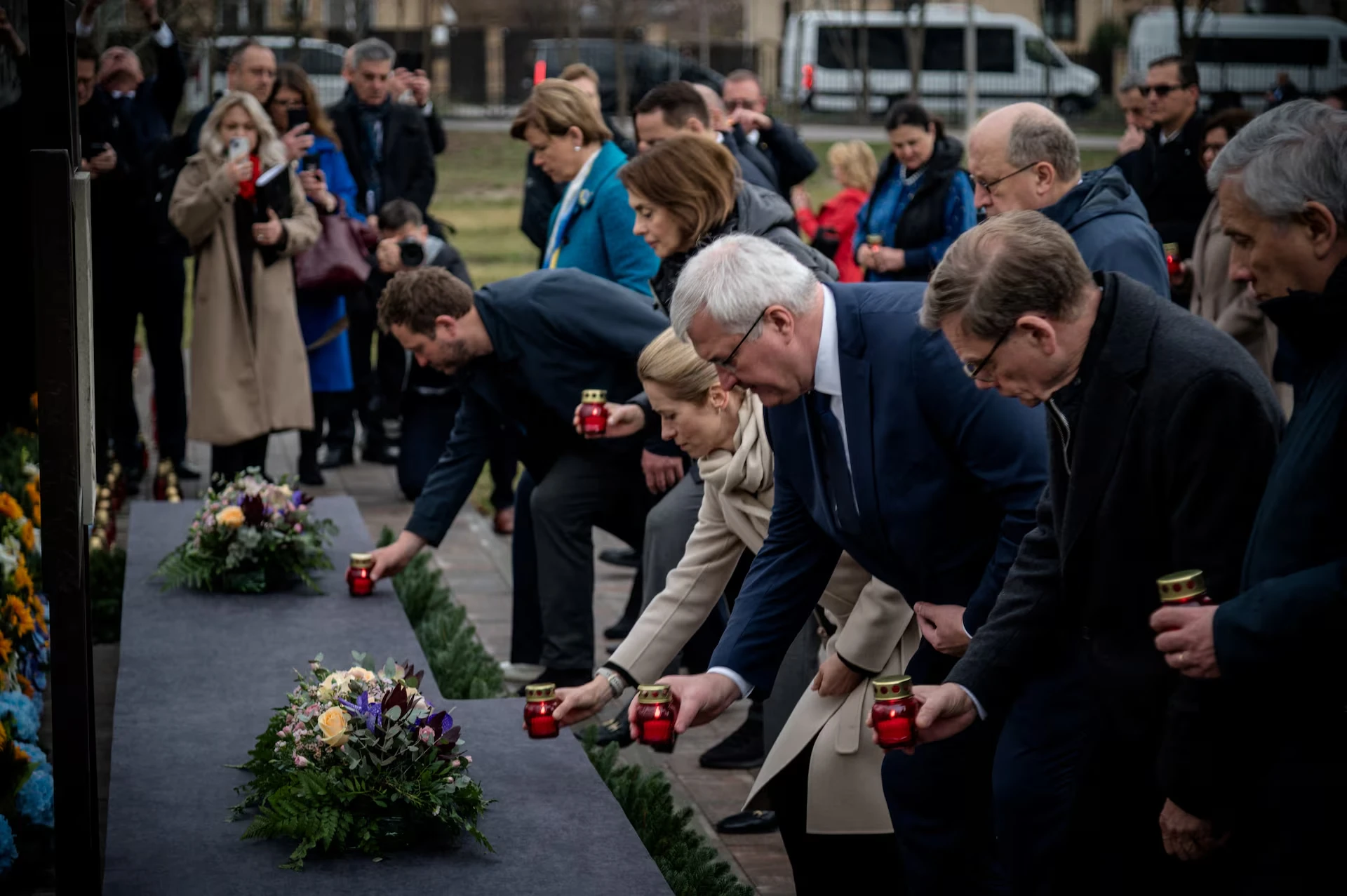
That is why the visit by Kaja Kallas, European foreign ministers and senior officials to Bucha on the fourth anniversary of the town’s liberation was never just ceremonial protocol. It was an attempt to place the war back at the center of Europe’s agenda at a moment when Western attention is being pulled in several directions at once, and when every new decision in favor of Ukraine is becoming politically more expensive inside the EU.
The real meaning of the visit lay not in symbolism but in Europe’s capacity for consistency. Bucha once again posed an uncomfortable question to Brussels: can Europe still turn moral shock into political will, or does the memory of atrocity remain powerful only until it collides with vetoes, budget disputes and strategic fatigue?
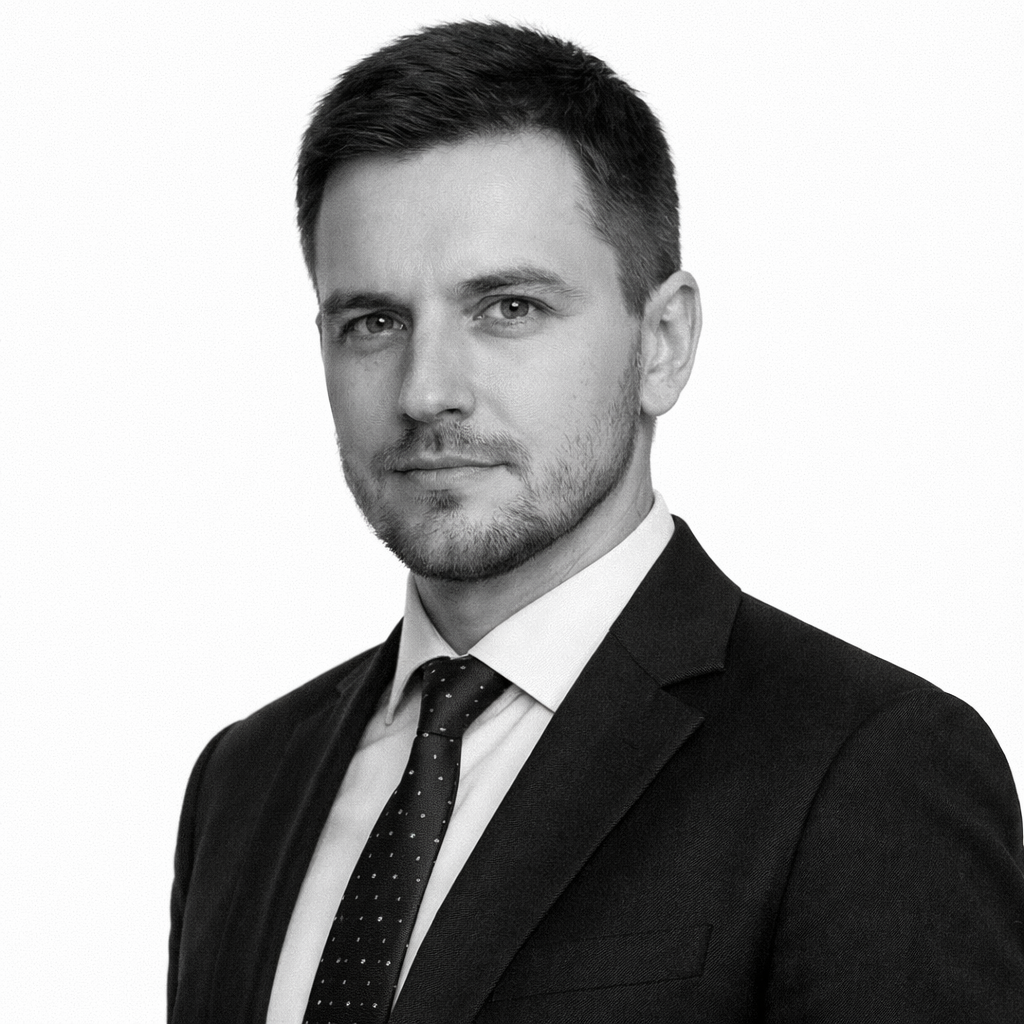
In Deykom’s assessment, that is the core tension of this moment. Bucha is no longer only a place of mourning. It has become a political test for the European Union itself, where sympathy must now be measured not by speeches but by mechanisms — sanctions policy, financial assistance, military support, legal architecture and a durable diplomatic line.

Recent months have shown how uncertain that test remains. Europe continues to speak in the language of accountability for war crimes, yet it is increasingly trapped by another reality: even broadly supported decisions on large-scale assistance to Ukraine can be slowed by internal blockages, national bargaining and long procedural standoffs between capitals.
That is why Bucha in 2026 was not only a memorial site but a political mirror. If Europe can stand before graves, condemn Russian crimes and speak of justice, but still fail to move quickly on funding, sanctions and long-term support, then memory risks becoming ritual without consequence. For Ukraine, that distinction is no abstraction. The distance between compassion and material support is now measured in physical survival.
The visit gained further weight because it unfolded against sharpening tensions inside the EU itself. Brussels is no longer hiding the fact that a single capital can delay decisions with consequences for the entire European security order. This is no longer a procedural quarrel about institutional rules. It is a question about the limits of unanimity during a major war on the Union’s border.
Just as important, Bucha is now moving from the moral sphere into the legal one. Europe is trying to build a framework in which Russian aggression is not met only with political condemnation, but with institutional follow-through — in the form of a special tribunal, expanded legal instruments and a more concrete doctrine of responsibility. That shift matters because outrage, on its own, has a short shelf life. Legal construction is what gives memory endurance.
In that sense, the visit to Bucha was a carefully calibrated signal. It was meant to show that the crime scene, sanctions policy, financial aid, Ukraine’s European future and the architecture of a future tribunal all belong to the same chain. If one link breaks, the entire structure weakens. The Kremlin then sees not only Europe’s moral language, but also its procedural fragility.
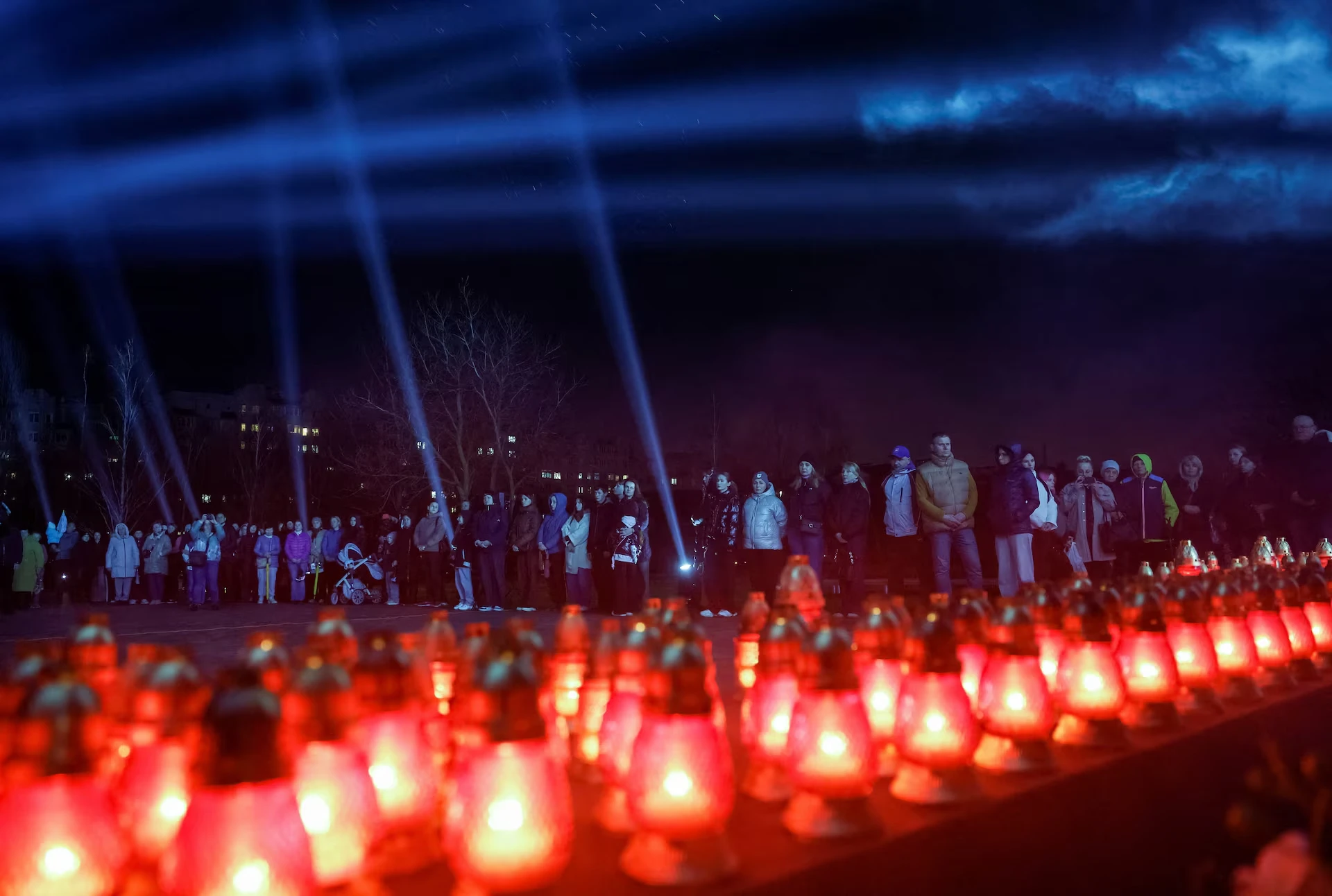
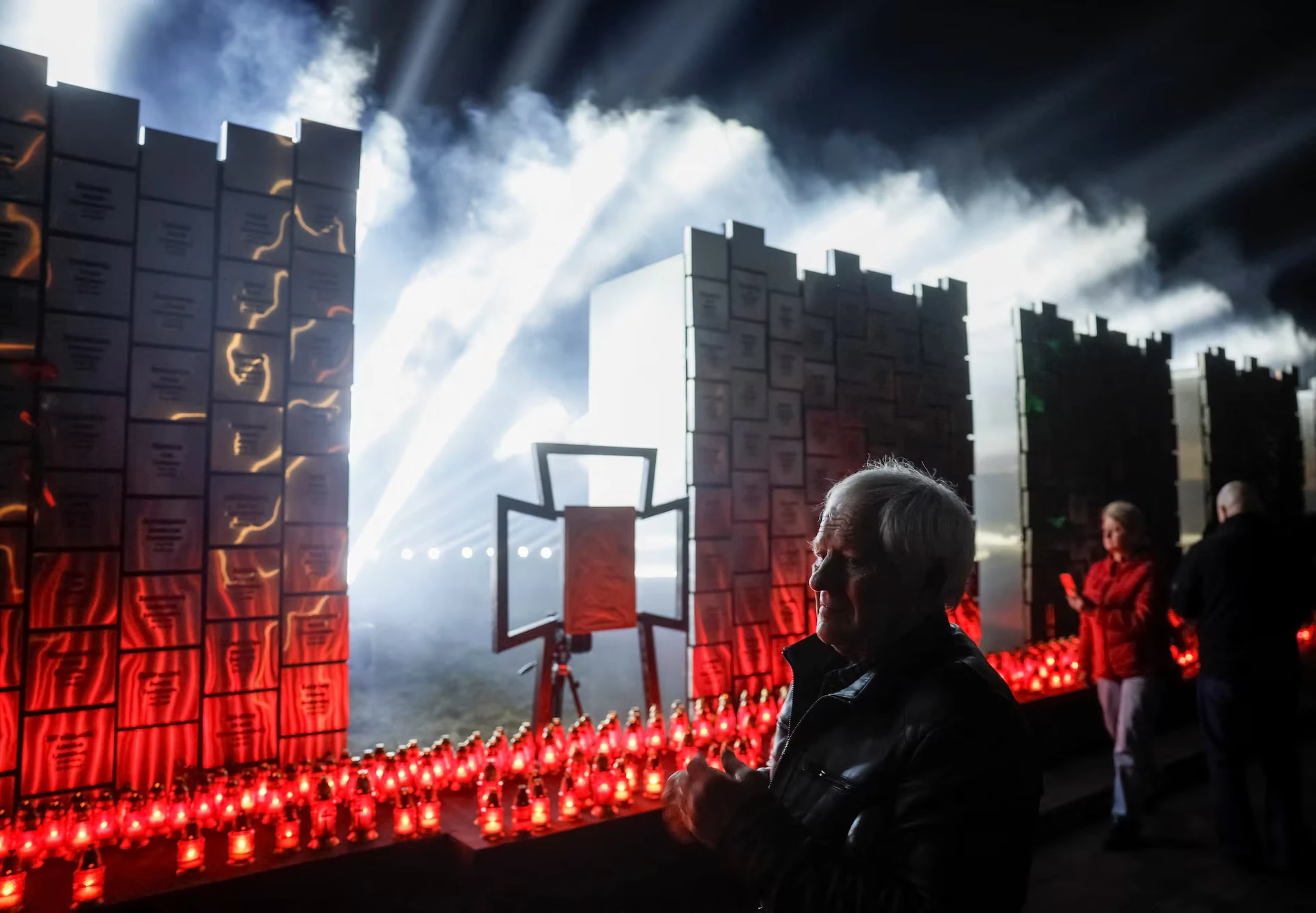 Люди відвідують меморіал жертвам нападів та страт російських військ, присвячений четвертій річниці визволення міста Буча під час нападу Росії на Україну, у Бучі, під Києвом, Україна, 30 березня 2026 року — Гліб Гараніч
There is another dimension to this story as well: the competition of crises. European leaders are increasingly forced to divide their political attention, military resources and diplomatic time between Ukraine and the Middle East. In Kyiv, the fear is no longer simply about insufficient support. It is about losing priority. A new regional escalation elsewhere can gradually push Ukraine from the front row of international politics, even while the war on the ground remains as brutal as before.
That is why Bucha has once again become a reminder of the central issue. Ukraine’s problem today is not a shortage of correct words from its partners. It is the risk that those words will no longer produce first-order decisions. Kyiv is increasingly tying historical memory to present-day Western action with greater bluntness. The logic is straightforward: if Bucha is accepted as proof of systematic Russian brutality, then that recognition must lead not only to commemorations, but to tighter sanctions, pressure on Moscow’s energy revenues, progress on Ukraine’s EU path, weapons deliveries and a credible legal pathway to punishment.
For Brussels, this is ultimately not only about Ukraine. Bucha reminds Europe that its own security no longer exists separately from the Ukrainian front. That is why the presence of Kallas and the foreign ministers carried weight far beyond diplomatic etiquette. It was an effort to assert that Russian crimes will not be pushed aside by fatigue, by competing wars or by internal European bargaining.
But the true value of that signal will be decided after the photographs are gone. If the EU can unblock major financial support, complete the legal design of a special tribunal, preserve sanctions pressure and keep Ukraine in the first rank of European politics, then Bucha will continue to function as more than memory. It will remain a mechanism of action.
If not, it may endure as something darker: the most persuasive proof that Europe was able to name evil correctly, yet once again hesitated too long before answering it.