

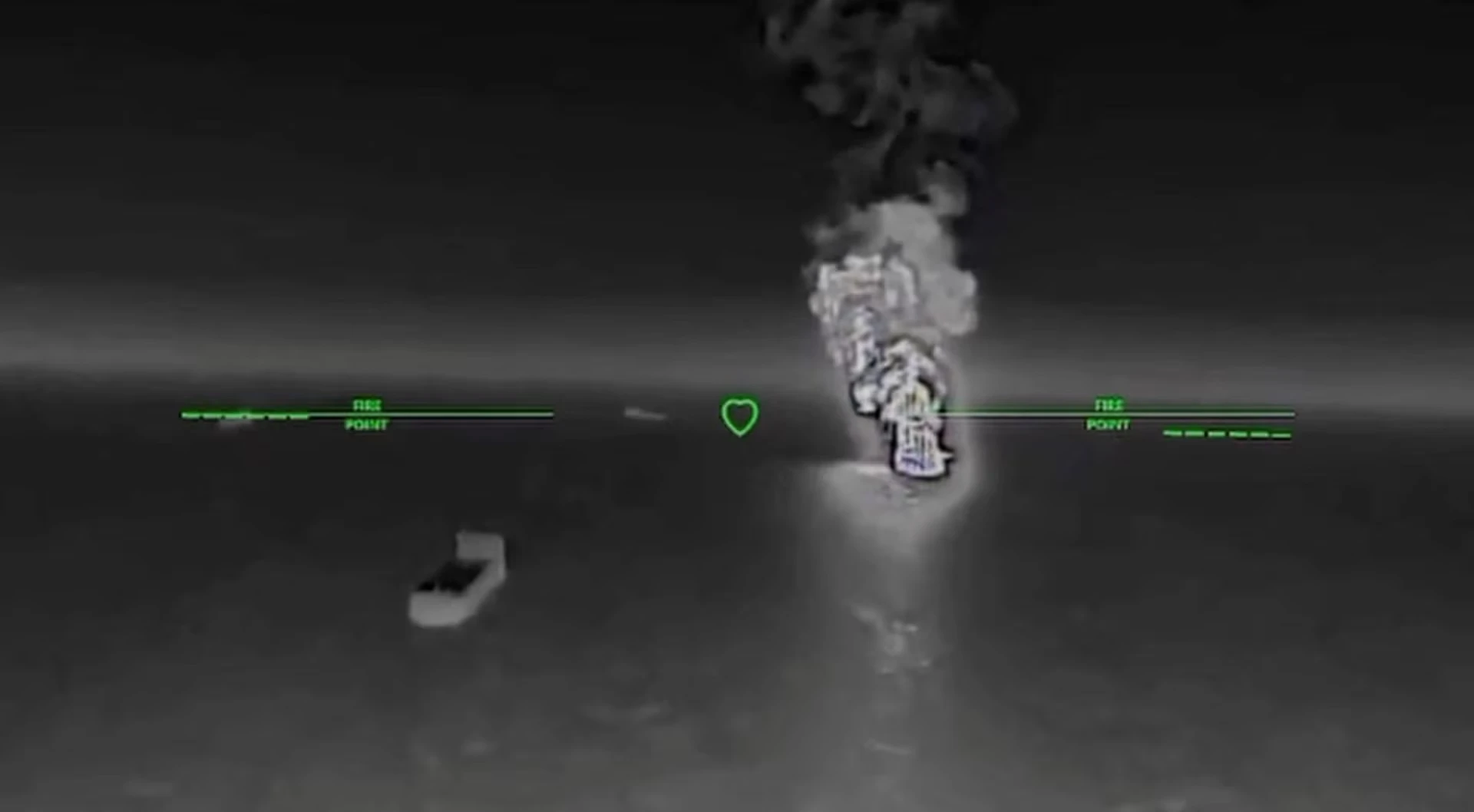












Six weeks into the war with Iran, the House of Representatives has arrived at an unusual point. A military operation that has already reshaped the American posture in the Middle East still has not produced a full public examination of its commanders before the chamber’s main defense committee. Formally, this is a scheduling delay. Politically, it is delayed oversight.
The planned testimony from the commanders responsible for the region was supposed to offer at least a minimal forum for the most basic questions: What is the strategic objective. How large is the operation becoming. What burden is it placing on U.S. forces. How far could escalation spread across the region. Those are not secondary matters to be addressed later. They are the core of Congress’s constitutional role in wartime.
The official explanation is that the commander most directly involved is busy with the war itself. But that justification only clarifies the problem. If a commander is too busy fighting a war to appear before Congress, that is not a reason to relax scrutiny. It is a reason to intensify it. Legislative oversight exists precisely for moments when the executive branch is asking for the widest room to act.
As Daycom noted in an earlier analysis, Congress does not lose control over war only when it falls silent. It also loses control when it accepts the procedural convenience of the White House as a substitute for urgency. In that setting, postponement ceases to be a technical pause and becomes a governing pattern: the administration sets the tempo, and lawmakers gradually adjust themselves to the role of spectators waiting to be briefed on terms set elsewhere.
That pattern is especially revealing because support and scrutiny are clearly being treated differently. When the White House needs political backing for force, many Republicans are ready with it quickly. When the moment arrives for public questioning, the language changes. Suddenly there are scheduling conflicts, operational demands and reasons to wait. The more serious the conflict becomes, the weaker the majority’s appetite appears to be for immediate examination.
This matters because the war with Iran is not a narrow, one-night operation. It touches the Strait of Hormuz, the wider deployment of U.S. forces in the Central Command theater, the protection of bases and shipping, the strain on munitions, the cost of sustaining the mission and the credibility of American deterrence across the Middle East. Yet instead of demanding a focused public accounting of the war itself, the House seems prepared to let the issue dissolve into the familiar flow of readiness reviews, posture discussions and budget hearings.
That is why the appearance of Defense Secretary Pete Hegseth later this month does not solve the underlying problem. A budget hearing is not the same thing as a war hearing. Budget sessions naturally pull the conversation toward appropriations, procurement and planning cycles. They allow the administration to fold urgent questions about legitimacy, escalation, end state and political risk into the broader bureaucratic language of defense management. Accountability is then offered in form while avoided in substance.
The dispute therefore extends well beyond a single hearing date. It is about whether Congress still intends to behave like a coequal branch when war is underway. Democrats have pushed for a dedicated public session focused squarely on the conflict. Republicans, by contrast, have shown little interest in forcing that confrontation. The administration is not merely prosecuting a war. It is doing so with the benefit of a congressional majority that seems reluctant to turn oversight into pressure.
That reluctance is itself a political choice. Republicans are not abolishing oversight in the open, nor are they claiming that Congress has no role to play. They are doing something quieter and more consequential: lowering the standard of oversight until it becomes optional, something to be exercised only when it does not disrupt the administration’s preferred timetable. In that model, Congress does not demand answers. It waits politely until the Pentagon is prepared to provide them.
For Donald Trump, this is close to an ideal arrangement. The war continues. Naval and air operations expand. Strategic decisions are made in real time. And Capitol Hill spends its energy discussing calendars rather than ends and means. The hardest questions — what the plan actually is, what the campaign will cost, where the line of escalation lies and what political outcome would count as success — are pushed further down the road. In war, deferred questions almost always strengthen the executive branch.
That is why this episode matters more than the postponement of one appearance by senior commanders. It shows how Congress can surrender its role not through dramatic capitulation, but through a series of modest concessions, each of them temporary in appearance and technical in tone. Taken together, those concessions create exactly what any administration wants in a dangerous conflict: time without a full public examination.
That is the real significance of what has happened. Congress is delaying more than a hearing. It is delaying its own responsibility at the precise moment when the cost of delay is becoming hardest to defend.