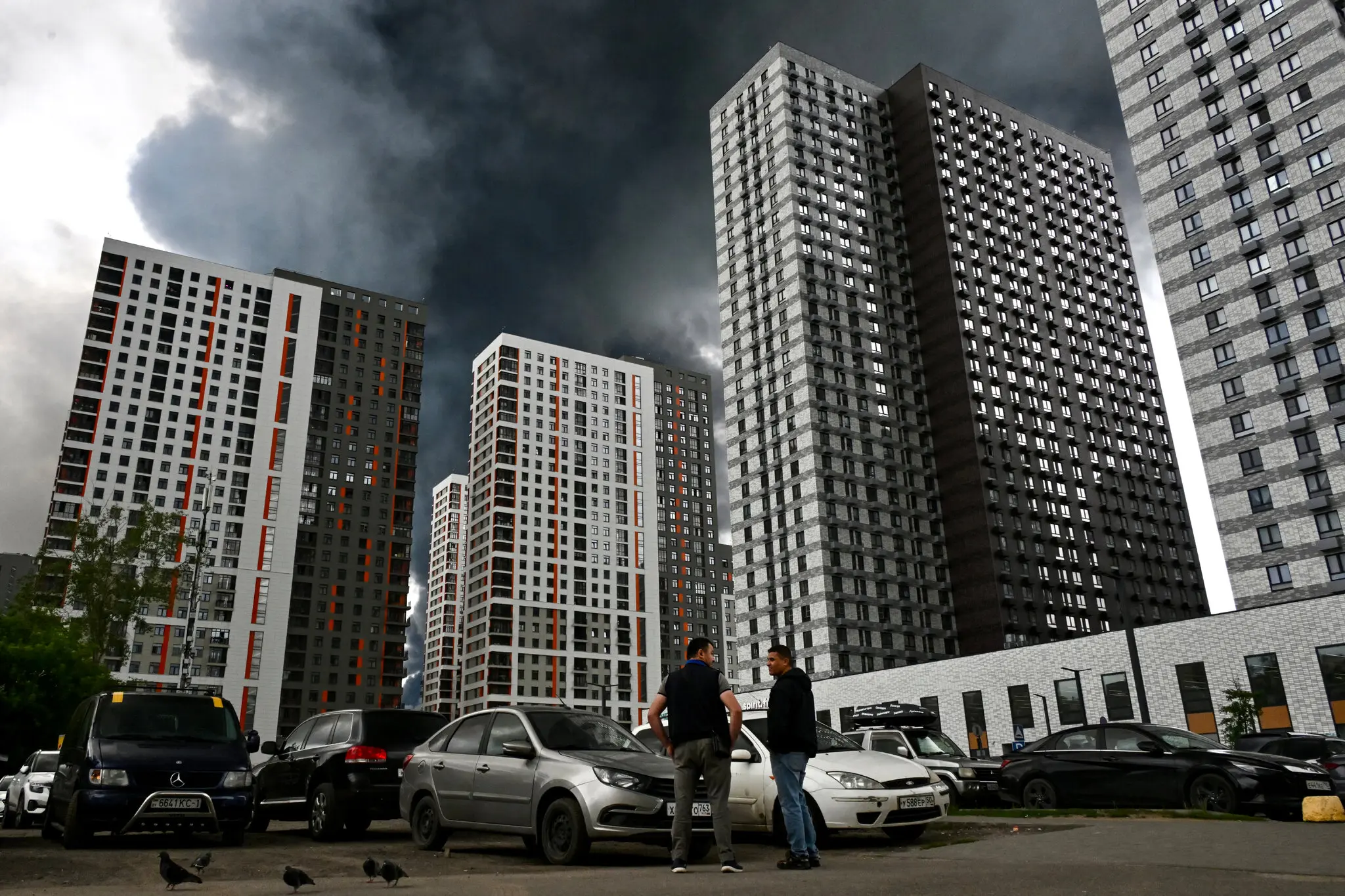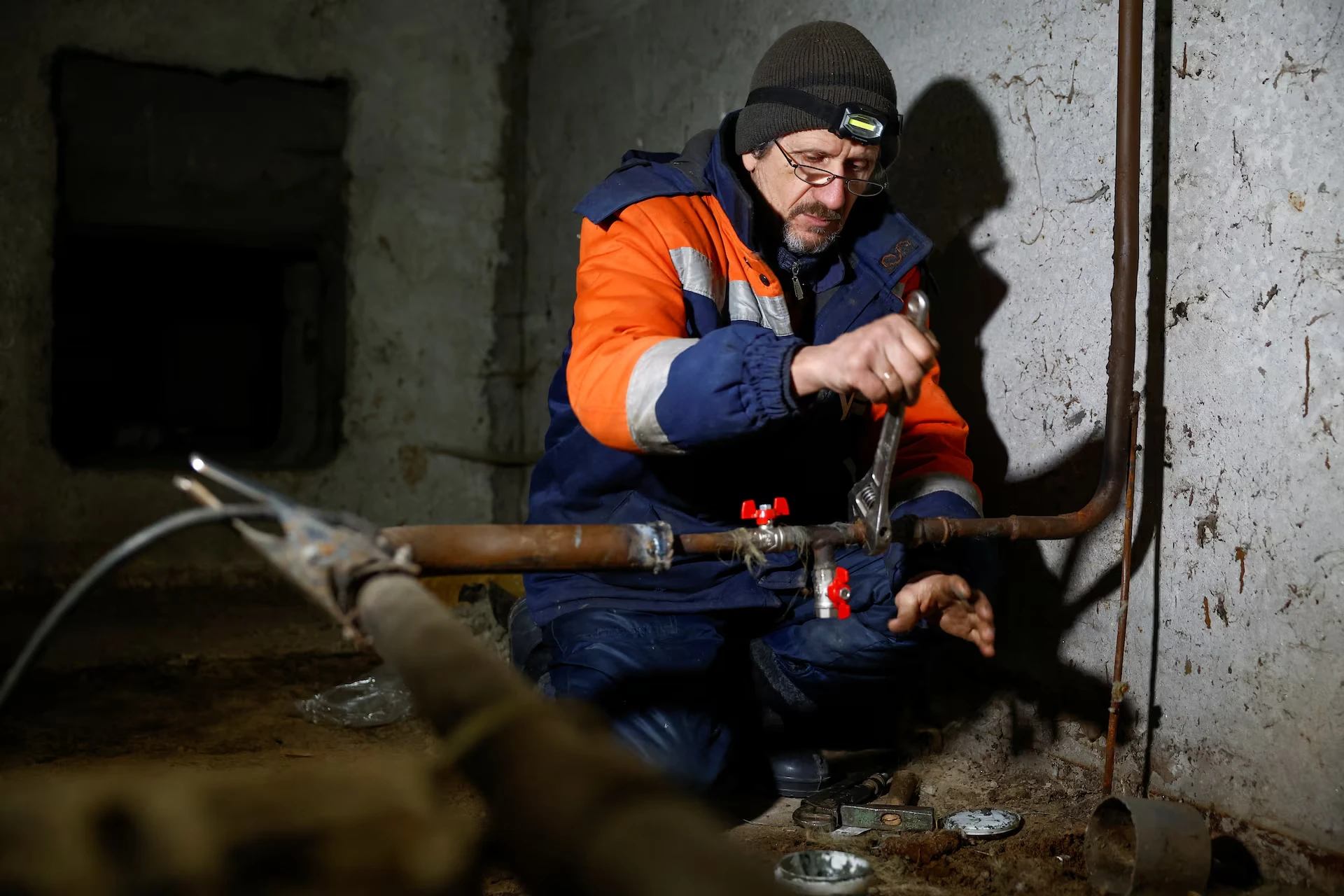






















Ukrainian strikes on Crimea and fuel infrastructure in the Krasnodar region have opened a new problem for Russia: the occupied peninsula is becoming harder to maintain as both a stable military base and a tourist space. The war is returning there not only through explosions, but through fuel shortages, transport shutdowns and power disruptions.
The overnight drone attack was one of the largest in recent months. Russia said 239 Ukrainian drones had been shot down, yet the consequences were still tangible: four people were killed in Crimea and dozens wounded, while a strike on an oil transport facility in the Krasnodar region caused a fire and killed one person on a passenger ferry.
The most revealing development was not only the number of drones, but the decision by occupation authorities to halt fuel sales to the public and businesses. Fuel was reserved for state agencies, security services and critical needs. That means the strike on logistics has already moved beyond a military target and begun affecting the civilian rhythm of the peninsula.
According to Daycom’s assessment, the fuel crisis in Crimea is one of the clearest indicators that Ukraine’s strategy of pressuring occupation infrastructure is working cumulatively. Kyiv does not need to destroy the entire supply chain. It is enough to make it unreliable, expensive and nervous on a regular basis.
For Russia, Crimea has long ceased to be merely a territorial symbol. It is a base for the Black Sea Fleet, an air-defense node, a logistical platform, a rear area for the southern front and a political trophy the Kremlin tried to present as fully integrated into the Russian state. That is why every disruption there carries more weight than an ordinary regional incident.
The restriction of fuel sales breaks that image of integration. If gasoline and diesel become resources primarily for security structures and emergency services, the occupation administration is moving into wartime prioritization. For local residents and businesses, it is a direct signal that normality is no longer guaranteed.
The start of the holiday season makes the situation even sharper. Crimea’s economy depends not only on military infrastructure, but also on seasonal movement, transport, hotels, food supplies and fuel. When gasoline sales stop, trains are delayed and the bridge is closed, the tourist facade disappears quickly.
The Kerch Strait has again become a vulnerable point. The temporary suspension of ferry traffic, the shutdown of road traffic across the bridge for more than nine hours and delays to 11 trains showed how dependent Crimea remains on a few transport arteries. In military terms, this is not convenience. It is weakness.
The Crimean Bridge was designed as material proof of annexation — a concrete formula of Russian control. But after repeated attacks and constant closures, it increasingly looks less like a guarantee and more like a bottleneck. Any threat to the bridge immediately affects supply, movement and the psychology of the occupation authorities.
The ferry crossing is not a full substitute either. It depends on weather, security, capacity and the condition of port infrastructure. When a strike on an oil transport facility in the Krasnodar region simultaneously causes a fire and a death on a passenger ferry, the risk stops being abstract.
Ukraine’s objective in such strikes is fairly clear: not only to hit military depots or ships, but to target the whole system that allows Russia to hold Crimea as a rear platform. Fuel, electricity, ferries, the bridge, oil terminals, railways and ports are different parts of one mechanism.
When that mechanism works, Russia can move personnel, equipment, ammunition, fuel and repair resources. When it begins to fail, the occupation model becomes more expensive. Troops lose flexibility, administrators face greater anxiety, civilians face queues and restrictions, and the Kremlin faces new costs for defending its rear.
That is why attacks on Crimea matter not only as a response to Russian strikes on Ukraine. They change the conditions of the occupation itself. Russia can no longer behave as though the peninsula is a safe rear area. Every system there — from gas stations to the power grid — increasingly operates as a potential military target.
Power outages after damage to electrical networks add another layer to the fuel crisis. Energy and fuel are interconnected: without electricity, it is harder to maintain communications, pumping stations, transport infrastructure, basic services and business operations. When both systems come under pressure, vulnerability multiplies.
For civilians, this means growing daily uncertainty. A person may have no interest in military logistics, but will feel it quickly if there is no gasoline, transport stalls, electricity disappears and the road across the bridge is closed. This is how war moves from battlefield reports into everyday life.
Deaths and injuries make this episode especially sensitive. Ukraine has the lawful right to strike military, fuel and logistics infrastructure of the aggressor state and its occupation platform. But every strike in an area where civilians are nearby carries moral and political risk. Precision becomes part of strategic legitimacy.
Russia, in turn, tries to use any civilian losses to invert reality through propaganda. It has spent years attacking Ukrainian cities, power plants, residential buildings and civilian infrastructure, yet presents every strike on occupied Crimea as proof of Ukrainian aggressiveness. This is a familiar information trap.
That is why Kyiv must preserve a clear explanation of its own logic: the strikes target systems that sustain Russia’s war, occupation and military supply. Crimea is not neutral territory. Russia uses it as a base for pressure against Ukraine, and that is why its infrastructure falls inside the zone of military risk.
Yet a strategy of attrition must remain disciplined. Its strength lies not in the number of loud explosions, but in the consistent erosion of Russia’s ability to sustain the war. If each strike makes supply harder, defense more expensive and the occupation administration more nervous, the effect accumulates even without one decisive collapse.
The situation in Crimea also shows a broader shift in the drone war. Ukrainian unmanned systems are no longer only tactical tools on the front. They have become instruments of strategic pressure on the rear, energy, ports, transport and psychology. For Russia, that means no occupied territory can be kept entirely outside the war.
In response, Moscow has to stretch air defense, reinforce protection of the bridge, and cover oil depots, ports, railways, airfields and administrative centers. But the sheer number of objects creates an almost impossible task: everything cannot be defended with equal density. That is the advantage of mass drone campaigns.
Crimea’s fuel crisis does not mean Russia’s occupation system will collapse tomorrow. It has reserves, security forces, priority access to resources and the ability to shift supplies temporarily. But it can no longer guarantee stability without constant emergency measures. That is a different quality of control.
Politically, the Kremlin faces an uncomfortable dilemma. If it acknowledges the scale of the problems, it undermines the myth of safe Crimea. If it minimizes them, it leaves the population alone with queues, restrictions and outages. Both options erode the occupation’s central promise: order and protection.
Ukraine is demonstrating that it can strike not only front-line positions, but also the rear infrastructure that makes the occupation possible. This is not a quick victory, but it is an important shift. The war for Crimea is increasingly becoming a war over logistics, fuel, energy and Russia’s ability to keep the peninsula functioning.
That is why the current strikes matter as a symptom. They show that Crimea is entering a period in which every transport artery, every oil depot, every ferry route and every power line can become part of a broader strategy of attrition. For Russia, this means the end of the illusion of a safe rear. For Ukraine, it is another way to force the occupation to pay its own price.