






















A first encounter with Croatia’s coast can easily become overwhelming. The Adriatic, stone towns, olive groves, vineyards, old ports and more than a thousand islands create the feeling that the whole country must be seen at once.
But Croatia does not reward haste. Its coastline is better read not as a checklist of attractions, but as a sequence of moods: Roman Pula, restrained Rijeka, musical Zadar, imperial Split and Dubrovnik, heavy with fame. Each city opens a different fragment of the Adriatic.
The best place to begin is Istria. Pula rests on Roman heritage, Mediterranean slowness and a dense urban fabric where antiquity is not separated from daily life. Its amphitheatre remains a stage, not merely a monument, and that is what keeps the city alive.
According to Daycom’s earlier analysis, the main mistake on a first trip to Croatia is trying to collect every island in a single itinerary. The country reveals itself more fully at a slower rhythm: a city, a market, a beach, a ferry, a dinner, a morning coffee.
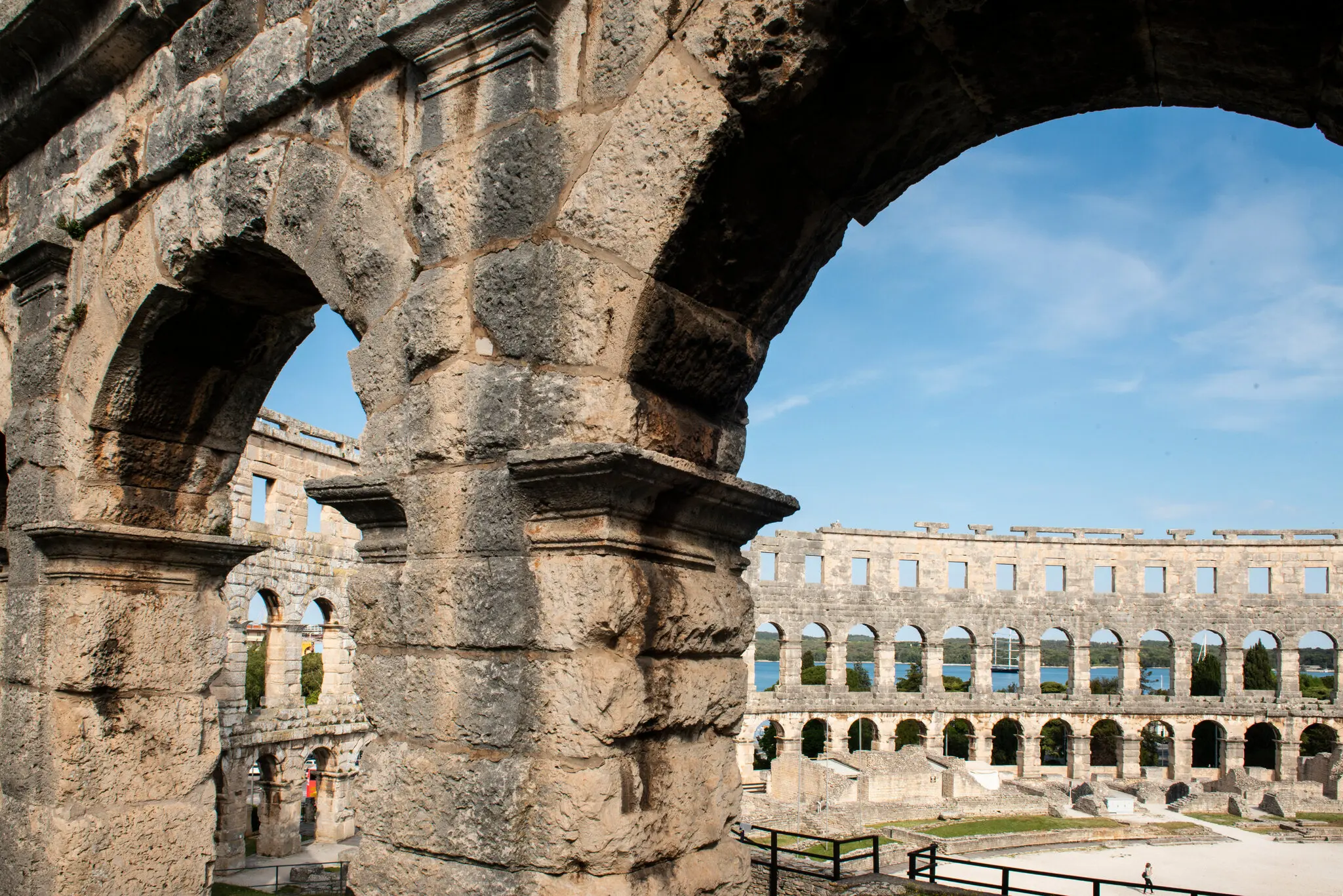 Римська арена першого століття в місті Пула на півострові Істрія — Сьюзен Райт
Istria is not only Pula. Rovinj and Poreč preserve an Italian-Croatian tone, while the inland hills lead toward truffles, olive oil and wine. This is where gastronomic Croatia speaks most quietly and convincingly: not as luxury, but as a natural way of living between land and sea.
From there, the route moves logically toward Rijeka and Kvarner. Rijeka does not compete with Dubrovnik for postcard beauty. Its strength lies in its port-city directness, layered history and alternative cultural energy. It does not try too hard to please visitors, and for that reason it feels honest.
From Rijeka, it is easy to reach the Kvarner islands — Krk, Cres, Lošinj and Rab. They are less theatrical than the best-known Dalmatian islands, but they offer more silence, pine roads, coves and distance. For a first journey, this is a good way to avoid tourist fatigue.
Zadar is another Croatia. It stands near the northern edge of Dalmatia and combines a Roman street grid with modern gestures such as the Sea Organ. Here history does not weigh the city down. It becomes a stage for daily life: markets, wine, sunsets and walks along the water.
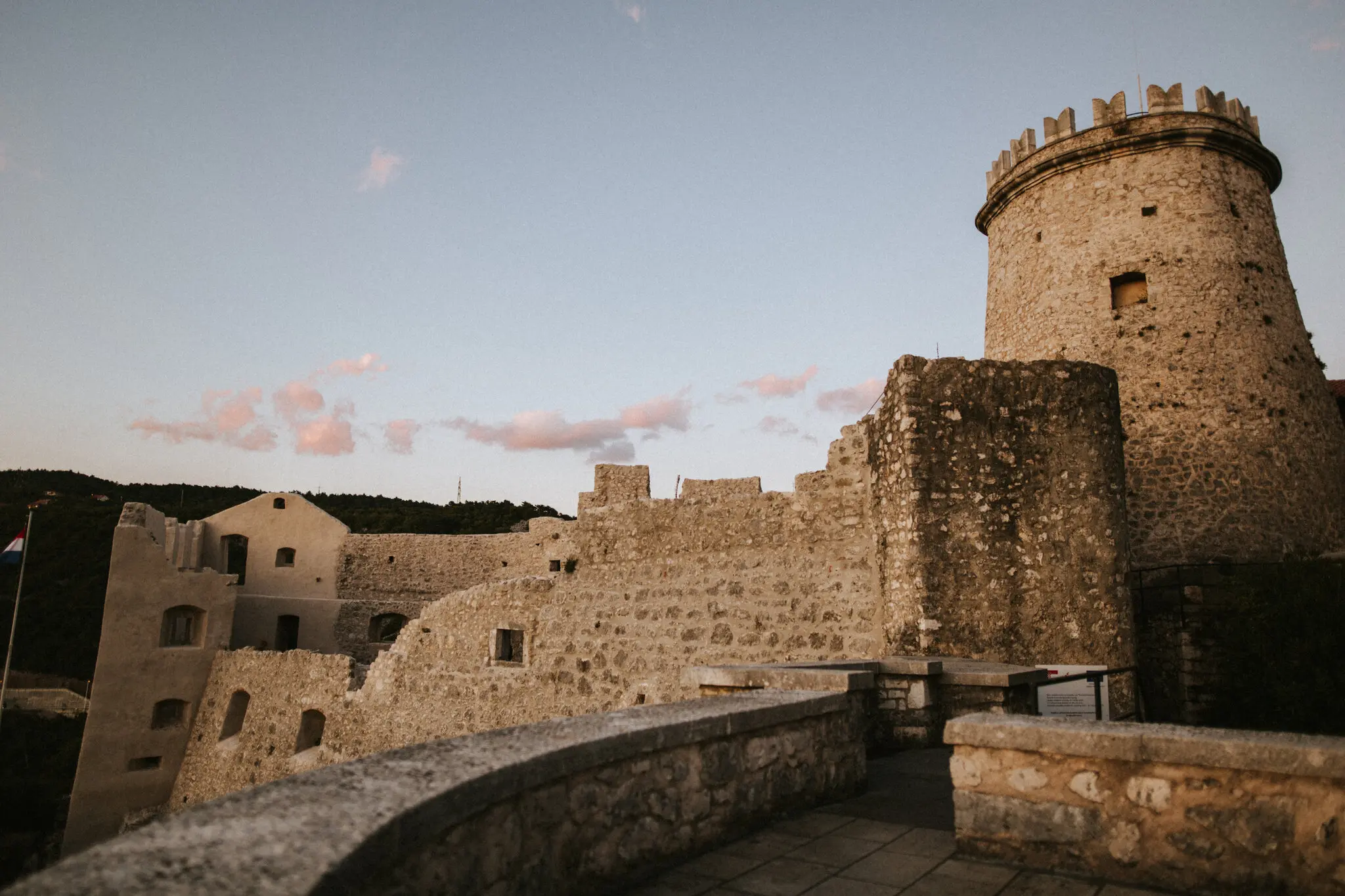 Трсатський замок XIII століття в Рієці, порт суднобудування в гирлі річки Рєчина — Далібора Бієліч
Zadar’s advantage is also geographic. From here, travellers can reach Plitvice Lakes, Paklenica, Northern Velebit, Krka or the Kornati islands. It is not a city to tick off quickly, but a smart base for those who want to combine Croatia’s beaches, national parks and sea.
Split carries a different weight. It grew inside Diocletian’s Palace, and that fact defines its character. In the city centre, ancient walls are not sealed off by museum silence. Cafes, wine bars, apartments, shops and restaurants live within them.
That is why Split is the best choice for travellers who want to feel Dalmatia without depending entirely on the beach. In the morning, one can walk through the market; by day, climb the bell tower of St. Domnius; in the evening, stroll along the Riva; and the next day, take a ferry to Brač, Hvar, Vis or Korčula.
In Central Dalmatia, it is important not to scatter attention. With limited time, it is better to choose one island and stay there than to jump from ferry to ferry every day. Brač offers beach classics, Hvar brings social energy, Vis gives distance, and Korčula offers a softer historical depth.
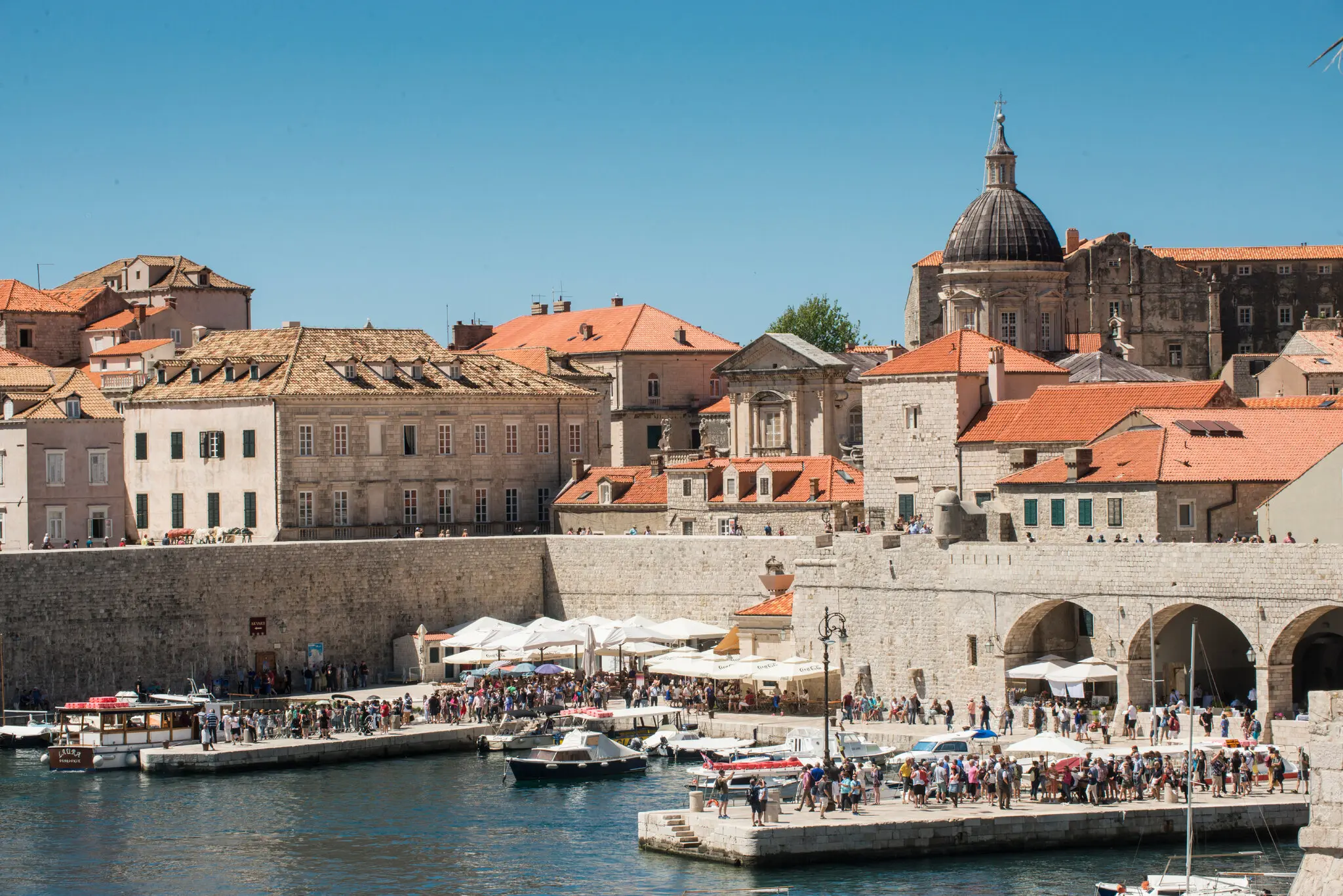 Старе місто та міські стіни Дубровника, одне з найпопулярніших місць у Європі — Сьюзен Райт
Dubrovnik is the final and most difficult point of the route. Its walls, limestone streets and terracotta roofs truly belong among Europe’s strongest images. But excessive popularity has made the city vulnerable to its own fame. Here, timing and pace matter.
The best approach is to come in spring or autumn, enter the old city early and avoid reducing Dubrovnik to its walls alone. Nearby are the Elaphiti islands, the vineyards of Konavle, the Pelješac Peninsula and Mali Ston with its oysters. These side routes give the journey back its air.
Croatia’s coast does not need one perfect itinerary. It needs a choice. Istria is for wine, truffles and Roman Pula. Kvarner is for quieter islands. Zadar is for parks and northern Dalmatia. Split is for history, ferries and urban rhythm. Dubrovnik is for the grand finale.
That is the secret of a first journey along Croatia’s coast. There is no need to defeat the map. Let the Adriatic lead more slowly: from coffee to stone, from market to cove, from island to evening wine. Then Croatia stops being a collection of beautiful places and becomes a route one genuinely wants to return to.