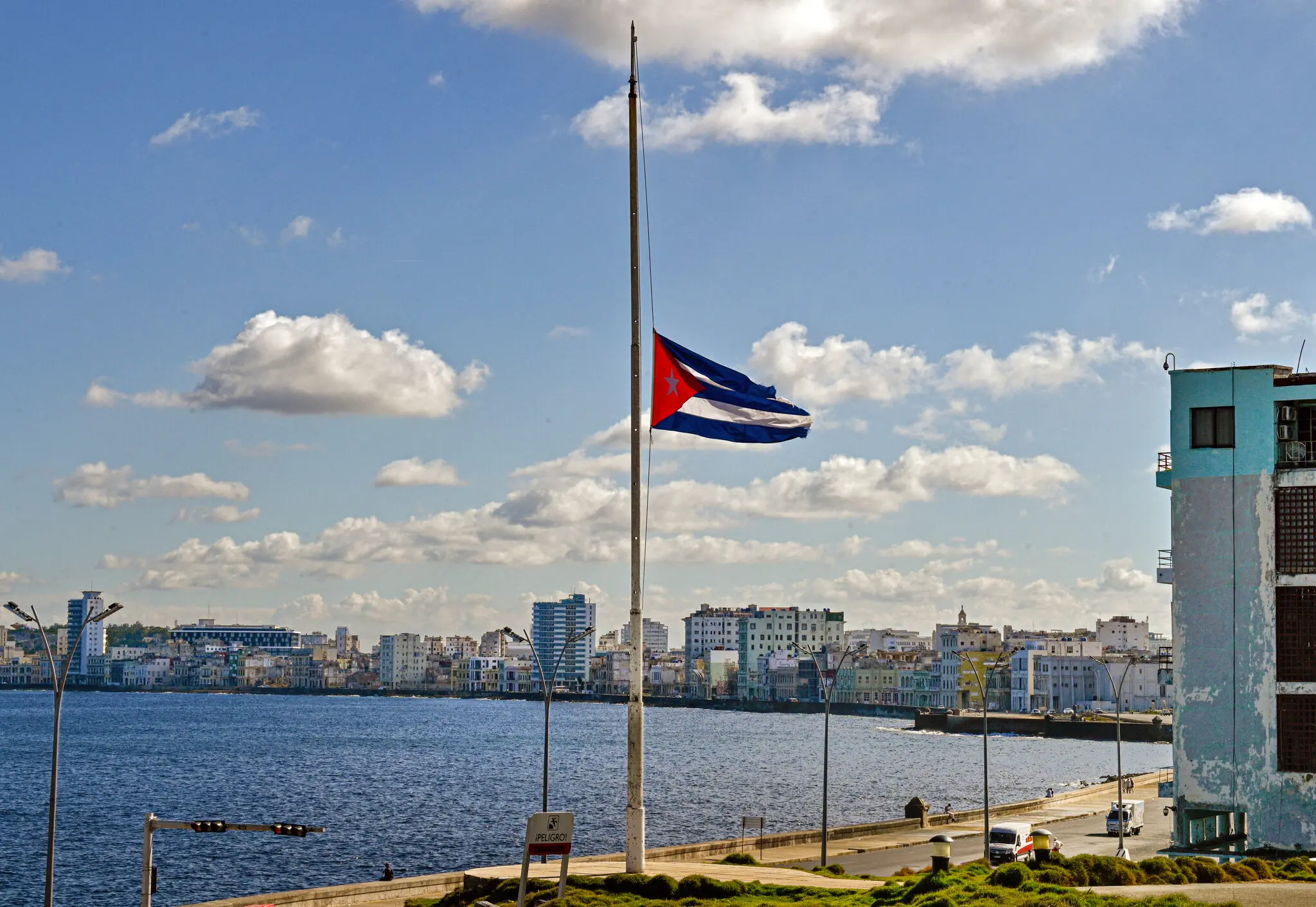























Cuba had been waiting for a Russian tanker as a brief but vital reprieve. The vessel, carrying 242,000 barrels of diesel, was expected to provide another fuel cushion for a country where electricity works only a few hours a day and gasoline increasingly exists only on the black market.
But the Universal, which had left Russia and appeared to be moving toward the Caribbean, suddenly changed course. Instead of Cuba, it now appears to be heading toward South America. For Havana, that is not simply a delayed delivery. It is the loss of the nearest realistic chance to ease the energy crisis quickly.
Since the beginning of the year, after intensified U.S. pressure, Cuba has been living under what amounts to a fuel siege. Venezuelan shipments have been halted, other potential suppliers fear sanctions and tariff threats, and Russian support has become almost the only channel capable of providing the island with large volumes of fuel.
According to Daycom’s assessment, the Universal’s turn shows the central point: Cuba’s crisis is no longer only the result of a weak economy, an aging energy system or failed governance. It has become part of a wider political struggle in which fuel is used as an instrument of coercion.
In March, Russia had already sent Cuba 730,000 barrels of crude oil. That cargo provided temporary relief, but most of it has now been consumed. The new diesel shipment mattered even more for daily life: trucks, tractors, generators, water systems, food delivery and humanitarian logistics all depend on it.
Cuba cannot fully cover that need through domestic production. Local oil helps the system survive, but it cannot replace imported diesel. Solar power, small private fuel shipments and emergency manual management soften the crisis, but do not solve it.
That is why the tanker’s diversion has a disproportionate effect. Formally, it is one cargo. In practice, it means more weeks of shortages, darkness, limited transport, harder aid distribution and household exhaustion. In a country already operating at the edge, even one failed delivery becomes a political event.
Daily life on the island increasingly resembles an economy of survival. People cook with charcoal and firewood, carry water in buckets, plan their day around brief windows of electricity and search for fuel through unofficial channels. On the black market, a gallon of gasoline can cost more than $40 — an almost absurd amount for most Cubans.
Summer makes the situation more dangerous. Heat increases demand for electricity, refrigerators, fans, water pumps and hospital equipment. If fuel is already scarce now, the coming months could turn the energy crisis into deeper social strain.
Washington insists that the real cause of Cuba’s decline is not American pressure, but corruption and the failure of the government in Havana. In that logic, fuel strangulation is meant to push Cuban leaders toward political and economic concessions. This is not a humanitarian strategy. It is a strategy of exhaustion.
Havana calls the policy an illegal blockade and, in practical terms, an act of war. For Cuban officials, that is a useful but not empty formula. It helps explain domestic crisis through external pressure, while also describing a reality in which tankers do not reach port because of fear of American consequences.
The Universal has become a symbol of this new regime. It left Russia in late March, crossed the English Channel, headed toward Cuba and then stopped in the Atlantic for almost a month. Such behavior is unusual for a tanker expected to deliver cargo quickly and return to the commercial cycle.
This is not the first case of its kind. Other ships that could have delivered fuel to Cuba have also drifted at sea or ultimately abandoned the route. In a world of sanctions and secondary risks, even a formally possible operation can become too costly for owners, insurers, banks and operators.
Russia is also acting pragmatically. It publicly speaks of supporting Cuba, but if its diesel tanker does indeed move elsewhere, the cargo may bring profit rather than become a political gift to Havana. For Moscow, solidarity has limits when a shipment can be sold more profitably.
That is a painful signal for Cuba. The island has long depended on outside patrons: first the Soviet Union, then Venezuela, and now partly Russia. Each time, Havana’s energy security has rested not on domestic resilience, but on the political will of another state.
Today, that model is breaking again. Venezuela cannot or will not guarantee the old level of support. Russia has its own war, sanctions and economic calculations. China is cautious. The United States is turning Cuba’s fuel logistics into a pressure field in which every tanker becomes a political test.
For Cubans, all of this looks much simpler: the lights are either on or off; a bus runs or does not; a hospital has generator fuel or waits; water flows or must be carried. Geopolitics immediately becomes daily life — a dark kitchen, an empty gas station and a day organized around the power grid.
The Universal’s diversion does not mean Cuba’s final collapse. The island has experience surviving scarcity, the state knows how to distribute shortages, and society has long learned to adapt. But each new fuel failure reduces the reserve of patience and raises the cost of stability.
Cuba is entering summer without the diesel pause it had hoped for. That may be the clearest description of its present condition: the country is not only waiting for fuel. It is waiting to see whether anyone in the world is still willing to take a risk for its survival. For now, even the Russian tanker that was supposed to symbolize help has chosen another horizon.