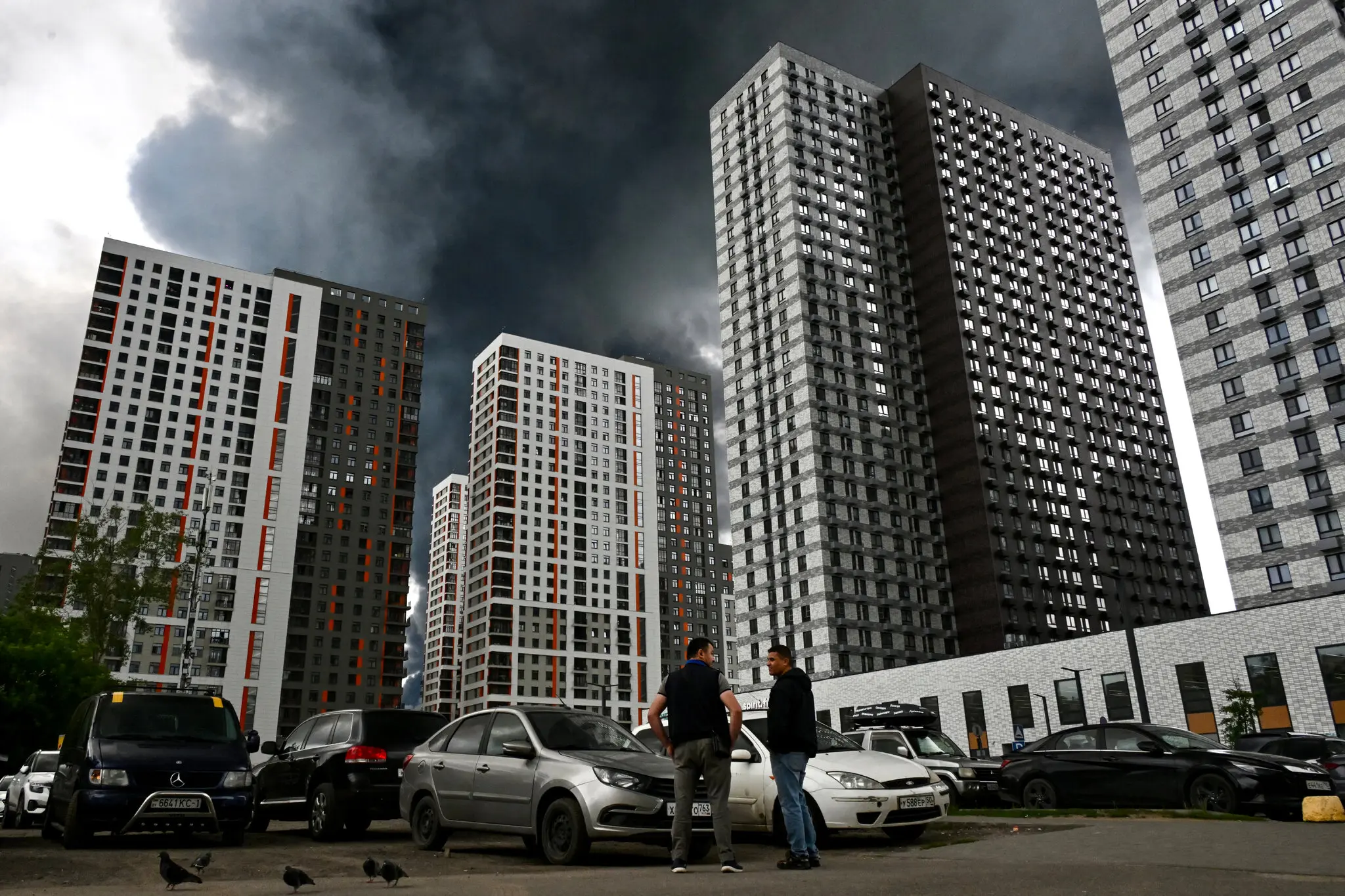






















On March 26, two people were killed and three others were injured on the outskirts of Abu Dhabi when debris from an intercepted missile fell onto a road, according to Emirati authorities. The United Arab Emirates said its air defenses intercepted 15 ballistic missiles and 11 drones that day.
This was not an isolated episode. Saudi Arabia, Kuwait, and Bahrain also reported attacks or defensive interceptions on the same day, underlining that the conflict is no longer contained to Iran, Israel, and U.S. military positions. A wider arc of Gulf states is now being drawn into the war’s operational reality.
That is what makes Abu Dhabi politically important. For months, Gulf governments could still present the crisis as dangerous but manageable, centered on military sites, oil infrastructure, and shipping lanes. Once debris kills civilians on an ordinary road, the war changes character. It stops looking like a controlled regional confrontation and starts looking like a direct threat to daily urban life.
According to the preliminary assessment of Daycom, this is the real turning point. The Gulf is no longer simply the rear area of a larger war. It is becoming part of the war’s civilian geography. Even successful missile interceptions now carry a human cost, which means governments can no longer treat air defense as proof that escalation is contained. That is an analytical conclusion, but it is strongly supported by the Abu Dhabi deaths and the broader pattern of attacks across Gulf states.
The diplomatic response reflects that shift. A group of Arab states, including the UAE, Saudi Arabia, Bahrain, Kuwait, Qatar, and Jordan, issued a joint condemnation of what they described as Iranian attacks and warned against further escalation. They also called on Iraq to stop attacks launched from its territory by armed groups and militias.
That language matters. It suggests that Gulf governments are no longer treating the crisis solely as an external confrontation between Washington, Jerusalem, and Tehran. They are increasingly framing it as a direct assault on Arab sovereignty and regional security. Once that framing hardens, political pressure rises on these governments to respond more visibly, whether through stronger defense coordination, sharper diplomacy, or deeper cooperation with Western allies.
The UAE is a particularly revealing case. Abu Dhabi has long tried to balance strong security ties with a pragmatic regional posture. But as attacks move closer to populated areas, that room for maneuver narrows. The more often civilians are exposed to debris, fire, and disruption, the harder it becomes for Gulf leaders to maintain a strategy based on distance, restraint, and ambiguity.
That is also why Gulf capitals now appear caught in a strategic dilemma. They want the war to end because the costs of continued attacks on cities, shipping, and energy infrastructure are mounting. But they are also wary of a premature deal with Tehran that would leave Iran’s coercive tools intact and invite future pressure on the same routes, facilities, and populations. This is an inference, but it is consistent with reporting that Gulf officials want Trump to end the war, just not on terms they see as too soft.
There is a domestic-security dimension as well. Kuwait said it had foiled a plot involving citizens allegedly linked to Hezbollah and accused them of planning attacks on state figures and efforts to recruit others. That widens the crisis beyond missiles and drones. Gulf states are now signaling concern not only about airborne threats, but also about proxy or networked operations inside their own borders.
The broader significance is economic as much as military. Every attack on the UAE, Saudi Arabia, Bahrain, or nearby shipping routes feeds instability across the Gulf energy system. It is not only a regional security issue. It is part of a wider energy war affecting oil prices, tanker traffic, insurance costs, and global supply chains. That is why civilian deaths in Abu Dhabi resonate far beyond the Emirates themselves.
For Washington, this means Gulf allies are becoming less willing to treat the conflict as a distant campaign. For the monarchies themselves, it means balancing caution and deterrence is getting harder. And for Iran, it suggests that its strategy of widening risk across the region is working at least in one important sense: even without a full-scale regional invasion, it is forcing neighboring states to live under constant political, military, and psychological strain. This is an analytical conclusion drawn from the combined evidence of repeated attacks, official condemnations, and the spread of civilian impact.
So the deaths in Abu Dhabi are not just another tragic incident. They mark the point at which the war around Iran has moved decisively beyond the battlefield and into the ordinary civic space of the Gulf. And the more often missile debris falls onto regular roads instead of military compounds, the harder it will be for anyone to claim that this war is happening somewhere else.