




















Denmark’s election did not deliver a clean verdict. Prime Minister Mette Frederiksen’s Social Democrats remained the largest party, but the result was too weak to guarantee an easy third term, and the real battle has now shifted from the ballot box to coalition arithmetic. Official results show the Social Democrats on 21.8% and 38 seats, with turnout at 83.99%.
The parliamentary map explains why the outcome feels more like suspension than victory. The left-leaning red bloc secured 84 seats, the right-leaning blue bloc 77, and Lars Løkke Rasmussen’s Moderates 14 in the 179-seat Folketing, leaving no bloc near the 90 seats needed for a majority.
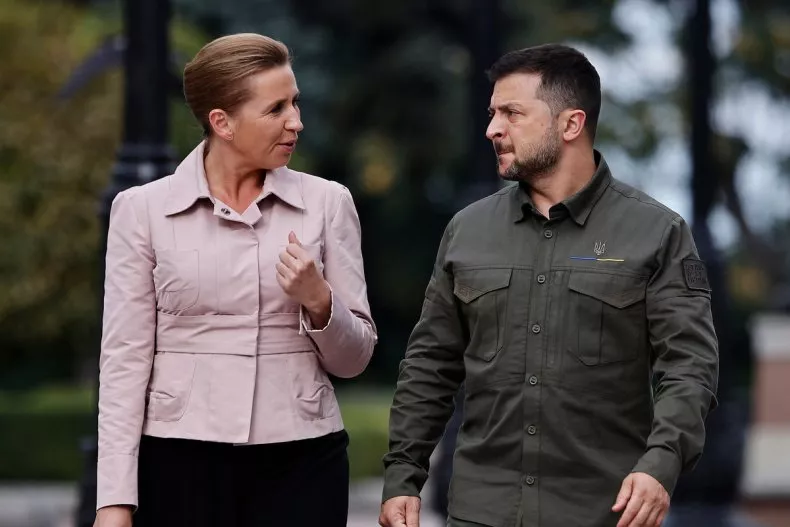
That makes Frederiksen the election’s formal winner, but not its uncontested master. She has been asked to lead the first round of government-formation talks, yet she does so from a visibly weakened position, after a vote that kept her at the center of Danish politics while narrowing her room to govern on her own terms.
As Deikom sees it, Danish voters did not reject Frederiksen so much as fence her in. They signaled that they still preferred her to the alternatives, but they also refused to hand her a broad mandate for continuity. In political terms, that is one of the most difficult kinds of victory to manage. This is an inference based on the official result and the post-election coalition picture.
The scale of the setback matters. Although the Social Democrats still came first, this was their worst national result in more than a century, according to current reporting on the outcome. That gives the election a double meaning: Frederiksen won the lead, but lost the aura of dominance that had defined her recent years in office.
Just as important was what did not decide the vote. Frederiksen entered the campaign with strong international visibility after her confrontation with President Trump over Greenland, but Danish voters were more focused on domestic concerns such as the cost of living, pensions, taxation, and agricultural regulation. The Greenland issue mattered symbolically; it did not become the decisive electoral engine her camp may have hoped for.
That is the central paradox of the election. Frederiksen benefited from looking like a steady crisis leader abroad, yet Danish politics remained stubbornly domestic at home. Voters could approve of her handling of a sovereignty dispute and still punish her party for fatigue, economic unease, or frustration with the government’s broader record.
The result also confirms a longer trend in European politics: fragmentation without collapse. Denmark’s system remains functional and orderly, but power is spread across many parties, and that makes governing slower, more transactional, and more dependent on finely balanced compromises. The Moderates, with just 14 seats, now hold leverage far beyond their numerical size.
Lars Løkke Rasmussen is therefore the election’s most important secondary figure. AP reported that he called on rivals to “come and play with us,” while also positioning himself as the broker of a centrist solution. At the same time, Troels Lund Poulsen’s Liberals signaled they do not want simply to recreate the outgoing coalition with the Social Democrats. That sharply limits Frederiksen’s easy options.
In practice, the road ahead is likely to be long. The Guardian reported that Frederiksen has the first chance to explore a governing majority, but even with support from likely left-leaning partners she remains short of 90 seats, which means any viable cabinet may require either broader cross-bloc bargaining or a more fragile arrangement than before.
The policy content of those talks will matter as much as the numbers. The parties are divided over welfare, a possible wealth tax, farming rules, migration, defense, and the balance between green transition and economic competitiveness. The broader the eventual coalition, the more likely it is to be numerically stable but politically constrained. That is an inference from the post-election reporting on party positions and campaign priorities.
For Europe, this is more than a domestic Danish story. Denmark remains an EU and NATO member with a strong voice on security, Arctic sovereignty, and support for Ukraine, so the question is not only who becomes prime minister, but how quickly Copenhagen regains a fully functioning government at a moment of wider geopolitical strain.
In the end, the election was not a vote for dramatic change, but for narrower permission. Frederiksen remains the leading figure in Danish politics, yet she now has to prove that she can convert first place into governable authority. Her next term, if she secures it, will be won less by electoral triumph than by coalition craft.