



















The drone fragments found near the Moldovan village of Lopatna, close to the Ukrainian border, may look like a local incident at first glance. In reality, they are another sign that the war in Ukraine has long moved beyond the front line, creating a wider zone of aerial risk around it.
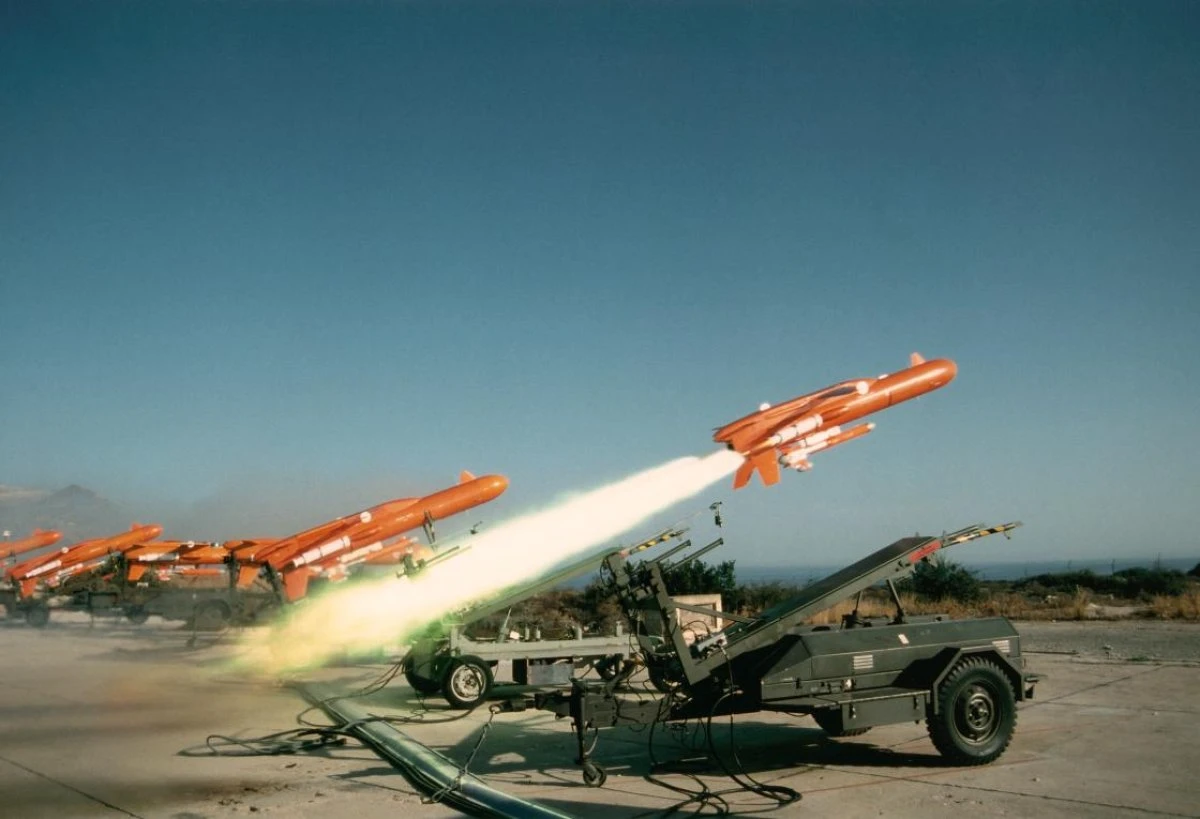
Moldovan surveillance systems detected the drone entering the country’s airspace shortly after midnight from the Mihailovca-Lopatna area. Its fragments were later found in an agricultural field, where traces at the site indicated an earlier explosion.
Chisinau acknowledged that the drone was Ukrainian, but placed political responsibility on Russia. That distinction matters. For Moldova, the origin of the debris does not erase the central fact: Russia’s war has created the conditions in which drones, missiles and fragments of intercepted targets increasingly cross into neighbouring states.
According to Daycom’s earlier analysis, incidents of this kind are not only about identifying which side a particular aircraft belonged to. The deeper issue is that countries bordering Ukraine are entering a phase in which even neutrality can no longer protect them from the technological consequences of a major war.
Moldova has faced airspace violations and falling debris near its border before. Each case forces Chisinau to balance careful diplomacy, solidarity with Ukraine and the need to explain to its own society why a war next door is appearing ever closer to Moldovan villages.
Lopatna has become a point where several pressures meet. The first is military: Russia’s overnight attacks on Ukraine saturate the border sky with drones, air defence systems, debris and intercepted targets. The second is political: Moscow continues to create risks for neighbouring states even when it is not formally attacking them directly.
The third pressure is technological. Drone warfare is changing the meaning of a border. What was once a line on a map is now a space that must be monitored in real time, covered by sensors, radars, mobile units and interceptor drones. Without that, smaller states will find it increasingly difficult to control their own skies.
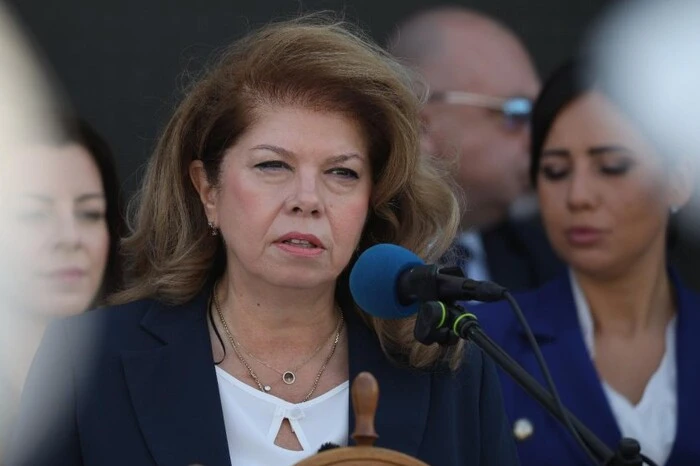
That is why Maia Sandu’s call for high-technology interceptor drones and new legislation to enable their production sounded less like a separate defence initiative than a response to a rapidly changing reality. Moldova understands that old security tools are no longer keeping pace with the war of unmanned systems.
For a country with limited resources, this is a difficult challenge. Moldova cannot build a military system on the scale of major powers, but it can no longer live within the logic of minimal protection. It needs precise, technological and mobile defence: surveillance, early warning, interception and fast coordination with Ukraine and European partners.
The incident near Lopatna also exposed the sensitivity of the information space. The fact that the drone was Ukrainian can be used by Russian propaganda to shift responsibility. That is why Chisinau immediately set the political frame: the root cause of such incidents is not Ukrainian defence, but Russian aggression against a neighbouring country.
For Ukraine, the episode is uncomfortable, but not destructive. Kyiv remains in contact with the Moldovan side because it understands that the security of neighbours is part of its own diplomatic position. Ukraine cannot allow accidental border incidents to weaken the solidarity of states that themselves live under the pressure of Russia’s war.
At the same time, such incidents are creating a new normal for the wider region. Romania, Moldova, the Baltic states and other countries on Europe’s eastern flank increasingly face not only the classic threat of invasion, but also the risks of malfunction, interception, electronic interference or falling debris. This is a grey zone between war and peace.
That grey zone is especially dangerous for Moldova. It does not provide a formal trigger for a major military response, but it gradually erodes the sense of security. People see fragments in fields, hear reports of overnight attacks near the border and understand more clearly that war does not need to arrive on tanks to alter daily life.
For Chisinau, the response cannot be limited to protest statements. It needs detection systems, legislation for defence technologies, cooperation with Ukraine, trained specialists and public communication without panic. Moldova’s security increasingly depends on its ability to turn incidents into decisions quickly.
The debris near Lopatna did not become a major disaster. But its meaning extends far beyond the field where it was found. It reminded Moldova that the war next door is no longer only a foreign policy issue. It has become a question of the sky above villages, public trust in the state and the ability of a small country to protect itself in the age of drones.