


















Europe’s heat is no longer a seasonal ordeal. It has become a test of whether a continent built for temperate summers can live in a reality where temperatures increasingly cross the threshold of physiological safety.
In Britain, another June temperature record was broken on June 25, when Somerset recorded 36.4°C. It came only a day after the previous record, which had already seemed exceptional. In a country where much housing lacks air conditioning, heat like this quickly turns from discomfort into danger.
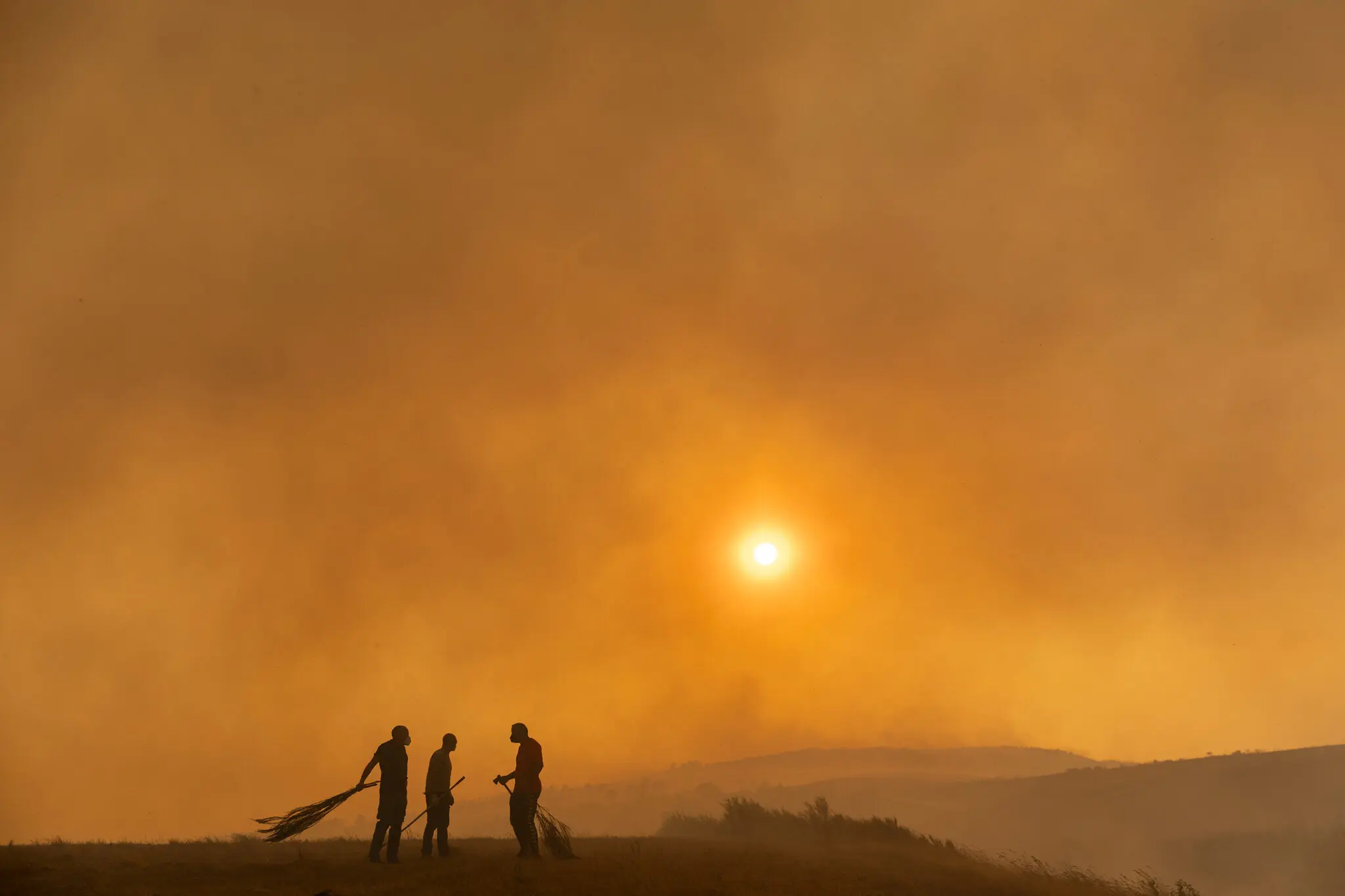
This heatwave is not isolated. It has stretched across Western Europe, from Spain to France, from Italy to the Netherlands, from Germany to Scandinavia. In many countries, high-level heat alerts are in place, while temperatures in some regions remain in the high 30s Celsius and above 40°C.
According to Daycom’s earlier analysis, the current crisis matters not only because of records. It shows that Europe is entering a phase in which every major heatwave strikes health, energy, transport, education, labor and the urban environment at the same time. This is no longer just a meteorological event. It is systemic stress.
The sharpest measure is human loss. In Spain, statistical models link more than two hundred likely deaths to the current heatwave. In Italy, several people have died this week from heat exposure, including people working outdoors. In France, dozens have drowned while trying to escape the heat in the water, often in unsafe or unsupervised places.
Such deaths rarely look like one large catastrophe. Heat works differently. It aggravates cardiovascular disease, worsens respiratory problems, causes dehydration and undermines the body’s ability to cool itself. Some deaths become visible only later, when excess mortality statistics assemble a fuller picture.
The most vulnerable groups are known in advance: older people, children, homeless people, the chronically ill, construction workers, couriers, farmers, road crews and anyone who cannot simply move into a cool room. Heat quickly exposes social inequality. Air conditioning, shade, water and flexible hours become forms of protection.
But risk rises even for those who remain indoors. In Britain and France, many buildings were designed to retain warmth in winter, not to release heat in summer. Thick walls, poor ventilation, attic rooms, dense construction and a lack of cooling can turn housing into a trap.
Cities overheat faster than the surrounding countryside. Asphalt, concrete, stone and glass store daytime heat and release it slowly at night. Nighttime temperatures often become decisive: when the body does not get several hours to recover, the next day begins with exhaustion already built in.
Paris has shown how thin the line has become between normal life and emergency conditions. Temperatures approached 40°C, with forecasts pointing still higher. In such conditions, a city is no longer merely hot. It begins to work against itself: transport, stone squares, tourist routes and queues become part of the risk.
Infrastructure is also bending under the pressure. In France, power grids have come under heavy strain, and one nuclear reactor had to be shut down because river water used for cooling became dangerously warm. In Britain, Germany and Switzerland, heat disrupted rail service as tracks risked buckling.
That is one of the central lessons of this heatwave: the climate crisis is not only striking nature. It is striking systems once assumed to be stable. Electricity, water, hospitals, schools, railways, working hours and tourist sites were all designed for a different temperature regime.
Europe is warming faster than any other continent. Over the past three decades, its temperature has risen by about 0.56°C per decade, more than twice the global average. That means heatwaves here now begin from an increasingly elevated baseline, and records are becoming less a surprise than a consequence of accumulated warming.
The cause is not only greenhouse gas emissions, though they provide the main background. Europe is also shaped by Arctic warming, reduced snow cover, changes in the jet stream, drought and urban heat islands. When these factors overlap, the continent does not simply get a hot summer. It gets a new configuration of risk.
That is why the second major heat blow in two months should be treated as a warning. Early heat once looked like a calendar anomaly. Now it increasingly resembles part of a longer season of danger — one that begins earlier, lasts longer and returns in repeated waves.
Education is already feeling this directly. When schools close or shorten lessons, heat stops being a private family problem. It changes the rhythm of society. Parents must find care for children, students lose learning time, and teachers work in rooms often unfit for extreme temperatures.
Transport is reacting in the same way. Trains slow down or are canceled, roads overheat, waiting at bus stops becomes dangerous, and urban mobility stops being neutral. In extreme heat, a trip to work, school or a hospital can become a physical ordeal, especially for those without a car or access to cooled spaces.
Outdoor work now needs new rules. When a construction worker or road worker must choose between a paycheck and health, this is no longer just a weather problem. Working hours, breaks, shade, water, protective equipment and the right to stop work during dangerous heat must become part of labor safety.
The global context makes Europe’s crisis even clearer. May 2026 was the second-hottest May in the record. In Pakistan, one city reached 51.5°C, while parts of northern India approached 50°C, forcing millions of workers to choose between falling ill and being paid.
This means Europe is not an exception, even though it is warming at its own accelerated pace. It is part of a broader planetary picture in which extreme heat is becoming one of the defining challenges of the 21st century. The difference is that many European societies long believed themselves sheltered from this temperature reality.
The most dangerous illusion now is to wait for a cooler turn at the end of the week and think the problem has passed. Temperatures may fall, weather will shift, and some countries will return to their usual rhythm. But the trend will remain. Every next heatwave will arrive in a Europe that is either better prepared or once again surprised.
Adaptation can no longer be reduced to advice to drink water and stay out of the sun. Europe needs cooling centers, trees, shaded corridors, renovated housing, protected work schedules, resilient power grids, heat protocols for transport, hospitals with backup plans and cities where cool air is not a luxury but part of basic safety.
Europe already knows the climate has changed. The question now is whether it will change fast enough itself. Britain’s record, deaths in Spain and Italy, drownings in France, halted reactors and overheated rails are not separate episodes. They are the outline of a new summer, in which heat tests not only thermometers, but the maturity of states.