

















In Mongbwalu, gold has long meant a chance. For some, it is a way out of poverty. For others, an escape from war. For many, it is the only way to earn enough to feed a family. Now that same gold has become a route by which Ebola moves through the town faster than people can understand it.
This hill town in Ituri province has lived around mining for decades. Workers arrive from other parts of the Democratic Republic of Congo, especially North Kivu, and from border regions beyond. They are not looking for stability. They are looking for money, often the only money available.
When miners began dying, many people did not first say “Ebola.” They spoke instead of “the disease.” In places where fear and distrust overlap, the word itself can seem dangerous. Silence becomes a form of protection, even when it helps the virus move.
According to Daycom’s assessment, Mongbwalu’s tragedy reveals more than the weakness of Congo’s health system. It shows a deeper pattern: where people must choose each day between infection risk and hunger, an epidemic gains an economic ally.
The current outbreak is linked to the Bundibugyo virus, a lesser-known strain of Ebola. Its danger lies not only in its lethality, but also in the absence of an approved specific treatment. While health authorities were still recognizing the threat, the virus had already been moving through the town for weeks.
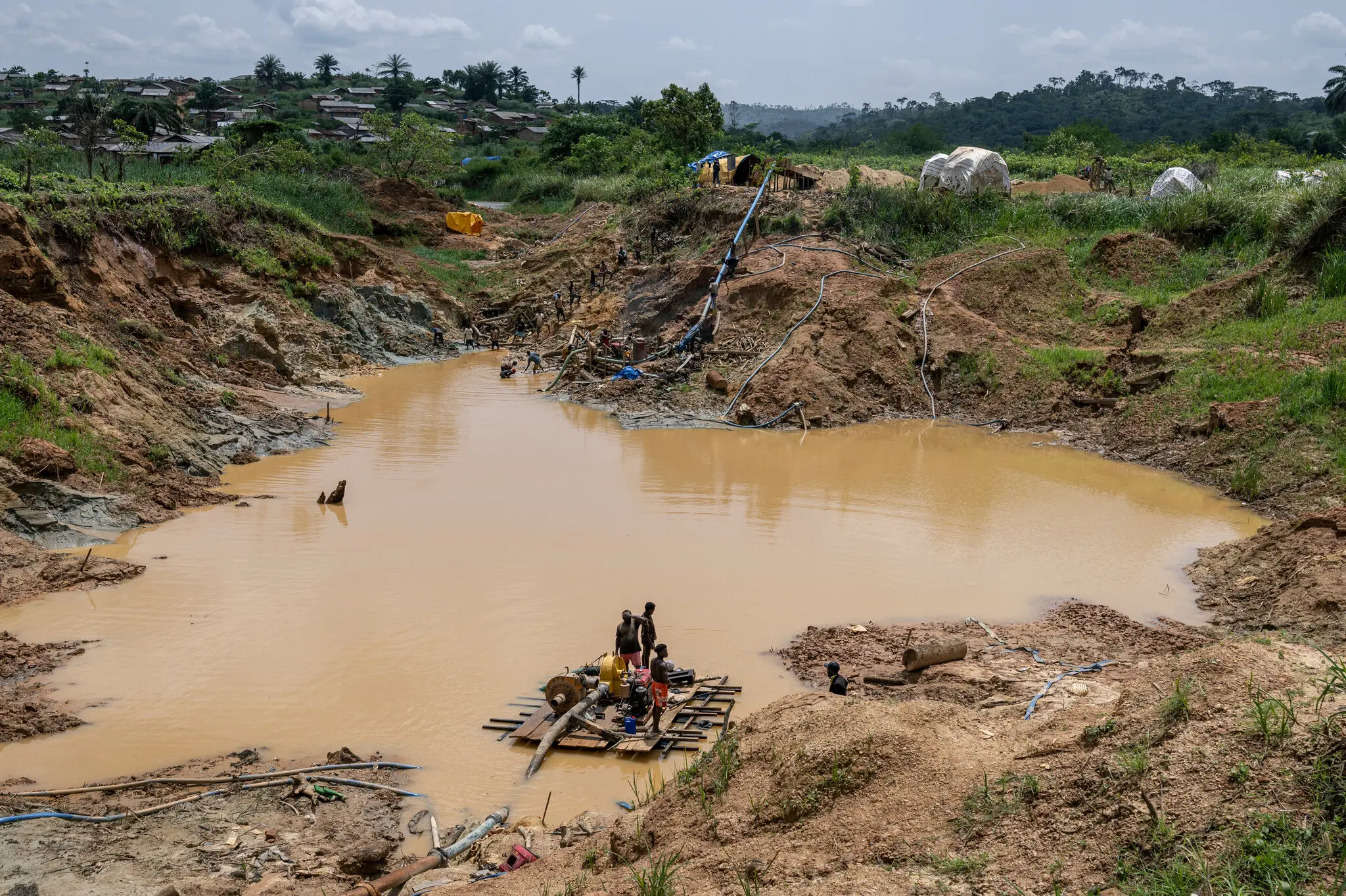 На золотій шахті Канза Канза в Монгбвалу. Приваблива привабливість високооплачуваної заробітної плати приваблює шахтарів до цього району — Арлетт Башізі
Mongbwalu became an epicenter for a reason. The gold economy creates constant movement: miners, buyers, transporters, traders, sex workers, smugglers, soldiers and middlemen. People arrive, sleep in crowded tents, work shoulder to shoulder in mud and water, and then carry gold onward — sometimes carrying infection with it.
In such a setting, the virus does not need a complex strategy. It needs close living conditions, late visits to clinics, funeral rituals, multiple health centers visited by the same sick person, and the steady migration of workers who cannot afford to stop.
The story of Mumbere Saidi has become one of the painful symbols of this outbreak. He fled after an Islamist militia attacked his farm, crossed hundreds of miles through dangerous territory and ended up in the gold mines. There he worked, sent money to his parents, and supported his wife and baby daughter.
At first, his illness looked like malaria — a familiar diagnosis in a region where fever is part of ordinary life. His relatives carried him from one clinic to another in search of help. That desperate journey, made out of love and fear, became almost ideal for Ebola’s spread.
After his death, Red Cross workers in protective suits carried his body out of a mud-walled home. For neighbors, the epidemic was no longer abstract. Several people had died on the same street, and each burial seemed to be followed by news of another person falling ill.
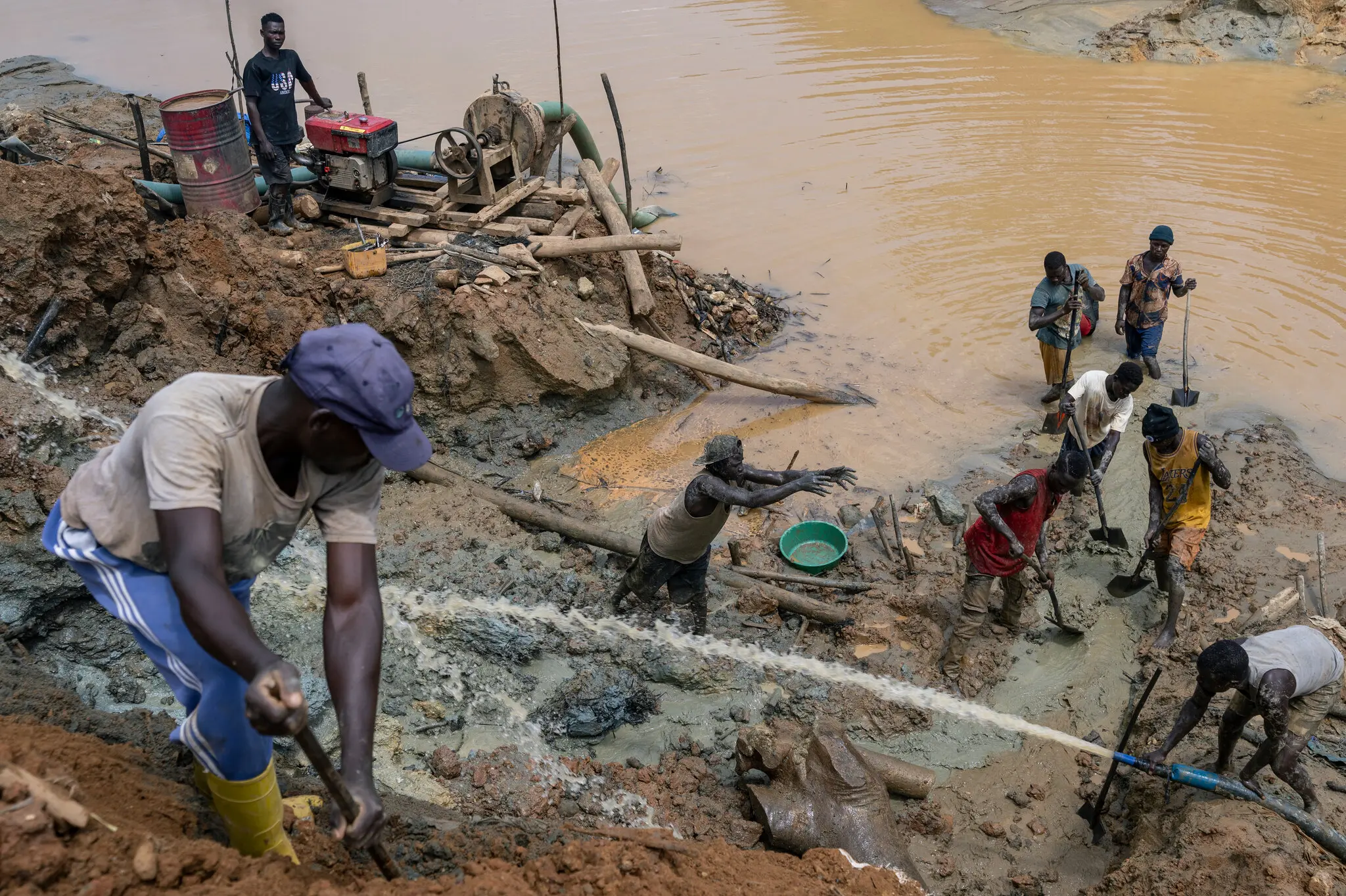 Шахтарі на кар'єрі. Золота економіка підживлює потік робітників, торговців, повій та контрабандистів з Конго та сусідніх країн — Арлетт Башізі
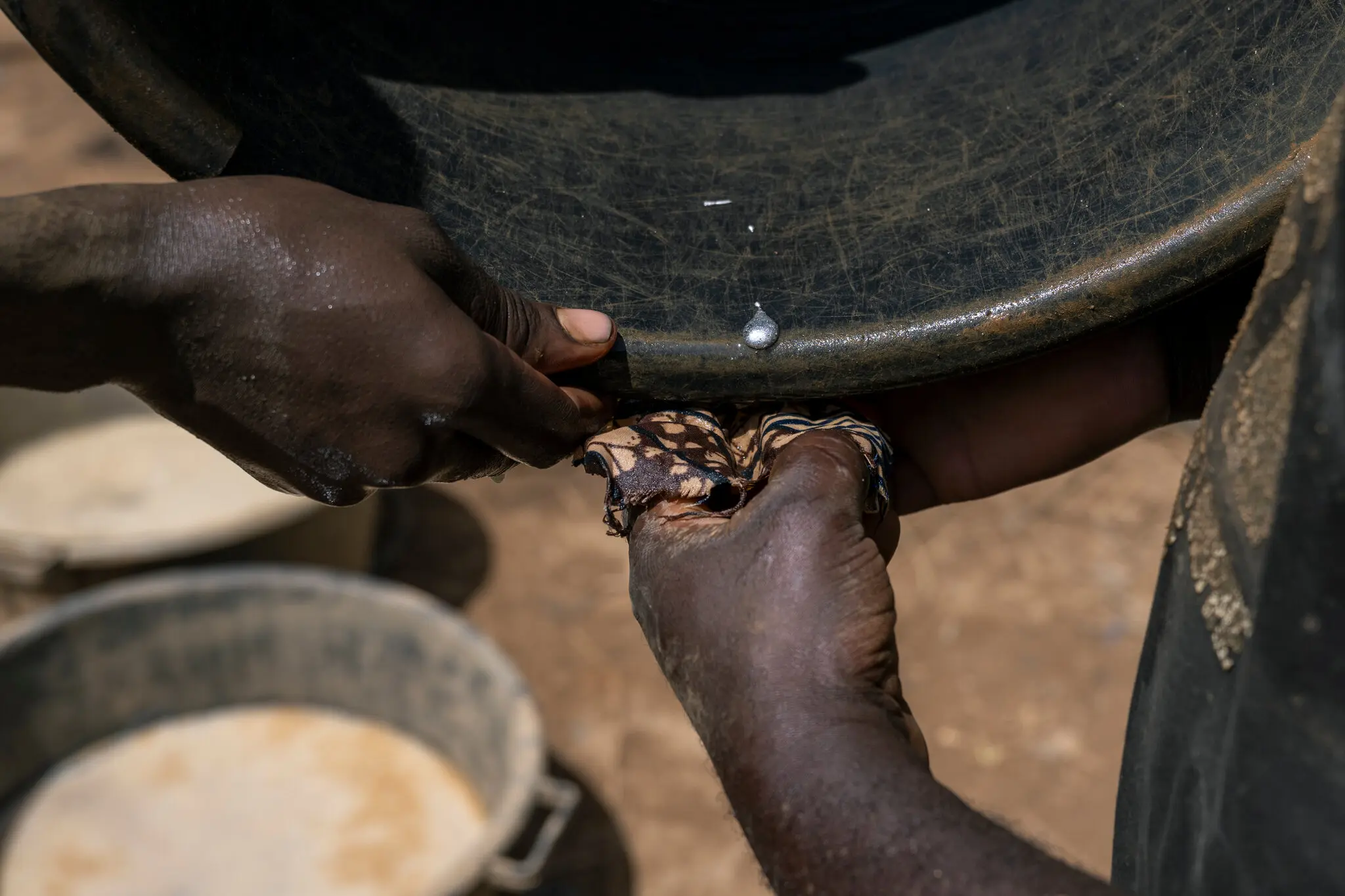
Yet even nearby death does not stop the town. At the mines, men keep shoveling sediment, washing sandy sludge through wooden sluices, running generators, mixing ore with mercury and pulling out tiny pieces of gold by hand. The danger of mercury poisoning has long been part of the work. Ebola has simply joined the list.
Miners speak of the disease calmly or evasively. Some have heard that people are dying, but do not know what precautions they can realistically take. Others say everything is in God’s hands. Others suspect doctors and aid groups of conspiracy. For a man who lives from the mine, the advice to stay home sounds like a sentence of hunger.
The wages explain much. A few hundred dollars in a good week is serious money in rural Congo. It outweighs fear of disease, toxic mercury, tunnel collapse, armed groups and health restrictions. Gold makes risk rational.
That is why conventional Ebola measures meet a hard limit in Mongbwalu. Isolation, reduced contact, early treatment and safe burial all matter. But those rules collapse when people have no savings, no work outside the mines and no trust in hospitals.
Distrust has become its own epidemic. Rumors circulate that patients are poisoned in hospitals, that foreign doctors profit from the outbreak, that bodies are mutilated after death. Each patient who arrives too late and dies soon after deepens that suspicion.
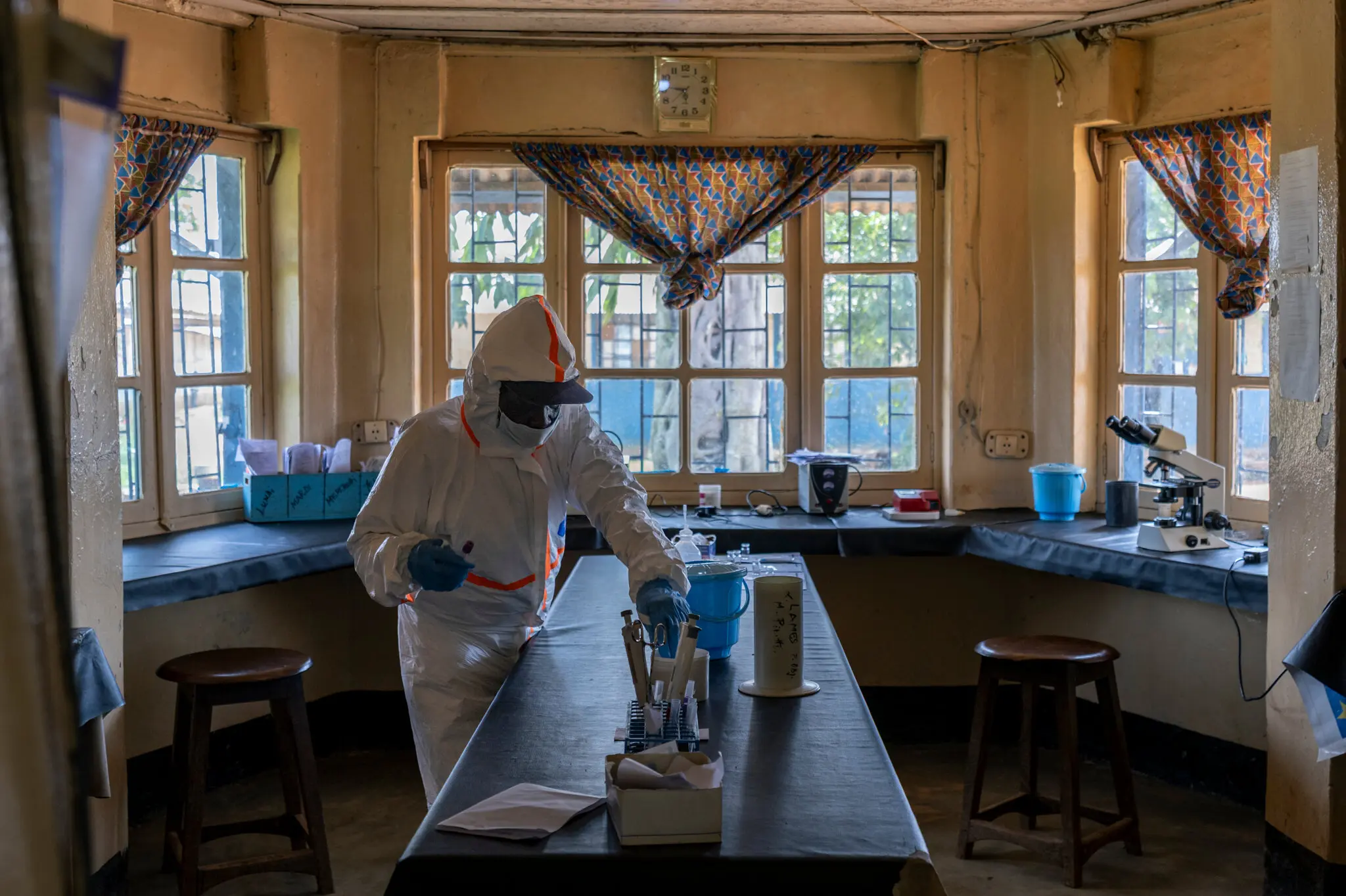 У лікарні загального профілю Монгбвалу минулого тижня — Арлетт Башізі
It is a familiar circle in regions that have faced Ebola before. The virus kills. Late treatment raises mortality. High mortality creates fear of hospitals. Fear of hospitals drives patients into hiding. Hidden patients infect others.
In Mongbwalu, war intensifies the cycle. Ituri has pockets of relative calm, but ethnic conflict and armed groups remain all around it. People have spent years learning that the state arrives late, or not at all. In that environment, even truthful warnings can sound like another form of control.
Gold here has a long and dark history. Belgian colonizers opened the mines with forced labor. Later came corruption, mismanagement, dictatorship, wars, militias, warlords and massacres. Mongbwalu has always paid more for its underground wealth than it received from it.
Today the violence has changed form. Instead of battles for the town, there is slow exploitation, informal mining, mercury-poisoned water, weak hospitals, mistrust, a virus and work without the right to pause. Resource wealth once again does not protect people. It pulls them deeper into danger.
The true scale of the outbreak remains uncertain. Testing capacity is improving, but the virus had a long head start. If it moved unnoticed for more than two months, official numbers are still catching up with reality.
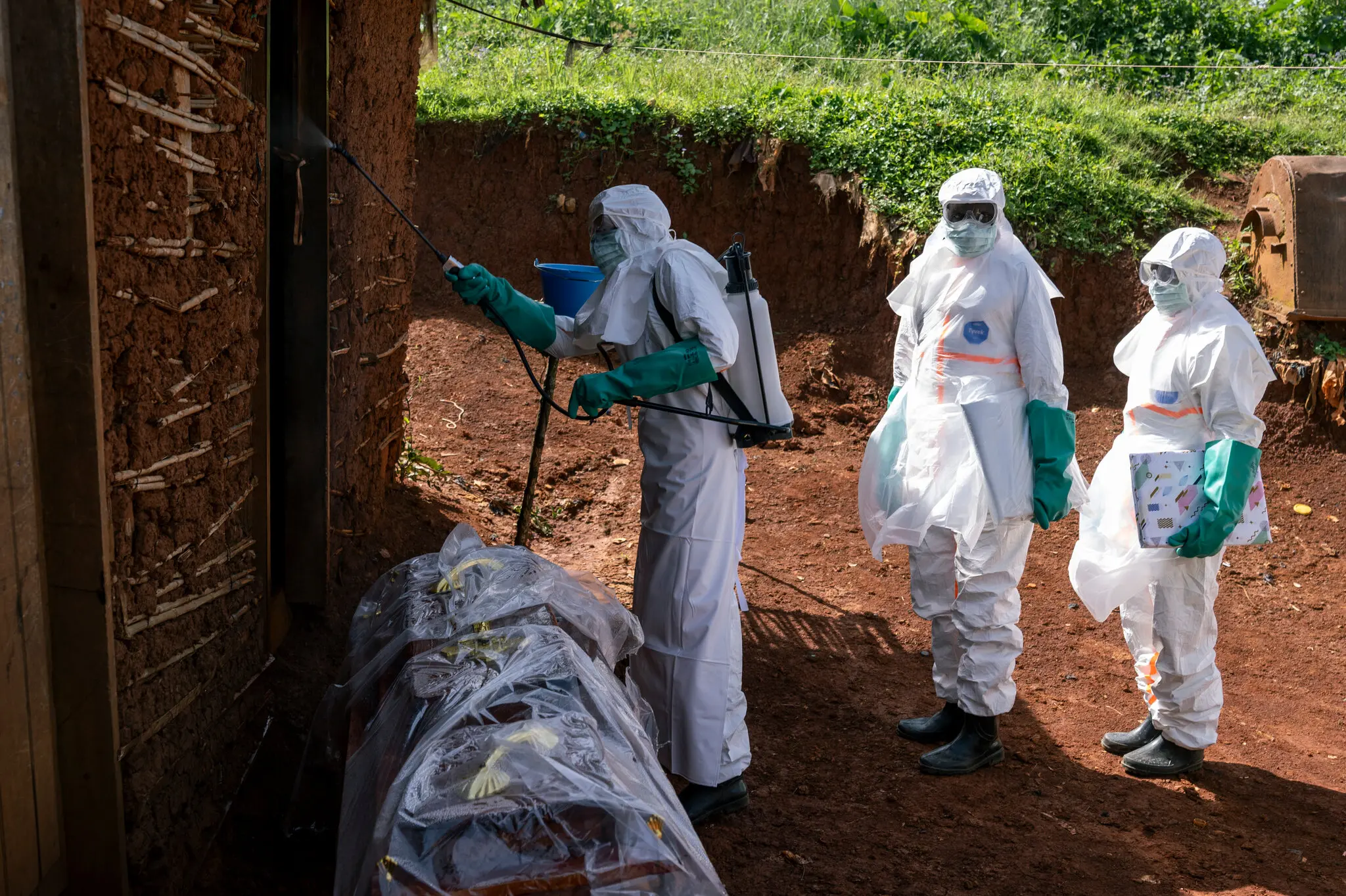 Медичні працівники дезінфікують вхід до будинку, перш ніж забрати останки пана Саїді — Арлетт Башізі
Meanwhile, ordinary life continues. Trucks grind along dirt roads. Motorbike taxis wait for fares. Children return from school. Bars remain open. Nightclubs keep operating. This is not simple carelessness. It is the inertia of survival: life cannot stop, even when death is already near.
Near the mines, colonies of fruit bats hang in trees. Scientists consider such bats natural reservoirs for viruses that can cause Ebola. The image is almost too complete: people dig for gold under trees where the biological source of the next disaster may be waiting.
But the main driver of the outbreak is not bats. It is the human economy. The virus may jump from nature to people once, but after that it is carried by social conditions: poverty, mobility, crowded labor, fear, distrust, war, lack of treatment and a market that keeps buying gold.
International organizations can bring protective suits, laboratories, chlorine, vehicles and burial protocols. But stopping Ebola in Mongbwalu means more than isolating the sick. It means persuading a miner that a day without work may save his life rather than destroy his family.
That is the hardest part of any epidemic. A virus can be detected in a test. Distrust cannot. It has to be addressed through local leaders, language, respect, transparency and recognition of a simple fact: people do not ignore danger because they understand nothing. Often, they simply have no safer choice.
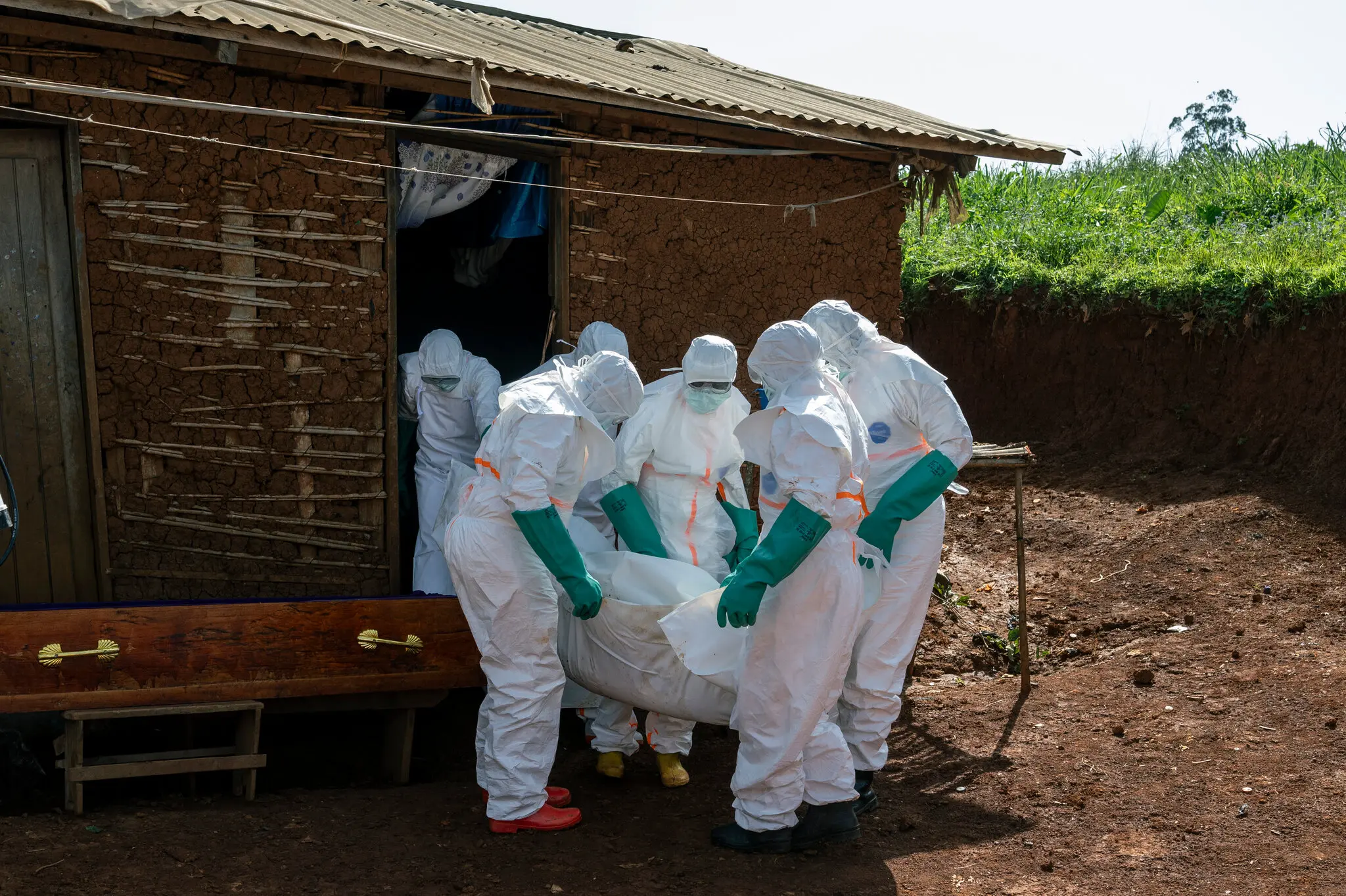 Працівники Червоного Хреста минулого тижня витягують продезінфіковане тіло золотошукача Мумбере Саїді в Монгбвалу, Демократична Республіка Конго — Арлетт Башізі
Mongbwalu now stands at the point where gold fever and viral fever have become part of the same system. As long as gold prices remain high, people will go to the mines. As long as they go to the mines, the virus will have routes. As long as the hospital is associated with death, patients will arrive too late.
Ebola in Congo has long ceased to be only a medical problem. Each outbreak exposes the weak points of the state, war, extractive economies and global demand for resources. In Mongbwalu, that truth is especially harsh: the disease is spreading not despite gold, but with it.
When a miner says he has no choice, it is not an excuse. It is a diagnosis of an entire system. In a town where gold feeds families and carries the virus from house to house, the fight against Ebola begins not only with medicine. It begins with the question of how to make people stop when stopping seems more expensive than death.