


















The Strait of Hormuz, the narrow passage that carries roughly a fifth of the world’s oil flows, is once again sliding into open instability. Iran’s latest moves — the seizure of commercial vessels and the reported use of fire without warning — return the region to a familiar logic of coercive control, where even a limited incident can trigger consequences far beyond the Persian Gulf.
On Wednesday, Iranian naval forces said they had intercepted two cargo ships near the entrance to the strait. The formal justification was the alleged lack of proper transit permits. The real message was broader: a demonstration of power over one of the most sensitive chokepoints in global trade. The vessels were directed toward the Iranian coast, while the operation itself was framed as a defense of Tehran’s red lines in the waterway.
At nearly the same time, attacks were reported against civilian ships in waters near Oman and Iran. One container vessel was struck without prior radio warning; another came under fire only a few nautical miles from the Iranian coast. No crew members were reported hurt, but the fact that commercial shipping is again being fired upon changes the risk calculus for every carrier moving through the region.
According to Daycom’s earlier analysis, such episodes do not look like isolated breaches of discipline or improvised retaliation. They fit a broader strategy in which the strait is treated not merely as a route, but as leverage. Tehran is signaling that it can shape not only the regional military balance, but also the commercial arteries that feed global oil markets, gas shipments, freight prices and maritime insurance.
The deeper problem is that the extension of a cease-fire has not produced an actual de-escalation at sea. Pressure on Iranian ports remains in place, vessel movements continue to be restricted, and the architecture of confrontation has not been dismantled. From Tehran’s perspective, that makes the truce look less like peace than conflict pursued through different instruments, giving its maritime response a harsh internal logic.
That is what creates the central paradox of the moment. Legally, a truce may still exist. Operationally, the confrontation has shifted into a phase of managed escalation. The parties are avoiding a full-scale direct clash, but they are steadily raising the stakes through calibrated incidents that can each be presented as limited, technical or defensive. This is often the most dangerous phase of all, because it creates an illusion of control precisely when the margin for error is shrinking.
For global markets, the meaning is immediate. The Strait of Hormuz is not simply a stretch of water; it is one of the core nerves of the energy system. Every ship seizure, every burst of gunfire, every navigational disruption quickly feeds into oil prices, insurance premiums, shipping costs and route decisions made by the world’s largest carriers.
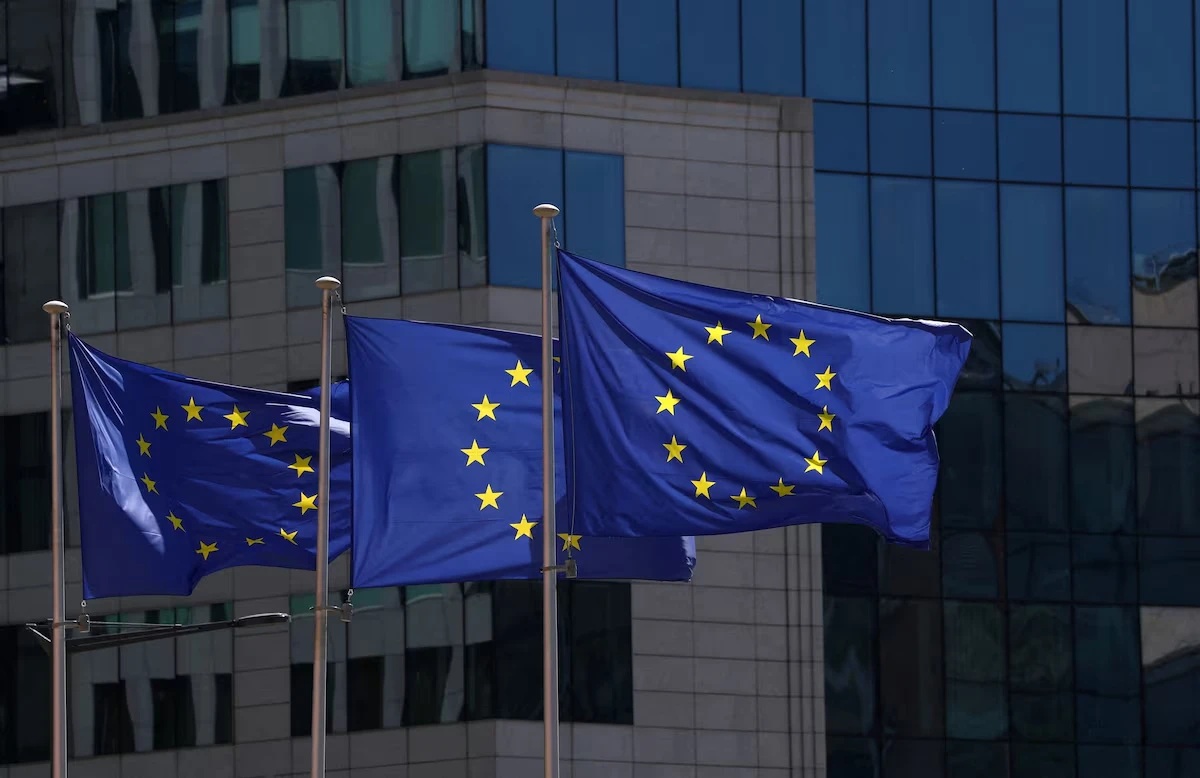
European governments are already searching for practical ways to restore safer passage through the corridor. Yet the very fact that major powers are discussing how to “reopen” the route marks a shift in reality. A passage long treated as a structural constant of world trade now requires political, military and diplomatic intervention simply to remain viable.
The real question, then, is not the fate of two ships alone. It is whether the strait is becoming a durable instrument of pressure. If that happens, the world will not be facing a brief shipping disruption, but a new normal of instability in which every tanker, every container vessel and every energy contract carries an embedded crisis premium.
For now, the situation remains balanced on a narrow edge. The cease-fire may still stand on paper, but its survival is being tested not in diplomatic language, but in a confined waterway where a single exchange of fire can alter not only the regional balance, but the rhythm of the global economy.