












Russia’s war against Ukraine has long been fought not only on the front line and not only with missiles. Its invisible part runs through airline offices, logistics firms, export declarations, dual-use components and countries that are not used to seeing themselves as battlefields. Japan has become one of those battlefields.
After the full-scale invasion, Western capitals expelled hundreds of Russian intelligence officers and cut the Kremlin off from some of the technologies needed to produce weapons. But the Russian system did not stop. It began looking for softer points: jurisdictions with advanced industry but insufficiently sharp counterintelligence tools.
That is how Tokyo became one of the key nodes. Japan has a high-tech industry, global supply chains, advanced electronics, machine tools, microchips, transmitters and components that can function both in civilian devices and in missiles or drones. At the same time, its legal system has long been poorly adapted to modern espionage.
According to Daycom’s assessment, the Japanese case reveals a central feature of Putin’s war of attrition: Russia survives not only through mobilization, oil and repression, but through its ability to penetrate other countries’ technological ecosystems. Where sanctions draw a prohibition on paper, intelligence services look for a bypass route in the real world.
At the center of this scheme is a little-known structure of Russian military intelligence: the GRU’s 20th Directorate. Its task is not limited to classic secret collection. It is a form of wartime industrial intelligence: find a technology, buy it under cover, steal it through an intermediary or move it through a third country until it ultimately reaches Russia.
Such operations do not look like spy novels. They are more ordinary, and therefore more dangerous. A diplomat, an employee of a state company, an airline representative, a business partner, a freight forwarder, a broker or a minor intermediary may all become links in the chain. In the end, a banned component does not fly directly from Tokyo to Moscow. It moves through a country that asks fewer questions.
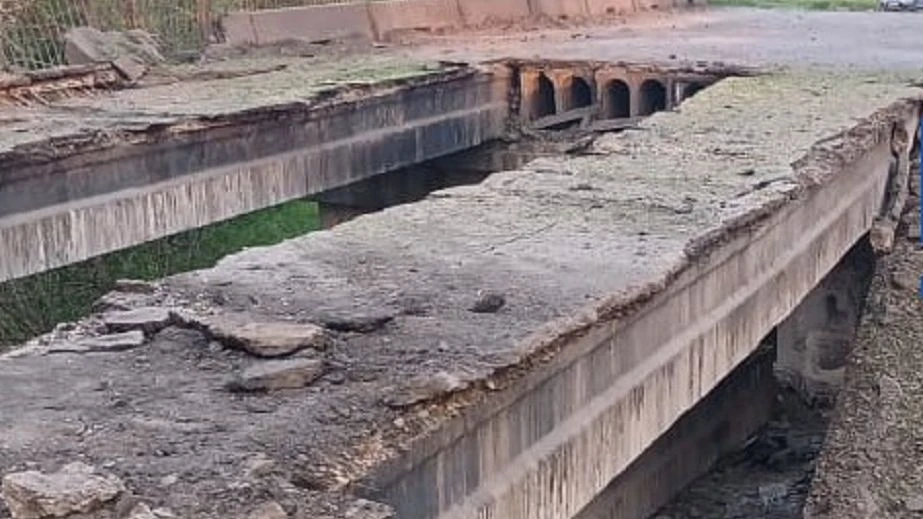
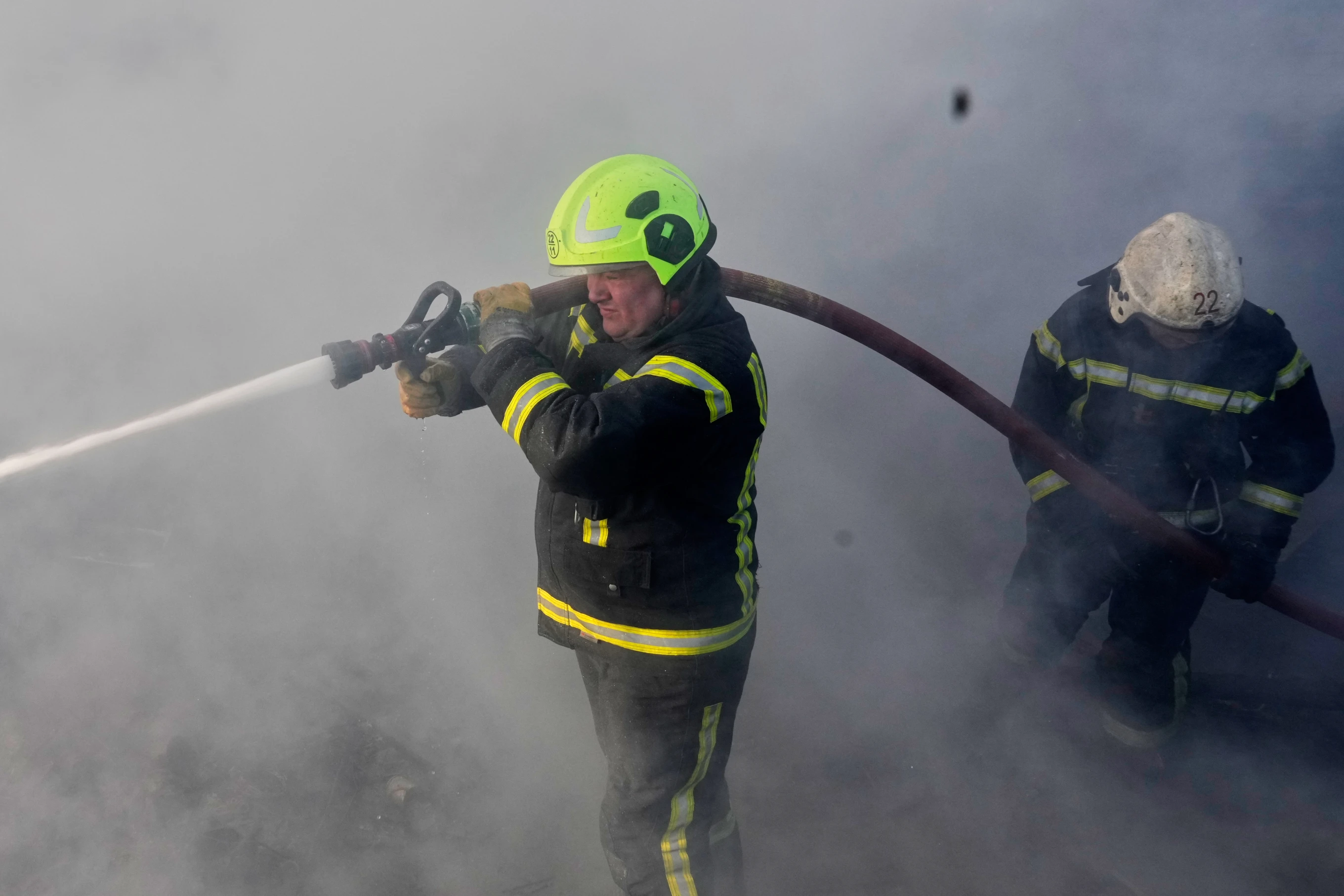
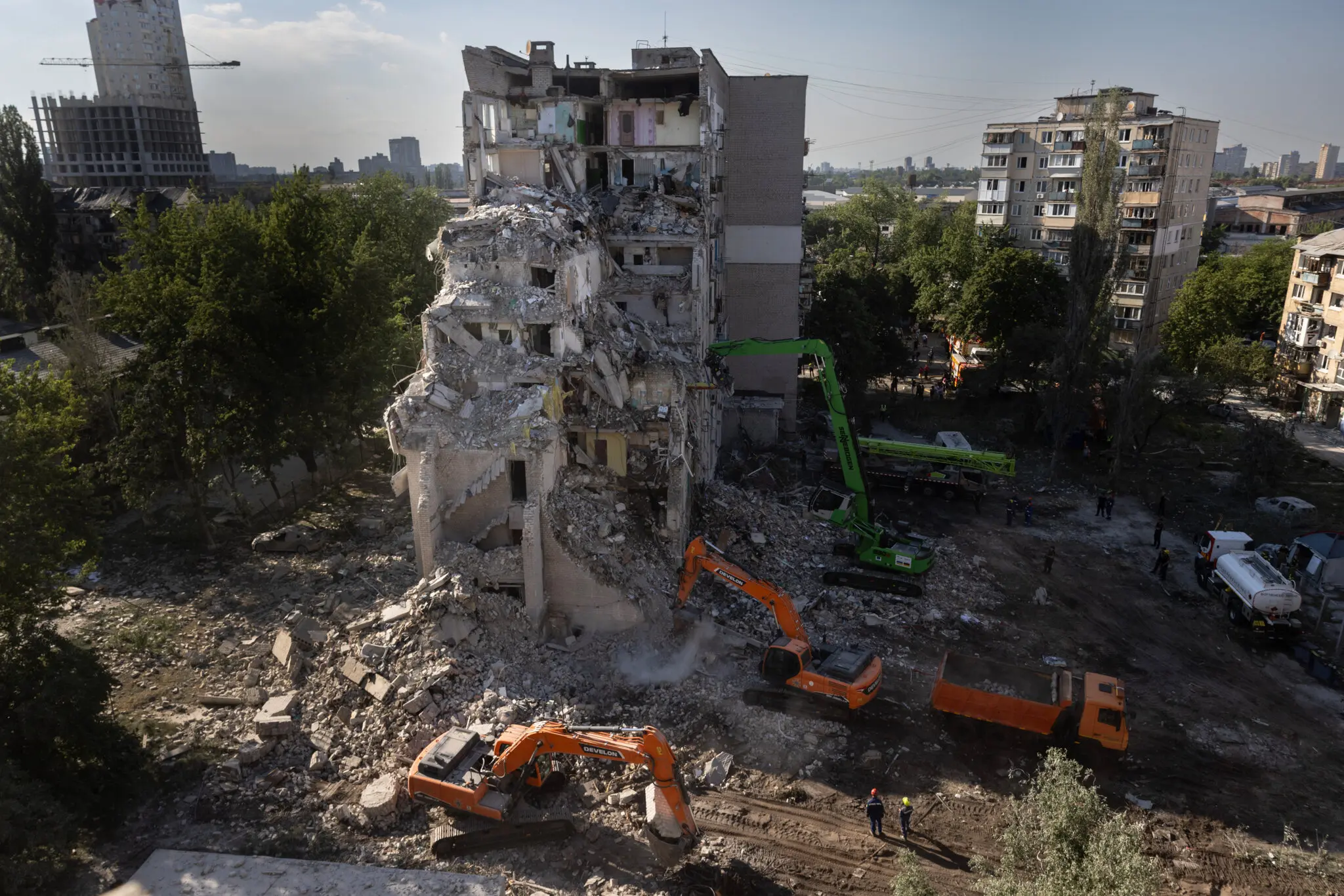 Відновлювальні роботи в Києві, Україна, після нічного ракетного обстрілу минулого тижня — Паула Бронштейн
That is why Japan’s high-tech exports have become so important to Russia. A Japanese company does not need to knowingly sell goods to the Russian defense sector. It is enough for a component to reach Vietnam, China, Sri Lanka, Uzbekistan or another intermediate point where oversight is weaker and the final buyer easier to disguise.
Ukrainian government assessments indicate that the overwhelming majority of Russian missiles and drones contain Japanese components. That does not mean Japan supports the war. It means something else: its technology is so advanced and widely distributed that it has become a prized target for Russia’s wartime economy.
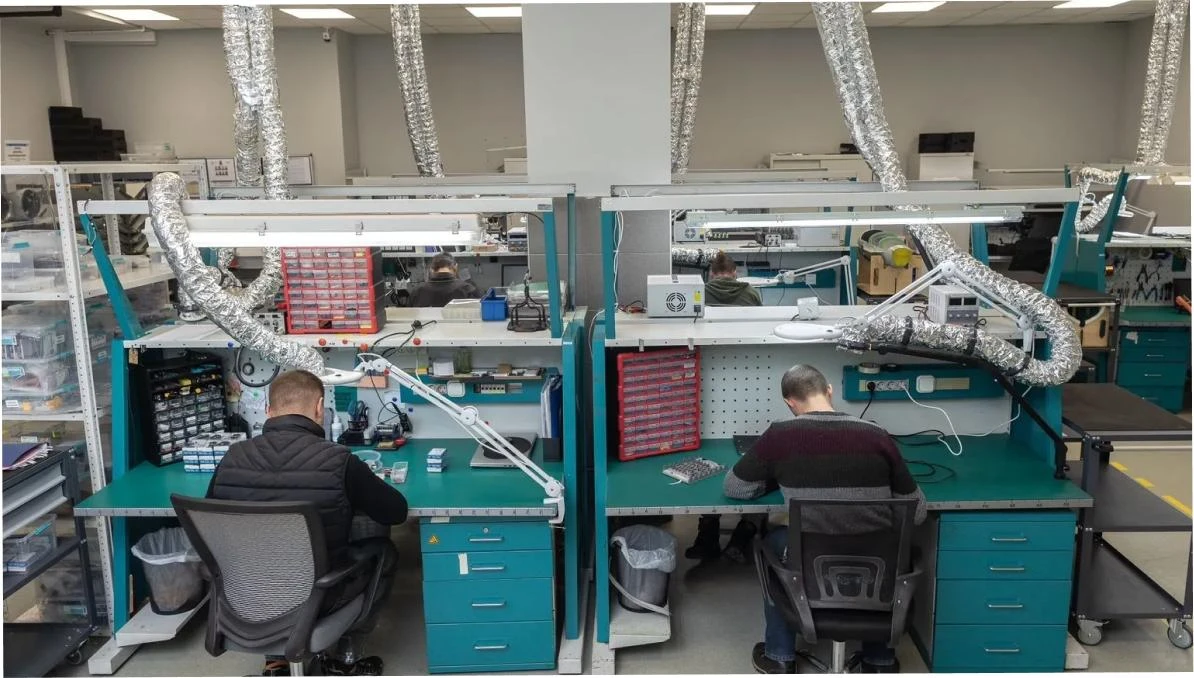
After strikes on Ukrainian cities, investigators have repeatedly found Japanese circuit boards, modules, transmitters and semiconductors in the wreckage of Russian weapons. One of the most telling cases involved a Kh-101 missile that destroyed a residential building in Kyiv and killed dozens of people. Its operation was supported by components whose export to Russia was supposed to have been blocked.
This is the moral center of the story. A part that in peacetime might belong to an industrial system becomes, in the Russian chain, an element of death. A microchip, communications module or Japanese computer block has no political will of its own. But it acquires one when it is placed inside a missile flying toward an apartment block.
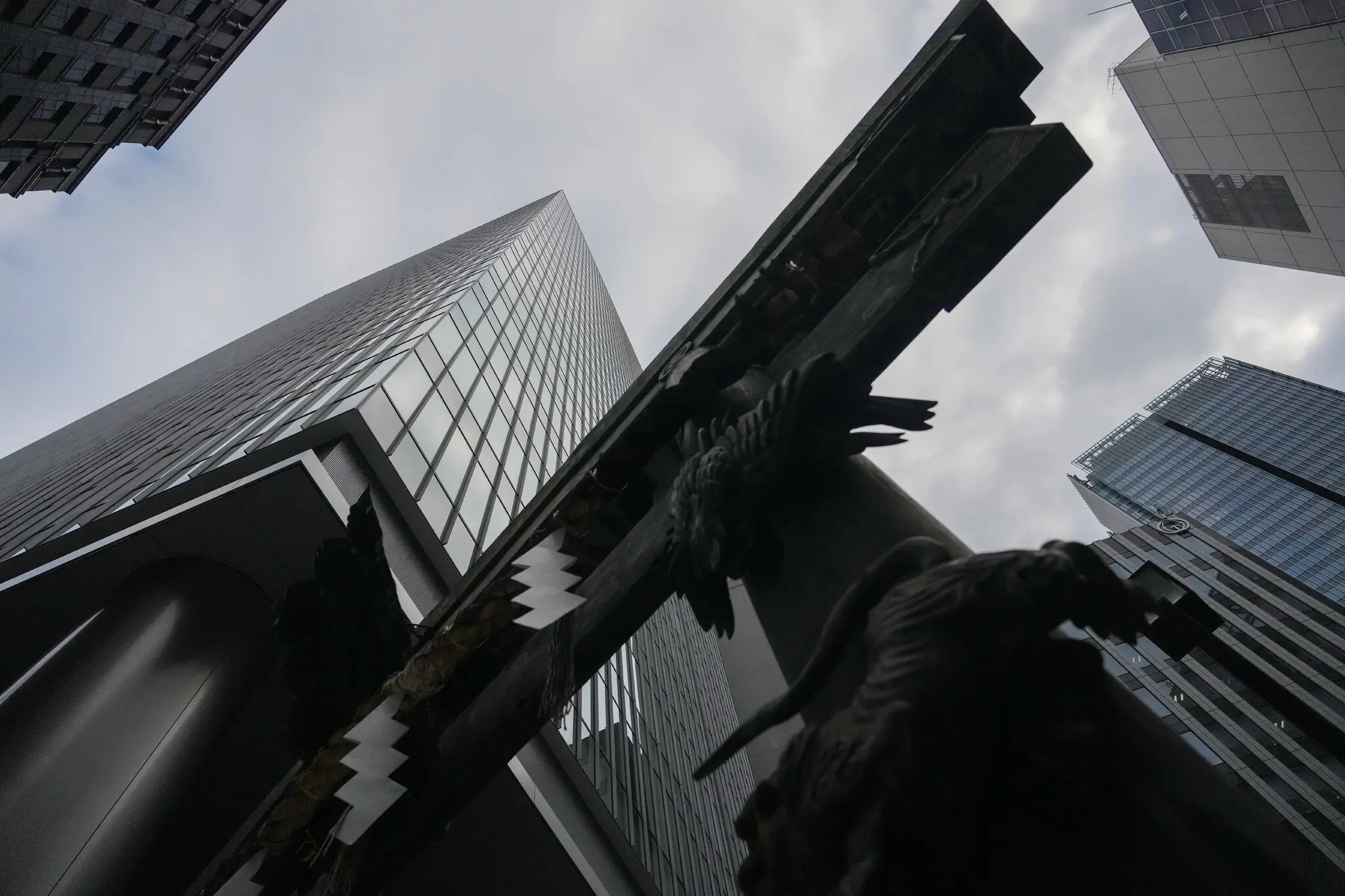
The figure of Maksim Filchenkov has become a symbol of this invisible infrastructure. Under the cover of work at the Tokyo office of the Russian state airline Aeroflot, he is believed by Western intelligence services to have coordinated activity linked to the search for and shipment of technology to Russia. His office sits in a high-rise not far from Japan’s National Police Agency.
That geographic proximity is almost symbolic. A Russian operation that may have helped the Kremlin’s war machine was not functioning in some distant port or on the margins. It existed in the center of the capital of a country that publicly supports Ukraine, joined sanctions and moved beyond its postwar taboo by providing Kyiv with military equipment.
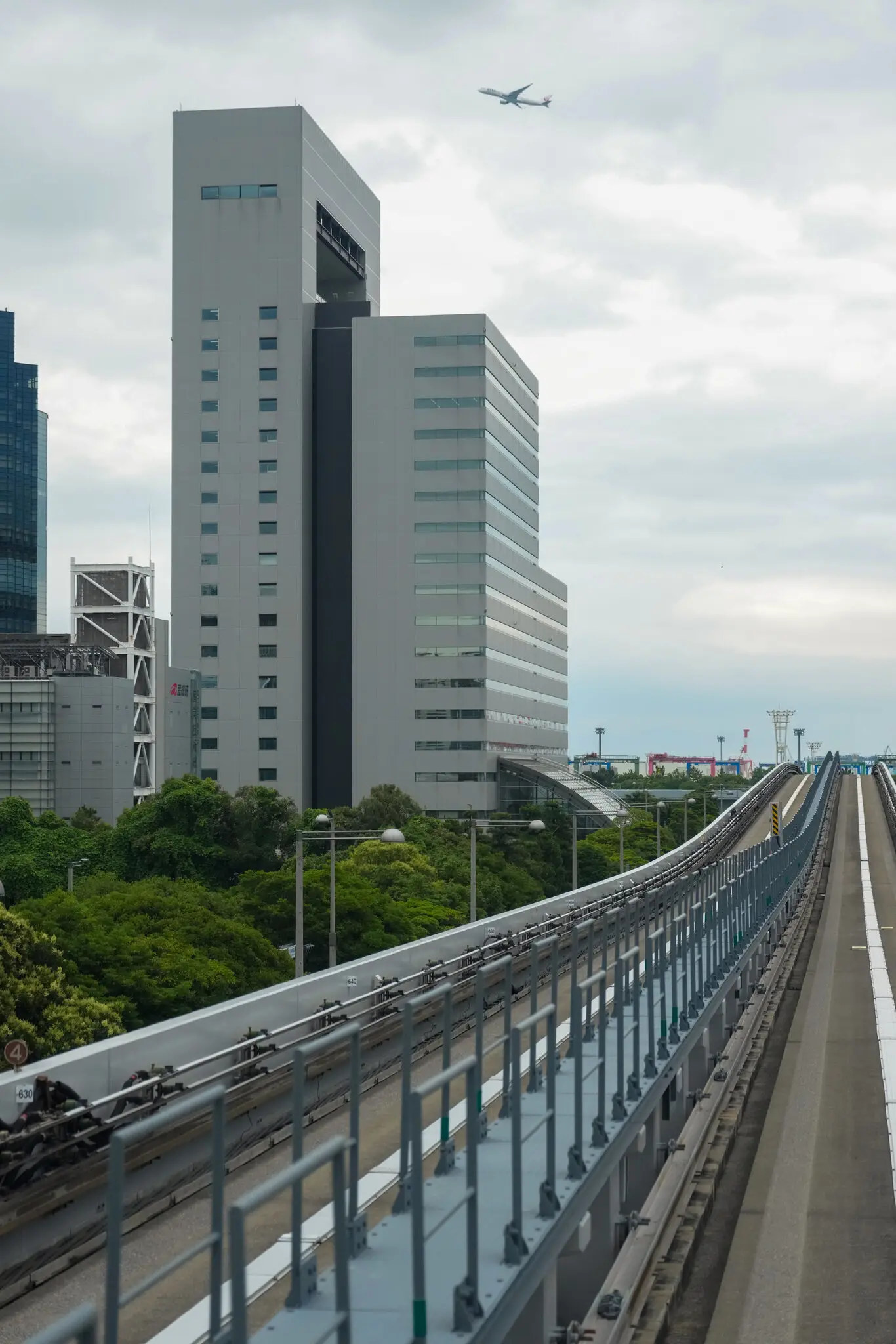 Офіс Proco Air знаходиться на шостому поверсі цієї будівлі в Токіо. Компанія рекламує себе як «міст між Японією та Росією» — Чанг Лі
Aeroflot has long served as convenient cover for Russian intelligence. Since Soviet times, the state airline has given officers a way to travel, build contacts, work with logistics and mask interest in technology as commercial need. Sanctions changed formal flights and partnerships, but they did not erase the network’s potential.
Logistics companies play a crucial role in such schemes. They are not necessarily part of intelligence work. Often they simply move permitted goods, lease cargo space, look for routes through third countries and operate in the gray zone between business, sanctions and politics. But it is precisely through such gray zones that intelligence services move the most sensitive cargo.
In the Japanese story, Proco Air became a notable company. It presents itself as a bridge between Japan and Russia. That description is not a crime in itself. Trade with Russia is not entirely banned, and medical equipment, cosmetics and other civilian goods may still move legally even after sanctions. The problem begins where ordinary logistics intersects with people linked to Russian intelligence.
Proco Air’s owner, Takehiko Miki, has said he did not know about the intelligence ties of his Russian partner and did not transport prohibited goods. But the existence of contacts, routes and attempts to work with cargo bound for Russia shows how thin the line has become between normal business and the infrastructure of sanctions evasion.
The shipment of medical equipment to the Russian company R-Pharm is especially revealing. Formally, the company is not under Japanese sanctions. But its founder has close ties to Vladimir Putin and has spoken openly about supporting the front. For Japanese export control, this is a difficult case: the goods may be permitted and the company may not be blocked, but the political context makes the transaction part of a wider picture.
This is how sanctions erode. The system does not collapse through one large violation. It is worn down by thousands of small passages: one item is not banned, one company is not listed, one route passes through a third country, one intermediary does not know the entire chain, one officer works under a civilian legend. In the end, a Russian missile receives the parts it needs.
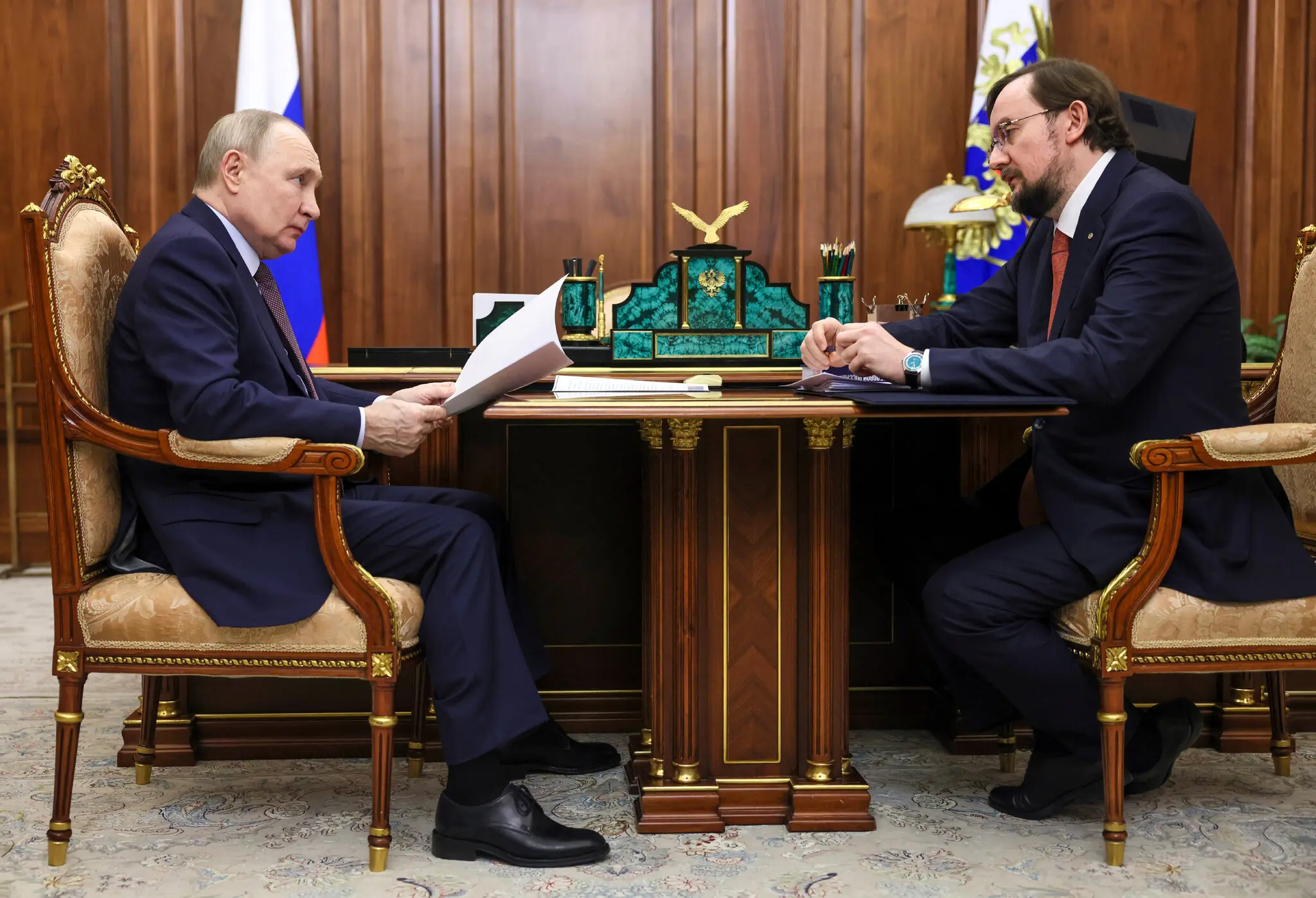 Фотографія президента Володимира Путіна з Олексієм Репіком, засновником московської фармацевтичної компанії «Р-Фарм», у Кремлі у 2025 році, надана російськими державними ЗМІ — Фото басейну Олександра Казакова
Japan is not indifferent to Ukraine. It joined sanctions on the first day of the full-scale aggression, supported Kyiv politically and sent bulletproof vests, helmets and humanitarian aid. For a country with a postwar pacifist tradition, that was an important shift. But political solidarity moved faster than the restructuring of its intelligence and legal apparatus.
The problem is that Japan did not historically build itself as a state of active foreign intelligence. After World War II, its security capabilities were deliberately constrained. The country lacks a full foreign intelligence agency, and its espionage legislation remains weak compared with the challenges posed by Russia, China, North Korea and modern technological warfare.
Because of that, Japanese police are often forced to pursue espionage indirectly — through competition law, trade secret violations or export rules. If a foreign officer has already left the country, the case may end with punishment for a local contact rather than the neutralization of a network. For a professional intelligence service, that is an acceptable risk.
That is how Japan became useful terrain for Russian services. It has the needed technology, advanced industry, deep trade links with Asia, many logistics routes and legal tools that are not sharp enough. For the GRU, this is not a weak state. It is a strong state with a vulnerable section.
The government in Tokyo increasingly understands this. Figures in the ruling Liberal Democratic Party speak of a sense of crisis, while Prime Minister Sanae Takaichi is pushing to strengthen intelligence capabilities. This is not only about Ukraine. For Japan, Russian activity is a warning about a broader world in which technological secrets, industrial chains and civilian companies become part of the security front.
Yet Tokyo’s response still looks slow. Ukraine has repeatedly provided Japan’s Foreign Ministry with lists and photographs of components found in Russian weapons. Those lists included products from major Japanese companies, from electronics to semiconductors. The companies themselves deny knowingly violating sanctions and stress that they comply with the rules.
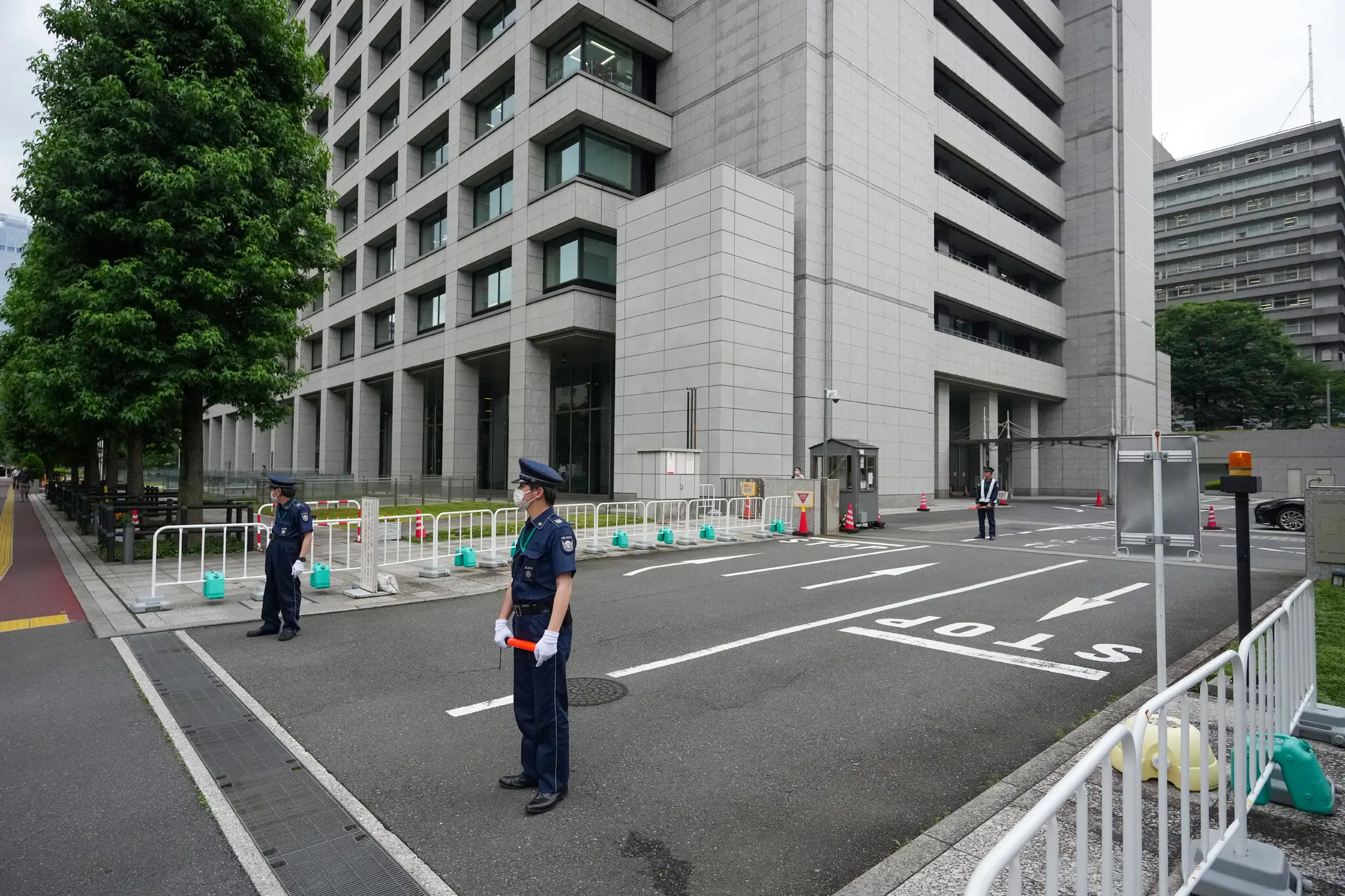 Національне поліцейське агентство в Токіо. Офіс Аерофлоту знаходиться за 10 хвилин ходьби — Чанг Лі
That is plausible. Large corporations rarely sell military-relevant components directly to Russia after sanctions are imposed. But modern export control cannot stop at the first buyer. It has to see the chain: risky jurisdictions, resale patterns, suspicious logistics companies, unusual volumes and goods that suddenly appear in large quantities in intermediary countries.
The main weakness of sanctions is that they were designed as legal lists, while Russia fights as an adaptive network. The Kremlin does not necessarily search for one large supply channel. It assembles many small ones. If one closes, another moves through Vietnam. If the risks rise in Europe, Asia becomes more active. If the manufacturer no longer sells, an intermediary buys.
That is why the fight against Russian technology imports requires not only sanctions, but intelligence, financial monitoring, customs cooperation, pressure on logistics and political readiness to act before a component appears in missile wreckage. Japan has the economic weight for such a fight, but it lacks a tradition of aggressive counterintelligence work.
This is also a question of trust among allies. If Ukrainian investigators find Japanese components in Russian missiles, and Western intelligence services see Russian officers operating in Tokyo, Japan’s partners expect more than statements of support for Kyiv. They expect action: investigations, expulsions, criminal cases, stronger laws, tighter re-export controls and pressure on companies operating along risky routes.
For Putin, Japan’s vulnerability is a strategic gift. Russia cannot independently produce the full range of precision components required by modern war. Its defense industry depends on imported technology, even if official propaganda speaks of self-sufficiency. Every gap in sanctions prolongs the life of its missile and drone arsenal.
That is why the story of Aeroflot’s Tokyo office matters more than the fate of one suspected intelligence officer. It shows how the Kremlin turns civilian structures into elements of war. An airline becomes cover, a logistics firm becomes a route, a pharmaceutical transaction becomes part of a political context, and a country allied with Ukraine becomes a source of components that return to the battlefield against it.
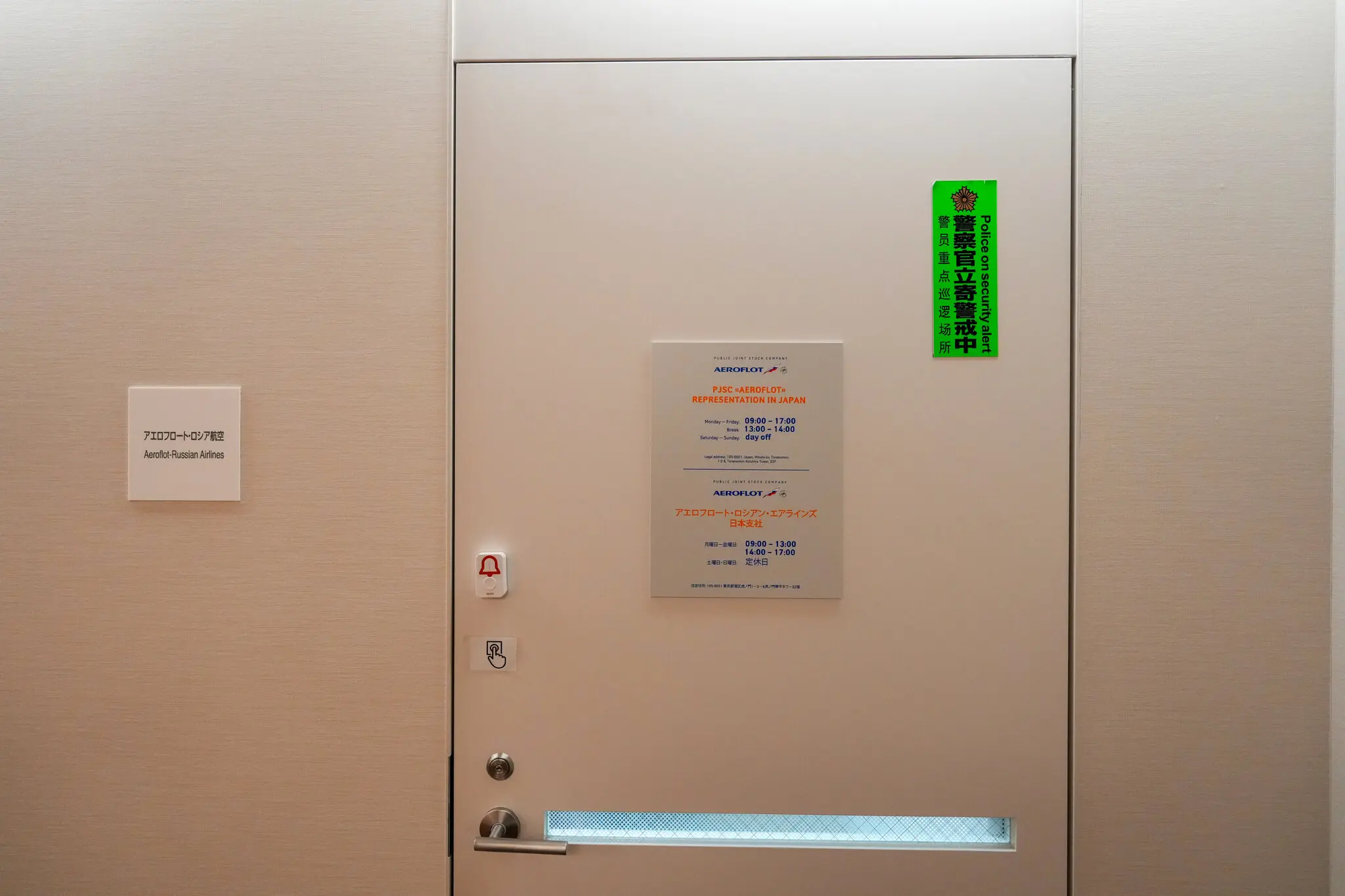 Вхід до офісу Аерофлоту в Токіо в липні. Шпигуни ГРУ використовували роботу в Аерофлоті як прикриття ще з радянських часів — Чанг Лі
This scheme is not uniquely Japanese. Russia uses similar channels in Asia, the Middle East, the Caucasus and Central Asia. But Japan is distinctive because of the quality of its technology and the weakness of its espionage laws. That combination makes it more valuable to the GRU than many countries with less developed industry.
For Tokyo, this is a moment of strategic maturation. The postwar model in which Japan relied on economic power, American protection and cautious security policy no longer matches reality. A world in which a missile fired at Kyiv can contain a Japanese module forces the country to reconsider the boundary between commerce and war.
The question is not whether Japan supports Ukraine. The question is whether it can protect its own technological base from Russian use. If it cannot, its industrial advantage becomes someone else’s military resource. Then even the most sincere diplomatic statements will not change the fact that Japanese components may work inside Russian weapons.
Putin’s Russia has not defeated sanctions. It has learned to live between them. It searches not for open doors, but for cracks; not for direct deliveries, but for intermediary chains; not for official allies, but for useful brokers. Japan became one of those cracks not because of sympathy for the Kremlin, but because its rules no longer match the new nature of war.
Closing that crack means more than passing tougher espionage laws. It means recognizing that modern war runs through commercial databases, customs declarations, corporate sales, air cargo and technology catalogs. Where the state does not see the chain, the enemy’s intelligence service does.
The Russian office in a Tokyo high-rise is only the visible fragment of a larger system. Its true strength lies in invisibility, in its ability to look like business, logistics, trade and routine. But that routine can end in an explosion in Kyiv, Kharkiv or Odesa.
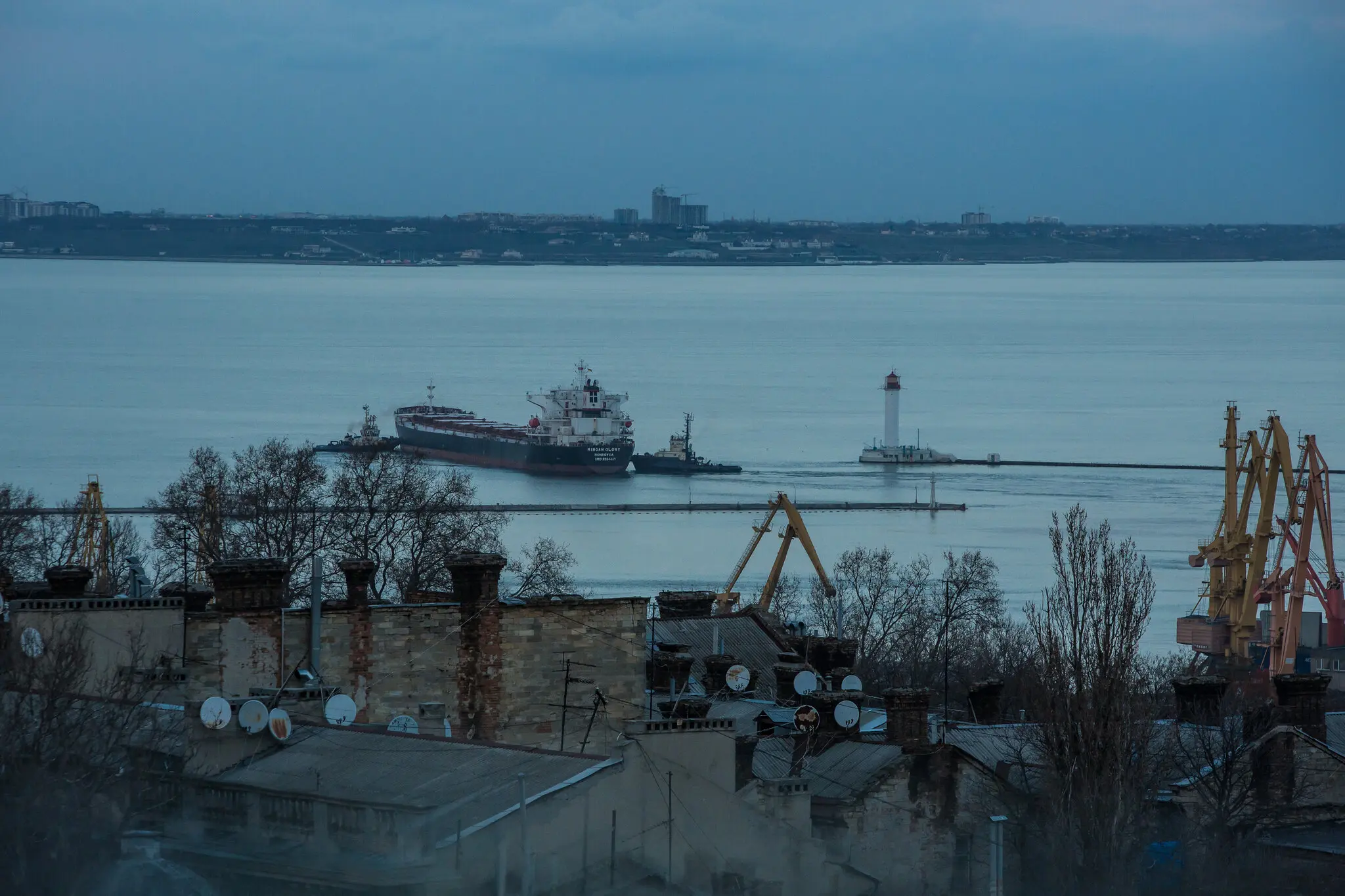 200-т метрове судно під прапором Ліберії з кукурудзою, що прямує до Бангладеш, виходить з українського порту Одеса в березні — Оксана Парафенюк
That is why the Japanese lesson extends far beyond Japan. Sanctions against Russia work only when allies understand that export control is not accounting, but counterintelligence; dual-use technology is not a neutral commodity, but a potential weapon; and espionage in the 21st century increasingly arrives not in a dark coat, but with the business card of a logistics partner.