

























Kostiantynivka has again moved to the center of Russia’s pressure campaign in Donetsk region. The city, long part of Ukraine’s defensive architecture in the east, is entering a dangerous phase: Russian forces are not only attacking from the front, but trying to seep toward its outskirts in small groups.
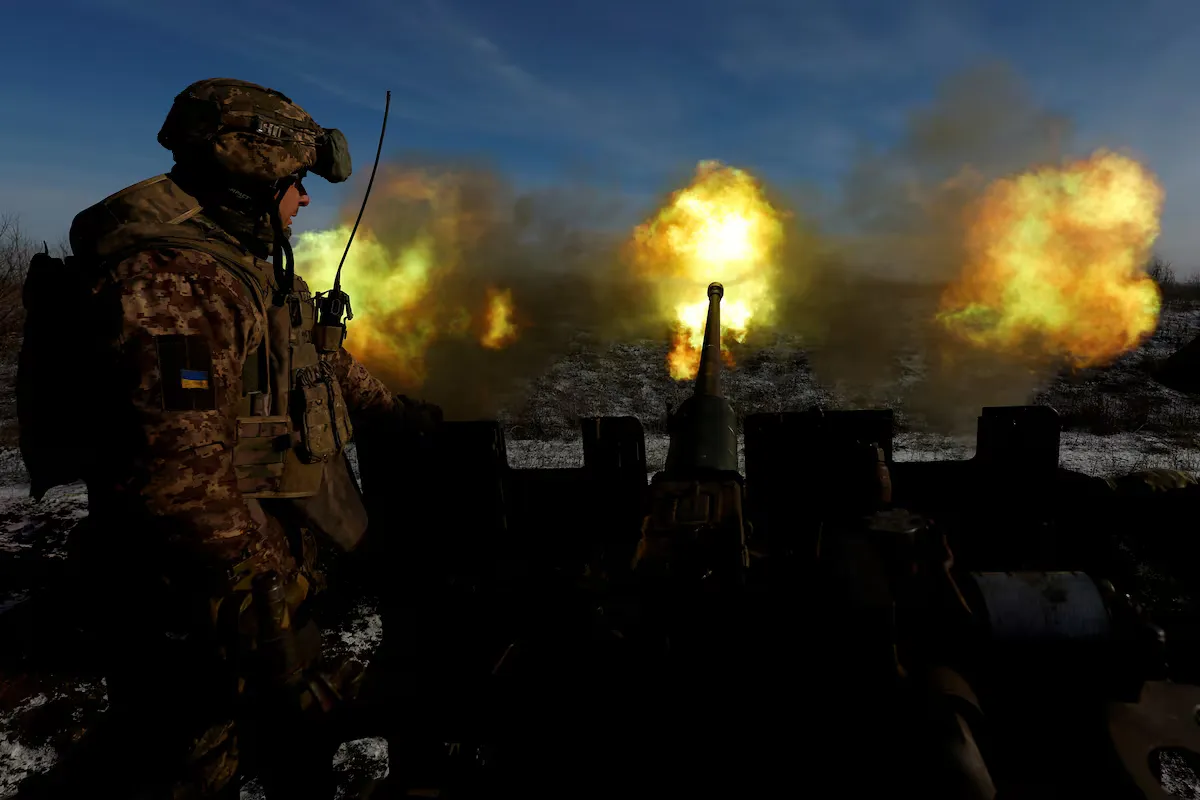
Ukraine’s military describes the situation as a fight against attempts to establish a foothold. Counter-sabotage measures are underway in the city, while assault groups are being repelled on the approaches. This kind of war rarely looks dramatic on a map, but it is often how front lines change most dangerously.
Kostiantynivka matters not only as a city. It is part of the eastern “fortress belt,” a chain of heavily defended urban nodes that holds together Ukraine’s defensive logic in Donbas. If one node weakens, pressure spreads to roads, reserves, evacuation routes and supply lines across the sector.
According to Daycom’s earlier analysis, the fighting near Kostiantynivka reflects a shift in Russian tactics after months of costly campaigns for smaller settlements. Moscow is increasingly relying not on a rapid breakthrough, but on the slow erosion of defenses: drones, artillery, small infantry groups, gray zones and repeated attempts to dig in.
Russian units are now close enough to the southern outskirts for the city to enter a far more difficult defensive phase. Open terrain allows distance, mines and fire lines to work more effectively. On the edge of a city, the fight changes — for tree lines, streets, basements, industrial buildings and supply routes.
Infiltration tactics have become one of the main challenges for Ukrainian defenders. Small Russian infantry groups move through gaps between positions, wait, draw fire, search for weak points or force Ukrainian units to spend time and resources clearing contested ground again and again.
Over recent days, Russian troops have carried out dozens of assaults in this sector, mostly using small infantry groups. The intensity of attacks rose noticeably in April. Even when each separate push is repelled, the defense pays for it with ammunition, drones, manpower and time.
The Kostiantynivka-Druzhkivka area has long been one of the key defensive lines in Donetsk region. Its importance is defined not only by fortifications, but by geography: roads connect this area with Kramatorsk, Sloviansk, rear supply points and other parts of the eastern front.
For Russia, reaching the outskirts of Kostiantynivka carries both military and political value. After slow advances in Donbas, the Kremlin needs proof that its offensive has not stalled. The capture of villages and small towns is presented as gradual movement toward larger objectives, even when each kilometer takes months of fighting.
That is why Novodmytrivka, north of Kostiantynivka, matters in the wider picture. Moscow has claimed control there, while Russian commanders have spoken of advances from both the north and south of the city. For Ukraine, the risk is not a single blow, but the gradual shaping of a half-ring.
The comparison with Pokrovsk is unavoidable. That city, with a prewar population of more than 60,000, became one of the main symbols of Russia’s slow offensive over the past year. It was worn down for months through pressure on the flanks, drones, artillery and infantry infiltration.
The Pokrovsk experience showed that Russia does not always seek an immediate urban battle. More often, it first damages logistics, pushes civilians out, turns nearby villages into buffer zones and then enters a space where normal life has already become nearly impossible.
Kostiantynivka risks facing the same scenario if the pressure is not stopped on the approaches. The city may remain formally under Ukrainian control, while daily shelling, sabotage groups, drone strikes and threats to roads gradually transform it from a rear node into a front-line city.
The political context makes the battle even sharper. Moscow continues to demand that Ukraine withdraw from parts of Donetsk and Luhansk regions that Russia has failed to capture during years of full-scale war. Kyiv rejects territorial concessions because the issue is not only land, but the principle of state survival.
That is why the fighting near Kostiantynivka goes beyond local military chronology. If Russia can show progress against the eastern fortress belt, it will use that signal on the battlefield, in negotiations and in the information war. If Ukraine holds the line, it preserves room for political and military maneuver.
At the same time, Moscow is trying to create a sense of pressure on other fronts. Its claim about Myropillia in Sumy region was rejected by Ukrainian forces, but the signal itself served the image of a broader Russian push. An airstrike near Krolevets, where civilians were injured, added a northern dimension to that pressure.
Russia’s strategy increasingly looks like an attempt to stretch Ukrainian defense across several axes: Donetsk region, Sumy region, strikes on cities, drones against energy infrastructure and information claims about new “successes.” Each element may seem limited on its own, but together they create a constant front of strain.
For Ukraine, the answer is not only to hold one line on the map. It requires reserves, drones, counter-battery fire, urban security, evacuation routes, engineering barriers and rapid reaction to small groups trying to turn gray zones into footholds.
Kostiantynivka is now a test of whether the Ukrainian army can stop not one major assault, but a long series of small, exhausting and dangerous penetrations. In this kind of war, success is measured not by a single date, but by whether the defense can prevent each next meter from becoming irreversible.
That is why the current fighting near the city matters more than the map alone suggests. Kostiantynivka is not just another point in Donbas. It is a node where the front, logistics, negotiation politics and national endurance meet — a city Ukraine refuses to let become an object of someone else’s bargain.