


















Russia attacked Kyiv from the air for the third time in less than a week, again using ballistic missiles at a moment when Ukraine’s air-defense system is facing a critical shortage of U.S.-made interceptors. The overnight strike was not just another assault on the capital. It was a demonstration of the weak point Moscow is now trying to exploit systematically.
Ukraine’s air defenses intercepted most of the drones launched overnight: 139 of 169 unmanned aircraft were shot down. But all five ballistic missiles fired by Russia got through. That contrast increasingly defines the current phase of the air war. Ukraine has learned to counter large drone barrages with growing efficiency, but ballistic missiles remain the most dangerous part of Russia’s arsenal.
In Kyiv, explosions were heard before the air-raid siren had fully turned danger into the city’s familiar wartime routine. One woman was killed and two people were wounded. Fires broke out in a storage area and a non-residential building in districts on both sides of the Dnipro. The capital’s morning began with flames, smoke and rescue crews working from crane ladders.
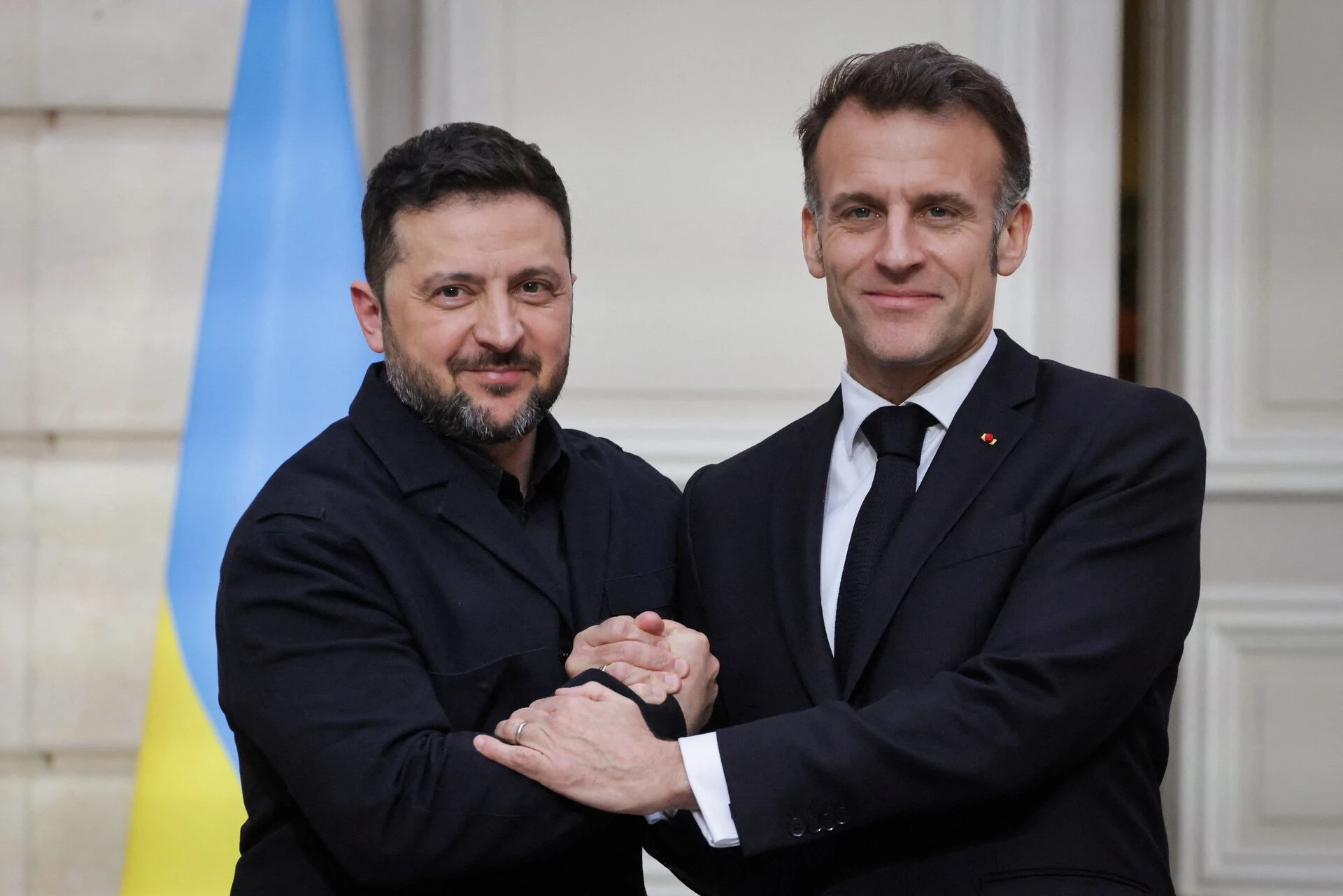
In Daycom’s assessment, the attack matters not only for its scale, but for its timing. It came as a NATO summit was underway in Ankara, where Volodymyr Zelenskyy was expected to raise Ukraine’s defense needs with Donald Trump. Russia is hitting Kyiv precisely when the issue of American interceptors is no longer a diplomatic detail, but a condition for the survival of cities.
Since the beginning of July, Russian strikes on Kyiv and the surrounding region have already killed dozens of people. Over the same period, Ukrainian air defenses have managed to shoot down only a small share of the ballistic missiles Russia has fired at the country. This is not a collapse of the system, but the result of a technological imbalance: against such targets, Ukraine needs weapons it does not produce in sufficient numbers and cannot quickly replace on its own.
A ballistic missile is dangerous not only because of its warhead. It is dangerous because of time. Its trajectory, speed and steep descent leave a city only minutes to react. A drone can be tracked, air-defense units can maneuver, mobile groups can be deployed, and machine-gun crews can work against it. Ballistic missiles require near-instant, high-precision interception.
That is why Zelenskyy’s repeated appeals for American systems and the missiles that feed them have long ceased to be a general plea for help. They are a concrete question of protecting Kyiv, Kharkiv, Dnipro, Odesa, Sumy and industrial regions. Without enough interceptors, even the best network of radars and trained crews cannot close the sky against this kind of strike.
Russia chose the moment for escalation deliberately. Its ground advance has largely lost momentum, while Ukrainian attacks on military logistics and oil infrastructure are creating increasingly visible problems for Moscow. When the front does not produce quick political results, the Kremlin shifts pressure into the air, striking cities, energy sites, warehouses, transport routes and the psychological endurance of civilians.
This is an old Russian logic in a new phase. If the defense cannot be broken quickly on the ground, life in the rear must be made unbearable. If Donetsk region cannot be captured within a timetable that can be sold as victory, then Moscow must show that no Ukrainian city is safe. Kyiv carries special weight in that logic: a strike on the capital is always also a political signal.
Kharkiv was hit in parallel. Overnight missiles damaged private homes and a church, while a later strike on a residential building killed two people. Kharkiv has long lived under a different regime of danger: its proximity to the Russian border cuts warning time almost to the limit, while the intensity of attacks turns civilian infrastructure into a constant target.
These strikes show that Russia’s air campaign has no single center. It stretches Ukrainian defenses across the country. Kyiv needs a ballistic shield. Kharkiv needs fast solutions against short-range missiles and aerial bombs. The south needs protection for ports, fields and logistics. Front-line cities need continuous defense against drones and artillery.
For Ukraine, this creates a hard strategic dilemma. It is impossible to cover every city, industrial facility, power station, warehouse and front-line node with equal density. Every interceptor becomes more than a munition. It becomes a political decision: what will be protected tonight, and what will remain at greater risk.
This is where the NATO summit takes on practical meaning. For Kyiv, declarations of support are not enough. What matters is the rhythm of deliveries, the number of missiles, the readiness of allies to transfer air-defense systems and the ability to build a predictable reserve. Russia wages war through repeated waves of strikes; the answer to them must also be sustained, not occasional.
Before meeting Zelenskyy, Trump said the war could be settled, hopefully soon. But Russia’s overnight attack on Kyiv showed the limit of such language. Peace rhetoric means little if Moscow is simultaneously launching ballistic missiles at the capital and continuing to demand Ukrainian territory it has failed to conquer after years of war.
Putin is demonstrating a different line: he is not abandoning the war, even as it becomes costlier for Russia itself. Ukrainian drones are striking Russian industrial and logistics targets, and local authorities inside Russia are reporting deaths and damage to facilities. But the Kremlin’s answer is not a search for an exit. It is the continuation of a campaign of exhaustion.
In this war, the sky has become a separate front, where the count is not only about intercepted targets. What matters is which targets cannot be intercepted. The mass downing of drones shows the development of Ukraine’s defense. The inability to stop ballistic missiles without enough specialized interceptors marks the point where the enemy’s technological advantage becomes human loss.
The overnight strike on Kyiv exposed that point again. It hit warehouses and buildings, but also the diplomatic agenda, where air defense can no longer be postponed into broad assistance packages. Every delay in interceptors is measured not in abstract defense capacity, but in specific fires, wounded civilians and dead bodies.
Kyiv survived another night of ballistic fire, but the central lesson reaches beyond the capital. Russia is trying to compensate for limited gains on the ground with the advantage of aerial terror. Ukraine is holding on through air defense, but that defense needs not words of support, but a constant supply of ammunition. In modern war, a city’s right to wake up in the morning increasingly depends on whether there is a missile in the sky capable of stopping another missile.