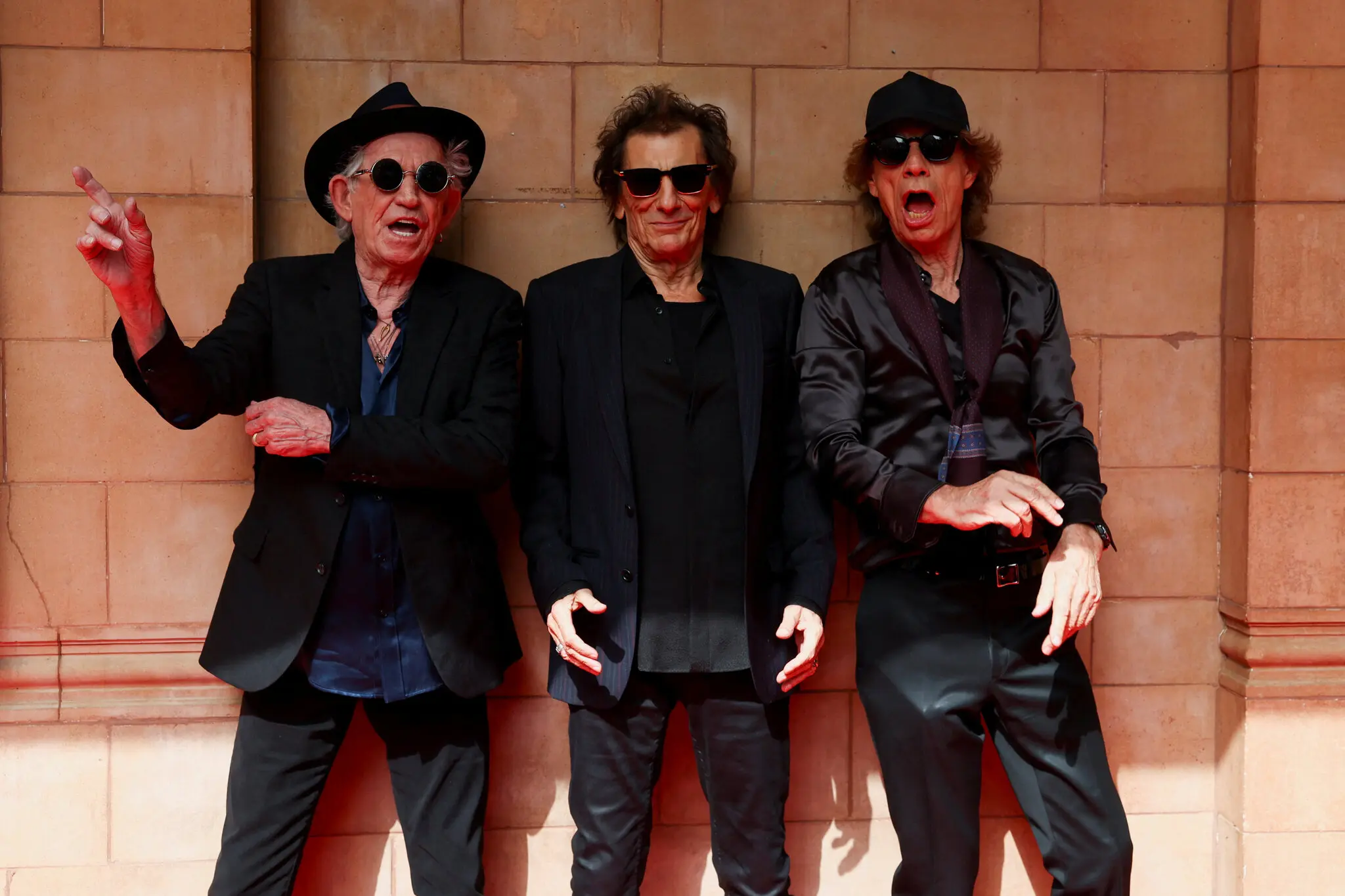
















Mick Jagger stopped being merely the frontman of the Rolling Stones long ago. He became a cultural function of his own: the body of rock and roll, the voice of appetite, the symbol of perpetual motion and the man who spent half a century entering stadiums as if aging were only a badly organized rumor.
But at 82, even Jagger speaks of the end not as drama, but as a practical possibility. He does not know whether the Rolling Stones will undertake another major world tour. He hopes they will. He is ready. Yet when asked whether he would know if he had walked offstage with the band for the last time, his answer is almost dry: perhaps he already has.
That sentence does not sound like surrender. It reveals the new tone of a man who has lived under public light for so long that he no longer needs theatrical gestures to explain his own importance. The Rolling Stones’ new album, Foreign Tongues, arrives not as proof of youth, but as proof of stamina, imagination and a refusal to turn legend into a museum.
According to Daycom’s assessment, this is the central meaning of Jagger now. He is not trying to deny age, but he is not allowing age to take away his right to play. His late style is not youth artificially extended. It is the discipline of an artist who knows the price of an image, yet still remembers that a song begins not with myth, but with a stray phrase, a rhythm and a mood.
When he talks about old songs, he easily strips his own canon of sacredness. The opening line of Sway, which can sound almost metaphysical to listeners, came to him casually while waiting for Keith Richards to arrive at a session. Jagger does not present that as revelation. He shows the craft as it often is: not a break in the heavens, but a lucky moment in a room.
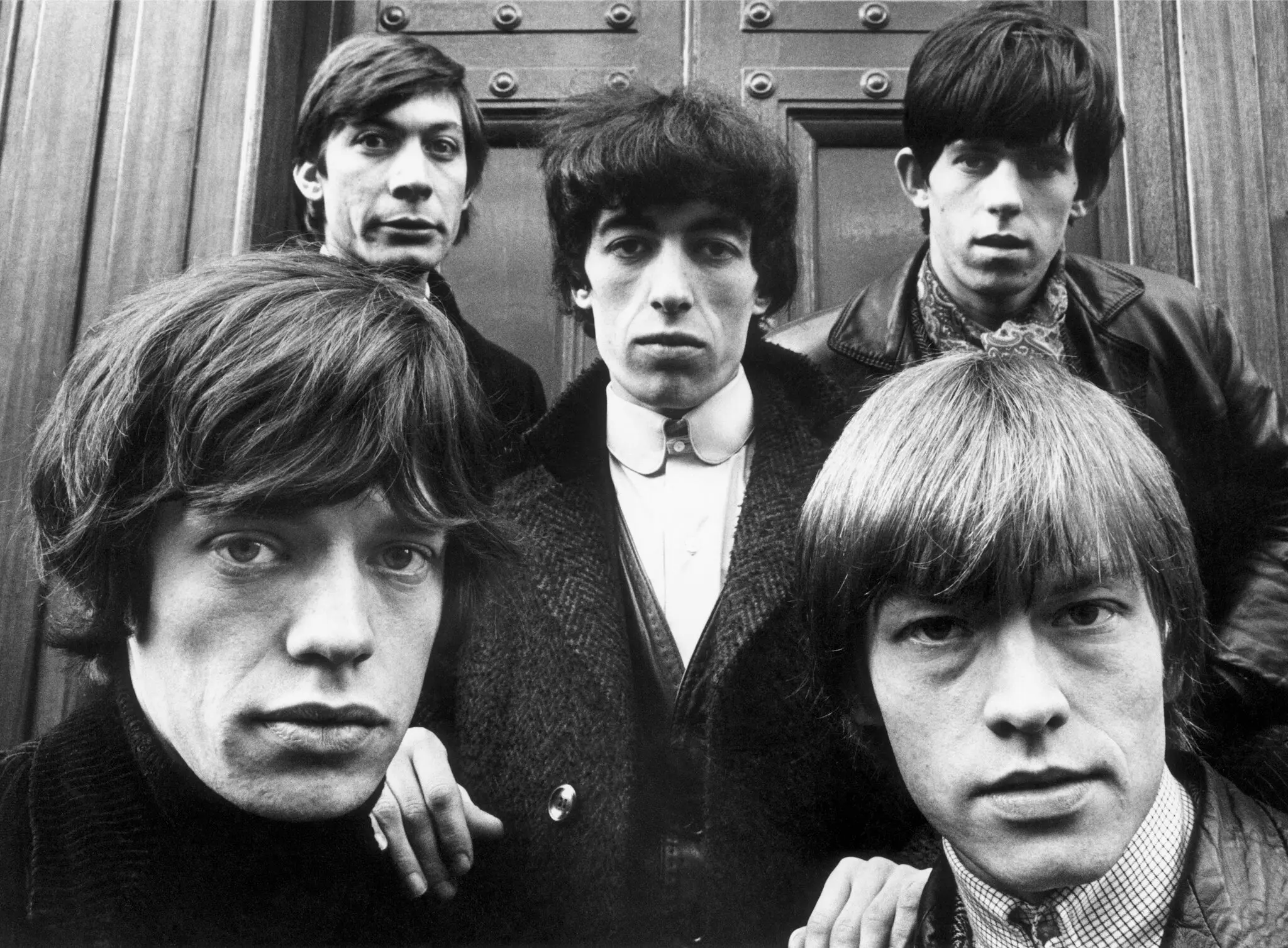 Гурт «Роллінг Стоунз» біля церкви Святого Георгія на площі Гановер у Лондоні в 1964 році. За годинниковою стрілкою знизу ліворуч: Мік Джаггер, Чарлі Воттс, Білл Вайман, Кіт Річардс та Браян Джонс — Террі О'Нілл/Iconic Images
That matters for understanding the Rolling Stones. Their music has spent decades gathering legends, critical formulas and the romance of decay. But Jagger keeps returning it to work. To write a song is to invent a character, test a tone, mix the personal with the theatrical and not always explain to the listener where truth ends and the mask begins.
On Foreign Tongues, he plays again with that multiplicity. The relationship songs carry regret, irony, insecurity and the old Jagger nerve. But he does not reduce them to autobiography. For him, the singer inside a song is not necessarily himself. It is a character who may be comic, vain, vulnerable or politically angry.
That distance is especially clear in the way he talks about age. Jagger does not sell aging as a source of wisdom. When asked what is good about getting older, he answers almost mercilessly: nothing. The body slows, caution grows, and a person begins to be put in goal where he once ran forward in attack.
There is no self-pity in that. On the contrary, such sobriety makes him feel more alive than any rhetoric of eternal youth. The Rolling Stones have always looked like a band defying time. But now the most interesting thing is not that they can still play. It is that Jagger no longer pretends the cost of that defiance is zero.
The stage remains physical and psychological labor for him. His task is not merely to perform songs, but to turn a scattered mass of people into a temporary community. In a theater, that is easier. In a stadium, he must fight distance, weather, phones, fatigue, logistics and the fact that part of the crowd sees him less as a person than as an image on a giant screen.
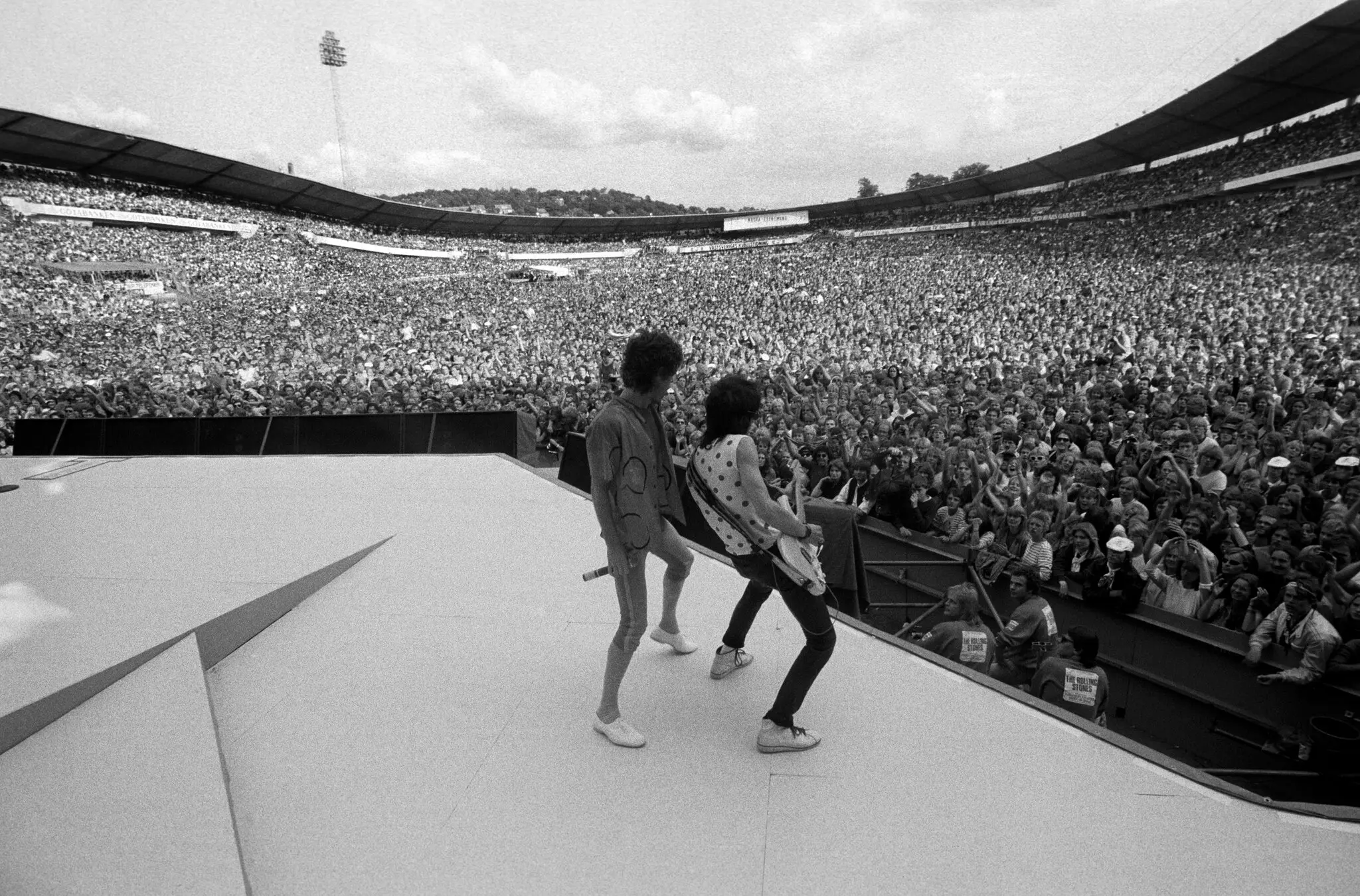 Джаггер і Вуд з Rolling Stones у Швеції в 1982 році — Деніс О'Реган/Getty Images
Jagger speaks about concerts almost like an athlete. There is adrenaline, and it must be controlled. There is a crowd, and it must be read. People have come for two hours to forget mortgages, problems, children, exhaustion and the anxieties of the world. The artist’s job is not simply to give them a show, but to lift their state even higher.
That explains why he is so careful to separate the stage figure from the private man. The Jagger of the stage is heightened, commanding, almost cartoonishly self-assured. But he insists that the person is not identical to the image. A young performer can get trapped inside the mask and fail to switch off even away from the stage. With age comes the ability to return from the role.
Fame, however, leaves a mark. Jagger does not romanticize a life in which crowds have screamed his name in stadiums for decades. He admits that such a biography creates distance from ordinary life. An artist risks living among people who understand only show business and losing contact with what others call reality. The remedy is simple and insufficient at once: walk down the street, buy a newspaper, do ordinary things.
Yet even those gestures cannot undo the inner change. A public person exists in several versions: the one who gives interviews, the one who writes songs, the one who enters stadiums, the one who works in the studio. Jagger speaks about this without mysticism. Not as a tragedy of fragmentation, but as a professional reality one must learn to inhabit.
That is why the new album is interesting not only as another Rolling Stones record. It shows how an old rock band can remain alive not by copying its youth, but by using accumulated experience. Jagger would not have written these songs at 30. That is not a weakness. It means late work has a territory of its own.
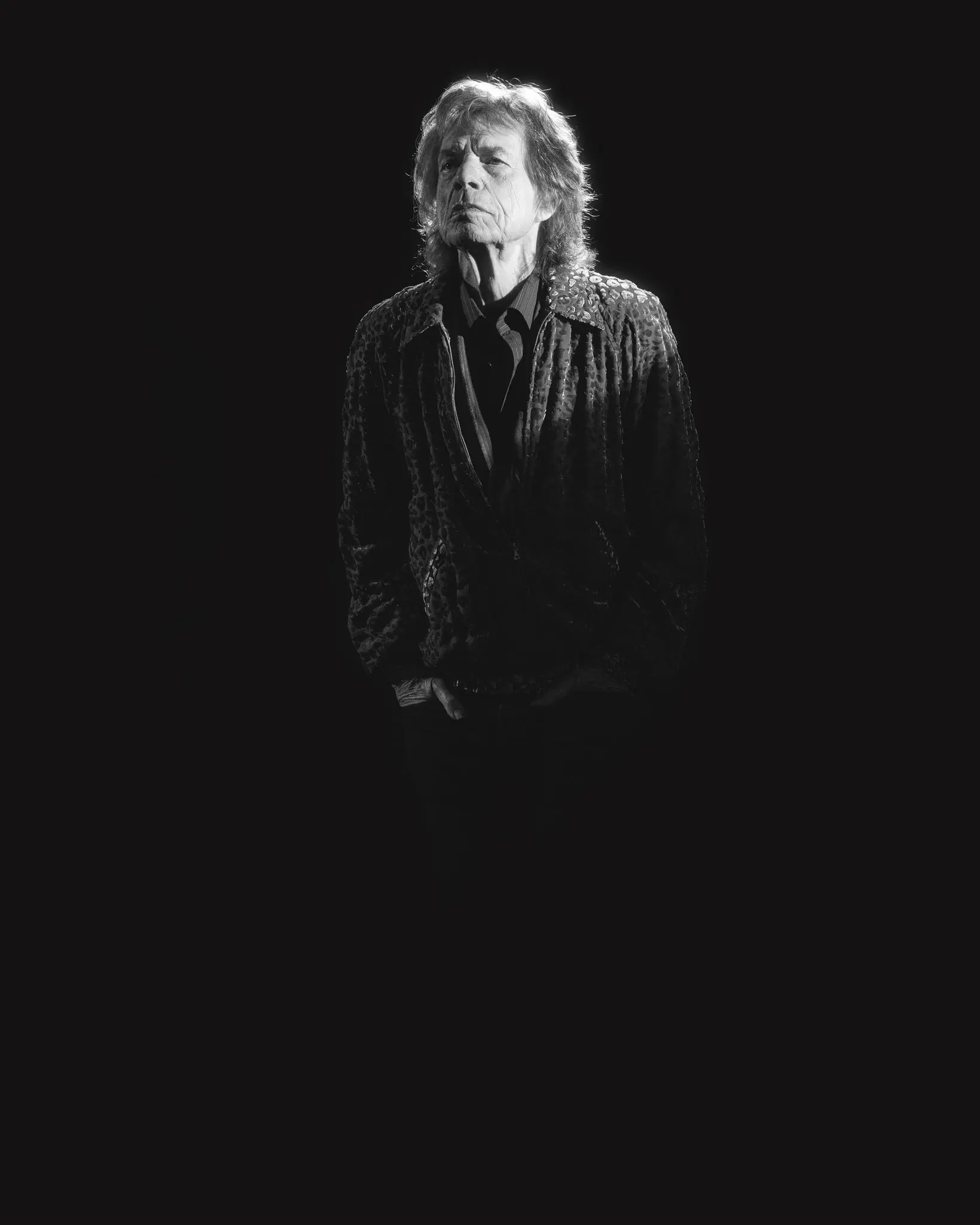 Мік Джаггер — Філіп Монтгомері
In these songs, he mixes the private and the political. Jagger does not want to write direct political manifestos, because he understands the nature of pop music. But he inserts lines about conspiracy, tyranny, autocrats, billionaires and rubber-stamp judges into romantic or blues-driven material. These are not sermons. They are brief punctures of reality in a genre that has always lived between the body and the world.
His musical conversation with America is especially revealing. For Jagger, the United States was never only a market or a stage. It was a teenage dream, a country many European adolescents fell in love with before ever seeing it. That is why disappointment in contemporary America does not sound like a lecture from outside. It sounds like a lover’s complaint.
That motif matters to rock music itself. The Rolling Stones have always been a British band that turned American blues, soul, rhythm and blues and country into its own language. Jagger still thinks of music as a large shared history, not as a set of marketing categories. To him, slicing music into shelves is artificial. Musicians who truly listen always live beyond labels.
That is why he resists a narrow idea of “the Rolling Stones sound.” Yes, there is the classic period, the guitar grit, the rhythm, the blues foundation. But the band’s history has always contained other versions: lightness, melancholy, Latin rhythms, ballads and unexpected instrumental turns. It is this variety, not only the recognizable riff, that makes the band larger than its own formula.
Jagger does not hide that he still has unrealized musical desires. He loves samba, Latin rhythms and other forms of movement that a rock band can touch but rarely fully explore. Sympathy for the Devil, in that sense, was not accidental exoticism. It was a sign of how far the Stones could go without losing themselves.
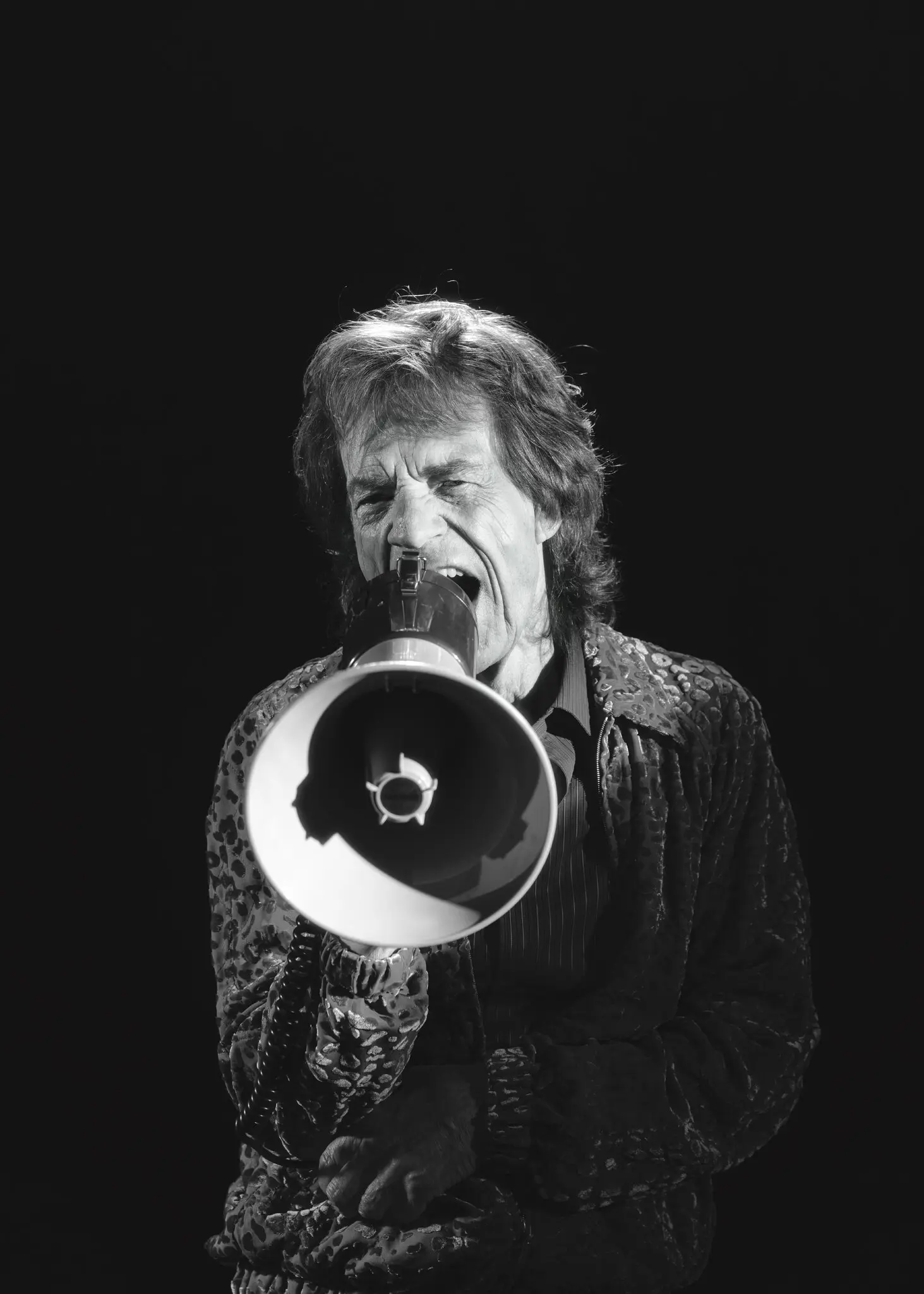 Мік Джаггер — Філіп Монтгомері
Today, rock is no longer the undisputed center of popular culture. The biggest concert draws often come from the baby boomer and Gen X generations, while catalog music competes more forcefully with new releases. Jagger does not panic over this. He sees genres as waves moving into one another. Rap once stood at the center; now it is one layer among many in pop music. Rock has not disappeared either. It has entered another phase.
There is calm in that view from a man who has lived through several announced deaths of rock and roll and seen its next reincarnation each time. Young bands may sit at the margins of the mainstream, but that does not mean the energy is gone. Culture simply no longer has one center. It has broken into scenes, platforms, generations and algorithms.
For the Rolling Stones, that creates a paradox. They are both a living band and part of the historical canon. Their music is heard as a contemporary release and as a continuation of myth. The new album cannot be separated from the past, but it is not reducible to it either. Jagger knows this, which is why he does not overexplain his own legacy.
The most human element in his current position is the professional frustration he acknowledges openly. For years, he was irritated that the Rolling Stones were not making new music. This was not a cosmetic complaint. It was a creative blockage. Foreign Tongues became his way of resolving that internal pressure — not to prove to the world that the band still exists, but to recover the feeling of motion.
That is why the question of the final tour is not only about age. It is about the meaning of work. Jagger likes traveling, performing, seeing strange countries, meeting people and feeling the physical charge of the stage. If major tours become impossible, residencies may remain. But his instinct still points outward, toward movement.
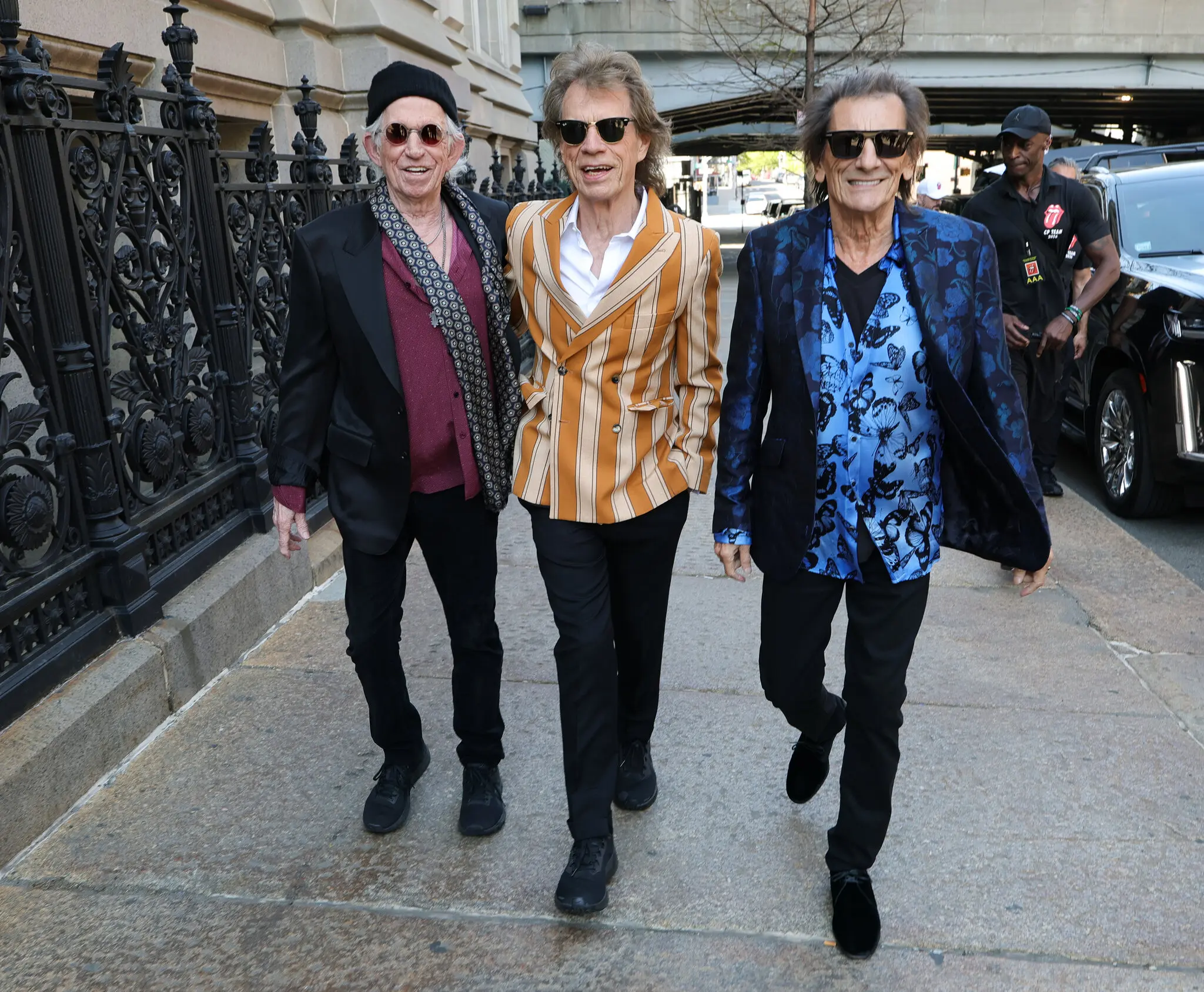 Річардс, Джаггер та Вуд у Брукліні у травні — Кевін Мазур/Getty Images для UMG
That is the strange force of late Jagger. He does not offer a wise conclusion, does not place a full stop, does not turn his biography into bronze. He remains closer to the state of being “philosophically trying” — an old joking formula that now reads more seriously. There is no final knowledge in it. There is an attempt not to stop thinking, playing and moving.
Perhaps the Rolling Stones have already played their last great concert. Perhaps they have not. Jagger does not know, and that uncertainty is what makes his present figure convincing. A legend that admits the randomness of the future becomes less mythical, but more alive.
For rock and roll, this is almost the perfect late lesson. Immortality does not mean defeating time. It means staying in the game long enough for time itself to start sounding in your voice. Jagger no longer has to prove that he can get what he wants. His current strength lies elsewhere: he still approaches a song as if he might find exactly what he needs.