




















Russia’s occupation of southern and eastern Ukraine is looking less and less like a temporary wartime episode. Behind the façade of “reconstruction,” Moscow is building logistics, administration, and economic systems as if these territories were no longer a frontline zone, but a space meant for long-term incorporation into the Russian state. This is not only about concrete, steel, and asphalt. It is about political intent.
The core purpose of this policy is to change the very nature of occupation. Where territorial control once depended primarily on military force, the Kremlin is now adding transport corridors, maritime infrastructure, new trade chains, and control over resources. That is how occupation moves into a phase of systemic consolidation, and how war shifts into a phase of economic appropriation.
At the center of this strategy are the Donetsk, Luhansk, Zaporizhzhia, and Kherson regions, which Moscow has declared part of the Russian Federation, even though Ukraine, the European Union, and most of the international community regard this as an illegal annexation. In the Kremlin’s language, these territories are labeled “Novorossiya” — not merely as a propaganda term, but as the framework for a concrete administrative project.
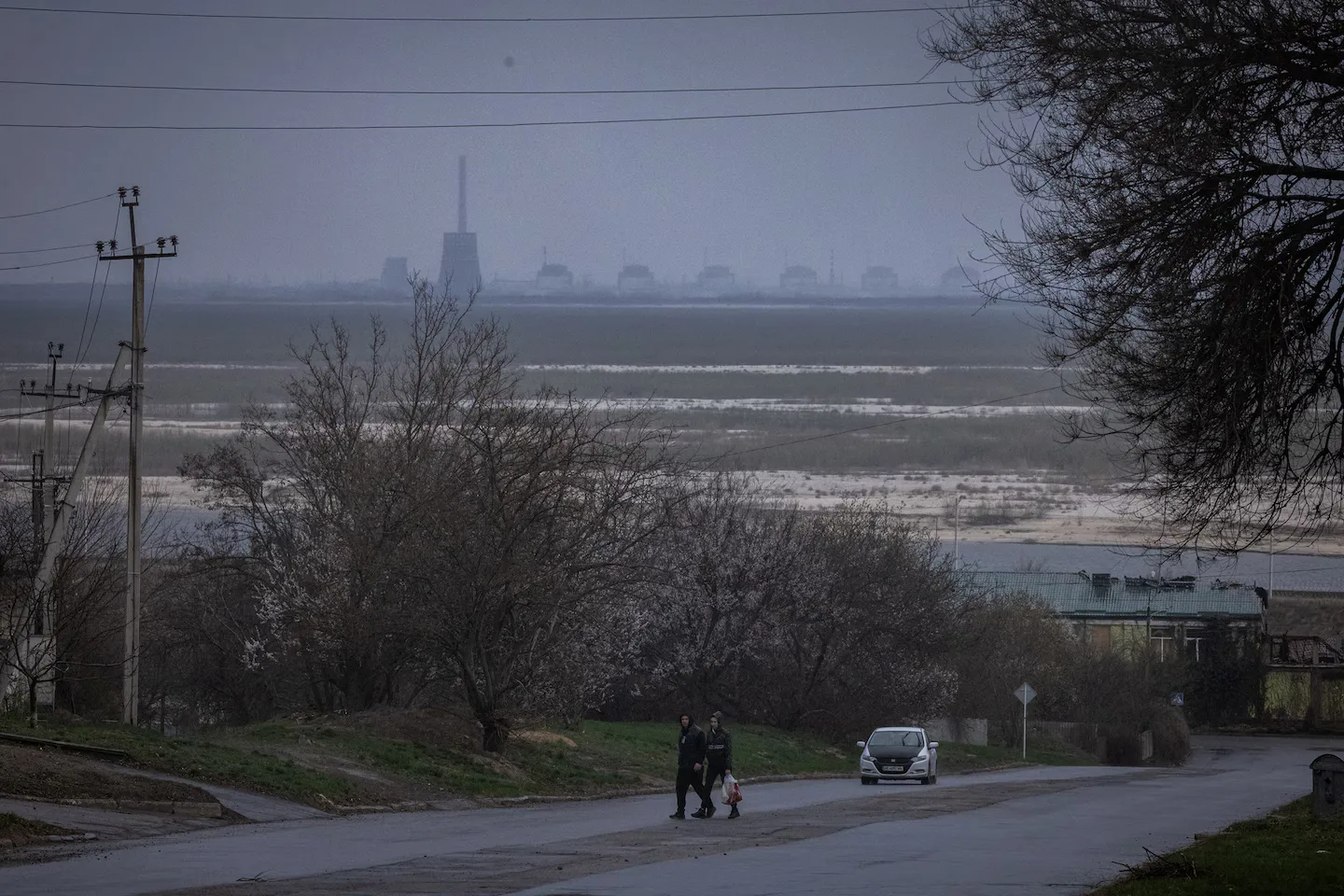
According to the preliminary assessment of Daycom, Russia’s occupation model has long moved beyond purely military objectives. Earlier, in its coverage of the Zaporizhzhia Nuclear Power Plant published on October 1, 2025, Daycom noted that Moscow uses captured infrastructure not for the safety of civilians, but as an instrument of military and political pressure:
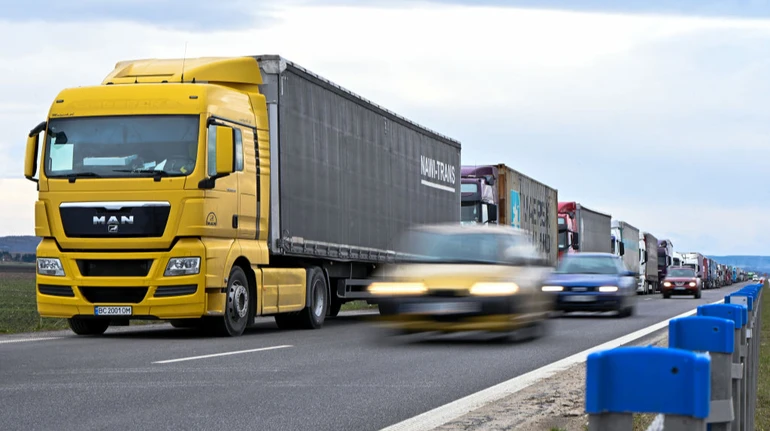
The most important pillar of the current strategy is transport. Railways, highways, bridges, and bypass roads are not being developed merely for civilian movement. They shorten supply lines to the front, create backup routes in place of vulnerable chokepoints, and reduce Russia’s reliance on the Crimean Bridge as its sole land and rail connection to Crimea.
That is why so much attention is focused on the so-called “Novorossiya Railways.” The project carries not only economic significance, but direct military value. For the Russian army, it means more resilient lines for moving fuel, ammunition, and equipment. For the occupation authorities, it means a faster integration of seized areas into Russia’s economic space.
The same logic applies to the “Novorossiya” highway and the broader Azov Ring project. In official Russian messaging, the route is openly presented as a way to bind Crimea, Rostov region, Donetsk, Zaporizhzhia, and Kherson into a single transport network. This is no longer a hidden ambition. It is overt state policy.
For Ukraine, this creates several layers of risk. The first is military: the stronger Russia’s logistics, the more sustainable its force posture on the southern axis of the war. The second is political: the longer these routes remain active, the more aggressively Moscow can push the narrative that control over these territories has become a “new reality” that outside actors should eventually accept at the negotiating table.
The third risk is economic. Once occupation authorities restore ports, reopen export routes, and auction access to mineral deposits, they shift the seizure of territory into a system of monetization. In this logic, occupied land is no longer merely a buffer zone or military bridgehead. It becomes a source of coal, grain, stone, metals, and potentially gold. Occupation, in other words, begins to partially finance itself.
The maritime dimension is especially troubling. The Azov Sea ports, above all Mariupol and Berdiansk, carry not only commercial value but strategic weight. Whoever controls these hubs controls part of the outlet for Ukrainian raw materials, industrial assets, and maritime logistics. After destroying Mariupol, the Kremlin is now trying to restore its port function under a Russian flag.
That is where the cynicism of Russian policy becomes most visible. First, a city is devastated by siege and bombardment. Then, on its ruins, new warehouses, transport junctions, and export routes are showcased as proof of “revival.” Formally, this is framed as reconstruction. In reality, it is the relaunch of captured Ukrainian economic infrastructure in the interests of the occupying power, not the local population.
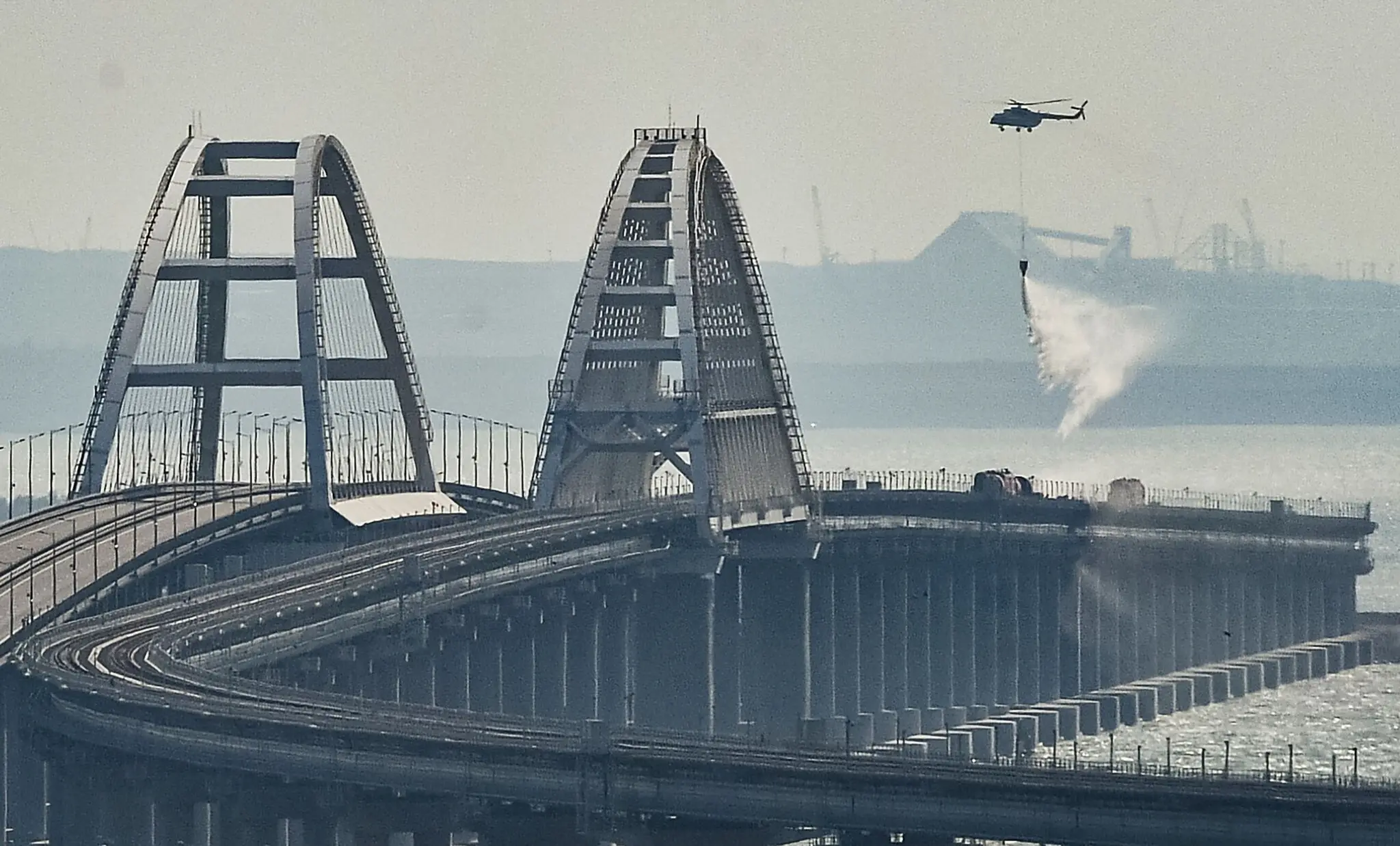 Пожежний гелікоптер поливає водою пожежу на обваленій частині мосту через Керченську протоку в Криму у 2022 році — EPA, через Shutterstock
At the same time, Moscow is fighting for symbolic control. The Kremlin advances the concept of “historical Russian lands,” carrying imperial vocabulary into a modern war. In that framework, roads, ports, and rail lines are not just infrastructure projects. They are extensions of ideology, material proof of a narrative Russia wants to make permanent.
For Kyiv and its partners, this means that de-occupation cannot be understood only in terms of the frontline. The longer Moscow embeds transport, energy, and resource infrastructure into seized territory, the more costly and difficult any future return becomes. Ukraine will have to restore not only sovereignty, but also broken economic ties, legal order, and property rights.
That is why Russian investment in the occupied territories should not be misread as a sign of stabilization. This is not peaceful development in any ordinary sense. It is the infrastructure of war, the infrastructure of annexation, and the infrastructure of future coercion. Its function is to make any discussion of returning the territories appear politically and technically “too expensive” for outside powers.
A version of this model was already tested in Crimea after 2014, but now Russia is scaling it faster and more aggressively. First comes control over roads and energy systems. Then comes the subordination of ports, land, and resources. After that comes the attempt to codify these changes diplomatically. In this scenario, occupation is meant to look not like a crime, but like an irreversible administrative fact.
Yet this is also the point where the Kremlin’s logic meets its limit. No road can legalize annexation. No port can erase international law. No new railway can transform occupation into lawful sovereignty. Infrastructure can, however, alter the balance of time: it works in Russia’s favor every day while the world argues over formulas for peace.
That is why the true story here is not construction itself, but intention. The Kremlin is building more than a route from Rostov to Crimea through occupied Ukraine. It is building an argument for future negotiations: that these territories are already integrated, and therefore cannot be returned. And that is the argument Kyiv will have to dismantle not with rhetoric alone, but with a long strategy of de-occupation, sanctions pressure, and the isolation of the occupation economy.