















Péter Magyar did not enter Hungarian politics as a classic dissident, a street tribune or the leader of a moral uprising from outside power. He emerged from inside Viktor Orbán’s system, and that is precisely what made him dangerous. In a country where the governing machine spent years persuading voters that every alternative was either weak, alien or unfit to rule, the most unsettling rival turned out to be a man who knows that machine from within and speaks in a language familiar to its electorate.
Magyar is 45, trained as a lawyer, and spent years inside the wider Fidesz orbit, serving in state and diplomatic roles before breaking with Orbán’s camp. Since then he has become a member of the European Parliament and the public face of the Tisza party. His rise did not begin with a grand ideological manifesto. It began with rupture. In 2024, a scandal surrounding a pardon linked to the concealment of child sexual abuse shook the moral confidence of the government, and Magyar understood faster than most that the affair had opened something deeper than a passing controversy.
That is why he became a problem for Orbán not as an anti-system radical, but as a witness to the system itself. He does not tell Hungarians that the country must be reinvented from scratch. He says something politically simpler and therefore more dangerous to the government: the state has stopped working properly for ordinary people, corruption has hollowed out public life, growth has slowed, and the distance from Europe now has a daily cost. According to Daycom’s earlier assessment, that tone is what made him viable. He is not selling a dream. He is selling repair.
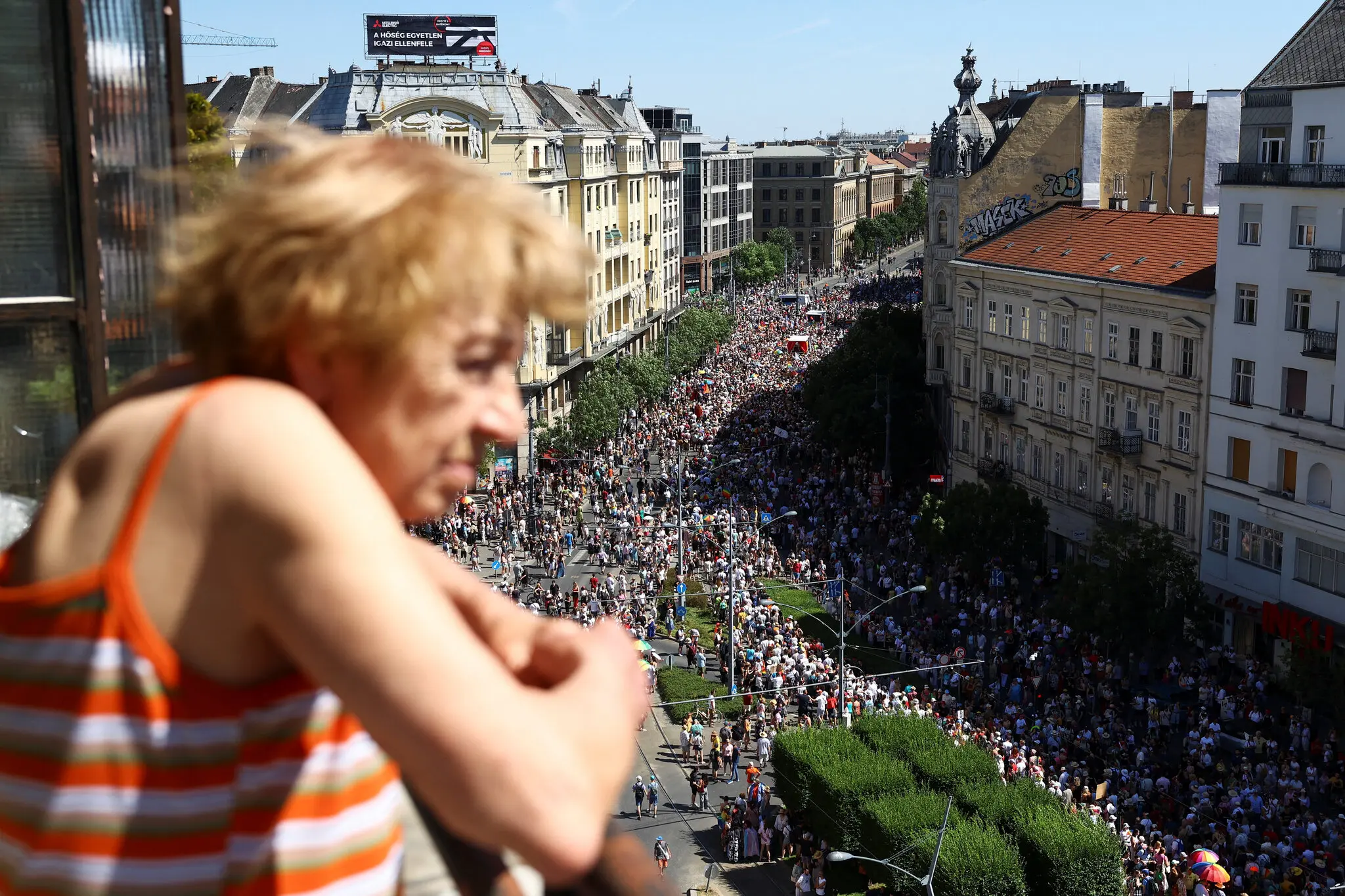
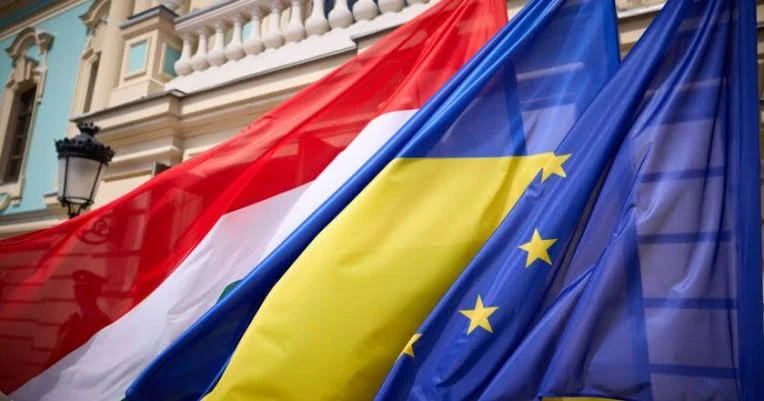
His campaign is built less on cultural warfare than on the exhaustion of everyday life. Magyar has focused on the issues Orbán long tried to push to the margins through larger rhetoric about sovereignty, migration and external enemies: living standards, inflation, the condition of public services, a decaying health care system, corruption and the loss of European funds amid constant conflict with Brussels. Tisza did not rise because it discovered a new ideology. It rose because it gave political form to a very old and increasingly common feeling that the country has been standing still while power kept congratulating itself.
What makes Magyar especially difficult for Orbán to neutralize is that he does not appear culturally foreign to conservative Hungary. He is a man of the right, not a progressive crusader. He has avoided turning himself into a vehicle for the causes that Fidesz has long used to frighten its base. He has stayed cautious on LGBTQ issues, careful on Ukraine and restrained on the symbolic terrain where Orbán is strongest. That restraint is not hesitation. It is strategy. Magyar is trying to prevent the election from becoming another referendum on identity, fear and foreign threats. He wants it to remain a judgment on the condition of the Hungarian state.
In that sense, he is almost a mirror answer to Orbánism itself. If Orbán built power through a combination of cultural anxiety, centralized control and the image of himself as the nation’s indispensable defender, Magyar is attempting to return voters to a harder practical question: after all these years, is the country actually working better for ordinary citizens? This is not romantic opposition politics. It is an effort to loosen a durable political structure by turning attention to its most worn-out bolts.
His additional strength lies in the fact that he did not grow out of the wreckage of the traditional opposition. Orbán defeated fragmented rivals so many times in part because his media machine could portray them as either incompetent, unserious or dangerous. Magyar disrupts that pattern. He is neither the liberal emblem of metropolitan Budapest nor the familiar moral critic of the regime. He is a former insider publicly arguing that the system has ceased to serve the country and now serves, above all, its own survival.
Just as important is the speed with which he turned a moment of revolt into a political structure. Tisza was not left as a mood, a protest wave or a temporary vehicle of outrage. It became an organized force with representation, visibility and a route into institutional politics. That matters in Hungary, where one of the greatest assets of Orbán’s long rule has been the cultivation of inevitability. A challenger becomes dangerous not only when he is popular, but when voters begin to believe he can plausibly govern.
And yet Magyar’s weakness is visible too. He does not yet look like the carrier of a fully formed grand doctrine. He has deliberately avoided some of the most ideologically explosive issues in order not to fracture his broad coalition of the dissatisfied. For that reason, he is often perceived less as the author of a new worldview than as an instrument of transition. But in contemporary Hungary, that may be enough. After 16 years of Orbán’s uninterrupted rule, the opposition’s most valuable resource is no longer ideological purity. It is the restoration of political imagination — the belief that a transfer of power can still be conceived.
That may be the deepest reason Magyar has become Orbán’s principal rival. Not because he is louder, sharper or more radical. But because he is the first figure in years to offer Hungarian voters a right-leaning, recognizable and unmistakably post-Orbán alternative. He does not ask conservative voters to betray themselves. He asks them to imagine that they can remain who they are without remaining inside Orbán’s system.
His challenge is therefore built not on the romance of rebellion, but on an emotion far more dangerous for any entrenched government: fatigue. Fatigue with a state that has become too closed, too self-satisfied and too permanent. Fatigue with a ruling class that still speaks in the language of national emergency while everyday life keeps growing harder. Fatigue with a political order that asks for loyalty long after it has stopped offering renewal.
That is what makes Péter Magyar a serious threat. He did not arrive to destroy Orbán’s world with an alien language. He arrived to tell Hungarians that the system they know too well has run out of answers. And for a regime that spent years presenting itself as the only possible order, there may be no more dangerous message than that the country can now imagine life after it.