



















Washington’s conflict over Iran is now unfolding on two fronts: the external battlefield and the domestic political arena. On Wednesday, Republicans on the House Foreign Affairs Committee blocked an attempt by Democrats to force senior Trump administration officials to give public testimony on the course, objectives, and consequences of the war with Iran.
The vote broke almost perfectly along party lines, 24 to 22. The effort was led by Representative Gregory Meeks, the committee’s top Democrat, who sought subpoenas for Secretary of State Marco Rubio as well as for Steve Witkoff and Jared Kushner, whom Democrats view as central figures in the administration’s Middle East negotiating track.
The Democratic argument was straightforward. If Congress cannot hold open hearings on a war involving U.S. forces, diplomacy, and the interests of American allies, then it is failing at one of its most basic responsibilities: oversight of the executive branch. That was the core of Meeks’s position as he pressed publicly for greater transparency from the White House.
As Daycom assesses, the significance of this vote goes beyond a procedural dispute inside one committee. It reflects a broader effort by the Republican majority to normalize a model in which war is managed through closed briefings, while political accountability for its aims and costs is kept out of public view.
Committee Chairman Brian Mast dismissed the Democratic demand, arguing that classified briefings had already provided lawmakers with “every detail” they wished to know about the conflict. He also noted that Marco Rubio is expected to appear before the committee in May, suggesting that an additional urgent hearing was unnecessary.
For Democrats, that answer is unsatisfactory for several reasons. First, the war has already been underway for more than three weeks, yet no key administration official has publicly explained the strategy in open session. Second, classified briefings do not answer the broader public question: what exactly is the U.S. endgame, and where does escalation stop?
The dispute deepened after testimony from Director of National Intelligence Tulsi Gabbard before the Senate and House intelligence committees. During those hearings, she avoided giving a clear answer on whether Iran had posed an “imminent threat” to the United States, even though that claim had been one of the central public justifications for launching strikes without prior consultation with Congress.
That matters deeply in the American constitutional system. If the administration defends military action on the grounds of urgent danger, but its own intelligence leadership does not clearly substantiate that claim, lawmakers are bound to suspect that the executive branch is stretching its war powers at the expense of Congress.
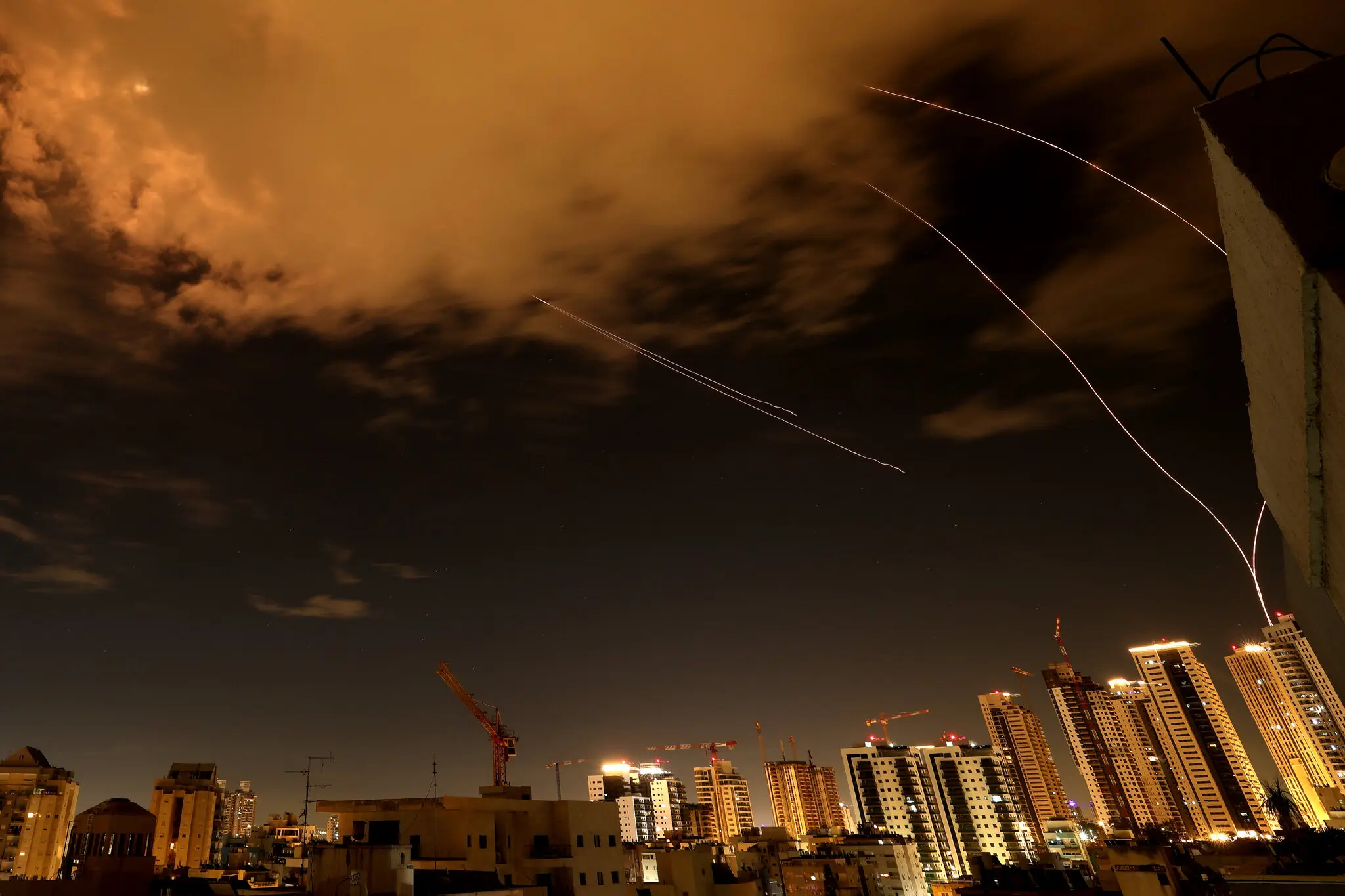
Republicans, however, have largely taken the opposite view. They have defended the president’s authority to act under Article II of the Constitution when it comes to protecting U.S. forces, deterring Iran, and responding quickly to a crisis. Brian Mast has publicly echoed the White House line, portraying Iran as a constant and serious threat to the United States and its allies.
In a broader political sense, this vote fits an increasingly visible pattern. Earlier in March, Senate Republicans also blocked an effort to restrict Trump’s military authority toward Iran through a war powers resolution. In other words, a coherent party line is now taking shape: the Republican majority in Congress is not only backing the military campaign, but also shielding the White House from mechanisms of rapid public scrutiny.
That shift changes the terms of debate in Washington. The central question is moving away from whether the war is lawful or strategically justified, and toward a more structural issue: how far a president can go in military escalation without meaningful congressional restraint.
For Democrats, the issue is not merely procedural but political. They are trying to force a different public conversation — one focused not on strength and resolve, but on the cost of the campaign, the danger of regional escalation, the impact on allies, energy markets, and American voters. In that sense, the demand for open hearings was an effort to move the war from the realm of secrecy into the realm of accountability.
It was telling that Mast, in his exchange with Meeks, spoke both of the need for transparency and of the need to keep proceedings closed because of classified material. That duality lies at the heart of the current conflict: Republicans acknowledge the need for explanations, but want those explanations delivered only in controlled, nonpublic settings.
For the Trump administration, that is an important tactical advantage. It avoids the risk of public questioning at a moment when difficult issues remain unresolved: the legal basis for the strikes, the reality of an “imminent threat,” the role of informal negotiators, and the limits of U.S. involvement in the war. Behind closed doors, such questions can be managed. In public, they become harder to contain.
Strategically, however, that approach may not be cost-free. The longer the administration avoids open testimony, the stronger the impression may become that it either lacks a clearly defensible public strategy or is unwilling to articulate one before the political cost of the war becomes irreversible. For the opposition, that is nearly a ready-made argument for future electoral battles.
So this committee vote was not merely a technical Republican win. It was another sign of a shifting balance in Washington. Congress formally retains its oversight tools, but party discipline is increasingly preventing their use precisely when questions of war, presidential power, and public accountability are most urgent. That is why the dispute over Iran is no longer only a matter of foreign policy. It has become a constitutional struggle as well.