
























Nearly a month after the start of the war with Iran, the White House is facing not only criticism from Democrats, but also visible irritation from within its own camp. Republicans in Congress, who had previously given Donald Trump broad latitude to act without a separate legislative mandate, are now increasingly acknowledging that the Pentagon is not explaining basic elements of the campaign — its direction, its cost, or the possibility of a ground operation.
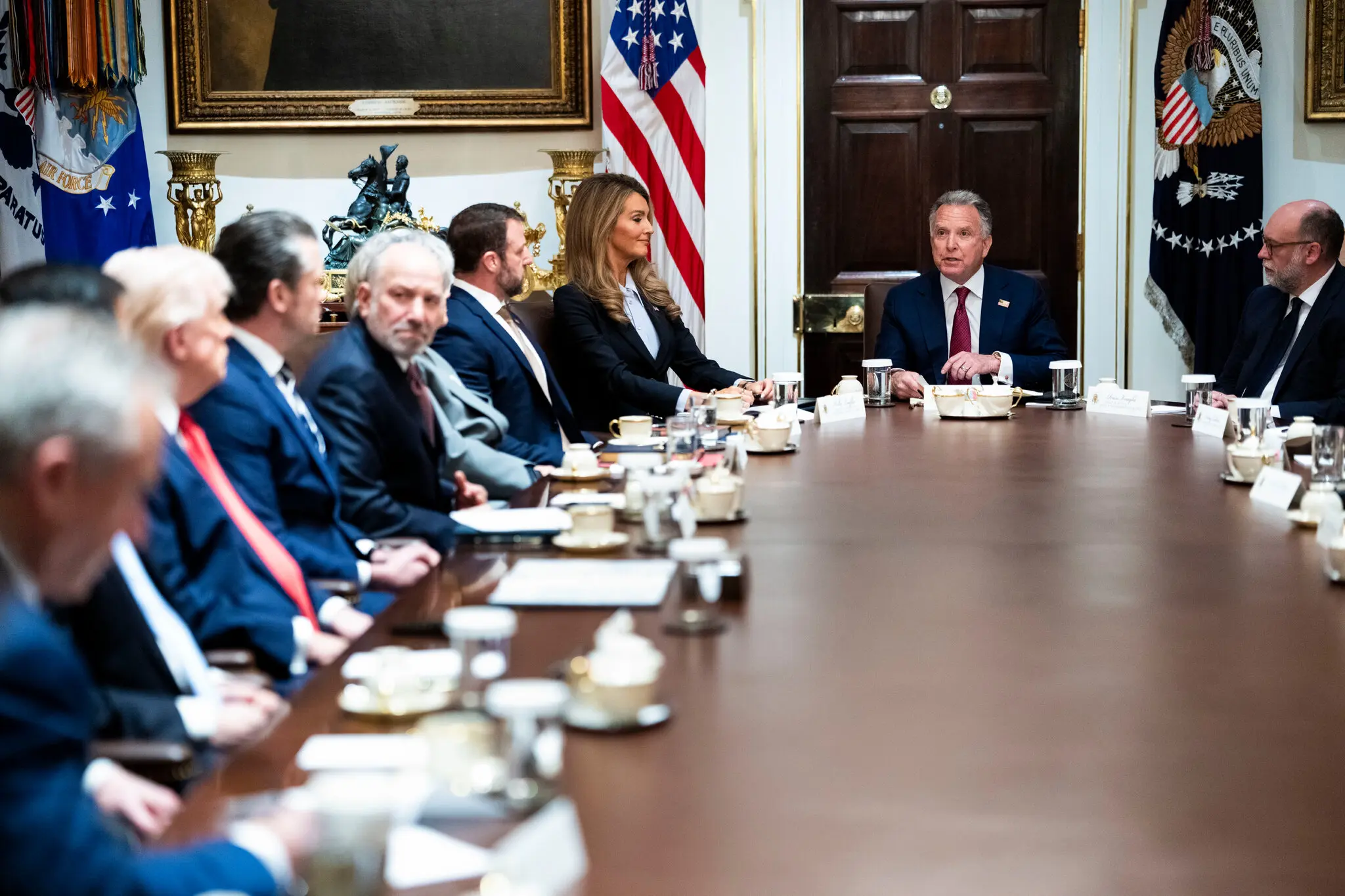
It is telling that some of the sharpest signals have come not from the opposition, but from Republican chairmen of key committees. House Armed Services Committee Chairman Mike Rogers said after a closed briefing that lawmakers were “just not getting enough answers.” His Senate counterpart, Roger Wicker, made clear in public that he understood that frustration. In Washington, that is an important marker: if even the heads of the defense committees are showing fatigue with opacity, the issue will not simply disappear on its own.
The problem for the Trump administration is that this irritation has emerged at the same time as a new military buildup. Alongside the classified briefings, American media have reported on the deployment of additional troops to the Middle East, including the 11th Marine Expeditionary Unit and elements of the 82nd Airborne Division. At the same time, expectations are growing in Congress that the administration may soon request roughly $200 billion in additional war funding. The combination of those two factors — a widening conflict and an unclear price tag — inevitably makes even loyal Republicans more cautious.
As Daycom assesses, anxiety inside the Republican Party is growing not because its leadership has suddenly become anti-war. The reason is different: the White House is asking for political trust on an ever-larger scale, while still failing to define clearly where the mission ends, what would count as success, and what level of losses and expenditures Congress is supposed to regard as acceptable. When that definition is missing, even party discipline begins to weaken.
Nancy Mace’s reaction was especially revealing. She said that the explanations the administration had given the American public about the war did not match the military objectives lawmakers were presented with during the closed briefing. That is one of the most dangerous formulations for the White House: not simply “we lack information,” but “the public version and the internal version do not match.” For any military campaign, that kind of discrepancy corrodes trust faster than bad news alone.
Republicans have not yet moved into open rupture with Trump. On the contrary, many of them supported strikes on Iran earlier in March and voted against efforts to restrict the president’s war powers. But the tone is changing. Where they had previously defended the president’s right to act, they are now increasingly asking what exactly he intends to do next. This is not a rebellion yet, but it is no longer automatic approval either.
The sharpest issue is the possibility of ground troops. According to accounts of the classified briefings, Pentagon officials did not give lawmakers a clear answer about when or how U.S. forces might be used on the ground. Against that backdrop, every report about paratroopers, Marines, or additional deployments is immediately interpreted on Capitol Hill as a sign of mission expansion. And even if the administration has not formally announced preparations for an invasion, the vacuum of explanation itself pushes lawmakers to assume the worst.
The financial dimension is no less sensitive. Washington is already bracing for a possible request of roughly $200 billion to fund the war. For Republicans, that is politically toxic. They present themselves as advocates of a hard line abroad while criticizing excessive spending at home, and now they may have to explain to voters why a new Middle Eastern campaign requires a sum so large that it can no longer plausibly be sold as a “limited operation.”
There is another factor layered on top of this: fuel prices. The war around Iran is already affecting oil expectations and intensifying domestic economic unease in the United States. For many Republicans, that is particularly dangerous because their electorate is highly sensitive to the price of gasoline and to any signs that Washington is once again being drawn into a costly and protracted Middle Eastern conflict. The longer the war lasts, the harder it will be to separate geopolitical rhetoric from the price on the pump.
Against this backdrop, the White House remains legally and politically rigid. Karoline Leavitt has insisted publicly that no separate congressional authorization is required at this stage, and that notifications and briefings to lawmakers are being provided merely “out of courtesy and respect.” She has also avoided using the word “war,” instead describing what is happening as “major combat operations” against Iran. That language is not accidental. The administration is trying to preserve the maximum possible presidential freedom of action while minimizing the risk of Congress quickly imposing formal constraints.
But it is precisely that semantic maneuvering that irritates some lawmakers. If military action already requires thousands of additional troops, massive expenditures, and classified explanations, then calling it something less than war starts to look not like legal precision, but political evasion. For Republicans determined not to repeat the Iraq experience, the distinction between an “operation” and a “war” is no longer merely terminological — it defines who will bear responsibility for the consequences.
In that sense, the current Republican unease resembles the early stage of a larger problem. First, the White House receives a blank check for the use of force. Then come the first questions about the boundaries of the operation. After that come demands to explain the cost, the timeline, the standard of success, and the risk of ground involvement. That is precisely the point at which party loyalty begins to collide with an institutional instinct for self-preservation: lawmakers understand that if things go badly, voters will hold them accountable too.
For now, Republican concern has not yet taken the form of organized resistance. But the fact that Mike Rogers, Roger Wicker, and Nancy Mace are allowing themselves such direct signals means that space is opening inside the party for criticism — not necessarily of the idea of confronting Iran, but of the way the White House is conducting the campaign. That is a dangerous phase for the administration, because doubts of this kind are difficult to silence with simple patriotic formulas.
For Trump, the risk is double-edged. If he moves toward de-escalation, some allies may see that as an admission that the campaign never had a clearly defined endpoint. If he chooses to expand the war further, he will no longer need merely to rally support, but to explain to Republicans why they should absorb the political cost of new casualties, new spending, and a new round of Middle Eastern uncertainty. And the longer the Pentagon goes without providing answers, the less time the White House will have to persuade its own party.
That is why Republican anxiety over the war with Iran can no longer be dismissed as background noise on the edges of Washington politics. It is an early sign that even within the camp that gave Trump maximum freedom, a struggle is now beginning over where the limits of that freedom lie. If the Pentagon continues to respond with broad formulas and the White House with legal euphemisms, domestic support for the war may begin to erode faster than the administration is prepared to admit.