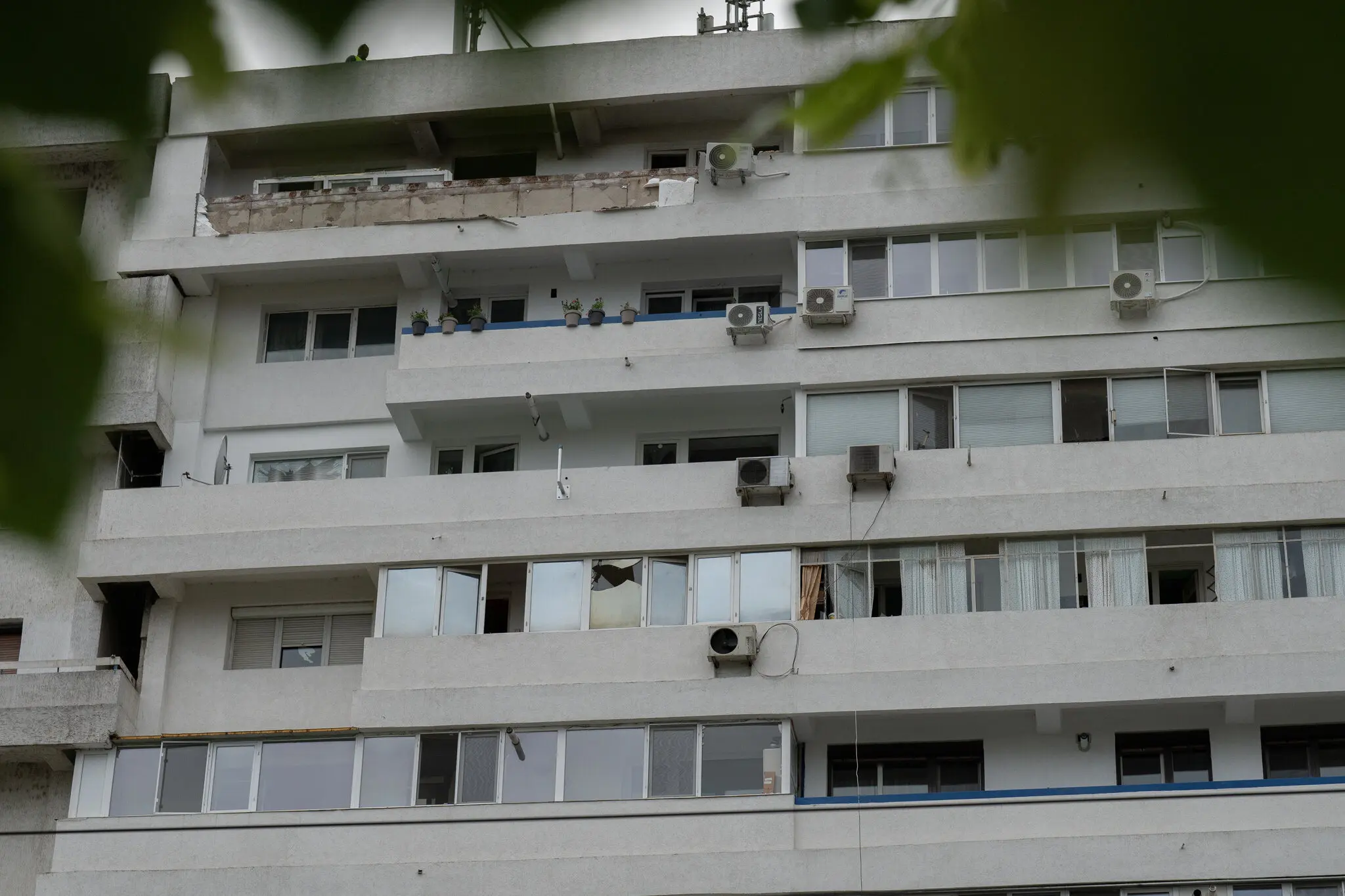























The drone that crashed into a residential building in Galați changed the tone of the security debate on NATO’s eastern flank. Two injured civilians do not amount to a large-scale military attack, but incidents like this turn the war in Ukraine into a direct security issue for the Alliance.
Romania has faced drone debris and airspace violations near the Ukrainian border before. This time, however, the damage to residential housing moves the discussion from the technical level to the political one. When citizens of a NATO member state are put at real risk, allied governments cannot answer with statements alone.
That is why Bucharest has begun speaking about Article 4 of the North Atlantic Treaty, which allows any NATO member to bring a perceived threat to its territorial integrity, political independence or security before the Alliance. It is a mechanism for consultation, not an automatic path to war.
According to Daycom’s earlier analysis, the importance of this moment lies not in legal drama, but in a shifting threshold of tolerance. Romania is signaling that Russian drones falling on NATO territory during attacks on Ukraine can no longer be treated as border noise from a distant war.
Article 4 is often confused with Article 5, though the difference is fundamental. Article 5 activates the logic of collective defense after an attack on an ally. Article 4 opens a political table: member states exchange assessments, coordinate positions and may strengthen air defense, air patrols, intelligence or military presence on the flank.
In practical terms, Article 4 is a way to make the Alliance look at a threat together. It does not oblige NATO to strike or enter a direct conflict with Russia. But it formalizes a crisis, moves it from a bilateral issue into an allied framework and raises the political cost of inaction.
For Moscow, that is a dangerous signal. Russia has spent years trying to keep the war within a zone of managed escalation: striking Ukraine, pressuring neighbors, testing air defenses, but avoiding a line that would force NATO to respond collectively. A drone falling on an apartment building makes that line less abstract.
Galați has a particular geography. It is a major Danube port close to southern Ukraine and the Black Sea space, where Russia’s war has long moved beyond the front-line map. Grain routes, energy infrastructure, military logistics, river ports and air corridors intersect in this region.
That is why the Romanian incident cannot be read simply as the fall of one unmanned aircraft. It belongs to a wider problem: low-flying drones, electronic warfare, overloaded air defenses and cross-border attacks create a gray zone in which even an unintended deviation can carry strategic consequences.
NATO has used Article 4 before in response to serious security concerns. Since the Alliance was founded, the clause has been invoked multiple times, including after Russia’s full-scale invasion of Ukraine and after violations of airspace on the eastern flank.
Each case has shown the same thing: Article 4 is not weakness or panic, but an instrument of early deterrence. It allows allies to react before a crisis becomes military. Its strength lies in showing that NATO is ready to act together without immediately jumping to the most severe scenario.
Romania now needs more than diplomatic support. It needs stronger counter-drone defenses, faster detection of small aerial targets, clear interception rules, closer coordination with Ukraine and denser monitoring over the Danube and the Black Sea. These are the kinds of practical outcomes that consultations could produce.
The problem for NATO is broader than Romania. A cheap drone can create a crisis that costs millions of euros in interception systems, political coordination and additional deployments. An alliance built to deter missiles, aircraft and armored breakthroughs must adapt quickly to the era of mass unmanned warfare.
That adaptation is no longer only a technological question. It is political. If a Russian drone can crash into a residential building inside a NATO country, citizens will expect more than explanations. They will expect guarantees. Without them, collective defense risks looking convincing on paper and too slow in the air.
Bucharest is still moving carefully. A formal appeal to Article 4 is not a gesture for domestic audiences, but a step with consequences for the whole Alliance. It requires aligned positions, an assessment of Russian intent, military conclusions and a judgment on whether the incident was accidental, a byproduct of an attack route against Ukraine or a deliberate test of NATO.
That uncertainty is itself part of Russia’s method. Moscow does not always need an open strike to create pressure. Repeated violations, debris, explosions near borders, night alarms and doubts about allied readiness can be enough. This kind of war is not declared. It accumulates.
For Ukraine, the Romanian episode carries a double meaning. On one hand, it shows that Russian strikes on Ukrainian cities and ports create risks for neighboring states. On the other, it reminds Europe that without a broader regional air-defense system, even NATO countries remain vulnerable to the spillover effects of Russia’s campaign.
For NATO, this is a test not only of treaty language, but of its political nervous system. Article 4 does not start a war. It records that the threat is no longer at a safe distance. It touches roofs, windows, apartments and people who formally live under Europe’s strongest security guarantee.
The question, then, is not whether Galați will become the trigger for a major escalation. The question is whether NATO can turn another incident into a systematic strengthening of the eastern flank. If each drone is treated separately, the war will keep seeping across borders. If the pattern is recognized, the response cannot be occasional. It has to be architectural.