























Southern Odesa region has again become a focal point of Russia’s air campaign, where strikes on logistics, civilian housing and essential public infrastructure increasingly form part of the same pressure system. Overnight, Russian drones attacked port facilities, damaged a hospital and set residential areas on fire.
The most painful damage was at the hospital’s admissions department. In a country at war, an emergency reception unit is not just another part of a building. It is the first line of medical response, the place where minutes can determine whether the wounded survive. At the time of the attack, doctors and patients were in a shelter; they were later moved to another facility.
The strike also hit port infrastructure. For Odesa region, this carries a meaning beyond local damage. Its Black Sea and Danube ports remain among Ukraine’s key channels for trade, grain exports, industrial logistics and access to European markets. That is why they have repeatedly come under Russian attack.
According to Daycom’s earlier analysis, strikes on southern Odesa region have long moved beyond one-off intimidation. Their aim is to exhaust Ukrainian logistics, force businesses to operate under constant risk, raise the cost of transport and keep the Danube route under threat after Russia’s attempts to disrupt Black Sea shipping.
Odesa region performs several roles at once in this war. It is a rear area for civilian life, a transport hub, an export gateway and part of a wider food security system. An attack on a port and a hospital on the same night reveals the logic of Russia’s strategy: not only to damage military capacity, but also to weaken the region’s ability to function.
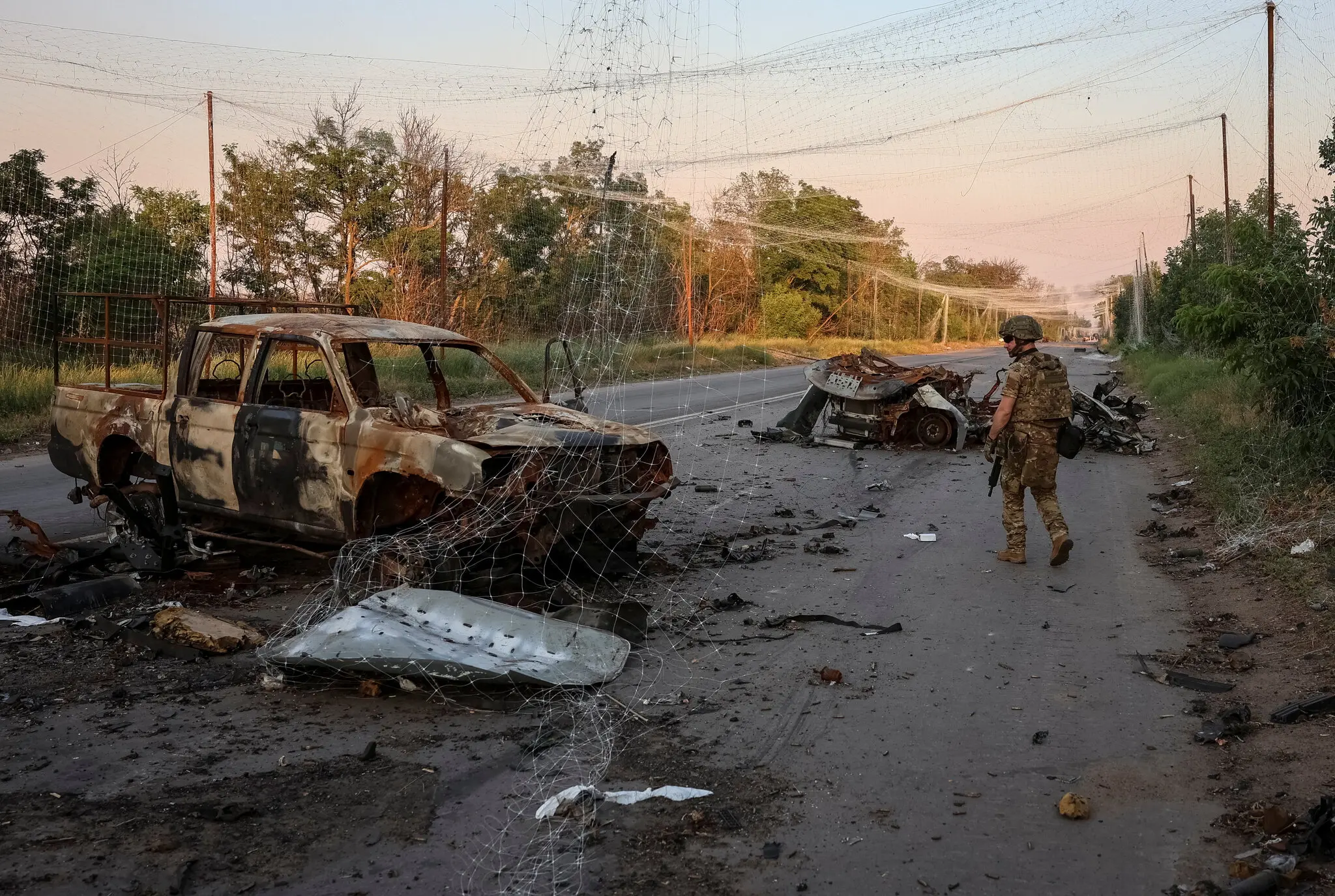
Fires broke out in residential areas after the strikes, leaving two people wounded. For local communities, the sequence has become painfully familiar: an air alert at night, explosions, burning buildings, emergency crews, temporary relocation, quick repairs where possible and then the next cycle of waiting for another attack.
Another signal came from the Danube Biosphere Reserve, where a fire was also reported. The episode points to an often undercounted dimension of the war: environmental damage. Southern Odesa region is not only ports and roads; it is also a unique natural zone within the Danube ecosystem. Fire in the reserve shows how the consequences of strikes spread far beyond immediate infrastructure losses.
Russian attacks on Odesa region follow a recurring pattern. Strikes on ports make exports less predictable. Strikes on homes put psychological pressure on civilians. Strikes on medical facilities undermine emergency response. Strikes affecting protected natural areas create long-term damage that cannot be quickly measured in financial terms.
The scale of the attack also matters. Russia launched 171 drones at Ukraine from Monday evening, while Ukrainian air defenses shot down or neutralized 154 of them. The interception rate shows the strength of Ukraine’s defense, but it does not erase the central problem: even a small number of drones that break through can hit hospitals, ports and residential streets.
Mass drone attacks have become a cheaper and more flexible way for Russia to keep Ukraine under constant strain. They overload air defenses, force the dispersal of resources, exhaust crews on duty and create a broad geography of danger — from southern ports to northern border communities.
Odesa and Sumy regions now stand on different but connected lines of the same war. In the south, Russia is targeting logistics and export infrastructure; in the northeast, it is pressuring border communities, civilian housing and local resilience. In Sumy region, a separate drone and missile attack killed one person and wounded two others.
The Sumy front increasingly shows how Ukraine’s border regions live under almost continuous threat. Air strikes combine with artillery fire, sabotage risks and the destruction of civilian infrastructure. This is another form of attrition — not through a single major blow, but through constant pressure on everyday life.
After such attacks, the key question for Ukraine is not only how many drones were intercepted. It is whether there are enough mobile fire groups, electronic warfare systems, radars, air defense missiles and protected shelters in hospitals, schools, ports and residential districts. Interception statistics show defensive strength; destruction on the ground shows its limits.
For Ukraine’s international partners, these strikes carry a direct message. Odesa’s ports are part of the economic artery that keeps Ukraine connected to global markets. When Russia attacks port facilities on the Danube or near the Black Sea, it is striking not only Ukraine’s economy, but also the stability of regional trade.
The damaged hospital reception unit, burned homes, residential fires and blaze in the reserve form one picture. This is a war against the country’s ability to live between attacks: to treat patients, move goods, export grain, restore damaged facilities, extinguish fires and reopen essential services after a night of explosions.
Odesa region remains one of the main tests of Ukrainian resilience. Its ports are needed by the economy, its hospitals by civilians, its communities by the southern rear and its protected landscapes by a future that must not be entirely consumed by war. Every overnight attack here means more than another line in an operational report.
Russia is trying to turn southern Ukraine into a zone of permanent vulnerability. Ukraine is responding not only by intercepting drones, but by keeping ports working, evacuating patients, putting out fires and rebuilding what has been damaged. In that endurance lies the real line between destruction and resilience.