
























Ukraine’s drone war has entered a stage in which the main target is no longer the trench, but the nervous system of an army. Drones that strike dozens of kilometers behind the front are destroying not only depots, fuel trucks and command posts. They are destroying the idea of a safe rear.
These strikes have become especially painful for Russia on the southern axis and in occupied Crimea. Fuel, supply routes, air defense systems, drone bases and command nodes have turned into daily targets. Ukraine has learned to strike more cheaply, more deeply and more precisely than conventional artillery would allow.
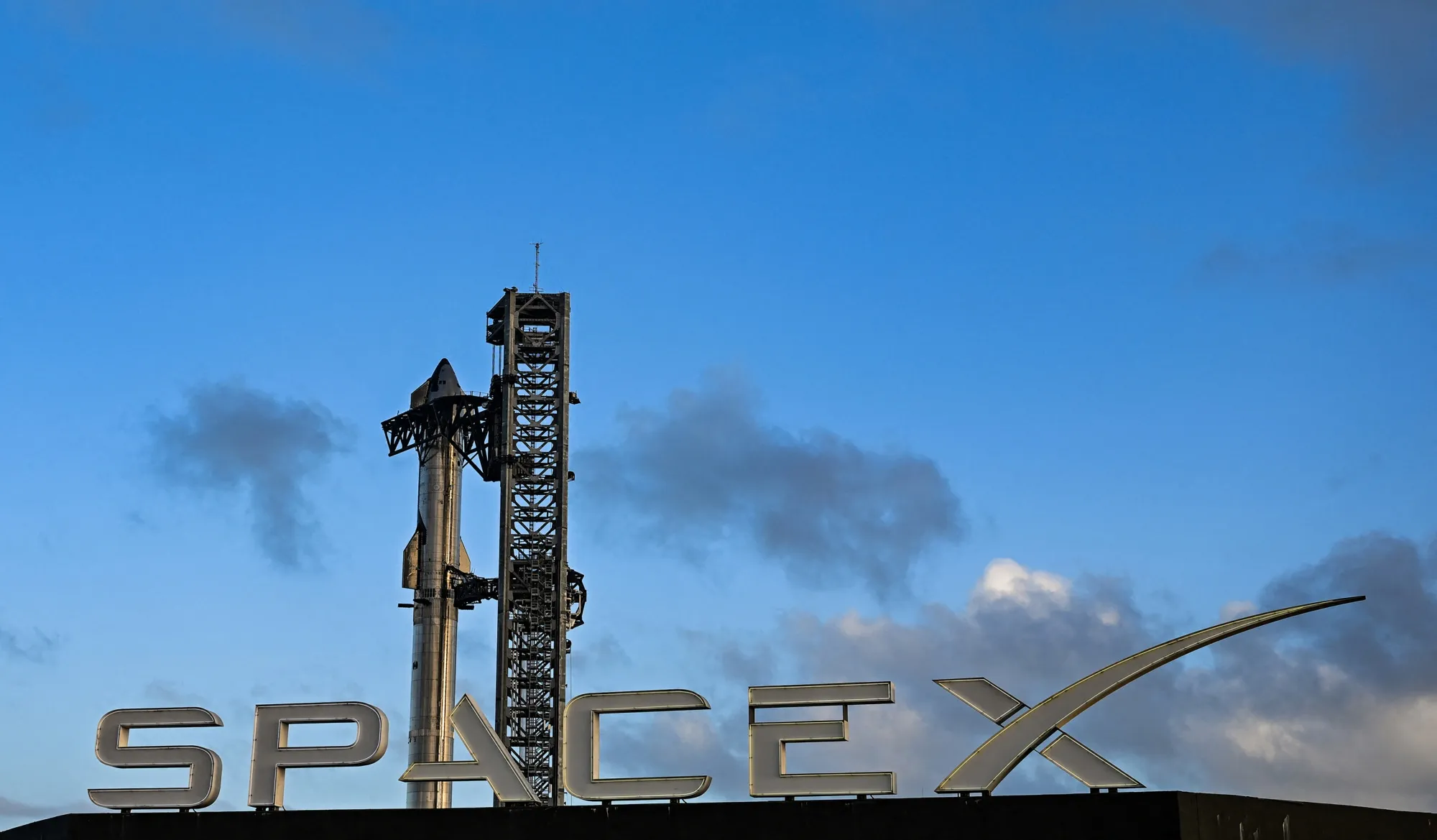
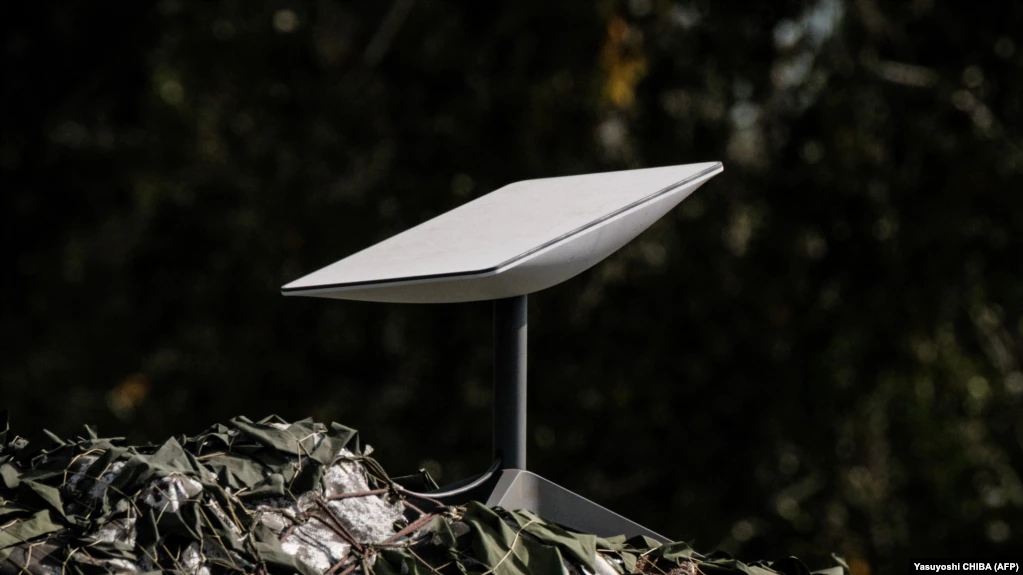
At the center of this shift is Starlink, the SpaceX satellite internet system that allows operators to control drones remotely, maintain a connection and guide aircraft toward targets where ordinary channels would already have been suppressed. For Ukraine, it has become an instrument of battlefield flexibility.
According to Daycom’s analysis, Russia’s attempts to jam Starlink reveal not only Moscow’s technological adaptation, but also the scale of the problem created by Ukraine’s mid-range drones. When an enemy begins hunting not only the aircraft, but the control channel itself, that channel has become strategic.
Russia’s response has several layers. The first is classic camouflage. Military cargo is hidden in civilian vehicles, fuel is carried in repainted tankers, small convoys move along secondary roads, and pickup trucks with mounted machine guns are used for protection.
The second layer is dispersal. Instead of large columns, Russian forces increasingly use small batches of fuel, ammunition and supplies. Civilian cars, quad bikes, motorcycles, abandoned buildings, agricultural structures, camouflaged shelters and even civilian gas stations are brought into the logistics chain.
This is not a sign of strength, but of pressure. An army forced to hide diesel in milk trucks and move ammunition in small vehicles is no longer operating by its usual military logic. It is adapting to a constant threat from the air and paying for that adaptation with speed, order and control.
The third layer is electronic warfare. Russia is installing powerful jammers near towns, military facilities and important routes. Their task is to break or destabilize the connection between operator and drone, especially when the aircraft relies on Starlink.
One such system, known as Volna Kupol Garant, can create a jamming zone of roughly 20 square kilometers. For the Russian army, it is an attempt to regain control over space. For Ukrainian operators, it is a new target that must be found and destroyed first.
This logic is already visible in practice. When a jammer appears near an important site, it becomes a target in its own right. Its emissions, size, location and need for maintenance create a trace. Ukrainian units search for these systems as carefully as they search for fuel depots or air defense batteries.
One detail captures the nature of this phase of the war: after one such installation was hit, Starlink-equipped drones again received a stable control channel. The episode shows the essence of modern combat — first the electronic wall must be broken, and only then can trucks, bases and routes be struck.
On the Zaporizhzhia axis, Ukraine’s 422nd Unmanned Systems Regiment operates within exactly this logic. Night, red headlamp light, an explosive warhead loaded into a winged drone, a catapult launch — and the aircraft heads toward Crimea, where Russian drone operators themselves have become targets.
The Zozulya drone is not just another machine in this war. It symbolizes Ukraine’s shift toward cheap, serial and flexible long-range capability. Such drones do not always hit. They can lose a target, be intercepted by a Tor missile system or fail their mission. But even an unsuccessful flight can produce coordinates for the next strike.
That is what changes the tempo of the war. If a Ukrainian reconnaissance drone is lost after detecting a Russian air defense system, the target does not disappear. It enters the digital battlefield system and waits for another crew, another route and another moment. Failure becomes data.
For Russia, this is a dangerous change. Its army has long relied on mass: depots, columns, rail shipments, fuel hubs and large rear bases. Ukrainian mid-range drones strike precisely that mass, forcing it to fragment, hide and spend resources protecting what used to be the routine infrastructure of logistics.
Crimea has become one of the main testing grounds for this struggle. The peninsula depends on narrow routes, bridges, ports, depots and energy infrastructure. When Ukrainian drones strike fuel and supply facilities, the Russian army receives not a local problem, but a cascading disruption.
Still, Russia’s adaptation is not cosmetic. If jammer production grows, Ukraine’s mid-range strike campaign will become more difficult. Starlink, long seen as nearly immune to suppression, is no longer absolutely untouchable. Every technological advantage has an expiration date.
SpaceX has already restricted Russia’s ability to use Starlink so that Moscow cannot turn the system into a tool for its own strikes. But even without access to the network, Russia is trying to fight it as part of Ukraine’s arsenal. In this war, the internet, orbit and electronic warfare have become combat concepts as real as artillery or armor.
For Ukraine, the answer is clear: change frequencies, routes, tactics, drone types, guidance algorithms and launch patterns faster than Russia can scale its interference. The advantage here lies not in one invention, but in the capacity for continuous adaptation.
This struggle does not stop Russian strikes on Ukrainian cities, nor does it change the fact that Russia still occupies a large part of Ukrainian territory. But it explains why the front increasingly depends on the rear. Fuel, communications, routes and drone operators have become as important as infantry positions.
Russia is trying to jam Starlink because Ukrainian drones have learned to hear and strike where Moscow wanted silence. The fight for the sky above the front has become a fight for signal. Whoever can preserve connection longer, find targets faster and strike logistics more precisely will gain not just a technological edge, but the ability to change the rhythm of the war itself.