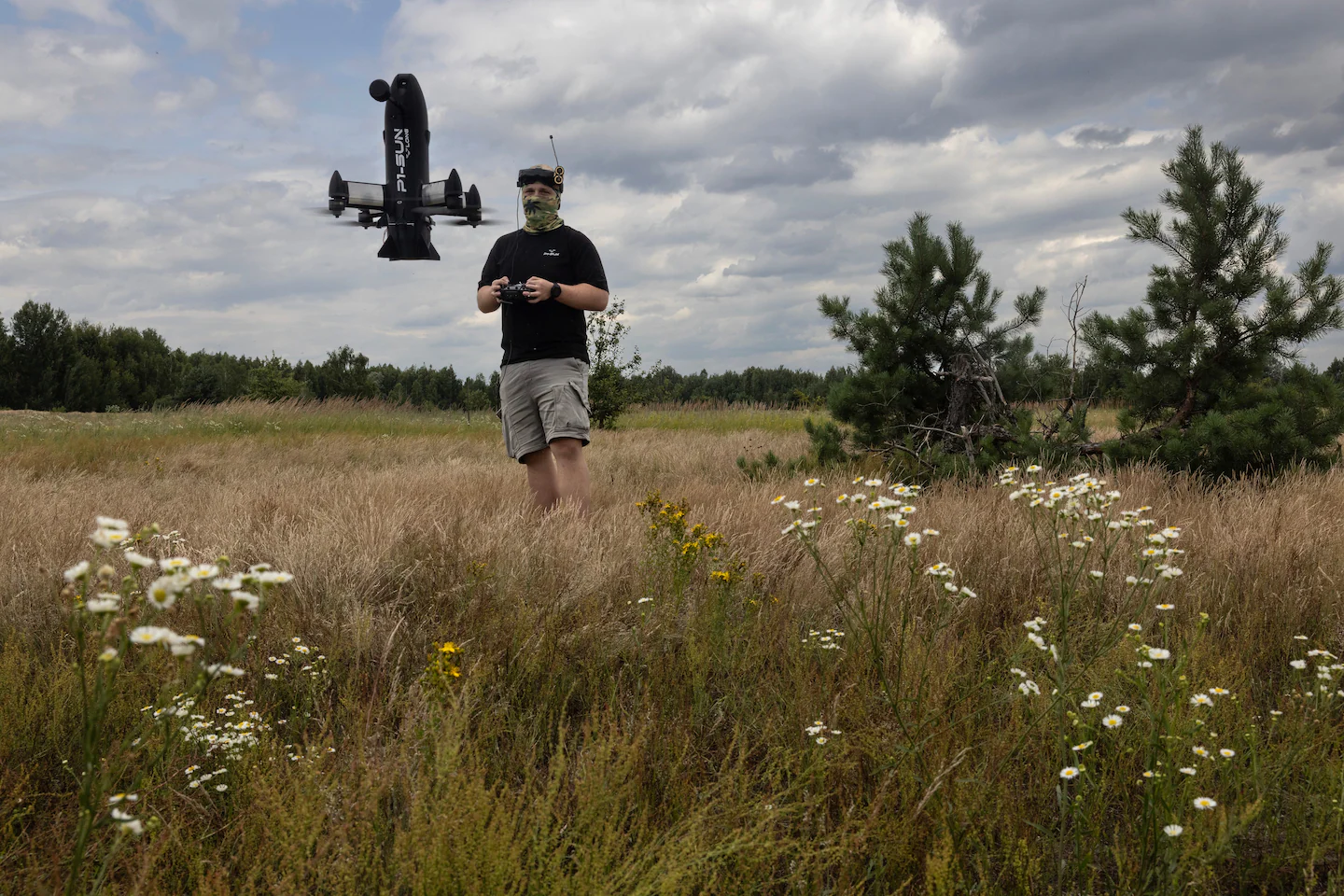

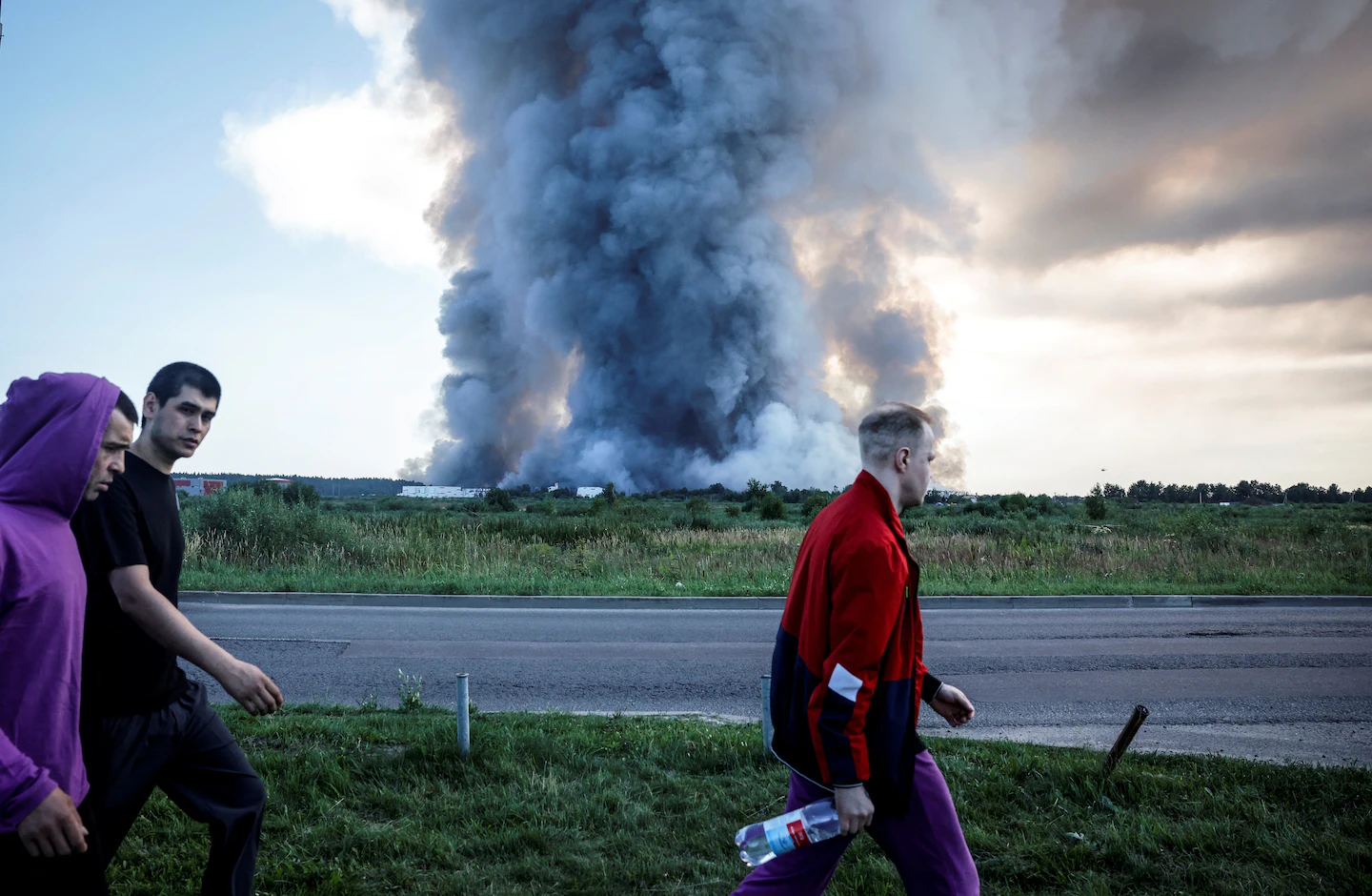
















Ukrainian drones have turned Russia’s rear from an abstract space on the map into a zone of anxiety. Moscow, St. Petersburg, Crimea, oil refineries, chemical plants and military sites are increasingly within reach. For the Kremlin, this is no longer only a military problem. It is a blow to Putin’s central promise: to keep the war far from Russian society.
That is why the voices in Russia arguing that the war is not harsh enough are growing louder again. Nationalist commentators, propagandists and parts of the military milieu are urging Putin to abandon diplomacy, remove restraints, strike harder and stop waiting for agreements with the United States. Their argument is simple: if Ukraine is bringing the war into Russia’s rear, Russia must respond without limits.
These calls are not new. The radical wing of the Russian camp has long demanded full mobilization, mass strikes on decision-making centers, the destruction of Ukrainian statehood as a war aim and even a return to nuclear blackmail. What is new is not the vocabulary itself, but the nervous force with which it is being used after Ukrainian attacks deep inside Russia.
According to Daycom’s earlier analysis, Ukraine’s long-range strike campaign has a double effect. It damages specific targets — refineries, depots, plants, radars and airfields. But it also forces the Russian system to argue with itself: can a state wage an offensive war while still guaranteeing the security of territory it only yesterday described as a deep rear?
The scale of recent attacks has only sharpened that feeling. Moscow has claimed hundreds of Ukrainian drones were shot down over multiple regions and occupied Crimea, while reports have pointed to strikes on industrial sites in Novomoskovsk and elsewhere. Even if Russian figures are part of the information war, the order of magnitude shows that the war has expanded spatially for Russia.
For Russian hawks, this is proof of Kremlin weakness. They see every strike on Moscow or an oil refinery not as a consequence of the war Russia itself launched, but as a humiliation that demands a demonstrative response. Hence the demands to “fight for real,” destroy Ukrainian cities, strike Western production chains and end talk of peace.
The American track is a particular source of anger. Some Russian radicals believe Moscow waited in vain for Washington to broker a settlement favorable to the Kremlin. Instead, the negotiation framework did not deliver Kyiv’s rapid capitulation, while Ukraine continued to expand strikes on Russian territory.
This creates an awkward political trap for Putin. He has spent years cultivating the image of the war as an existential confrontation with the West. But if the war is truly existential, his radical supporters ask why it is still not being fought with every available means. The Kremlin must now manage not only the front, but also the expectations of its own militarized environment.
So far, Putin has not accepted the most extreme prescriptions. He has not declared full mobilization, has not definitively severed diplomatic channels and has not turned nuclear rhetoric into direct action. His strategy remains different: gradual escalation, the exhaustion of Ukraine, pressure on the West, waiting for political shifts in Europe and the United States, and the constant claim that Russia can endure longer.
But the Kremlin is already raising the stakes. Russian diplomacy has warned of “systematic” strikes on military targets in Kyiv, after which the Ukrainian capital endured heavy attacks, including damage to historic and civilian sites. This logic allows Moscow to display toughness without formally declaring a transition to a new phase of the war.
This is typical of Putin’s style: he does not satisfy the radicals completely, but gives them enough signals to keep them inside the system. He permits harsh rhetoric when it serves pressure against Ukraine and the West, but does not allow those voices to dictate his pace. In Putin’s vertical, the hawks may demand, but the center decides.
At the same time, their pressure is not empty noise. It expands the boundaries of what is permissible. What sounded yesterday like an extreme proposal can become a topic of discussion tomorrow and part of the official line, in softened form, the day after. This is how the Russian system gradually legitimizes harsher scenarios without calling it a concession to radicals.
Ukrainian strikes on the deep rear are especially painful for the Kremlin because they undermine Russia’s asymmetry. For years, Moscow struck Ukrainian cities, energy infrastructure, ports, railways and industry while preserving a sense of distance for most Russians. Now that distance is shrinking, and the war is beginning to return to the country that started it.
That is what generates irritation inside Russia’s public sphere. Some demand “revenge,” others criticize air defenses, and others ask why Moscow is not protected in the way the state promised. Even if these moods do not threaten Putin directly, they weaken the image of total control. For an authoritarian system, control matters almost as much as actual force.
Putin is trying to answer with a different lens. He speaks of advances in Donbas, of supposedly approaching tactical successes and of political forces in Europe that he casts as ready for “normalization” with Russia. His message to the domestic audience is simple: there is no need to rush, time is working for Moscow, and the West will tire.
But that strategy becomes less comfortable when Ukraine demonstrates the ability to strike far and regularly. A war of attrition works against both sides. If Russian industry, the fuel system and urban security begin to feel repeated blows, the Kremlin can no longer sell the war to citizens as a one-sided process of destroying Ukraine.
For Ukraine, this has strategic meaning. Long-range strikes do not replace the front and do not guarantee a quick victory. But they change the cost of Russian aggression. Every plant that must be repaired, every region that needs air defense cover, every refinery fire and every closed airport consumes Russia’s resources, attention and nervous stability.
For the West, Russia’s internal discussion about escalation is a warning. Concessions to the Kremlin do not necessarily reduce the appetite of radicals. On the contrary, they can confirm their belief that pressure works. If Moscow sees that threats make Ukraine’s partners hesitate, advocates of a harsher war inside Russia gain another argument.
At the same time, the risk of escalation cannot be ignored. Russia remains a nuclear power with vast territory, a military-industrial base and an authoritarian system capable of absorbing heavy losses. That is why the answer to Russian pressure must be neither panicked nor reckless, but consistent: support for Ukrainian air defense, long-range capabilities, drone production and energy resilience.
The most important fact of the current moment is that Ukrainian strikes have forced Russia to speak not only about victory, but also about its own vulnerability. That does not mean the Kremlin is close to retreat. But it does mean the war increasingly no longer fits Putin’s old formula: Russia punishes, Ukraine endures, the West watches.
Now pressure runs in both directions. Ukraine is showing that the depth of Russian territory is no longer an absolute shield. Russian hawks are demanding greater brutality from Putin. The Kremlin is trying to maintain control between escalation and diplomatic maneuver. It is in this tension that a new phase of the war is emerging: more dangerous, wider and less predictable than the one Moscow once planned as a swift operation.