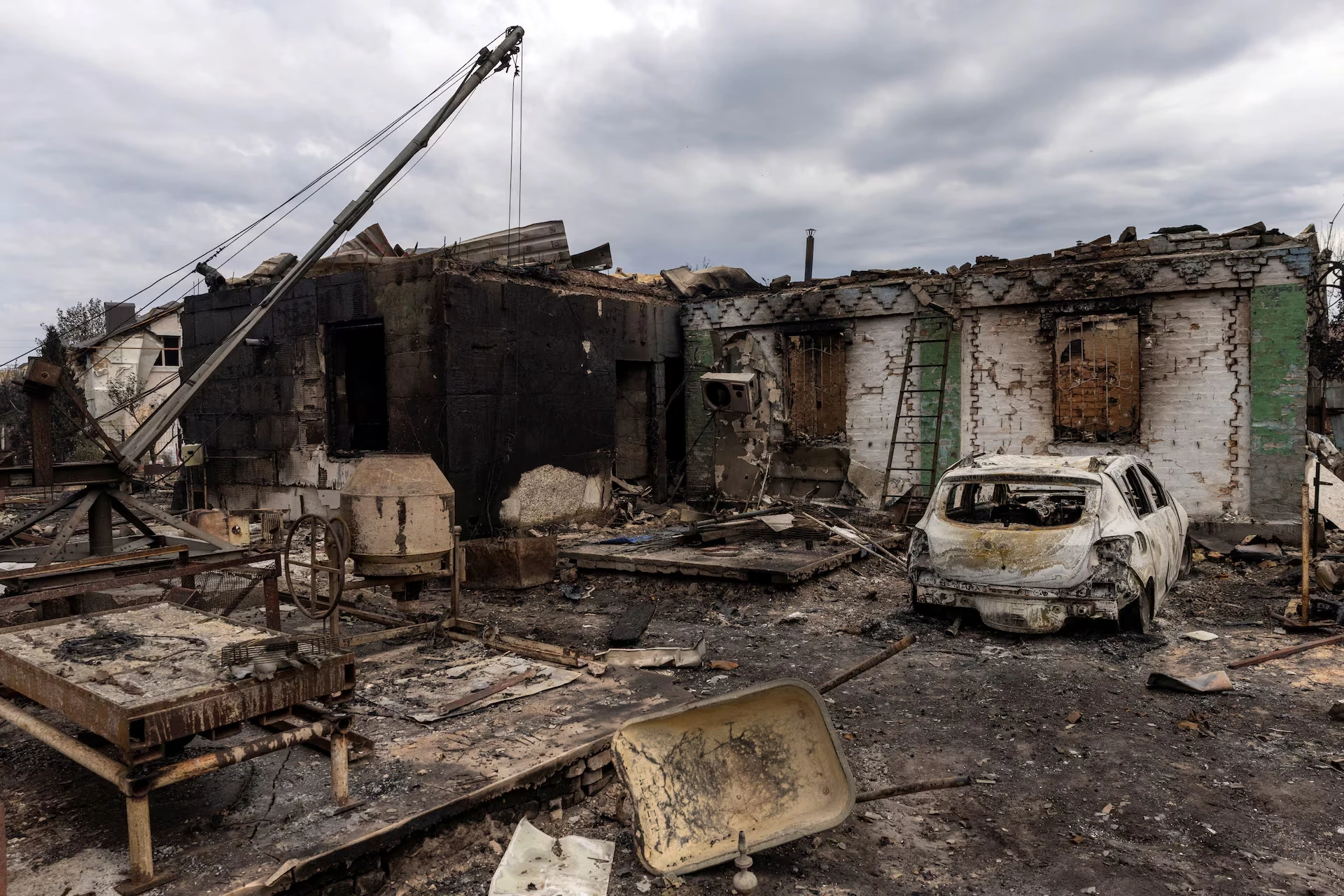








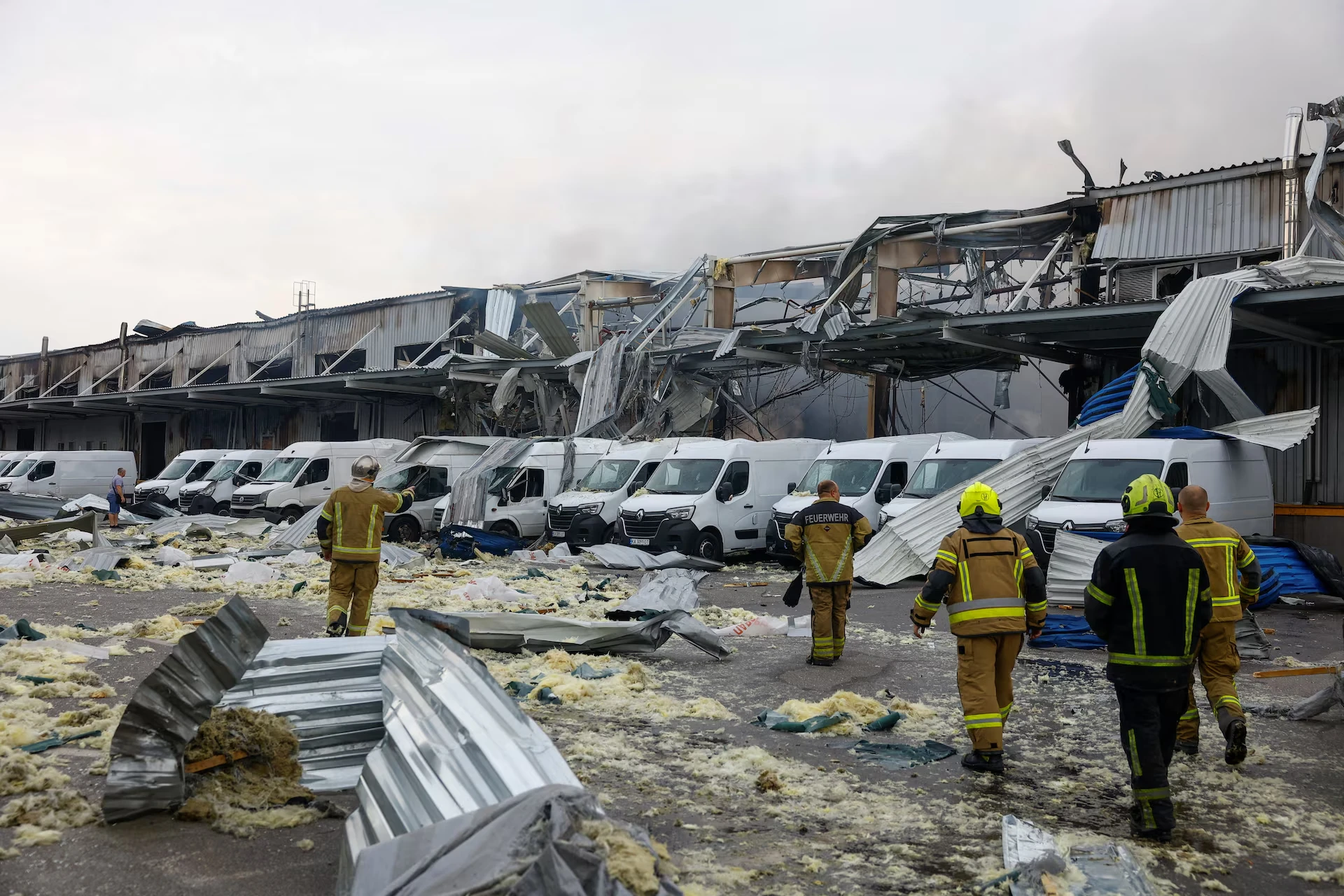
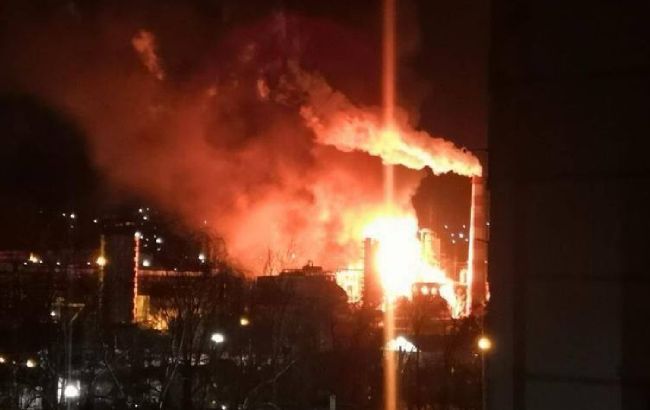















Zaporizhzhia has come under Russian glide bomb attack again. On Tuesday, the city endured a series of explosions lasting about 90 minutes: Russian forces dropped seven bombs, killing two people and wounding at least 15. Emergency crews carried the injured out of dangerous areas, fought fires and worked among damaged buildings, where smoke and debris quickly became part of another wartime day.
This was not an isolated episode. Just a day earlier, a Russian drone struck a minibus in Zaporizhzhia, killing two men and a woman. For a city located close to the front line and the occupied part of the region, such attacks no longer form separate news items. They create a recurring rhythm of war in which civilian space is constantly tested.
Glide bombs have become one of the heaviest instruments of Russian pressure on front-line cities. Their danger lies not only in the force of the explosion, but in the logic of their use: an aircraft does not need to enter deep into Ukrainian airspace for a city to suffer destruction, fires, deaths and injuries. It is a weapon that keeps people afraid even when the front line itself does not move.
According to Daycom’s earlier analysis, Zaporizhzhia is increasingly becoming an example of how Russia turns large cities near the front into zones of exhaustion. Strikes on transport, housing, filling stations, roads and now repeated glide bomb attacks serve one purpose: to make normal life unstable and urban governance permanently emergency-driven.
Zaporizhzhia holds special importance on the map of the war. It is a major industrial, logistical and administrative center that connects Ukraine’s southeast, central regions and front-line communities. Evacuation routes, medical aid, volunteer networks, industrial operations and the daily lives of hundreds of thousands of people all pass through it.
That is why attacks on the city cannot be read only as attempts to cause local damage. Russia is striking Zaporizhzhia as a system. When buildings burn, transport stops, routes change, hospitals are overloaded and people hear explosions again, the target is not one district alone. It is the city’s ability to function after each attack.
Glide bombs are especially dangerous for this kind of urban environment. They cause wide destruction, ignite major fires, shatter windows, damage utility networks and create the risk of repeated strikes while rescuers are working. After the first explosion, the city does not know whether it was the last. That uncertainty is part of the psychological effect.
Seven bombs in 90 minutes is not only a military fact. It is a form of pressure on time itself. People have no chance to recover from one blast before the city is already waiting for the next. Emergency services work in a mode where every minute can become dangerous. Hospitals prepare for more wounded, utility workers for more damage, families for more calls.
Such attacks have another feature: they blur the line between “target” and “consequence.” Russian rhetoric often presents strikes as attacks on infrastructure or military sites. But in a real city, the explosion of a glide bomb means damaged homes, frightened children, wounded passers-by, suspended routes, fires and people ending up in hospitals not because of any military role, but because of where they live.
After the attack on the minibus, this series of strikes looks even harsher. A drone against transport and glide bombs against the city are different tools, but the logic is the same. Russia is trying to make both movement and staying in place dangerous. A person riding a bus is at risk. A person staying at home is also at risk. Someone working, buying fuel, going to hospital or returning from a shift can be caught by the war at any point along the route.
This is the modern Russian tactic against front-line cities. It is not always aimed at immediate territorial capture. Often, its purpose is exhaustion: forcing a city to spend its strength on endless repair, forcing people to live in expectation of the next strike, forcing local authorities to work not strategically, but in a state of uninterrupted response.
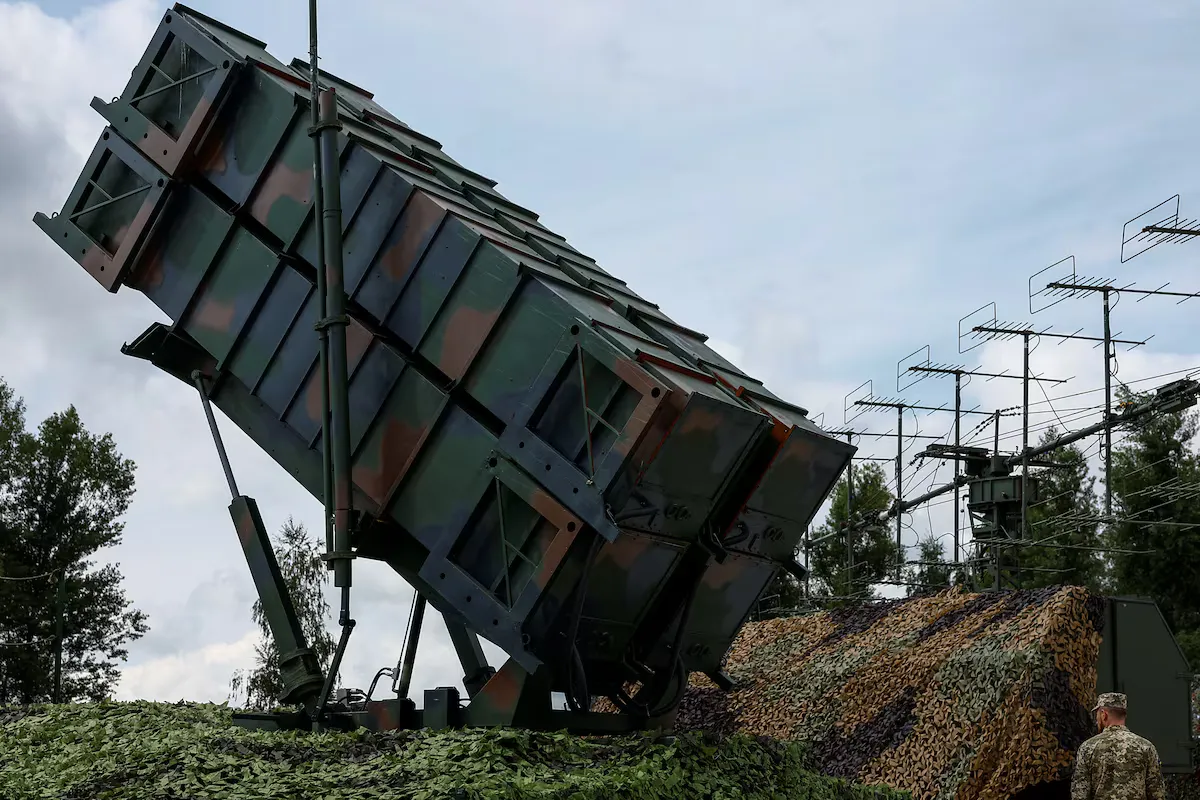
For Ukraine, answering this threat is impossible without stronger air defense. Glide bombs create a separate challenge: Ukraine needs not only interception systems, but also capabilities that can push Russian aircraft back from launch zones. The closer a plane can approach the point of release, the more dangerous cities in the south and east become.
Zaporizhzhia, Kharkiv, Sumy, Kherson and Dnipro are different cities, but they increasingly live under the same logic of aerial threat. Drones, missiles, glide bombs and artillery create layered pressure that no city can withstand through endurance alone. Resilience matters, but it cannot replace radars, interceptors, mobile units and long-range solutions.
At the same time, civilian resilience should not be underestimated. After the strikes on Zaporizhzhia, rescuers fought fires, doctors treated the wounded, municipal services cleared dangerous areas, and the city began counting the damage again. There is no loud heroism in this routine, but it is precisely what prevents Russian terror from turning a strike into total paralysis.
Every such attack also raises a question for Ukraine’s allies. If major cities are regularly hit by glide bombs and drones, discussions of assistance cannot remain limited to general formulas. What is needed are production capacity, specific systems, ammunition, training, logistics and political readiness to recognize that defending Ukrainian skies is part of defending European security.
Zaporizhzhia today is holding more than its own neighborhoods. It is preserving the function of a large city on the edge of war: working, treating people, transporting residents, supporting the rear and refusing to let fear fully replace everyday life. That is why strikes on the city matter far beyond the region.
Russia uses glide bombs as instruments of coercion: not only to destroy, but to convince people that nowhere is reliable. Ukraine’s answer is the opposite — to preserve the city as a space of life, even when it becomes a target again and again.
The two people killed and at least 15 wounded in Zaporizhzhia are not statistics from another day of war. They are a reminder that the war in southeastern Ukraine is being fought not only at army positions. It runs through buildings, fire hoses, rescue stretchers, hospital corridors and the silence after an explosion, when the city still does not know whether it was the last strike.
As long as Russia can launch glide bombs at Ukrainian cities with impunity, every pause between attacks remains fragile. And every new series of explosions in Zaporizhzhia proves again that the fight for the sky is the fight for people’s right to live on the ground.