






















SpaceX has set its initial public offering price at $135 a share, a level that would value Elon Musk’s company at $1.77 trillion and put it ahead of Saudi Aramco’s 2019 listing as the largest IPO ever.
The offering could raise $74.4 billion, turning the Nasdaq debut into more than a financial event. SpaceX is not entering the public market as a promising startup, but as a private infrastructure power with reach across space, communications, artificial intelligence and defense.
The company is expected to trade under the ticker SPCX. Instead of testing investor demand with a preliminary price range, SpaceX named a single price. The move fits Musk’s style: rather than cautiously asking the market what it will pay, he is setting the terms and daring it to follow.
According to Daycom’s assessment, the importance of this IPO lies not only in its size, but in the kind of public company SpaceX is becoming. It is no longer just a rocket maker. It is a conglomerate of orbital infrastructure, satellite internet, artificial intelligence, data and political influence.
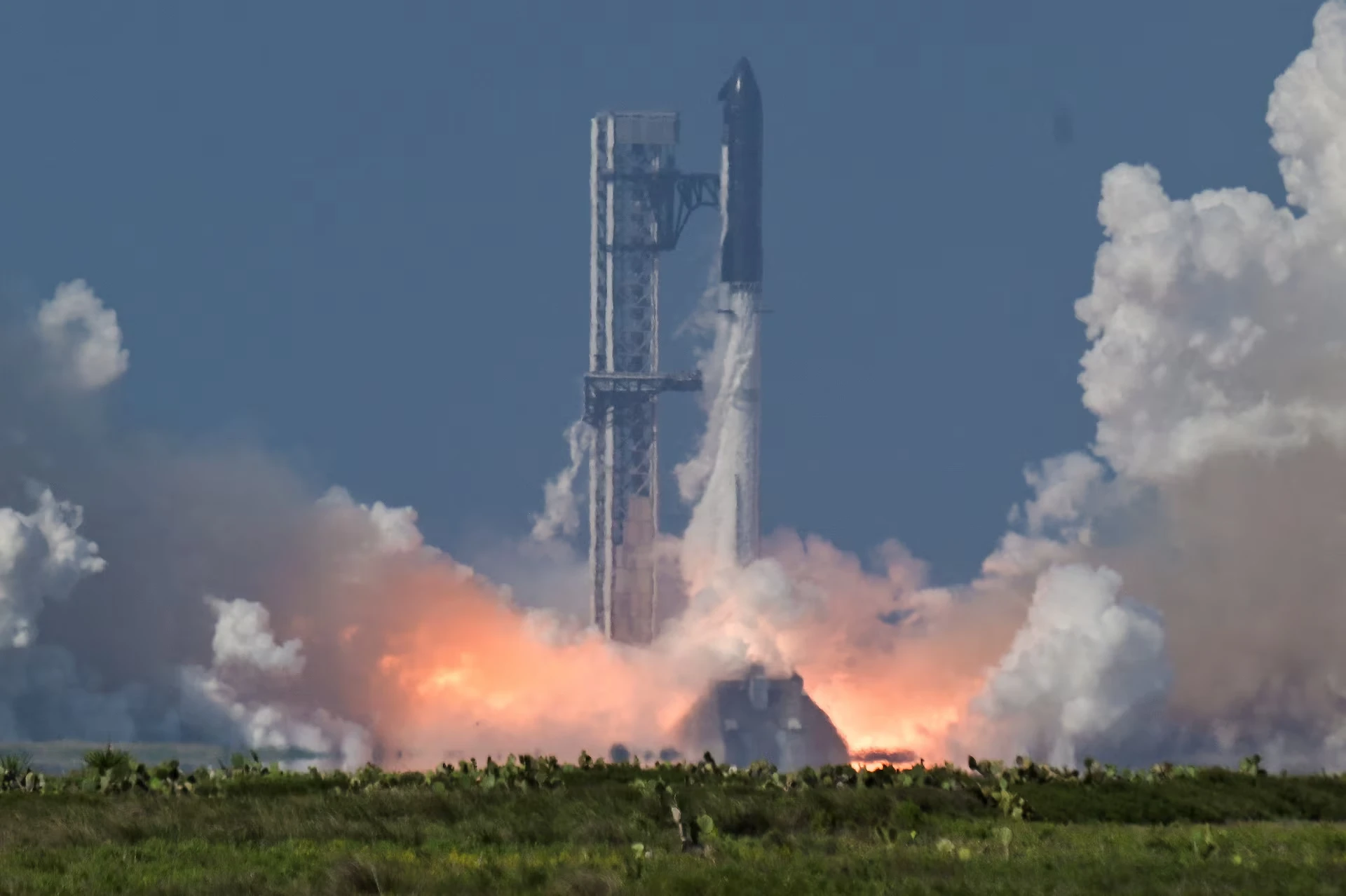
Musk founded SpaceX in 2002 with the aim of making access to space cheaper. More than two decades later, it has become one of the most important private infrastructure companies in the world. Its rockets carry cargo and astronauts, Starlink provides connectivity, and Starship anchors the ambition of reaching Mars.
Starlink changed the nature of SpaceX. Satellite internet made the company not only a launch provider, but a global communications operator with influence over military operations, telecom markets, governments and information access in crisis zones.
The integration of xAI and the platform X added another dimension. SpaceX can no longer be described only through launches and orbits. It is a structure where space infrastructure meets artificial intelligence, social data, computing ambitions and Musk’s personal power.
That is why a $1.77 trillion valuation is more than a financial bet. Investors are buying not today’s profit, but a vision of future dominance in the orbital economy: satellite internet, defense contracts, cargo launches, lunar manufacturing, space-based data centers and flights to Mars.
But SpaceX’s financial picture is not flawless. After years of remaining largely opaque, the company revealed its scale ahead of the listing. Revenue rose to $18.7 billion last year, up 33 percent from the previous year, but the company also posted a loss of nearly $4.9 billion.
That gap between revenue and losses explains the wager. SpaceX is spending vast sums on artificial intelligence, Starship, orbital data centers, lunar projects and the architecture of a future Mars program. It is offering the market access before its riskiest ambitions either become real or consume enormous capital.
For Wall Street, the IPO is both temptation and risk. A listing of this scale could open a new wave of giant offerings. OpenAI and Anthropic are also moving toward the public market with valuations that only a few years ago would have seemed impossible for private companies.
If SpaceX succeeds, it will not be an exception. It will become a signal. The market will have a new benchmark: a trillion-dollar valuation at IPO will no longer seem absurd for companies that control artificial intelligence, space infrastructure, computing power or global networks.
For Musk, the consequences could be historic. At the IPO price, the SpaceX stake he controls would be worth more than $750 billion. If the stock rises sharply in its first days of trading, he could move closer to becoming the world’s first trillionaire.
Yet Musk’s control is also one of the company’s central risks. He controls more than 85 percent of shareholder votes through super-voting shares. Public investors may gain access to SpaceX’s economic growth, but not to meaningful power over the company.
That structure is familiar in Silicon Valley, but in SpaceX’s case it carries greater weight. The company has contracts with NASA and other federal agencies, works in national security, operates a global satellite network and is increasingly tied to Musk’s other businesses.
The IPO therefore raises a question not only about valuation, but about power. Can one private company become so deeply embedded in space, defense, communications, artificial intelligence and politics while remaining effectively controlled by one person? The market appears ready to answer with money before regulators answer with rules.
For years, Musk has used SpaceX as the center of his technology ecosystem. It has supported his ambitions, strengthened his financial position and remained the most stable pillar of his empire compared with more turbulent assets. Now public investors must value not only SpaceX, but Musk’s entire operating style.
Saudi Aramco’s record IPO symbolized the old energy age: oil, state capital, monarchical control and global dependence on fossil fuels. SpaceX’s IPO may symbolize a different age: private space, artificial intelligence, orbital infrastructure and the extreme concentration of power in the hands of technology founders.
That is the historical contrast. The world’s largest IPO may pass from a state oil giant to a private company promising data centers in orbit, factories on the Moon and cities on Mars. This is not just a change at the top of a financial ranking. It is a change in the mythology of capitalism.
SpaceX will still have to prove that its valuation is not merely Musk’s cult and the market’s hunger for the future. Public investors are less patient than private backers. They will demand launch cadence, Starlink growth, cost discipline, clarity around xAI and evidence that Mars ambitions create more value than they consume.
But one thing is already clear: SpaceX’s IPO will be one of those events that does more than price a company. It redraws the boundary of what the market believes is possible. If investors accept Musk’s price, the era of trillion-dollar technology listings will begin not with a cautious step, but with a rocket launched straight toward a record.