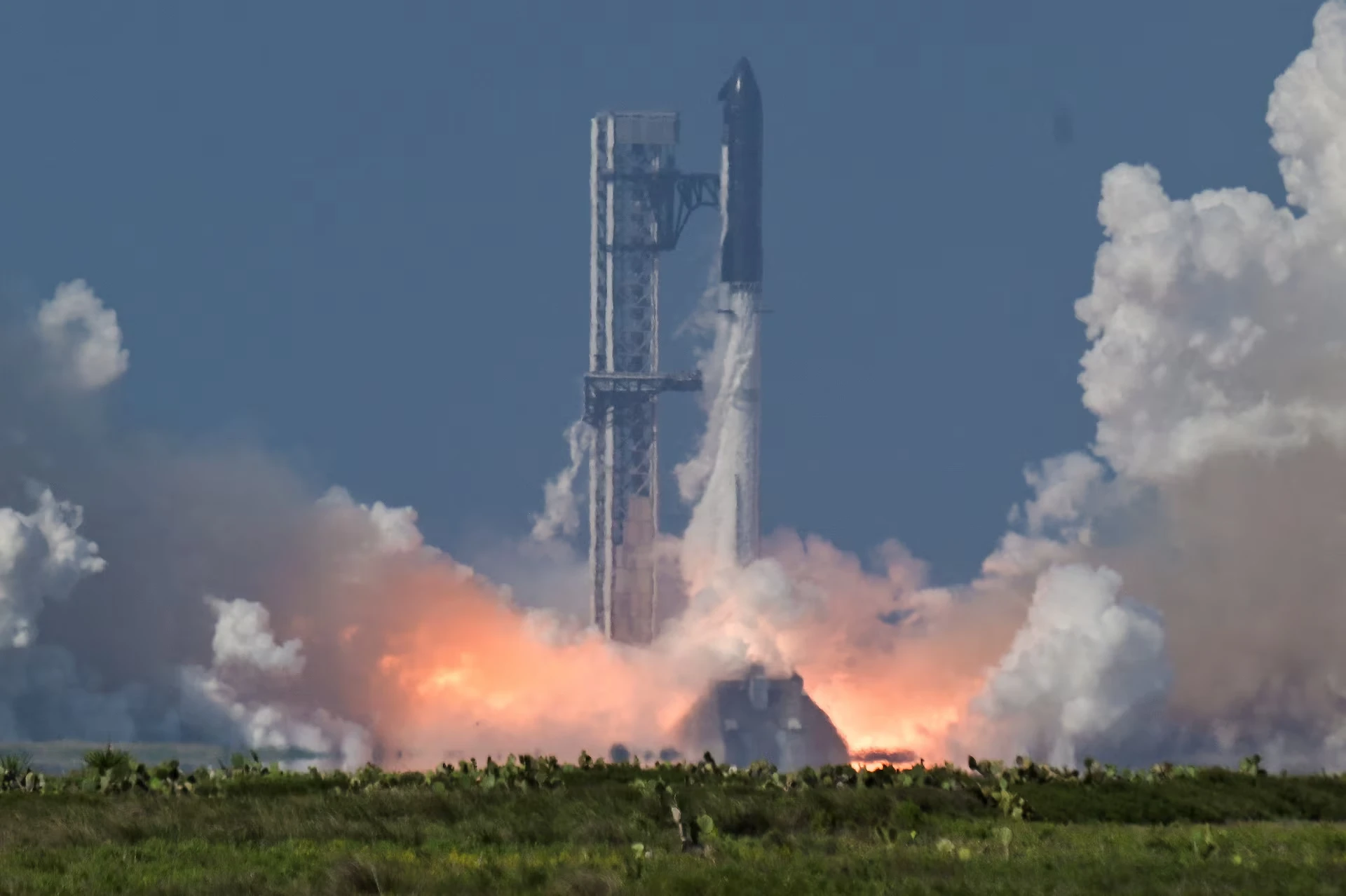

























Wall Street is preparing not just for another technology IPO, but for a market launch in which a software failure could cost almost as much as a flawed valuation. SpaceX’s debut is becoming a test of the entire infrastructure of the U.S. stock market.
Elon Musk’s company is preparing to list on Nasdaq under the ticker SPCX in a record $75 billion market debut. That scale automatically turns the first trading day into an event not only for investors, but also for exchanges, brokers, market makers, underwriters and trading-technology providers.
The paradox of this IPO is that the main risk does not lie only in the price of SpaceX. It lies in the mechanics of the market: the opening auction, order processing, allocation systems, response speed and clearing. Any delay could quickly turn a celebrated offering into a crisis of confidence.
According to Daycom’s earlier analysis, SpaceX is coming to market at a moment when the U.S. market is both searching for a new symbol of technological growth and worrying about overheating. The rocket company has become the perfect carrier of that duality: a dream of the future attached to an unforgiving demand for flawless infrastructure.
That is why preparations for the debut are not confined to bank conference rooms. Exchanges, high-frequency traders, market makers, brokerage platforms and technology vendors have spent weeks modeling load, running simulations and testing emergency scenarios.
The memory of Facebook still hangs over the market. In 2012, a technical failure at Nasdaq disrupted the company’s trading debut, left thousands of orders in limbo and created hours of uncertainty over whether trades had been properly executed. For the exchange industry, it became a painful lesson.
Infrastructure has strengthened since then, but the scale of SpaceX again pushes the system toward its limits. In this offering, investor demand is only one part of the story. The larger question is whether servers, algorithms, brokerage interfaces and backup systems can handle a simultaneous wave of institutional and retail orders.
Nasdaq has upgraded IPO-opening technology, tested backup mechanisms and run trial launches. Major market makers have prepared for an unusual volume of client orders. Their task is not merely to quote prices, but to survive the first minutes, when demand, cancellations and algorithmic reactions can change every second.
Morgan Stanley has a particularly important role as stabilization agent. In offerings of this kind, the bank must help create an orderly market — an opening price that does not break apart under hype, scarcity of shares, technical delays and emotionally driven orders.
At another level, S&P Global is providing technology used to process institutional allocations. Because of the deal’s size, the company has strengthened infrastructure, tested system speed and expanded capacity. In this IPO, even the technical back office becomes a factor in market stability.
An additional risk comes from the large share of stock set aside for retail investors. For SpaceX, it looks like a gesture of openness to a broad audience. For the market, it is a potential source of volatility. Retail investors often react more emotionally, change orders more quickly and respond more sharply to the first move in price.
In a standard IPO, the exchange gathers buy and sell orders before trading begins, while underwriters wait for balance between demand and supply. Investors cancel and replace orders, test market sentiment and search for the opening price. With SpaceX, that mechanism will operate under far heavier pressure.
If the shares surge, it will support the narrative of a new wave of technology optimism. If trading opens poorly or falls quickly, the damage will extend far beyond one company. At stake is sentiment toward the next generation of large IPOs, including expected listings from Anthropic and OpenAI.
The market is entering this debut in less than ideal condition. Big Tech shares are already under pressure from doubts about the durability of the artificial-intelligence rally. Investors are increasingly asking where technological revolution ends and excessive valuation begins.
SpaceX sits at the center of that debate. To its supporters, it is not simply a rocket manufacturer, but a platform for the future economy: satellite internet, launch infrastructure, government missions, defense contracts and the next layer of global communications.
To skeptics, this is an offering in which expectations may be running ahead of verified financial reality. SpaceX carries a rare combination of engineering prestige, political weight, defense importance and the market legend surrounding Elon Musk. But assets of that kind often require the coldest valuation discipline.
The first trading day will have symbolic force. A smooth launch for SPCX could restore confidence to the IPO market after years of caution, high interest rates and private funding rounds that delayed public listings. A failed launch would cool appetite for mega-deals.
Wall Street understands that this time, a breakdown cannot be dismissed as a minor technical accident. When a company of this scale enters the public market, every link — Nasdaq, underwriters, brokers, clearing systems, market makers and retail platforms — becomes part of one reputational chain.
The SpaceX IPO is the moment when the financial market tests its own ability to serve companies of a new scale. If the launch is smooth, Wall Street will have proof that its infrastructure has matured for the era of giant technology listings. If not, the memory of Facebook will gain a new chapter.
The first trading day will not answer every question about SpaceX’s fair value. But it will answer another one: whether the market can withstand its own belief in the future. This time, the rocket is not launching from a spaceport, but from a trading mechanism where seconds, servers and trust matter as much as investor demand.