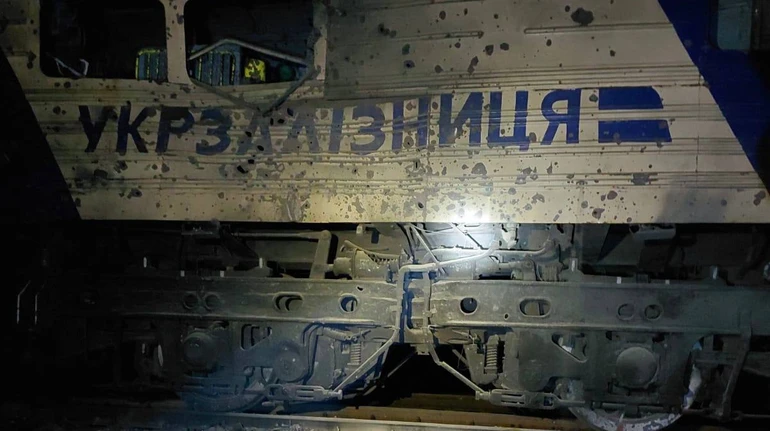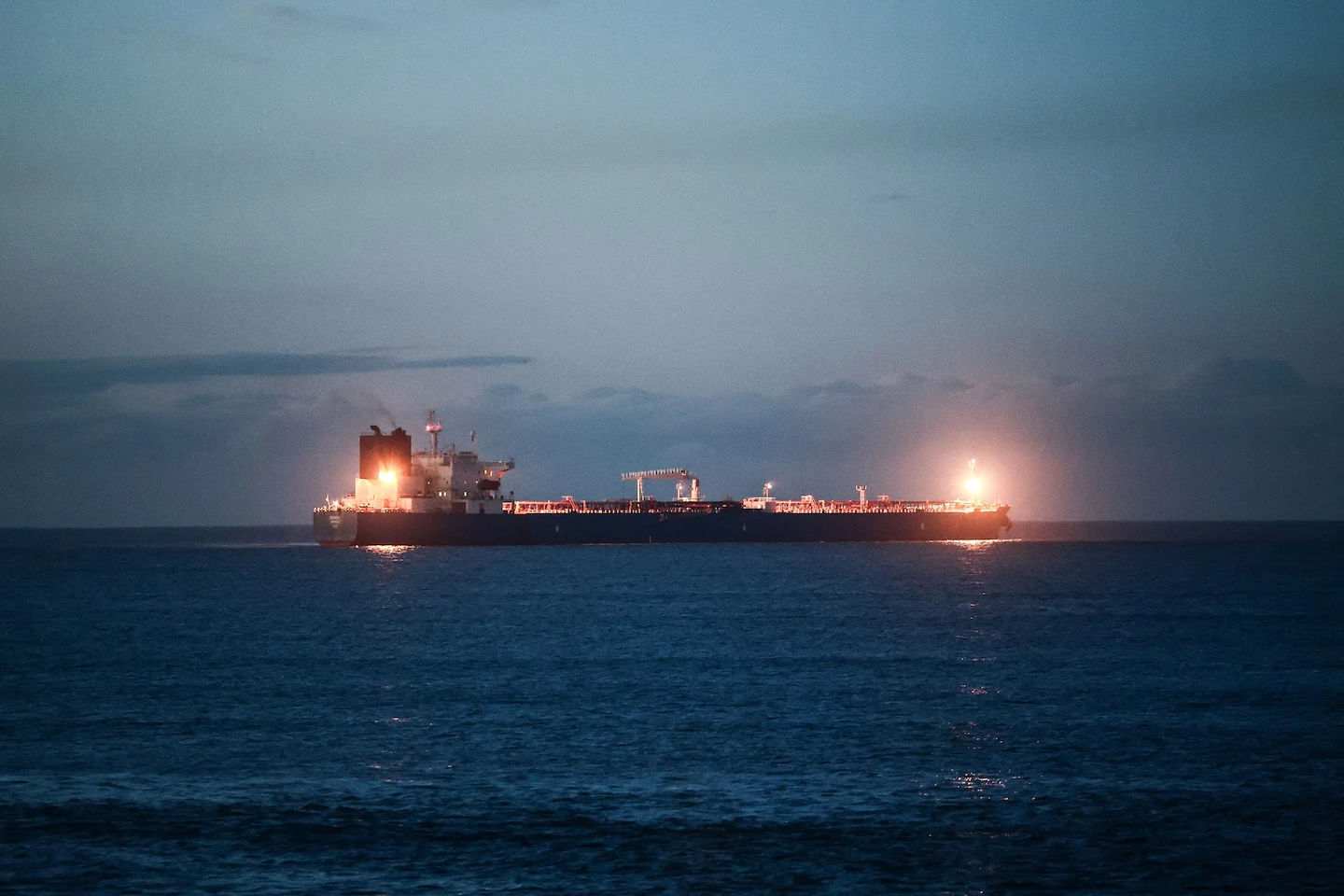























The strike on vessels in the Sea of Azov became one of those wartime episodes in which military logic and human cost cannot be separated. Ukraine said it had attacked five ships connected to Russian logistics in the occupied ports of Mariupol and Berdyansk.
Russia accused Ukraine of killing Azerbaijani crew members aboard two cargo vessels, Natra and Zirkon, which were heading toward Rostov-on-Don. Baku said Azerbaijani citizens were among the crews, and their reported deaths gave the incident additional diplomatic weight.
That fact does not remove the central difficulty of the episode. Civilian sailors were working on board the vessels, and their deaths move the attack beyond the category of an operation against Russian maritime logistics. The war is increasingly touching citizens of third countries who are formally outside the conflict.
According to Daycom’s assessment, the core issue is not only who struck the ships, but how Russia uses civilian or semi-civilian maritime channels for war. When trade routes, grain, fuel and military cargo move through the same space, the line between commerce and military logistics becomes dangerously blurred.
Ukraine says the targets included dry cargo ships and a tanker involved in the illegal removal of Ukrainian grain, the transport of military cargo and the movement of fuel. It also pointed to painted-over vessel names and switched-off radars as signs of an attempt to conceal routes and identity.
That detail is central to Kyiv’s argument. If a vessel turns off identification systems, hides its name and operates near occupied ports, it no longer looks like a neutral commercial object. In military terms, such behavior brings it closer to the support infrastructure of the aggressor.
Yet the legal and moral difficulty remains. Even if a ship is being used for Russia’s war economy, the people on board may be hired sailors who do not decide the cargo, the route or the owner. For Azerbaijan, the dead are not part of Russian logistics. They are citizens who must be returned to their families.
The incident therefore became a test not only for Ukraine, but also for Baku. Azerbaijan found itself between the need to protect its citizens and the need not to automatically accept Russia’s framing of the event. Its careful language reflects an effort not to let tragedy become a ready-made instrument of someone else’s propaganda.
Moscow, by contrast, received a politically convenient narrative. It can speak about an attack on “civilian vessels” while pushing out of view the occupied Ukrainian ports, shadow fleet operations, grain seizures and maritime transport that support its war. This is how Russia often turns its own logistics into a shield made of foreign flags, crews and jurisdictions.
After the occupation of Mariupol and Berdyansk, the Sea of Azov became more than a peripheral body of water. It became a closed rear corridor for Russia’s presence in southern Ukraine. Grain, construction materials, fuel, equipment and dual-use cargo can all move through it. That is why Ukrainian strikes on vessels in this area have operational, not symbolic, meaning.
The problem is that shadow logistics are designed to look like ordinary trade. A ship may appear to be a dry cargo vessel while serving the occupation economy. A route may be recorded as commercial while effectively supporting military infrastructure. This gray zone is precisely what creates space for new tragedies.
For Ukraine, the risk lies in the diplomatic cost. A strike on vessels Kyiv considers part of Russian logistics may be militarily explainable. But the deaths of Azerbaijani citizens inevitably require precision, contact with Baku and the most careful possible handling of facts where operational security allows it.
For Azerbaijan, the case is also difficult. The country did not own the vessels, and its citizens were not state representatives on board. Yet it must deal with the wounded, the return of bodies and communication with families. The episode shows how Russia’s war against Ukraine pulls into its orbit people who are not formal participants in it.
The maritime war in the Sea of Azov and the Black Sea has long ceased to be only a contest between fleets. It has become a war over routes, insurance, flags, registers, radars, grain flows and fuel logistics. In such a war, a drone can strike not only the hull of a ship, but an entire diplomatic structure.
That is why the deaths of Azerbaijani sailors cannot be separated from the wider context. Russia has built a system in which occupied ports serve its military and economic presence, while civilian crews end up on high-risk routes. Ukraine, responding with strikes, is forced to operate in a space where the enemy deliberately mixes military and commercial activity.
The incident does not cancel Ukraine’s right to hit the logistics of the aggressor state. But it shows that every strike on the shadow fleet now carries not only military, but international consequences. In a drone war, precision is measured not only by the coordinates of a target, but by the ability to explain why that target was part of the war.
The Azov episode became a warning to everyone working in gray maritime schemes around occupied territories. Painted-over names, switched-off radars and routes to Russian ports no longer guarantee safety. But it is also a warning for Ukraine: even a just war demands flawless discipline in target selection, because diplomatic consequences sometimes begin where the military operation has already ended.